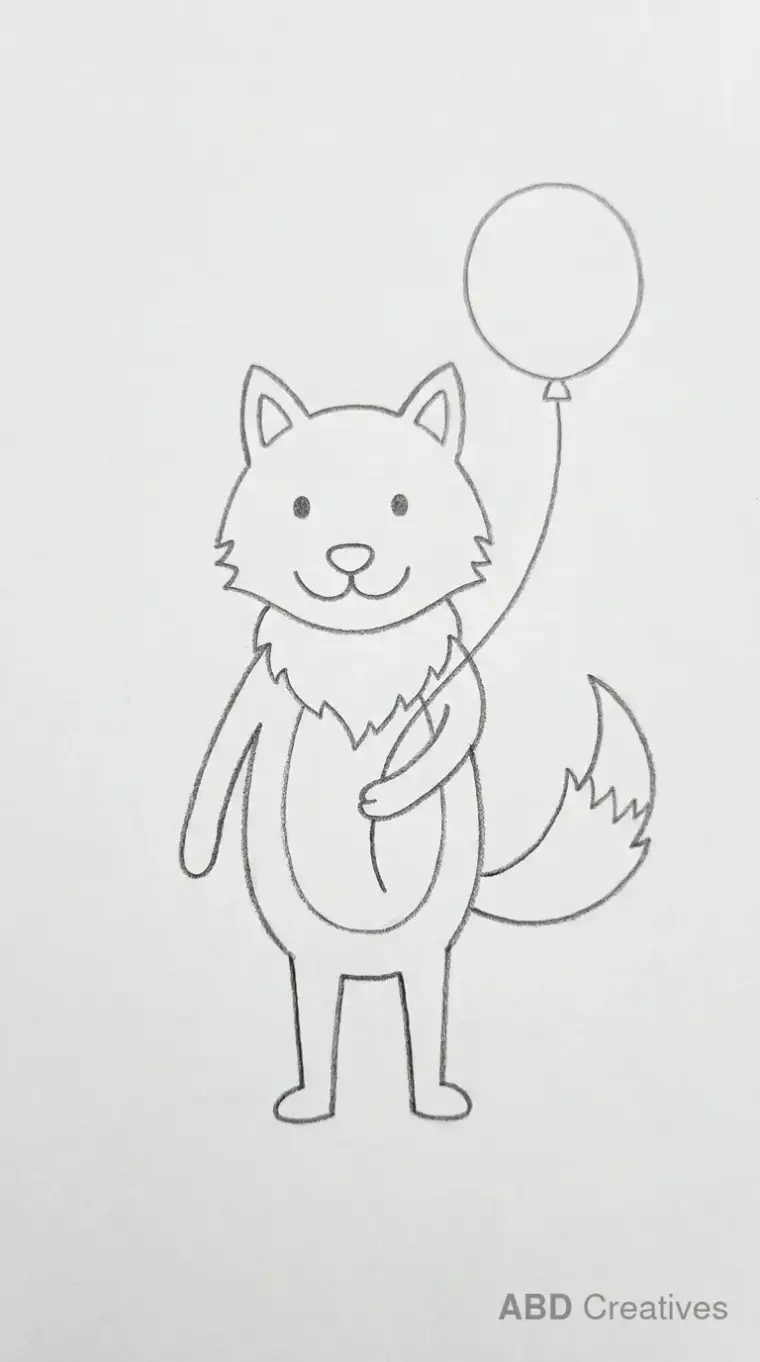
Wolf Drawing Ideas
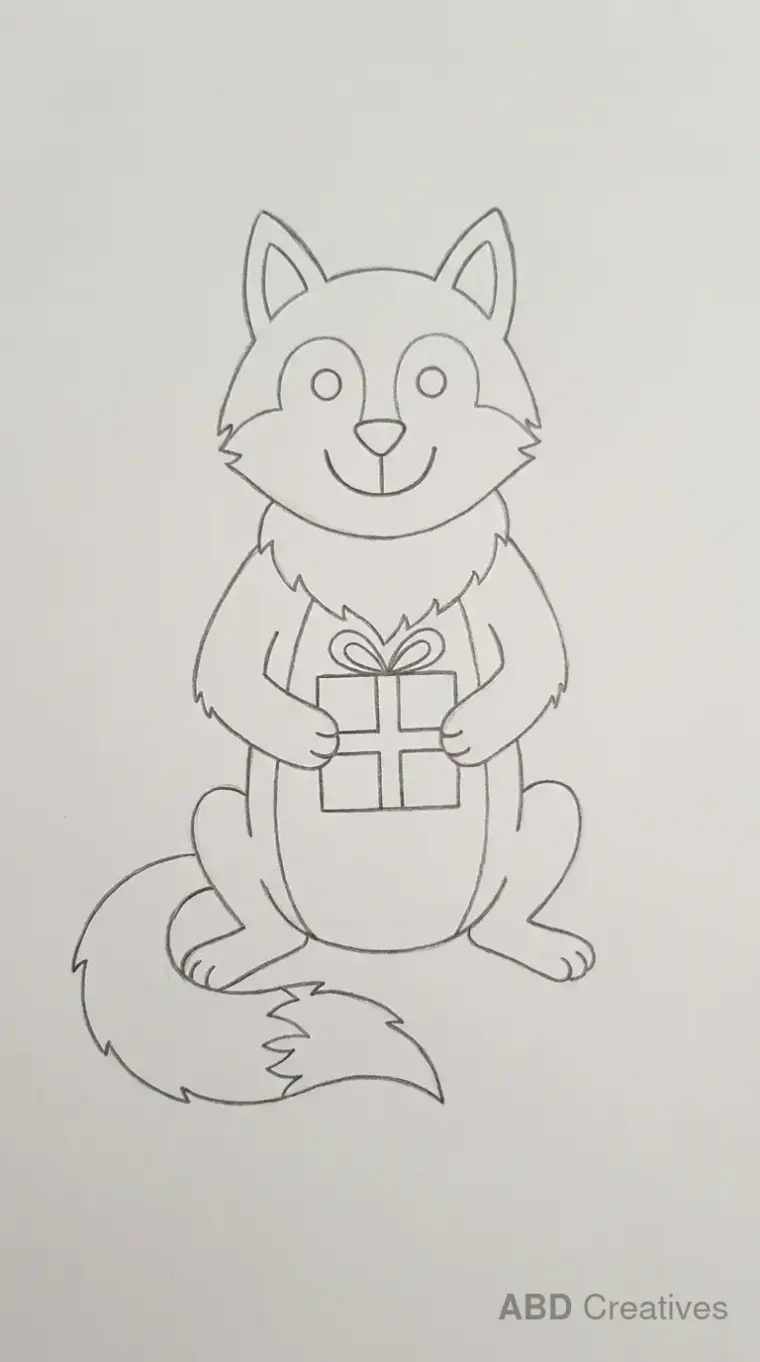
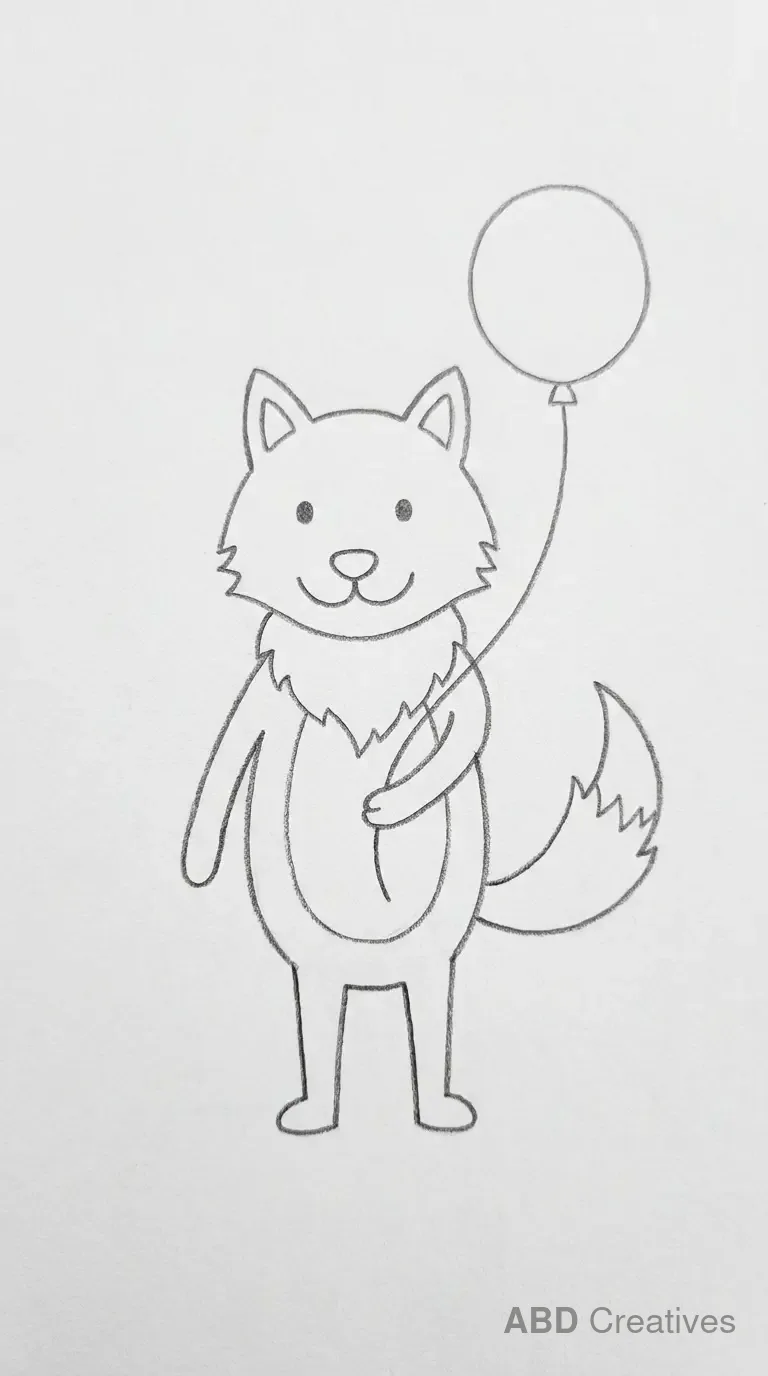
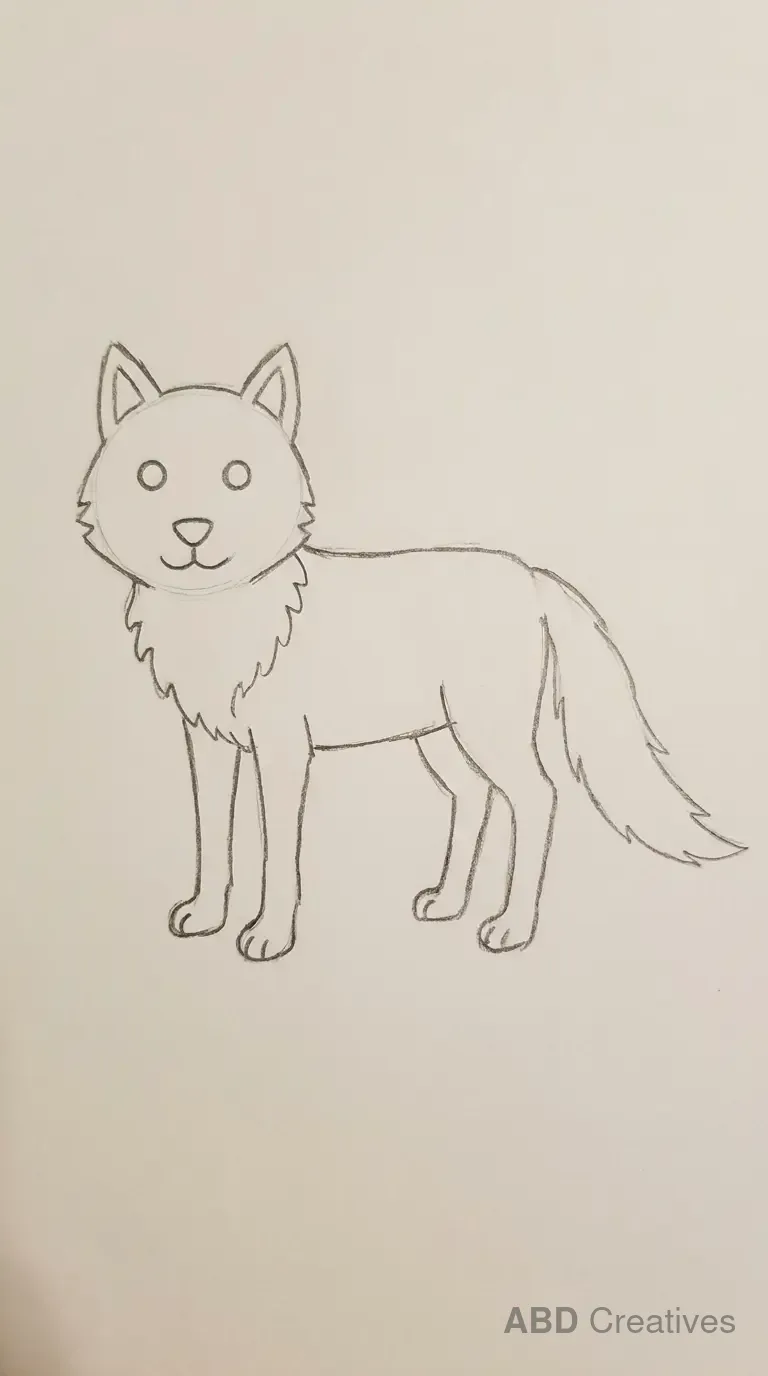
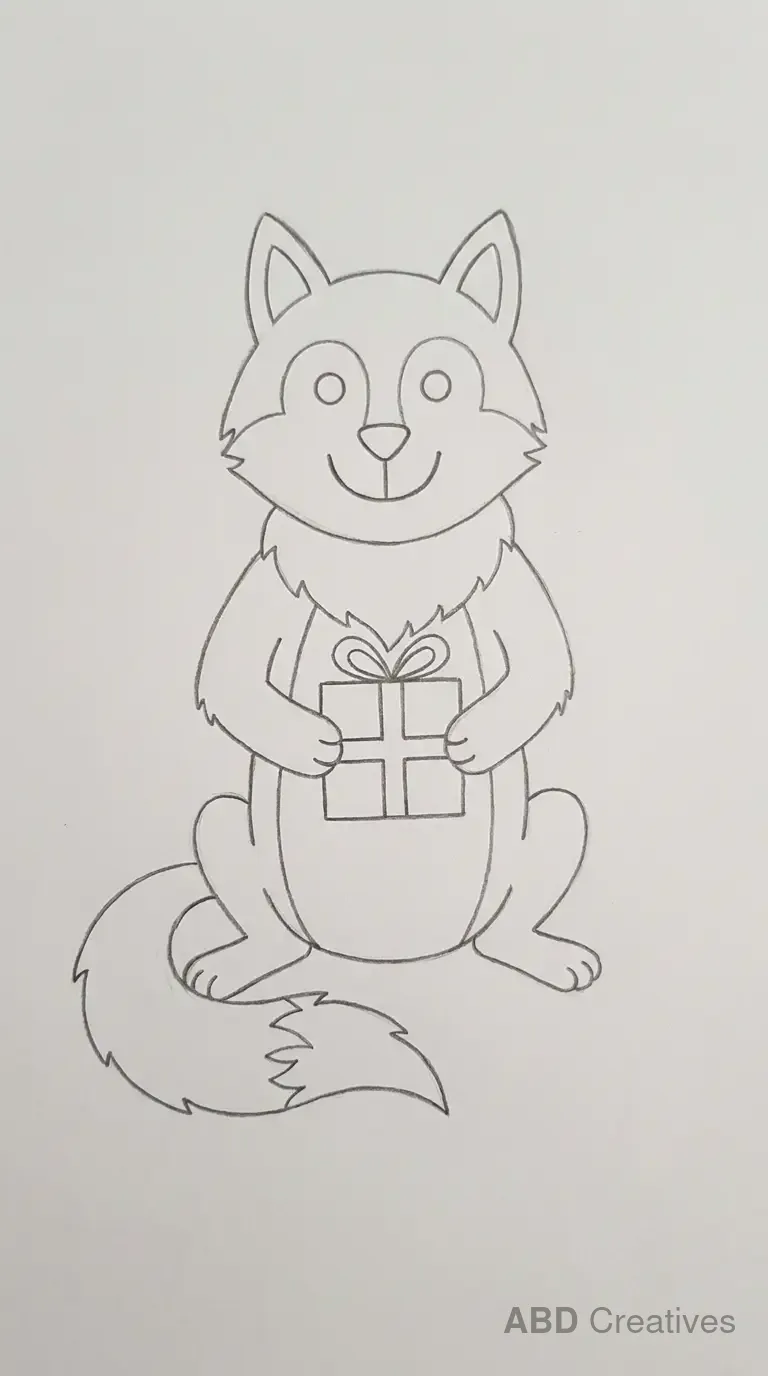
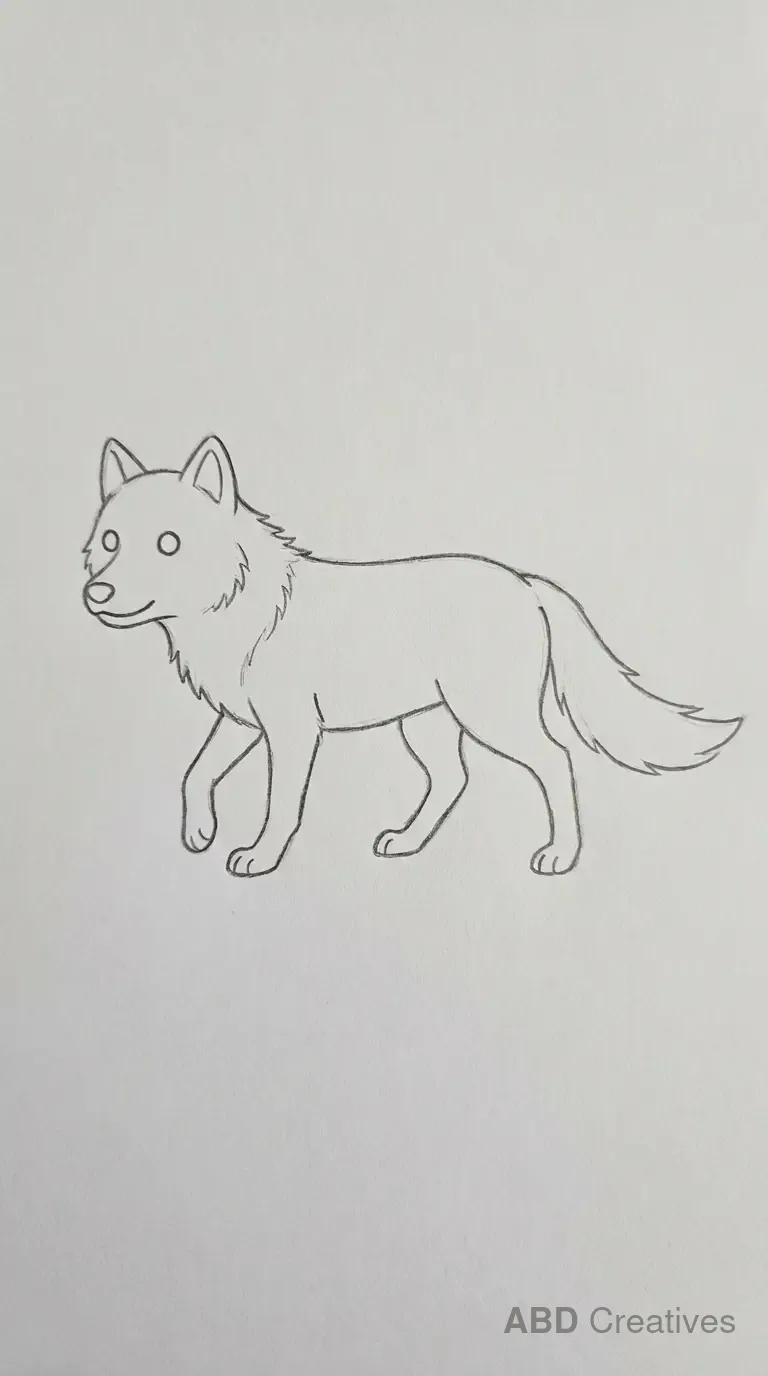
Twenty-eight wolf drawings you can copy straight onto paper, from a plain sitting wolf to a howling wolf under the moon. Every one is a clean pencil outline drawn by hand, with no shading and no colour. Pick one, keep it next to you, and copy it line by line.
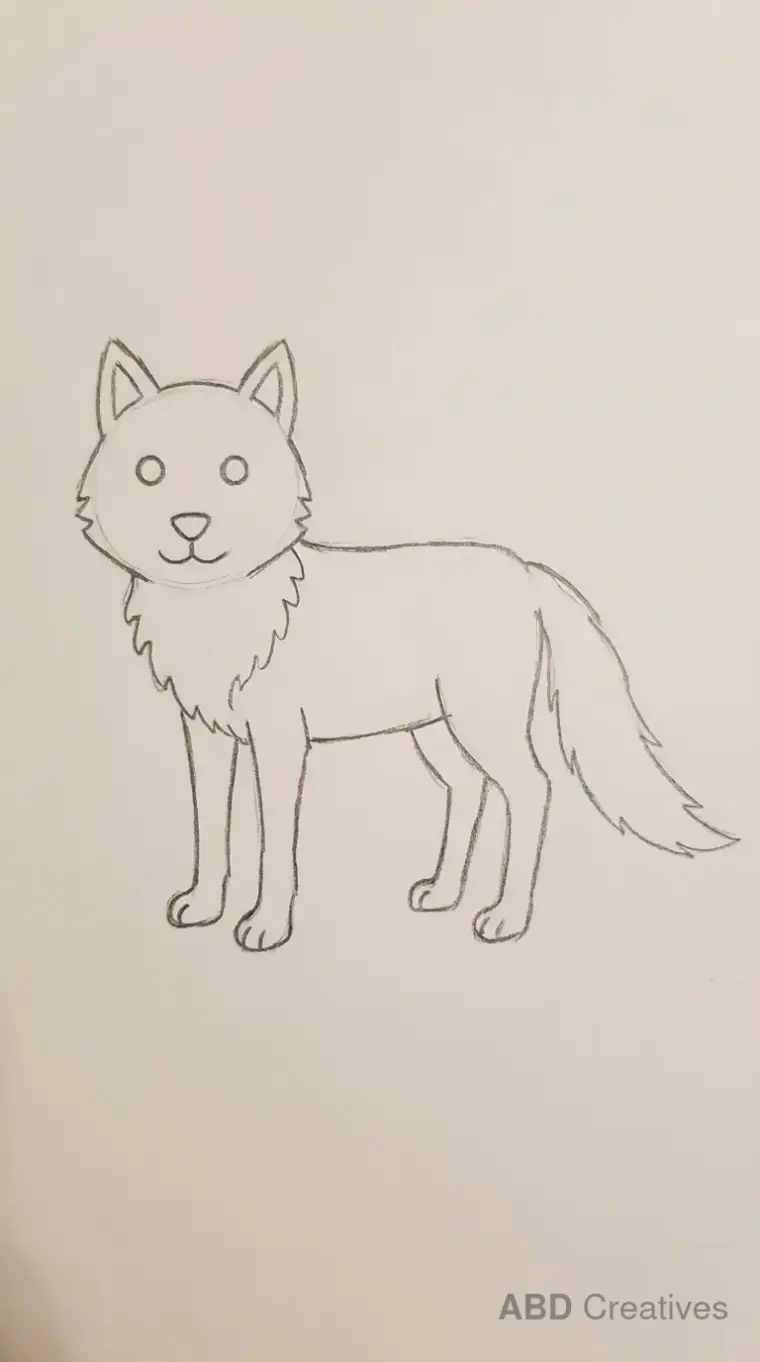
How to draw a wolf step by step
- Start with a small circle for the head and a longer oval for the body, set a little apart.
- Join the head and body with two curved lines for the neck, keeping the body low and lean.
- Add two pointed, upright ears on top of the head. Wolf ears sit closer together and stand taller than a dog’s.
- Draw a longer, narrower snout than you would on a dog, with a small dark nose at the tip.
- Add four thin legs with small paws. Keep the front legs close together under the chest.
- Draw a thick, bushy tail. On a wolf the tail is often held low and straight, not curled up like a fox.
- Go over the outline with a jagged, uneven line along the back, chest and tail to show fur, rather than a smooth line.
- Rub out any extra pencil marks and darken the final outline.
Which wolf should you start with
If this is your first wolf
Start with the Simple Sitting Wolf or the Simple Standing Wolf. Both are plain outlines with no extra props, so you can focus on getting the head, ears and body shape right.
If you have drawn animals before
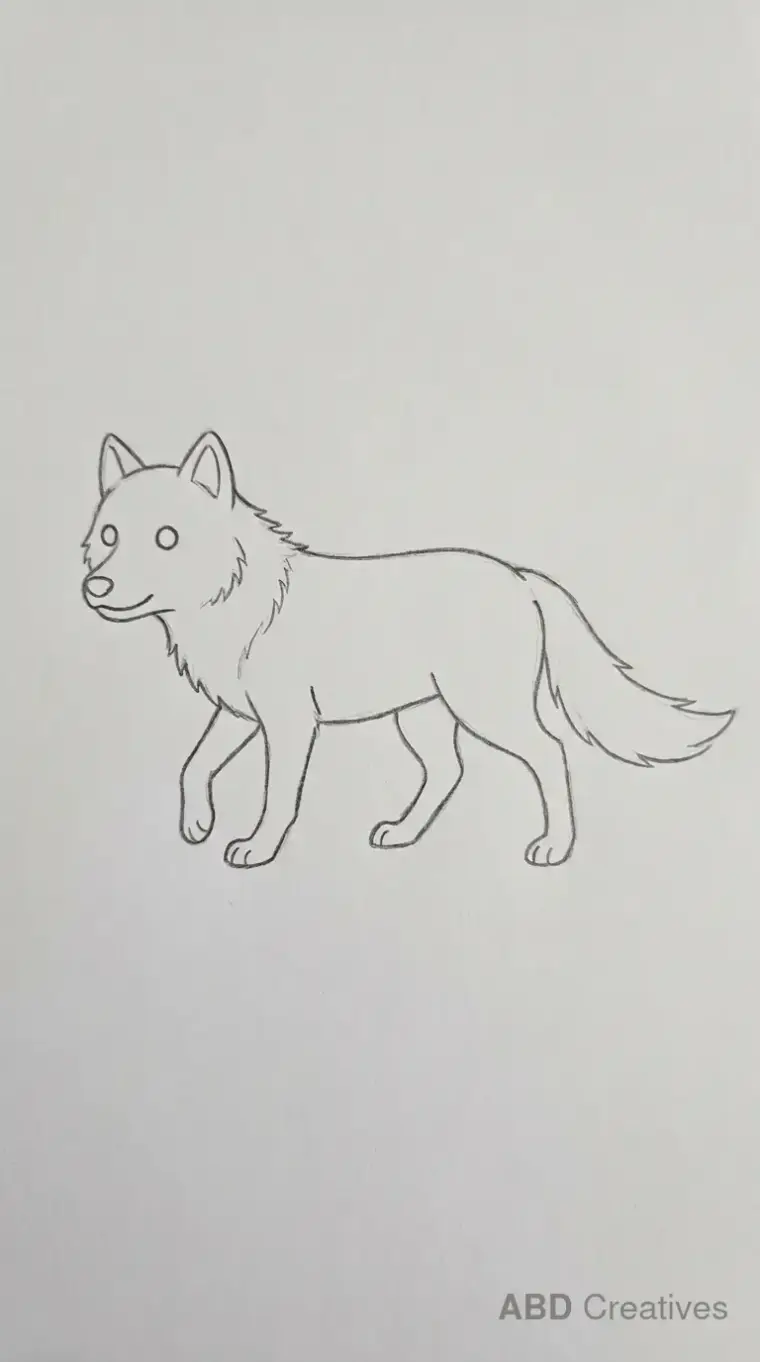
Try the Walking Wolf Outline or the Running Wolf. These add movement to the legs and tail, which is a good next step once you are comfortable with the basic shape.
If you want a challenge
Try the Howling Wolf or the Pouncing Wolf Outline. The tilted head and open mouth of a howl, and the low crouch of a pounce, both take a bit more care to get the proportions right.
What you need
A pencil, an eraser and plain paper are all you need to copy these drawings. A ruler is not needed, since every line here is drawn freehand.
Three things that make a wolf look like a wolf
- Ears too round. Wolf ears are triangular and stand up straight. Rounded ears make the drawing look more like a bear cub.
- Snout too short. A wolf has a longer, narrower snout than a dog or a fox. A short snout makes the wolf look more like a puppy.
- Tail too thin. A wolf’s tail is thick and bushy all the way to the tip, not thin like a wire. A thin tail makes the whole drawing look less solid.
Ways to use these drawings
Print a page and trace over it to practise your lines. Use one as a colouring page for kids. Copy one freehand into your own sketchbook to build up your animal drawing skills. Or use a finished wolf drawing as the start of a bigger forest scene with trees and other animals.
Questions people ask
Why does this wolf look a bit like a dog?
Wolves and dogs share the same basic body shape, so a simple wolf drawing can look close to a husky or a similar dog breed. Longer snouts, straighter tails and taller ears help tell them apart.
What is the easiest wolf pose to start with?
The Simple Sitting Wolf and the Simple Standing Wolf are the easiest. They have no extra props and a calm, still pose, so you can focus on the basic shape.
Do I need to be good at drawing animals to copy these?
No. Each drawing is broken down into simple shapes, so you can copy it step by step even if you have never drawn a wolf before.
Can I colour these drawings in?
Yes. Every drawing here is a plain pencil outline with no shading, so it works well as a colouring page for any age.
What paper and pencil should I use?
Any plain paper and a normal pencil work fine. A softer pencil, such as an HB or 2B, makes it easier to darken your final lines.
Can I use these wolf drawings for a school project?
Yes. You are welcome to print, trace or copy these drawings for personal, school or classroom use.
How long does it take to draw one of these wolves?
Most of these drawings take about ten to twenty minutes once you know the basic steps, a little longer if you are adding fur texture or a prop.
Are these drawings made by hand?
Yes. Each one was drawn in pencil on plain paper and photographed. They are not computer generated or traced from photographs.