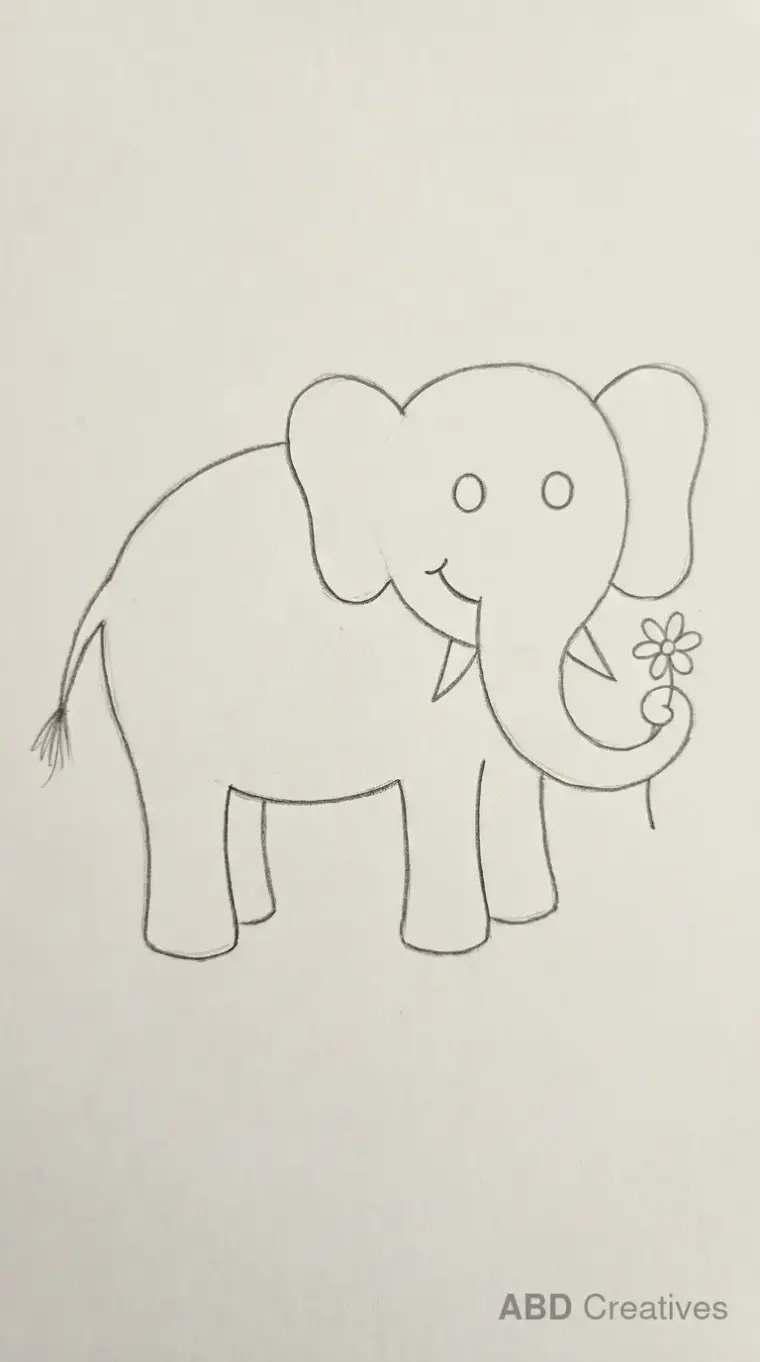
Elephant Drawing Ideas
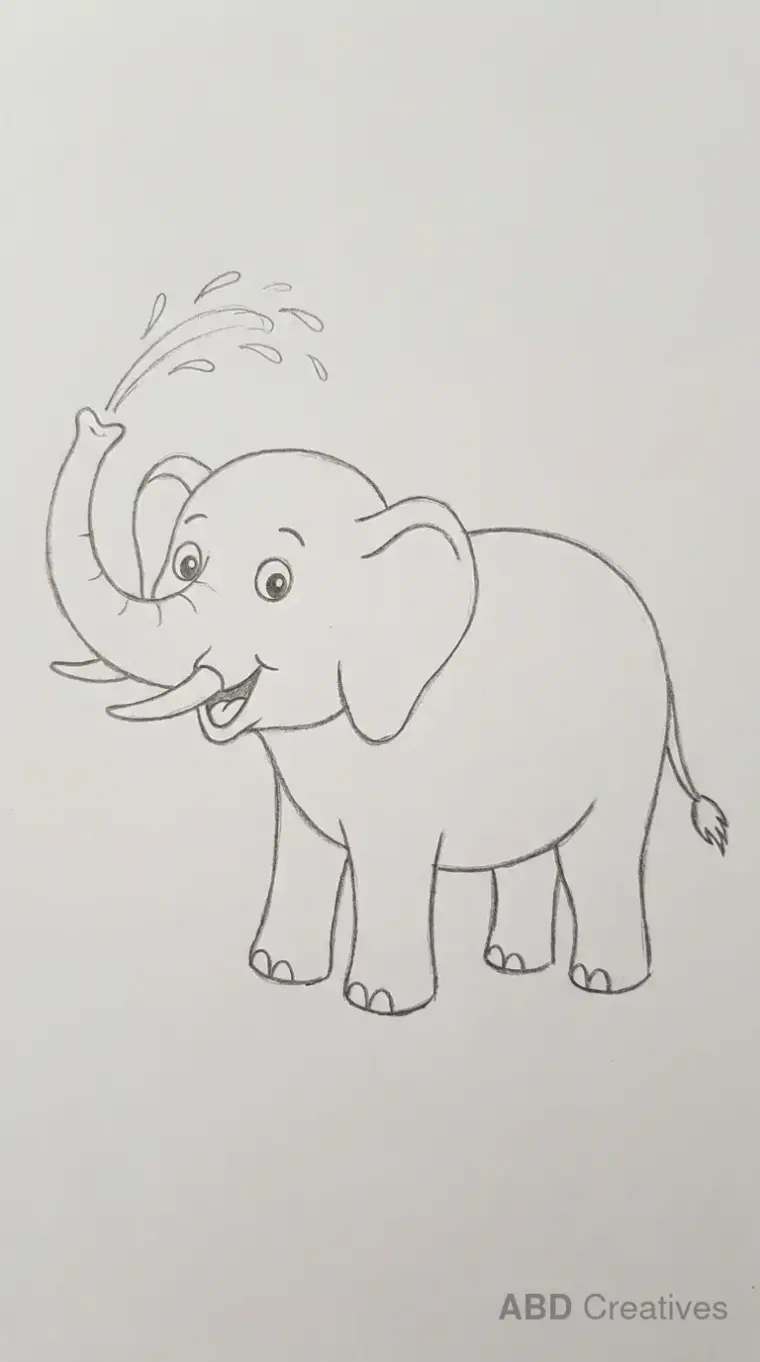
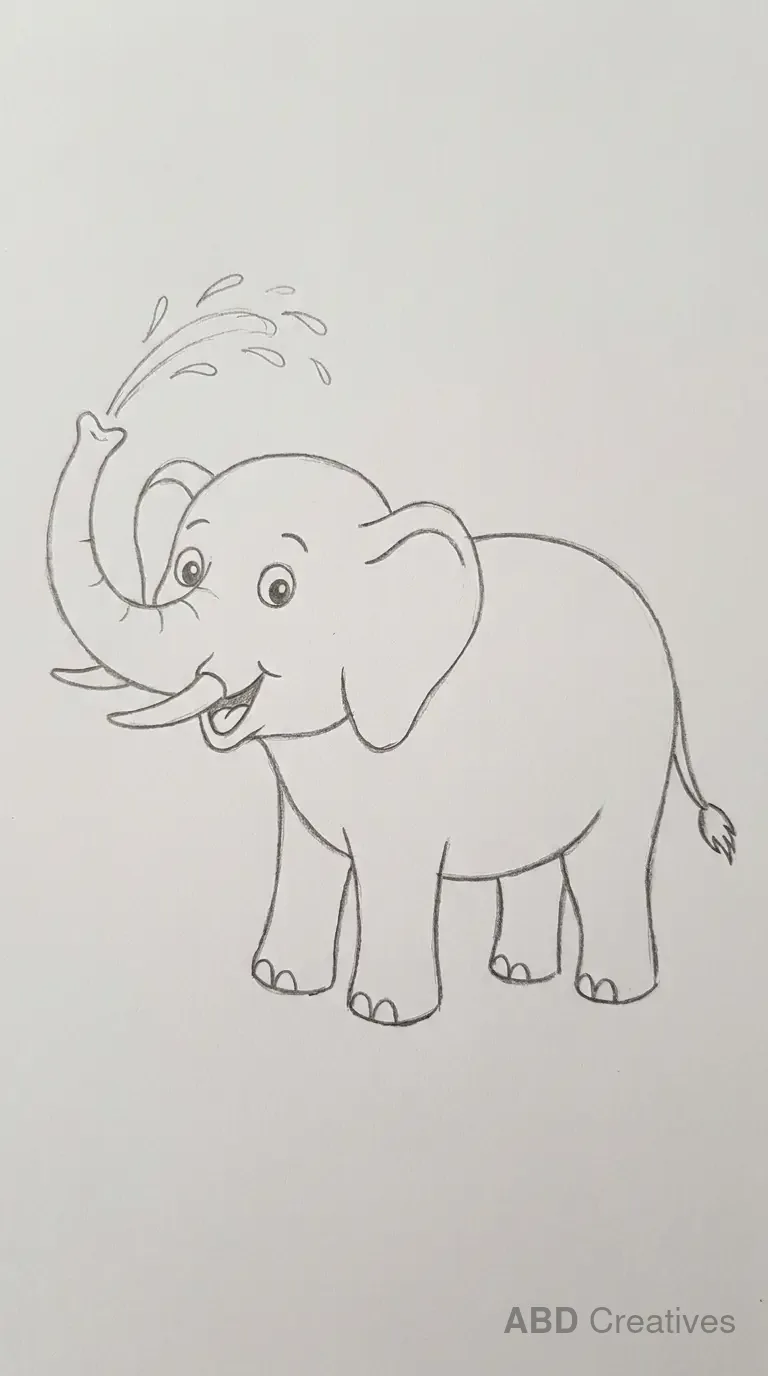
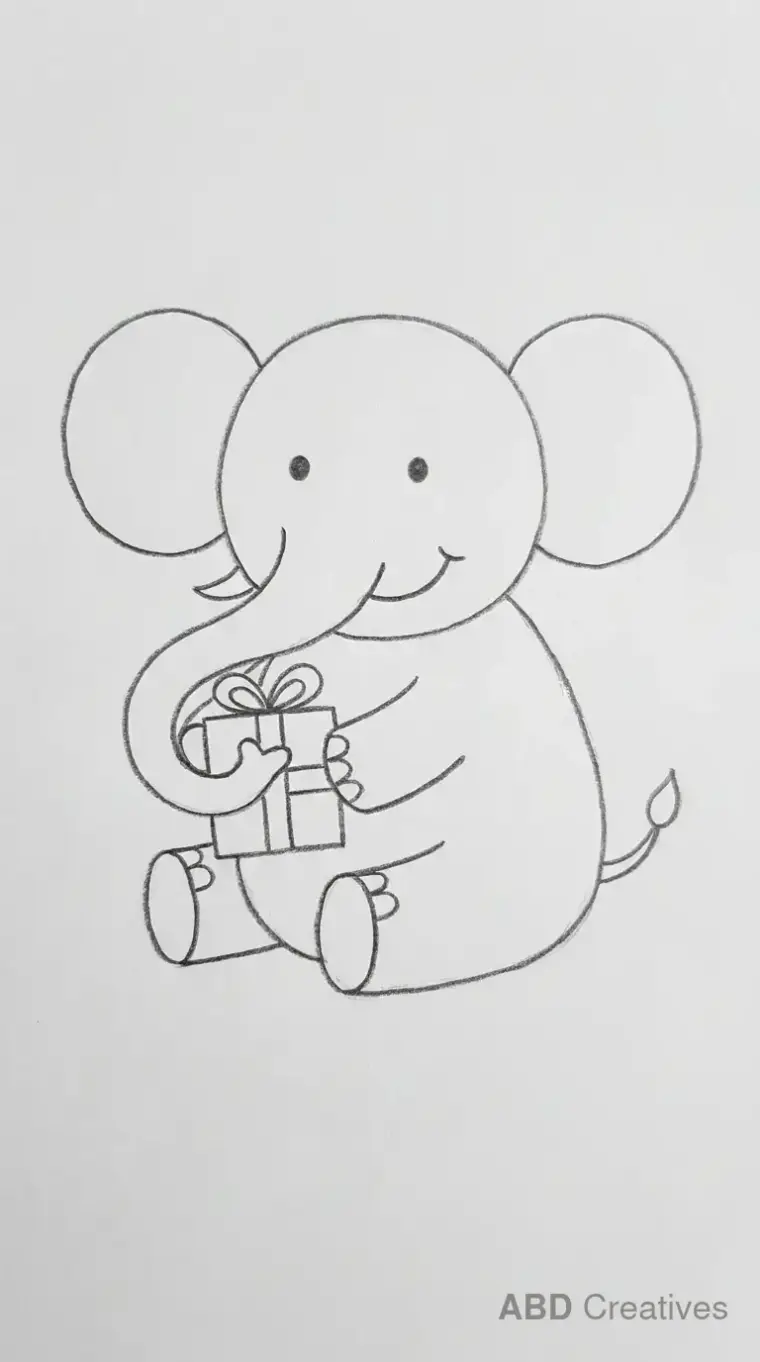
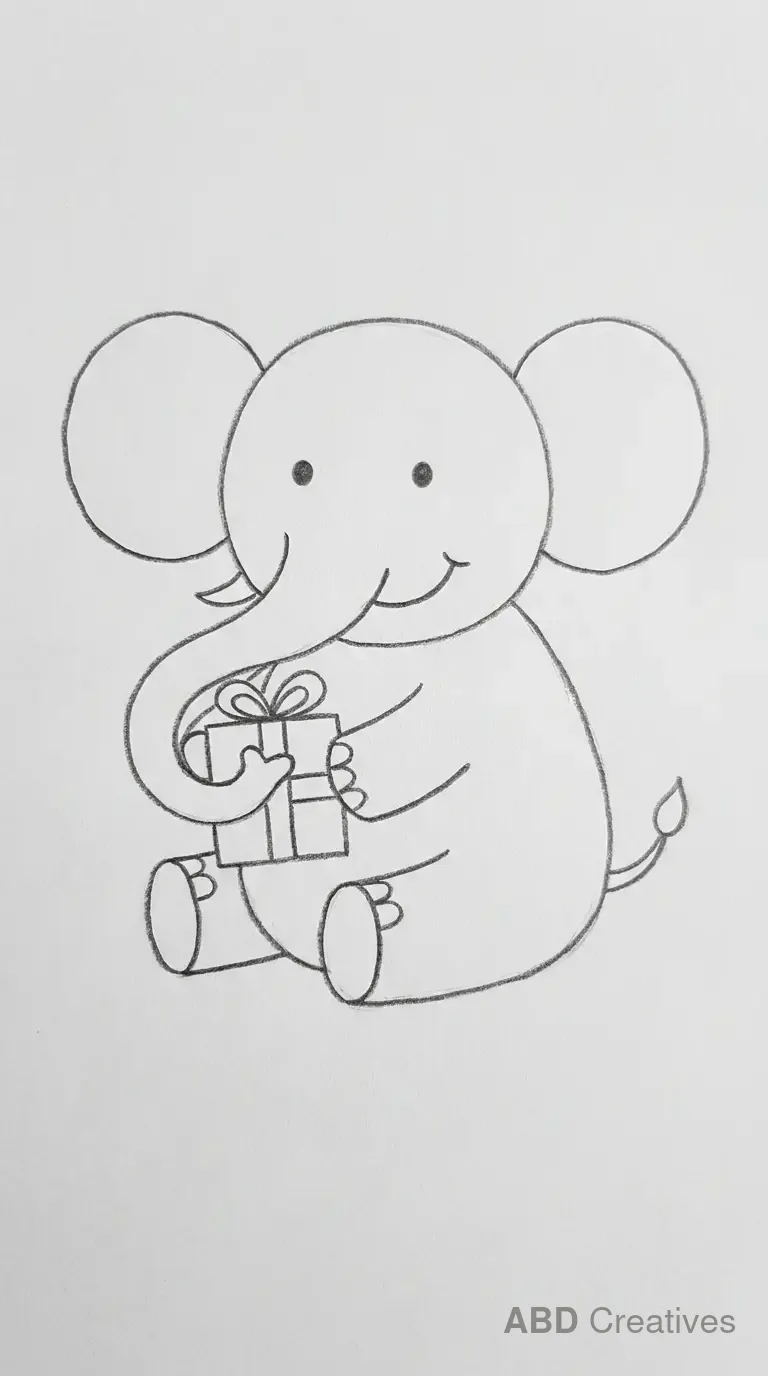
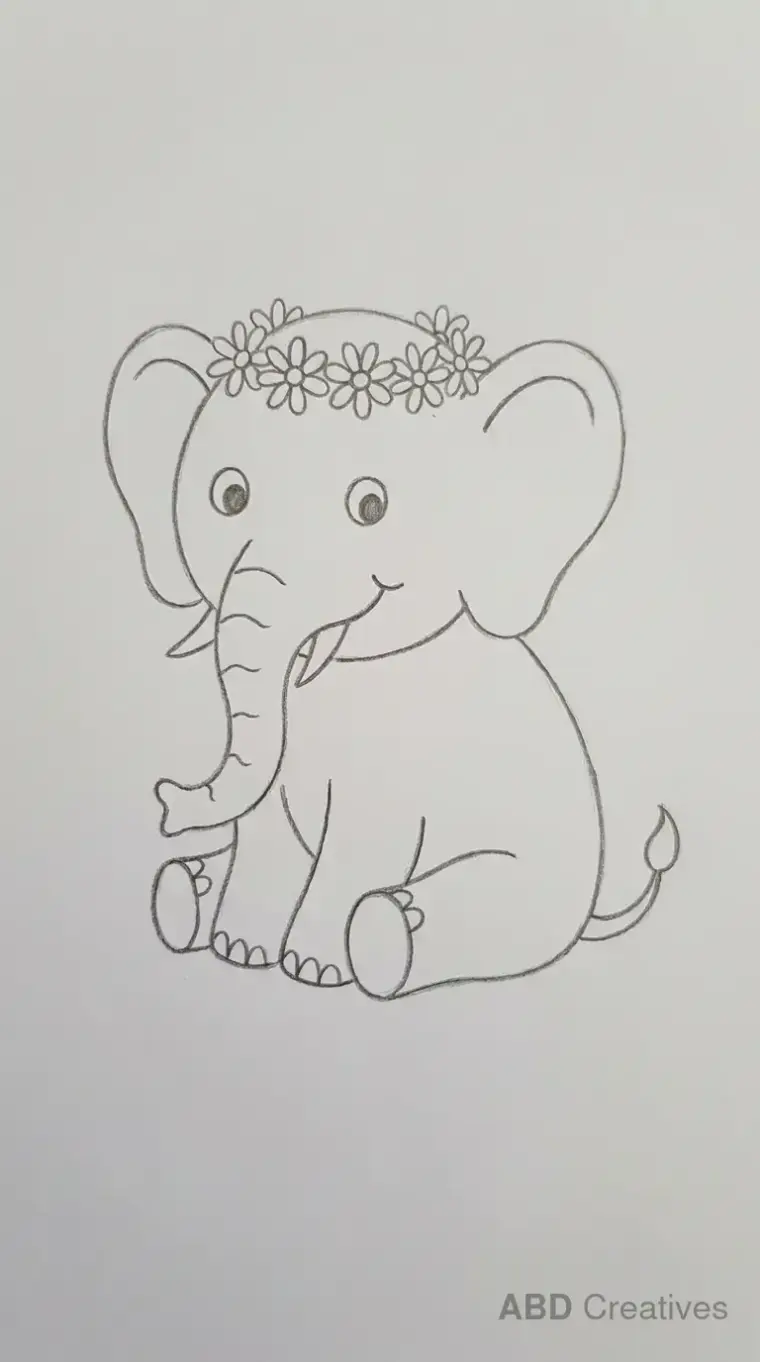
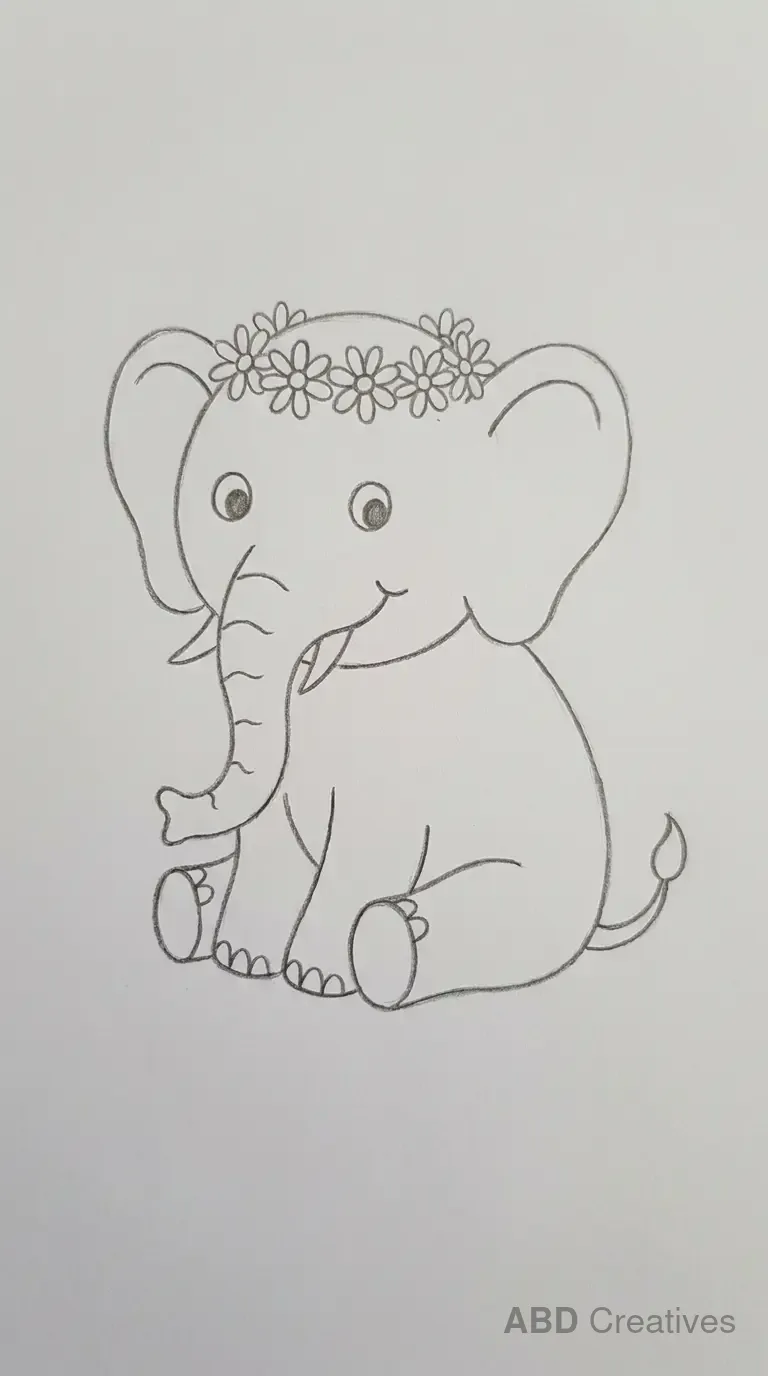
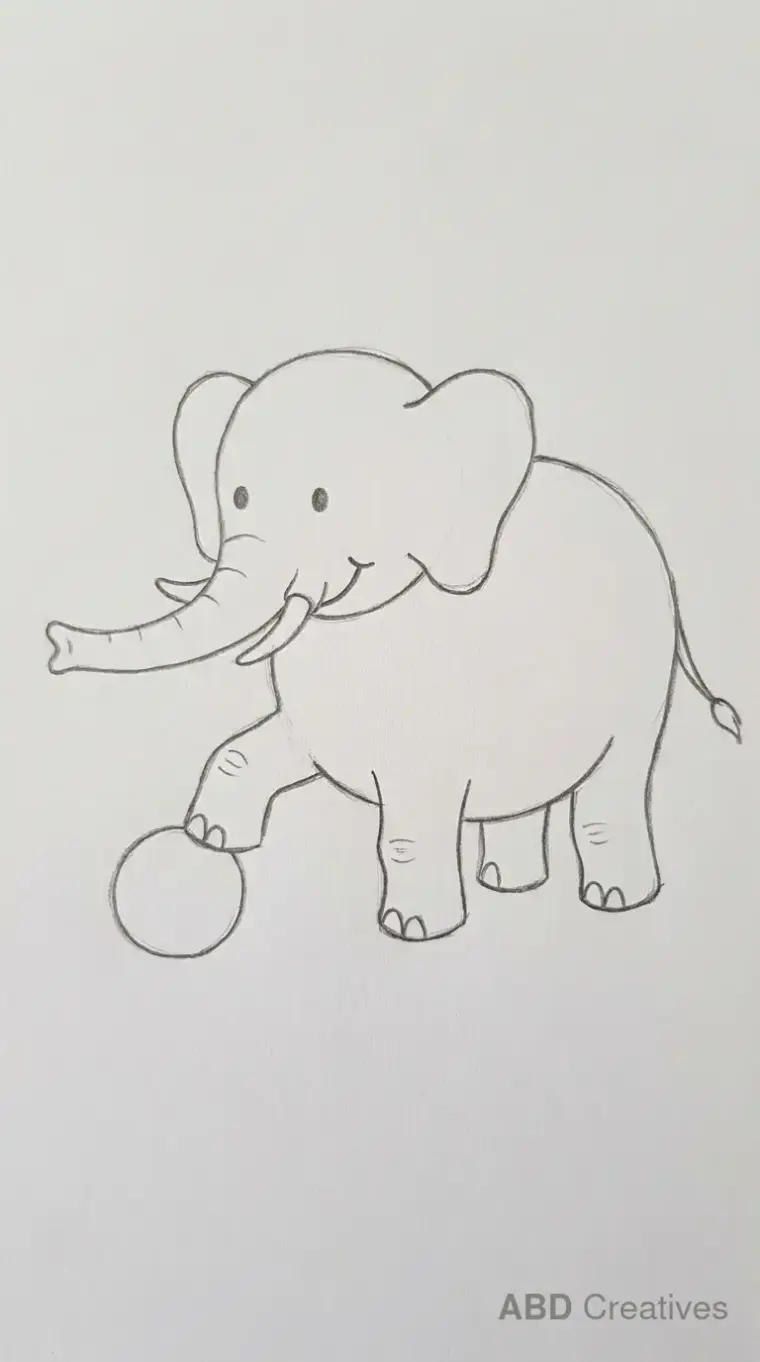
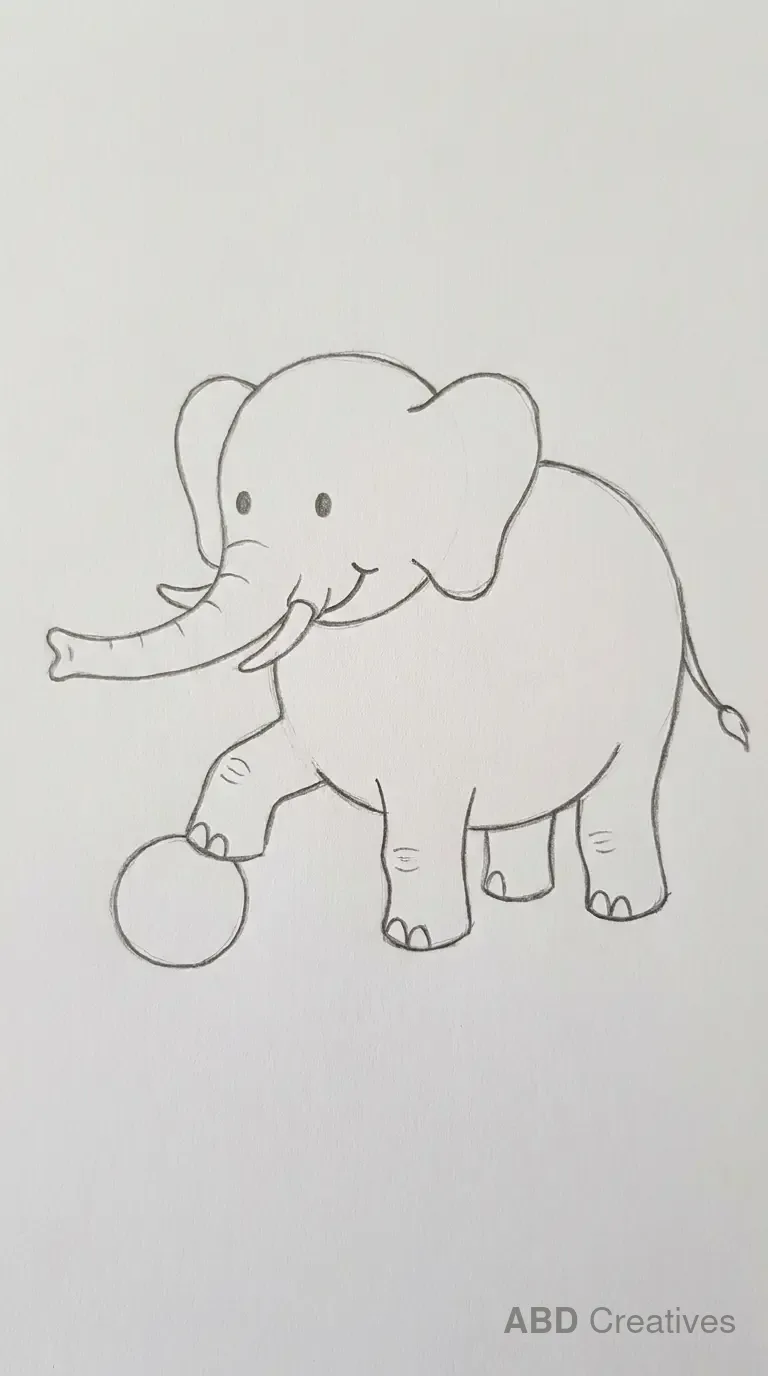
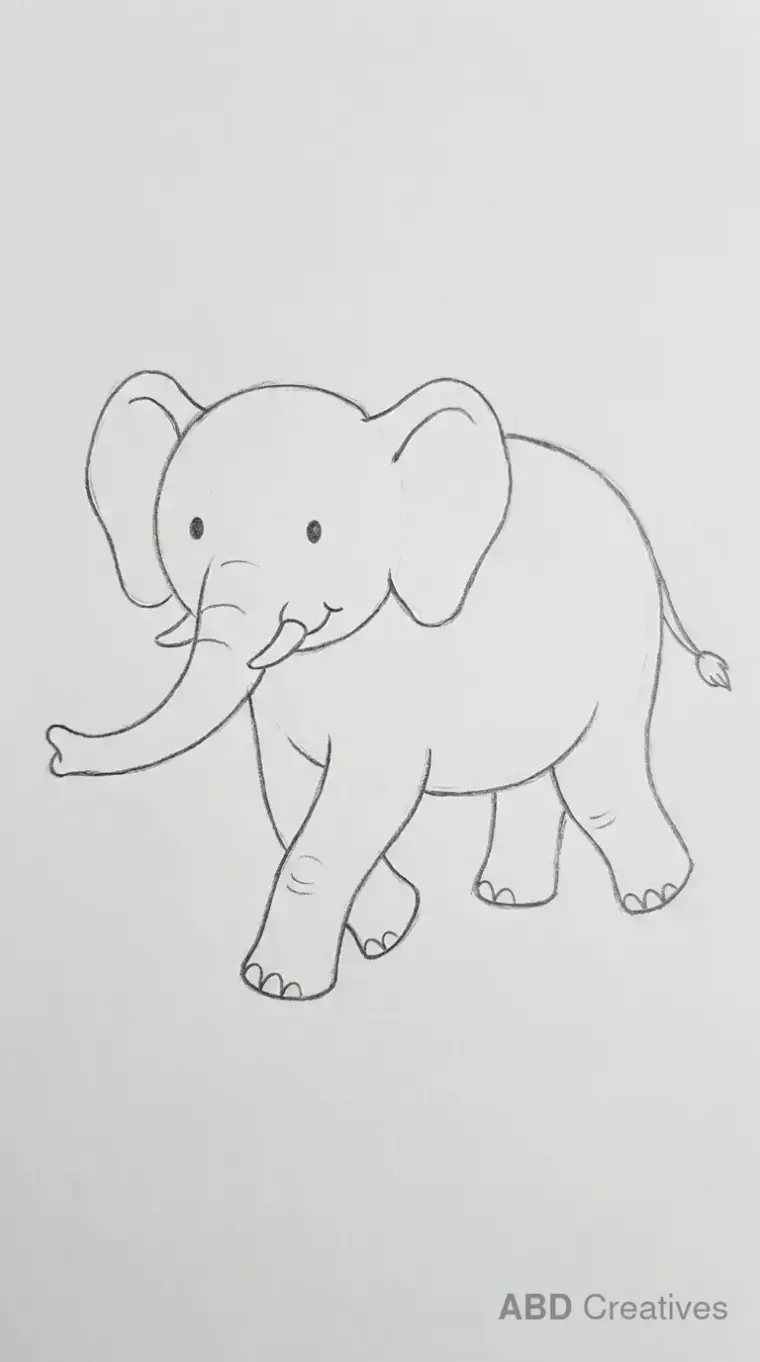
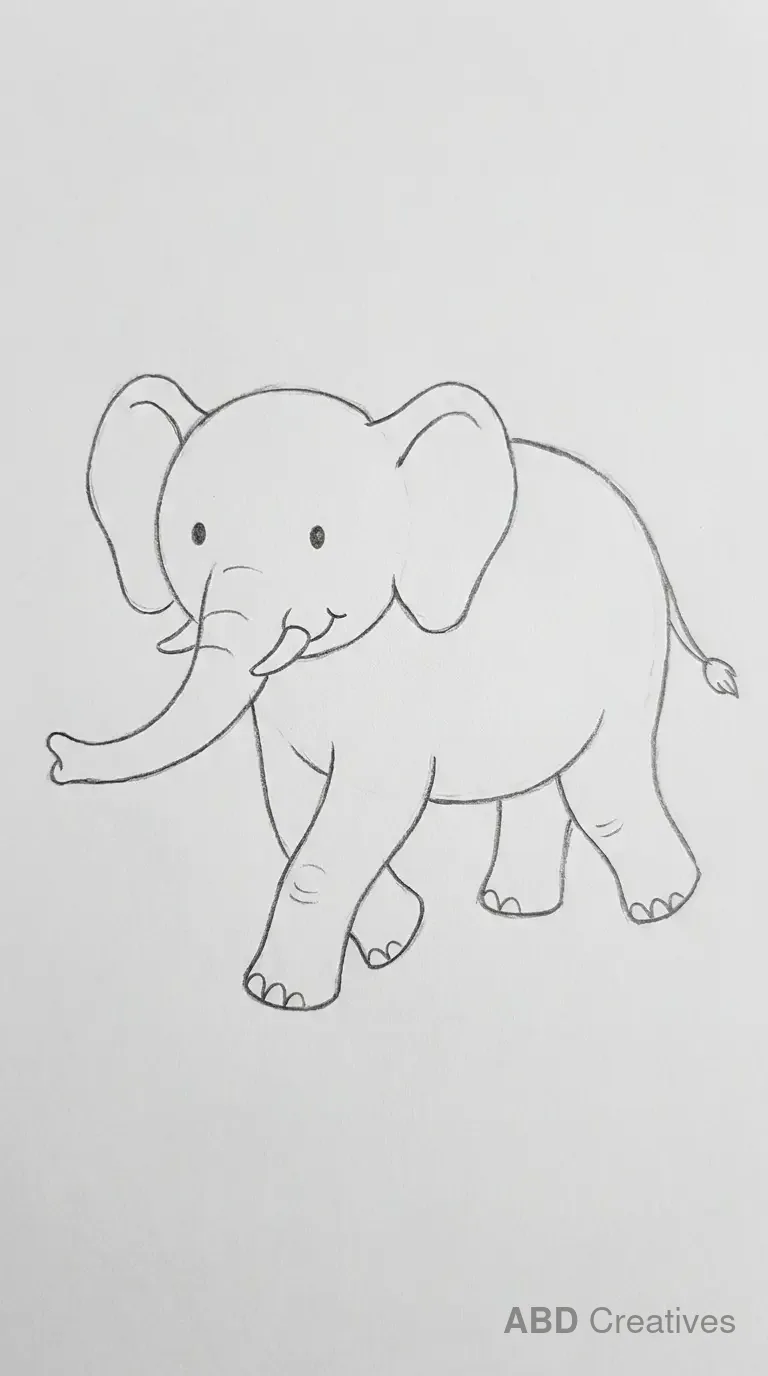
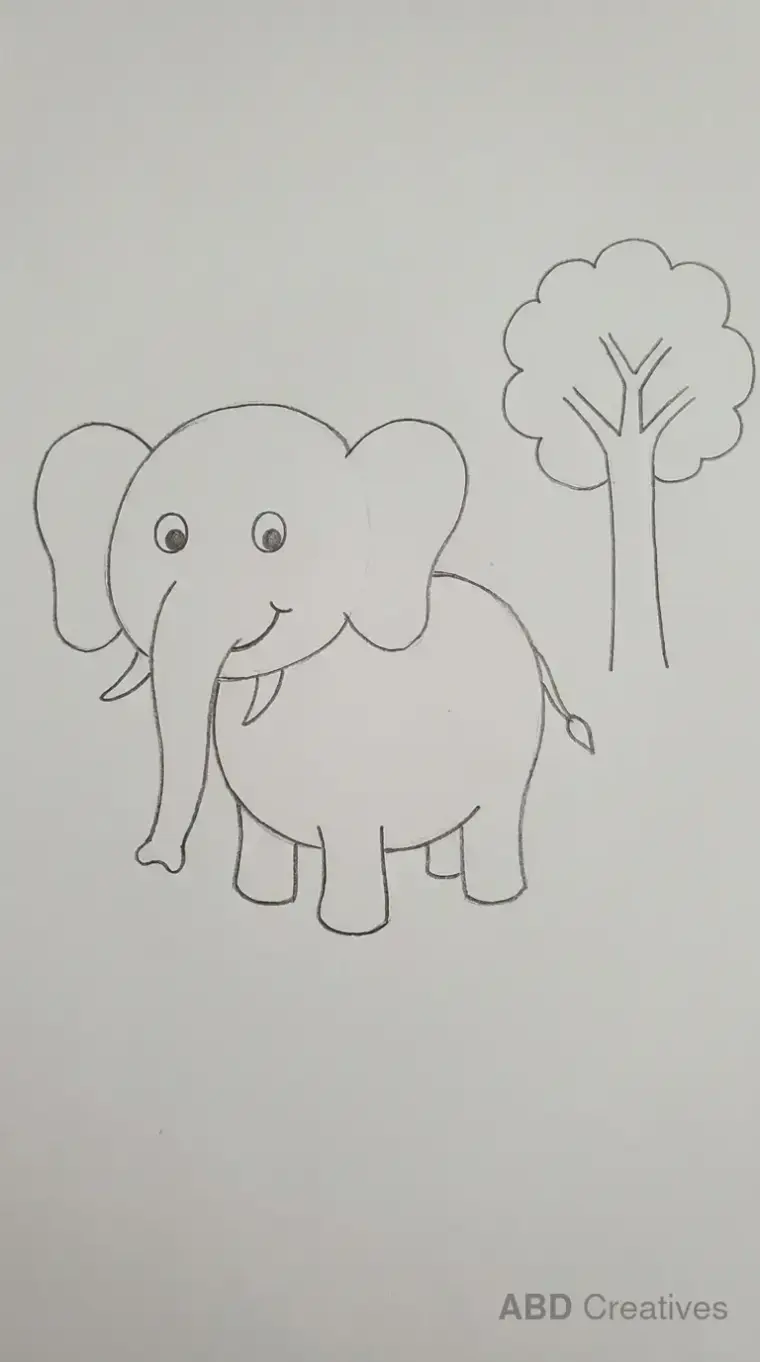
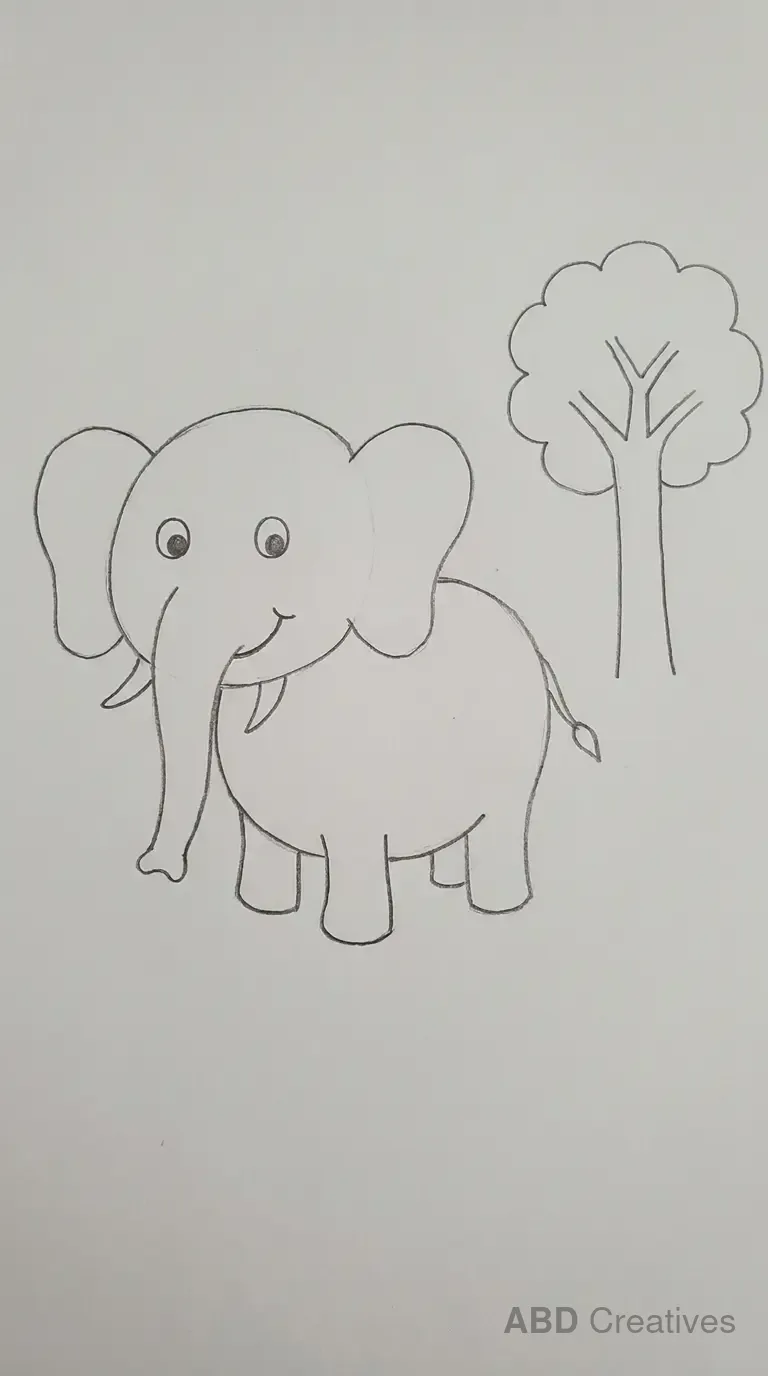
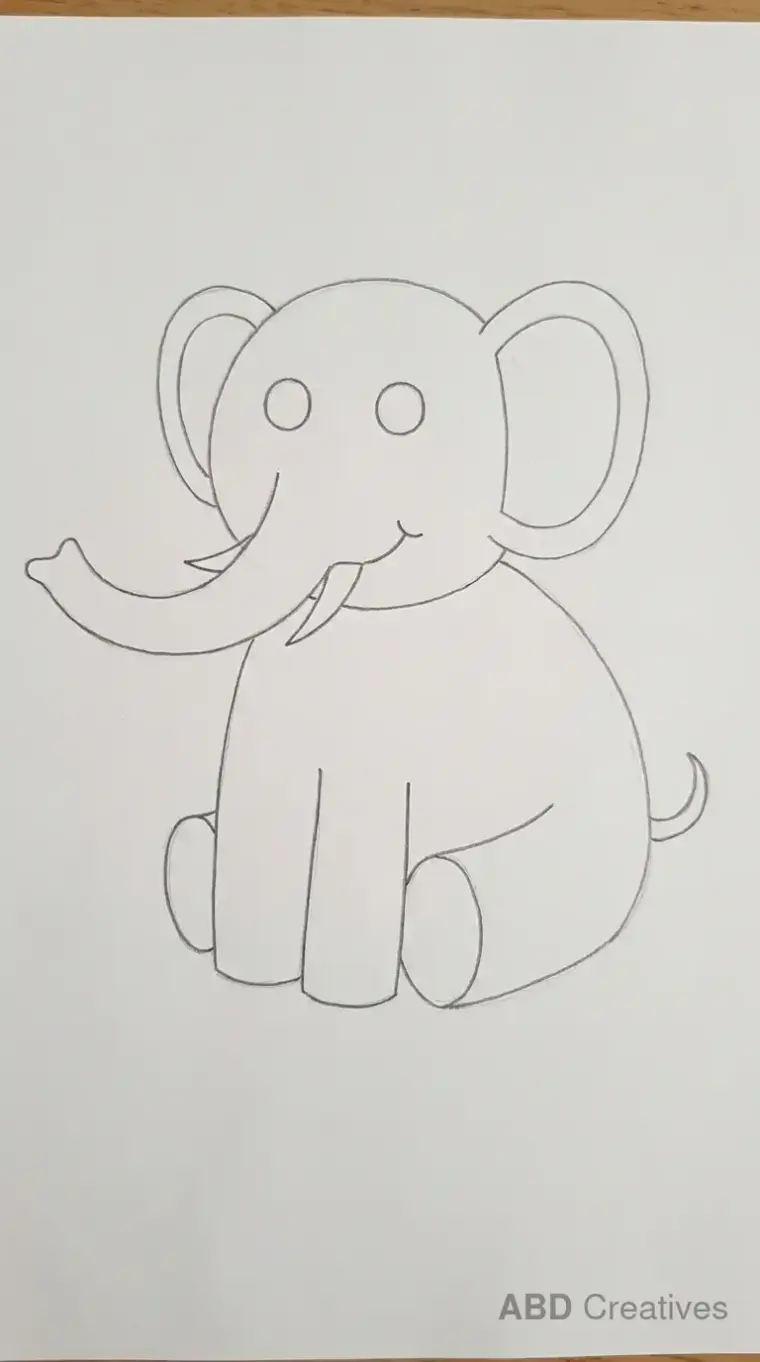
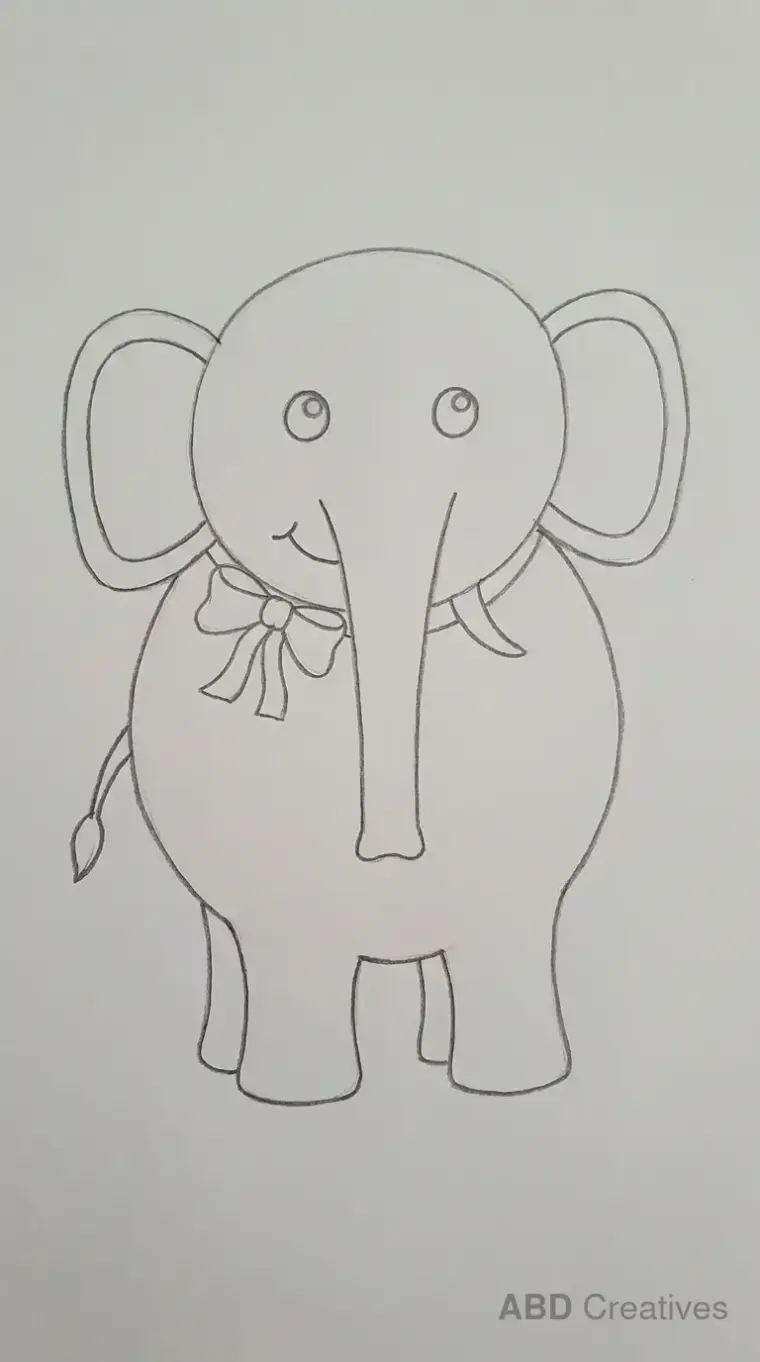
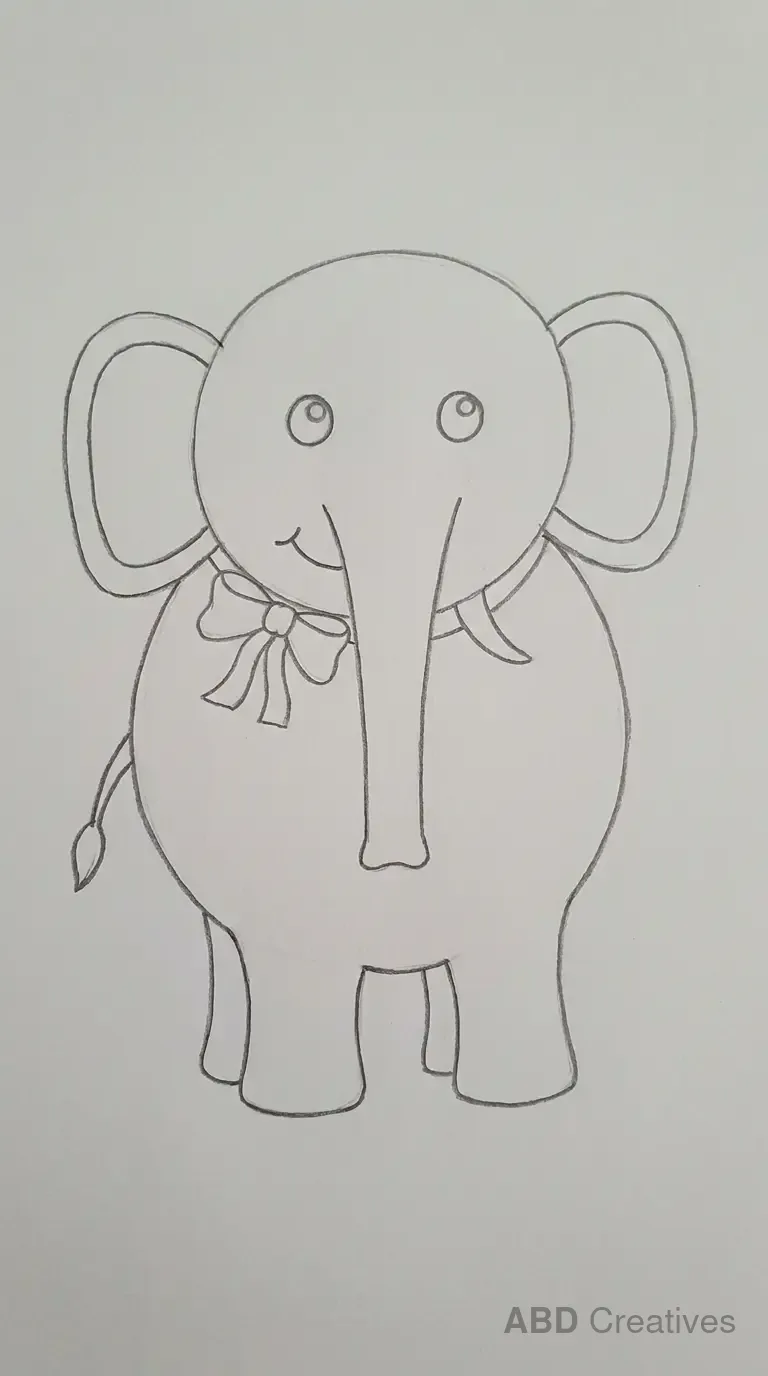
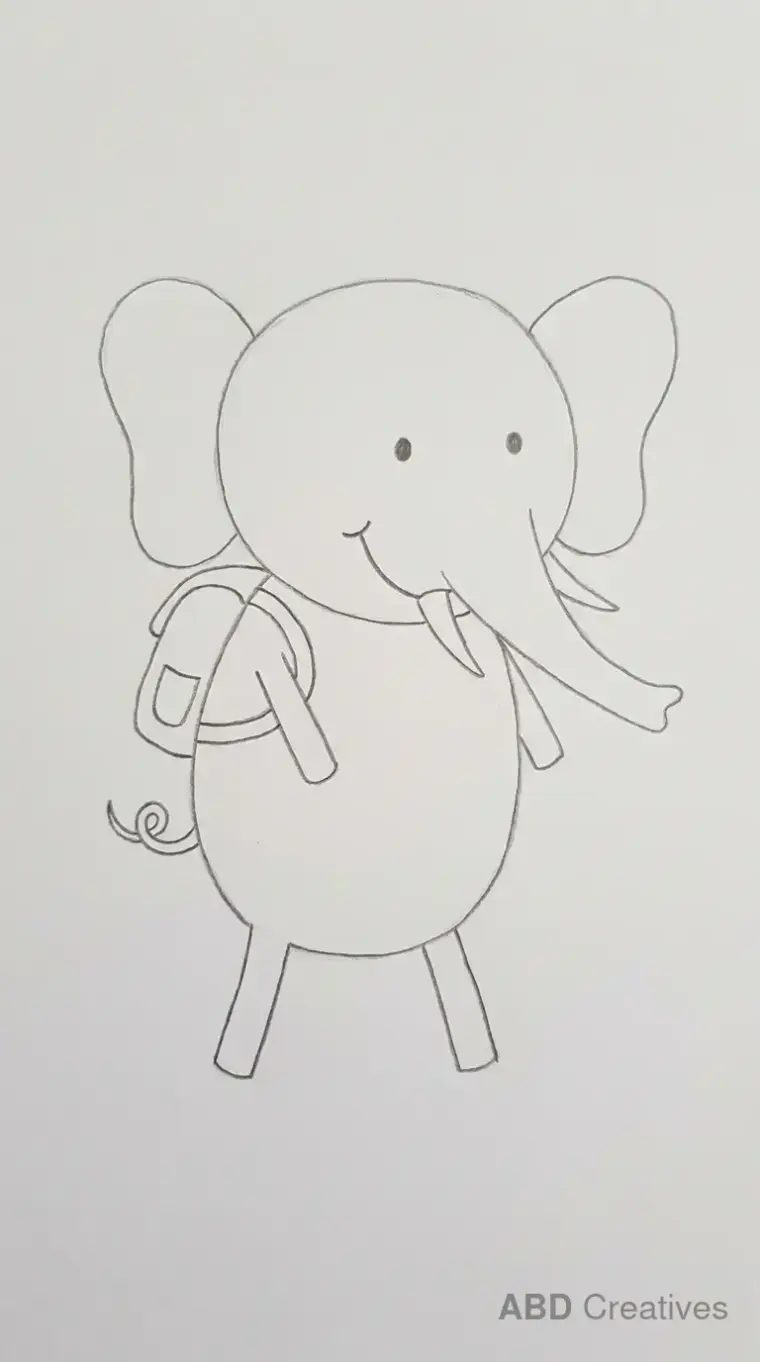
Twenty-one elephant drawings you can copy straight onto paper, from a plain standing elephant to one spraying water into the air. Every one is a clean pencil outline drawn by hand, with no shading and no colour. Pick one, keep it next to you, and copy it line by line.
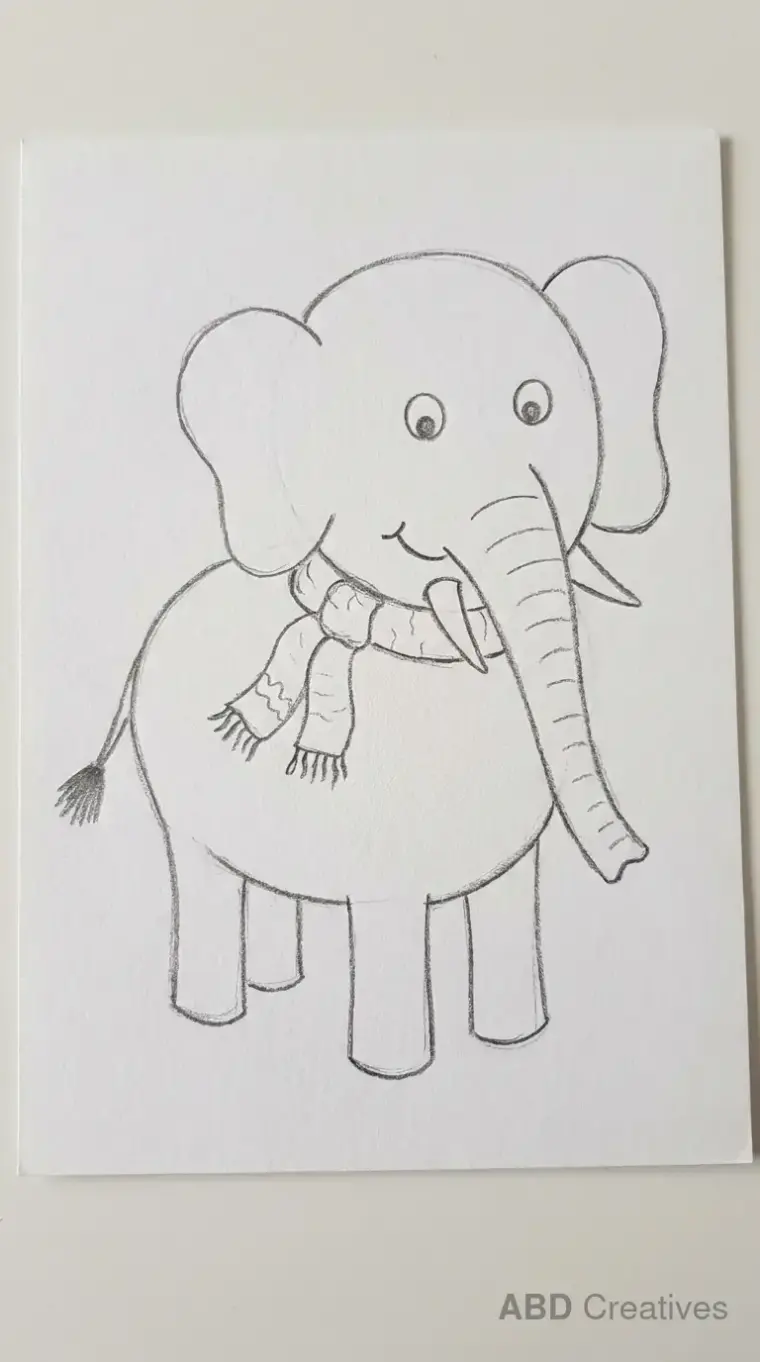
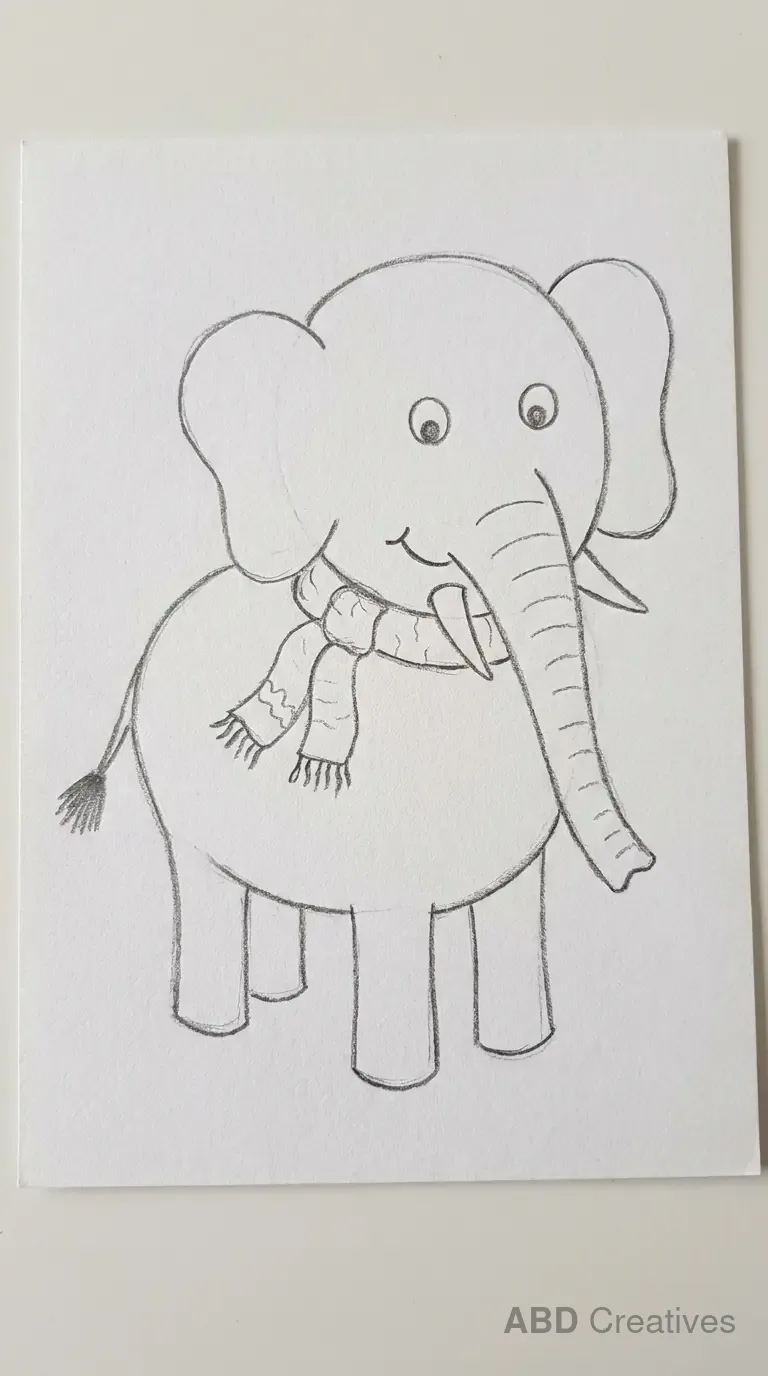
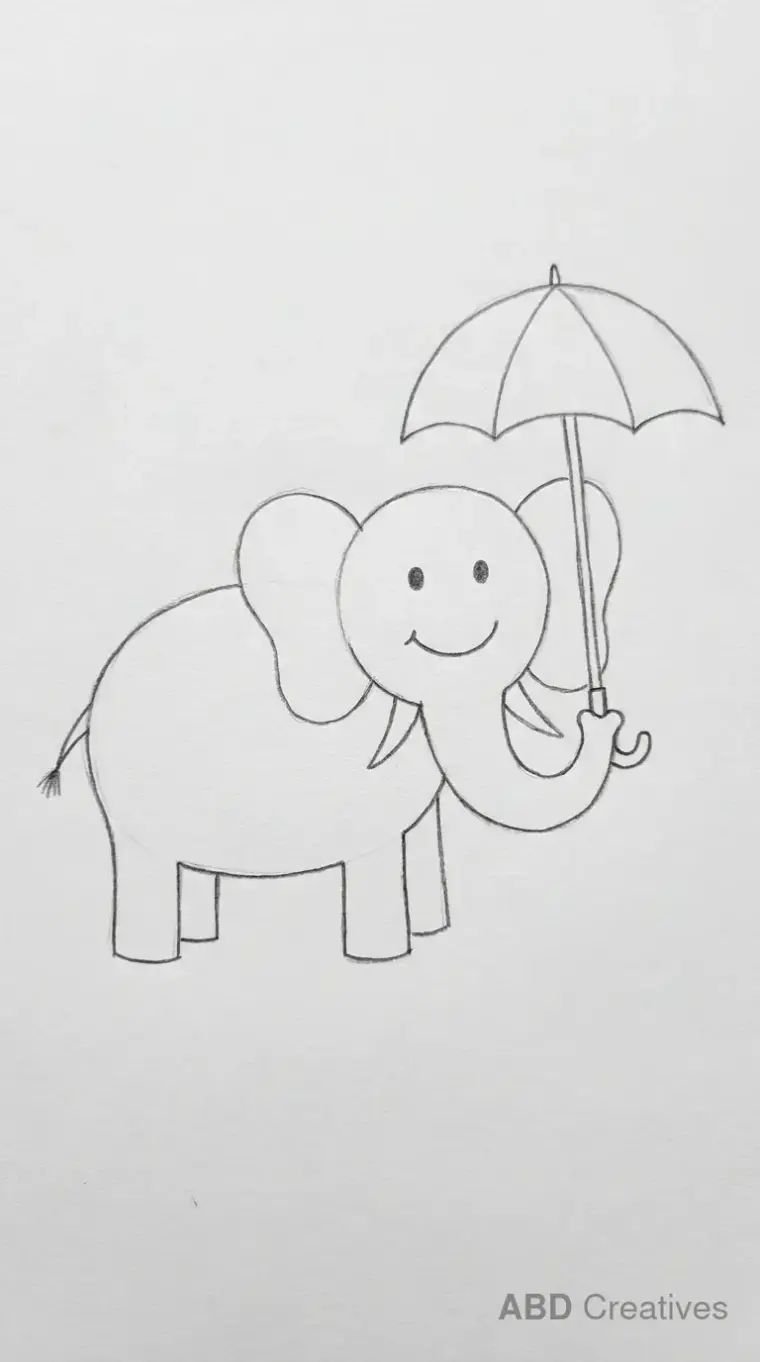
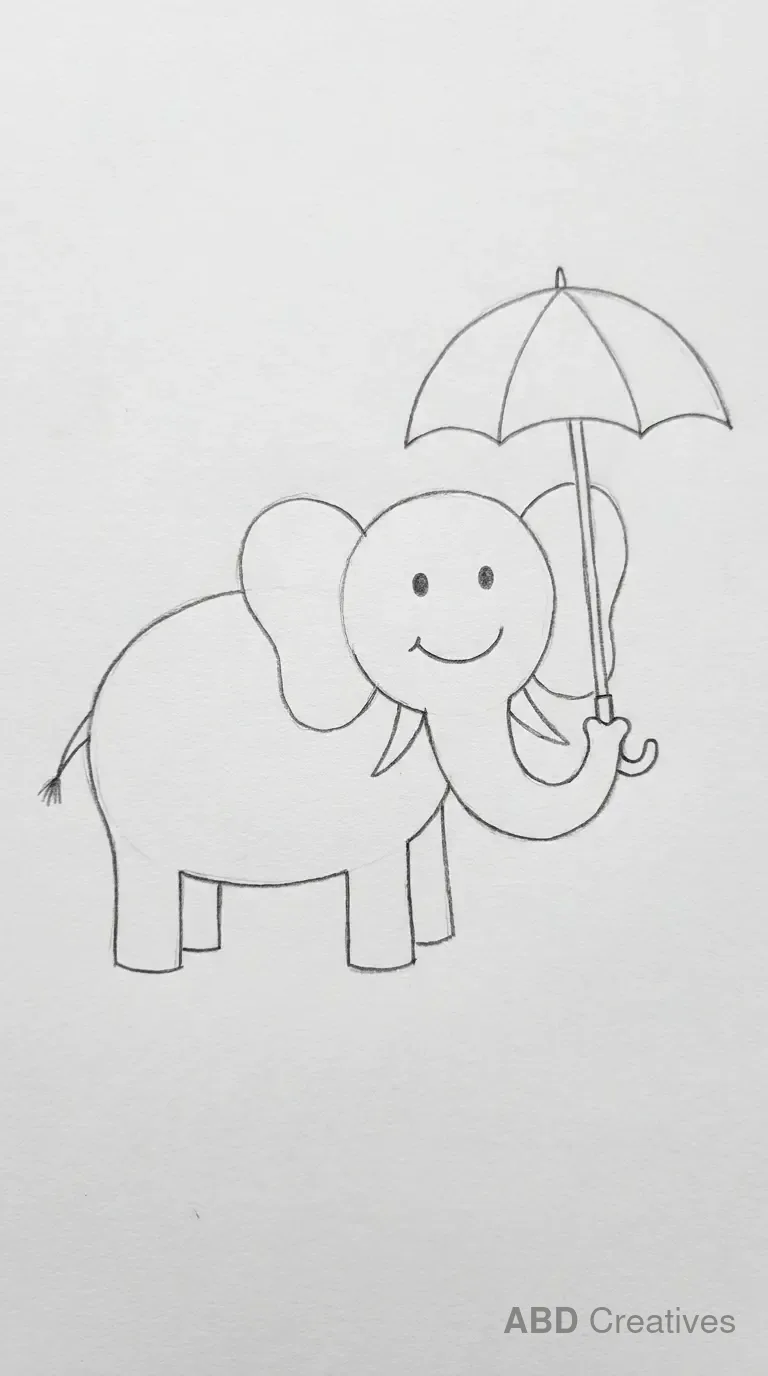
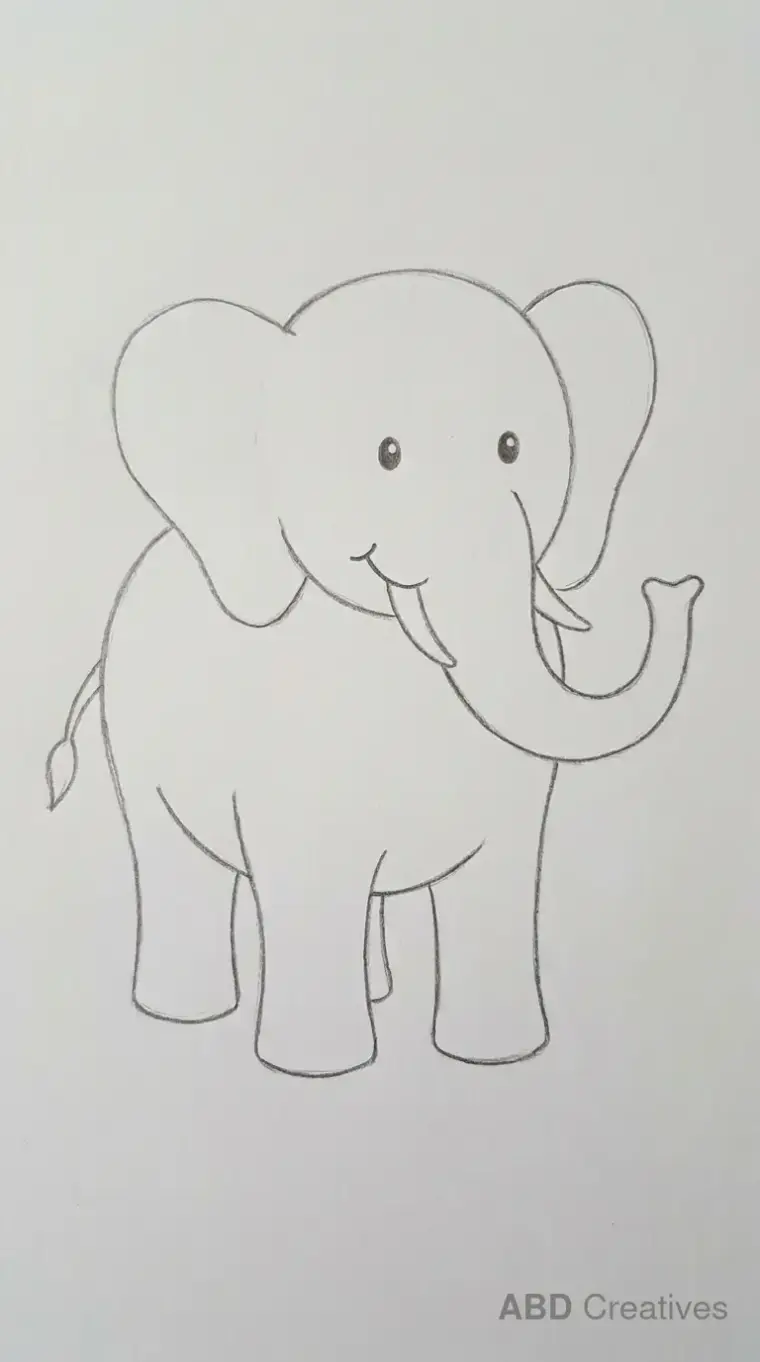
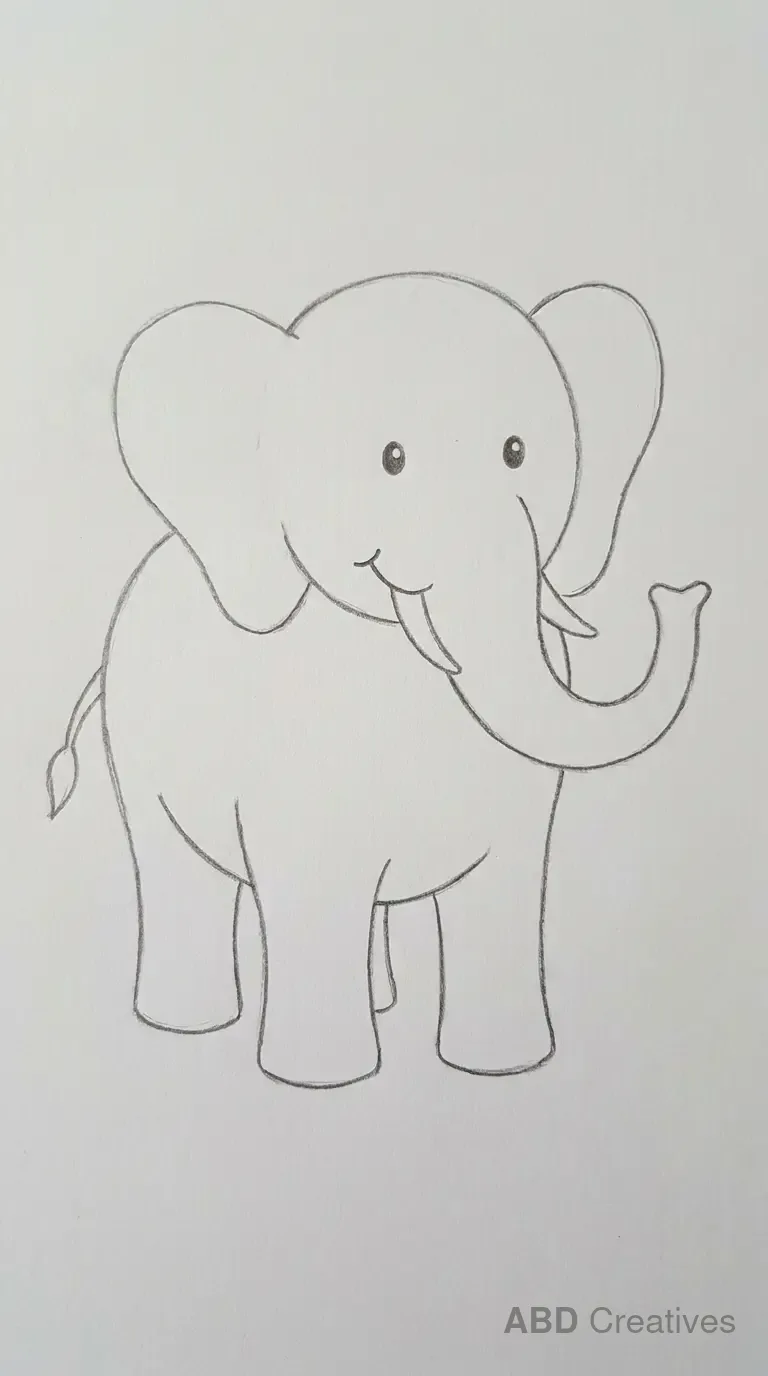
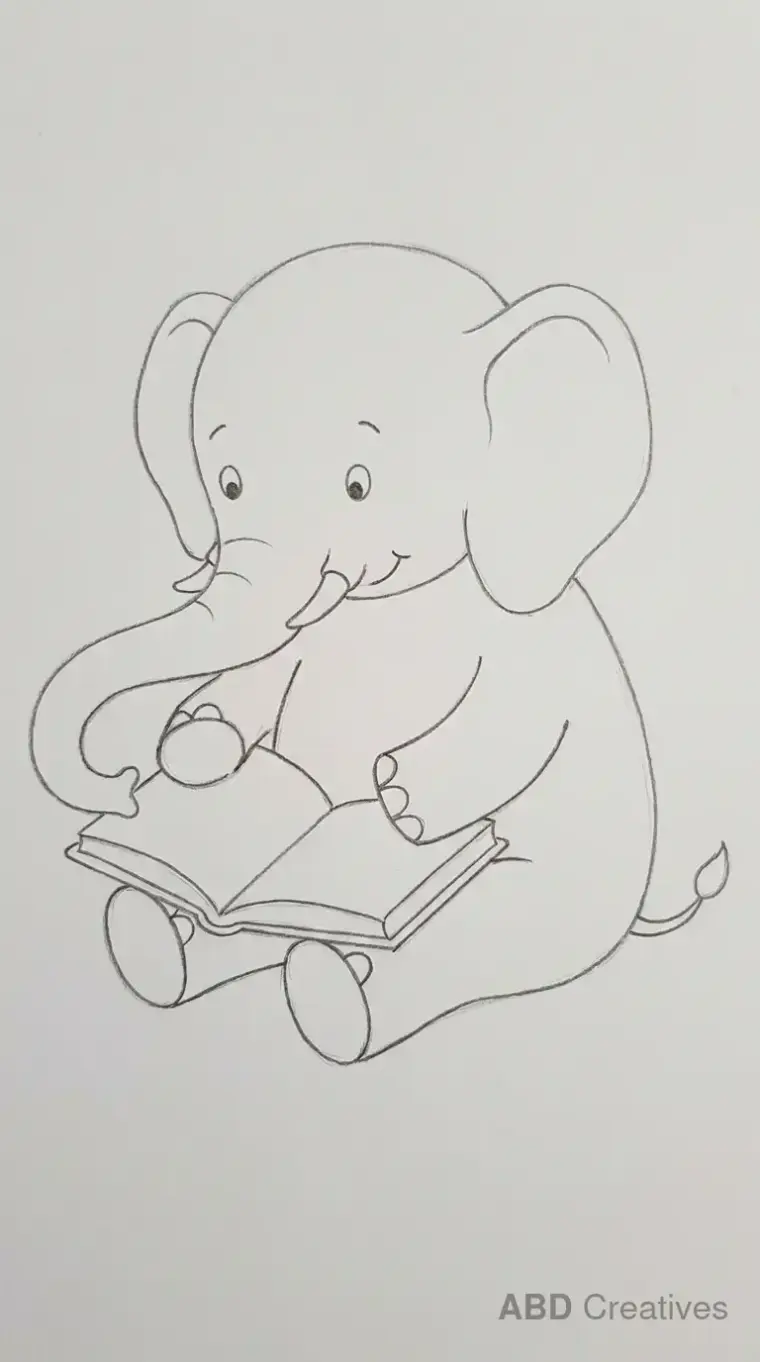
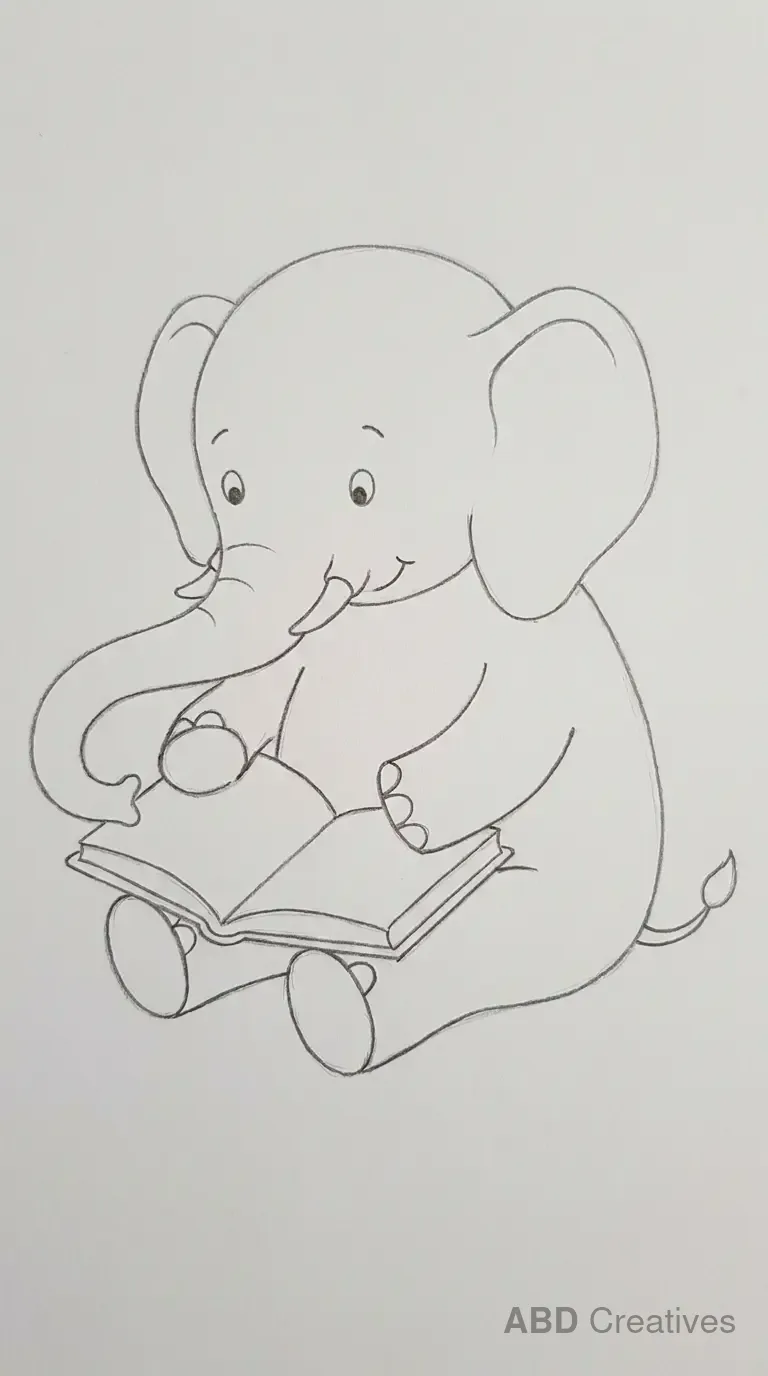
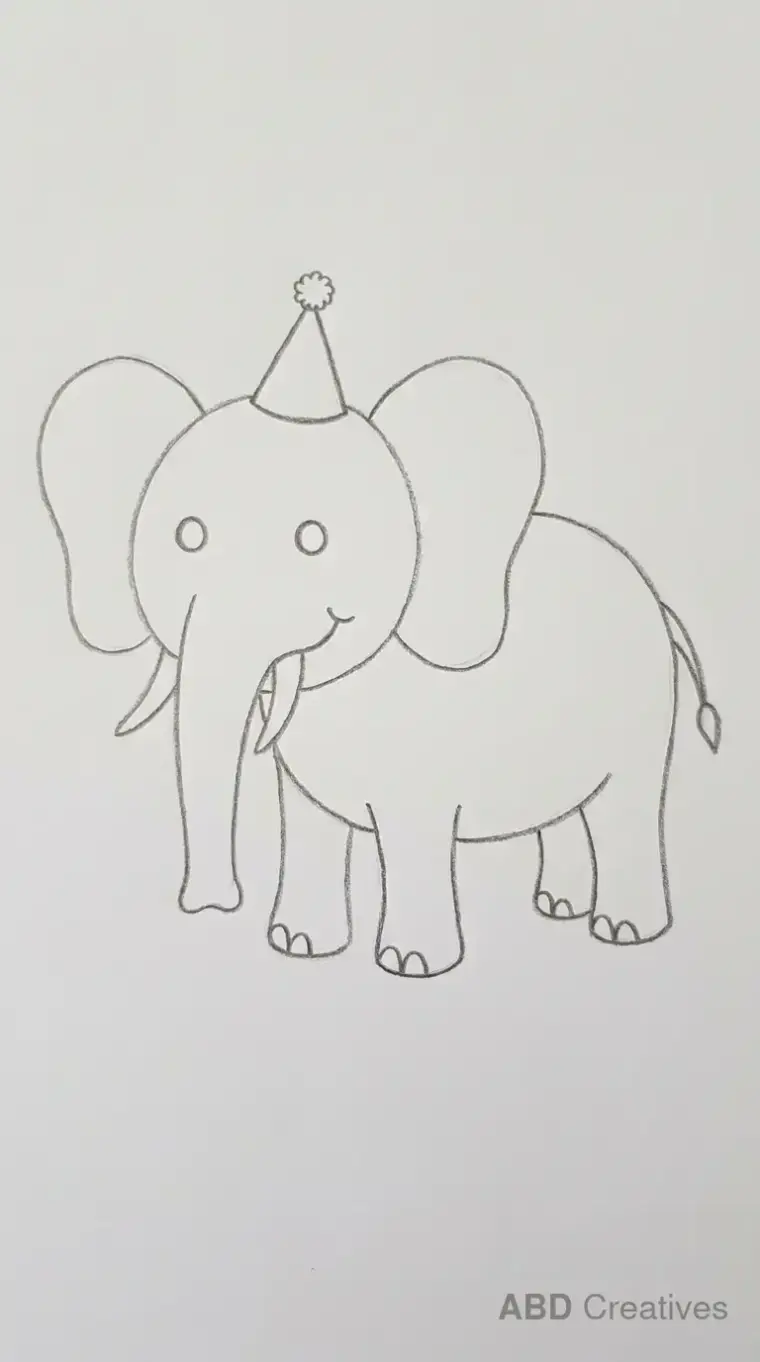
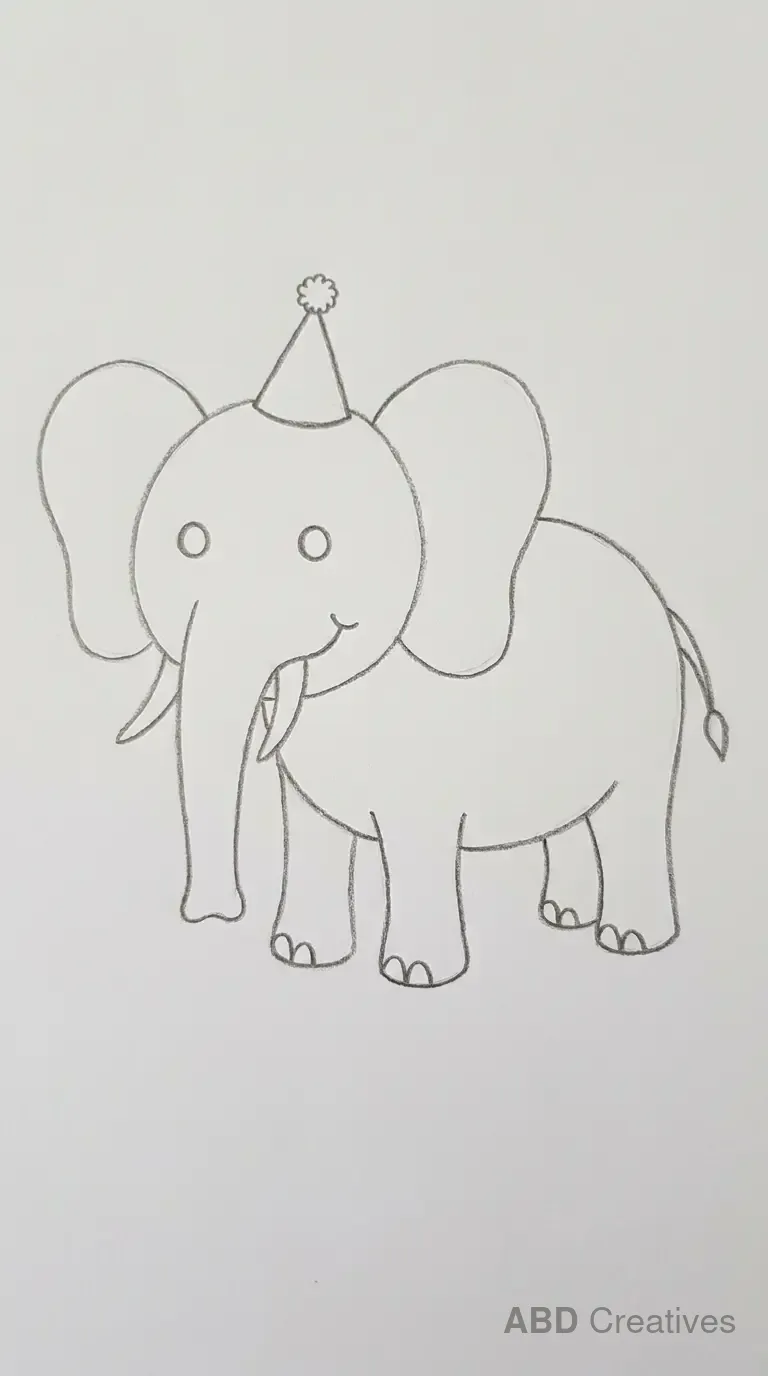
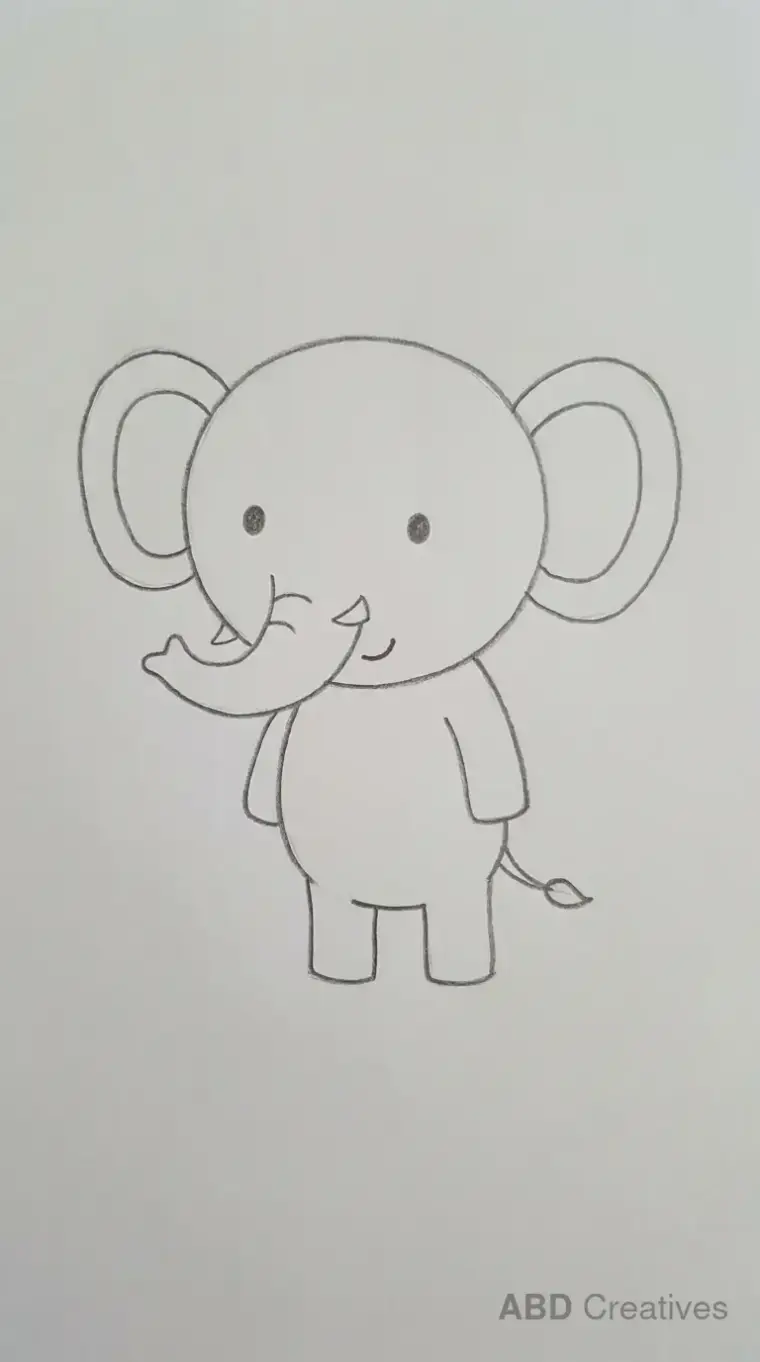
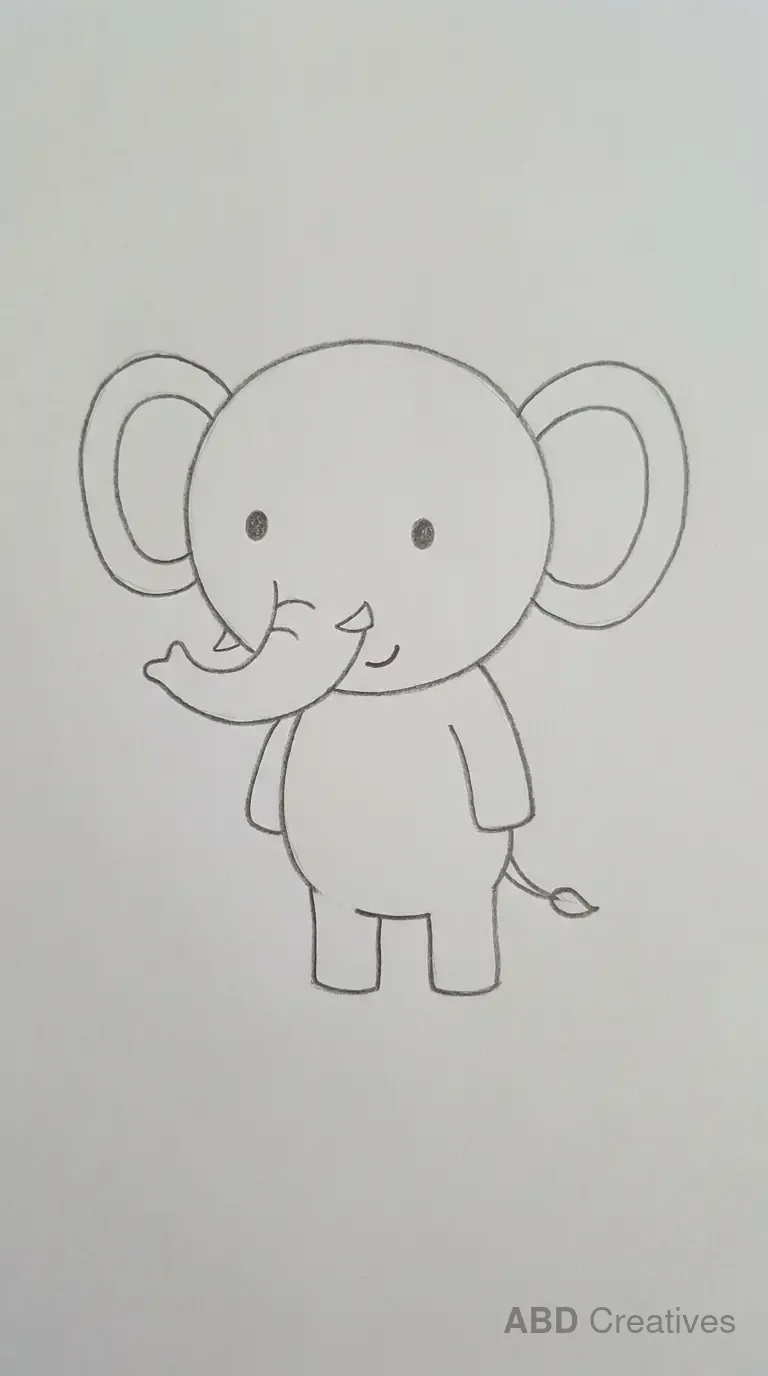
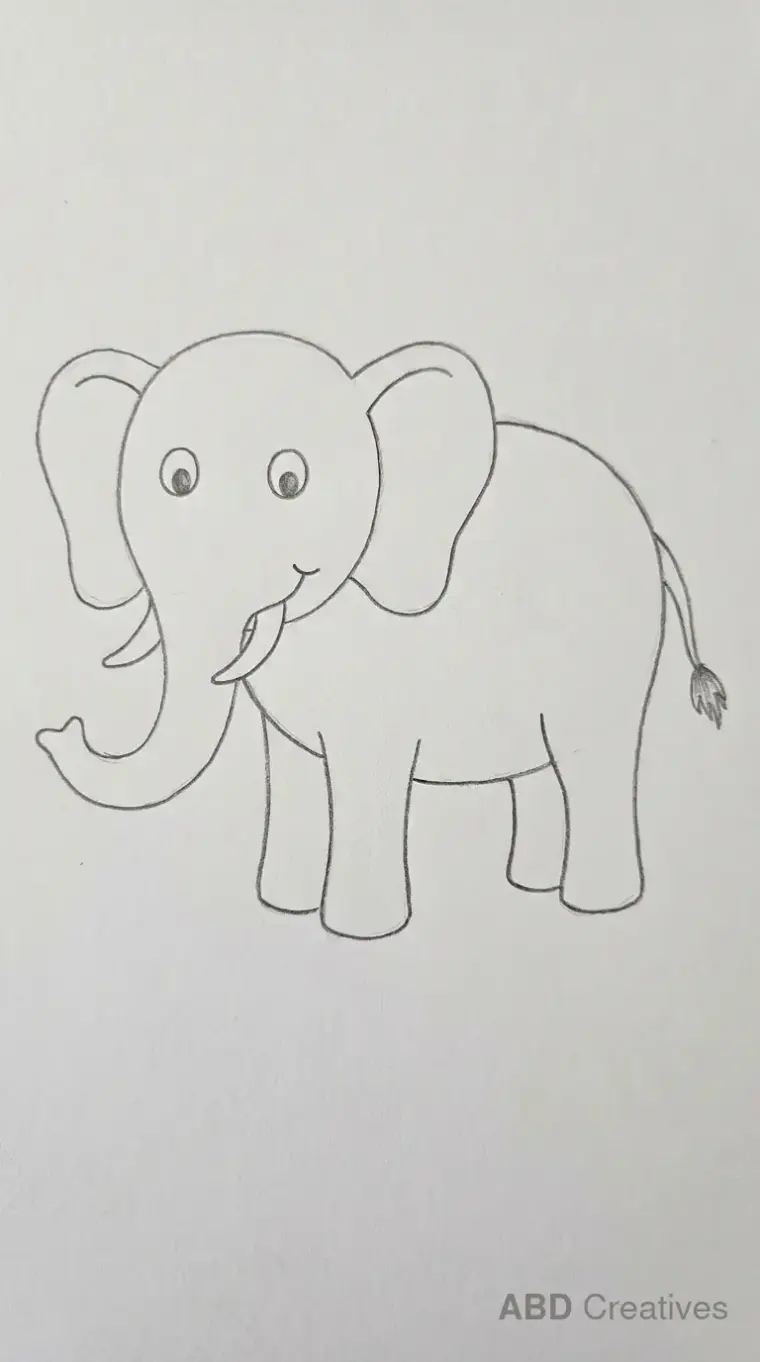
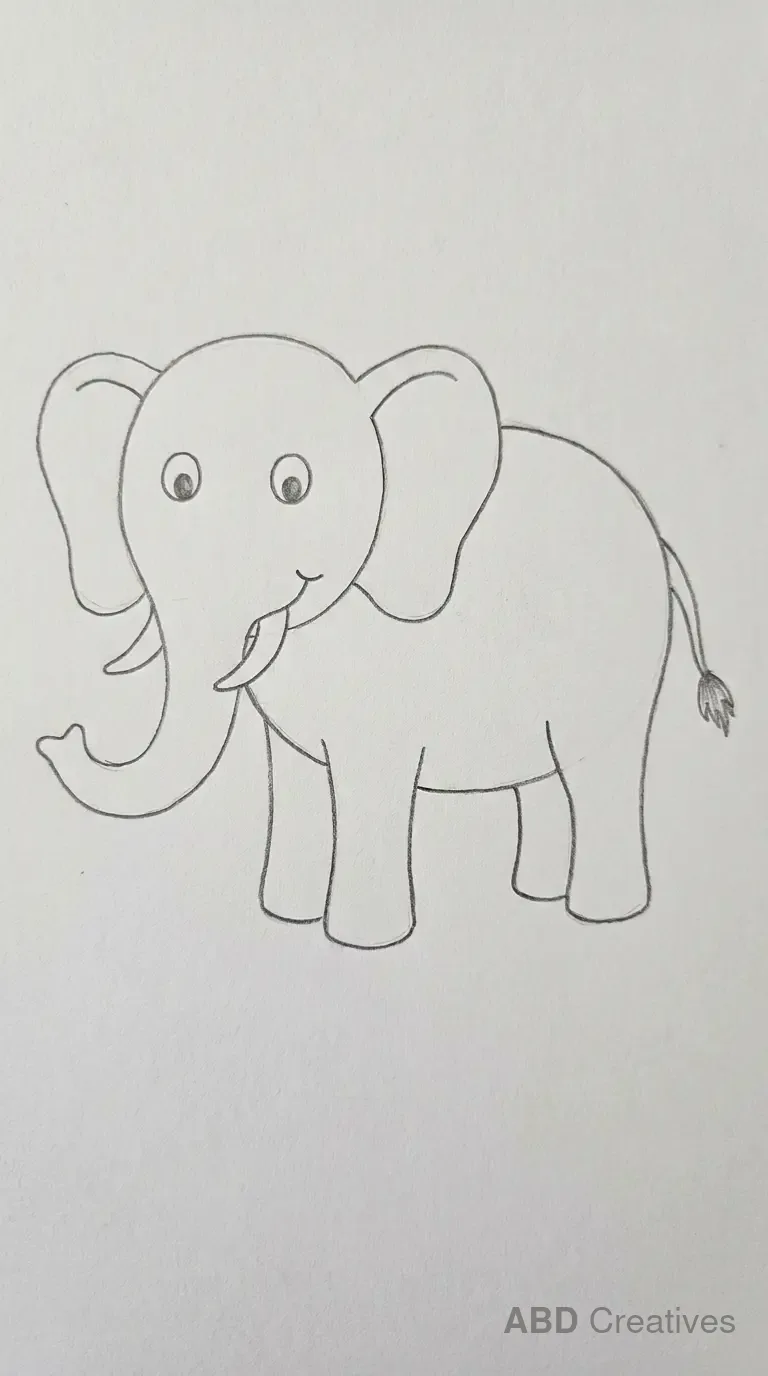
How to draw an elephant step by step
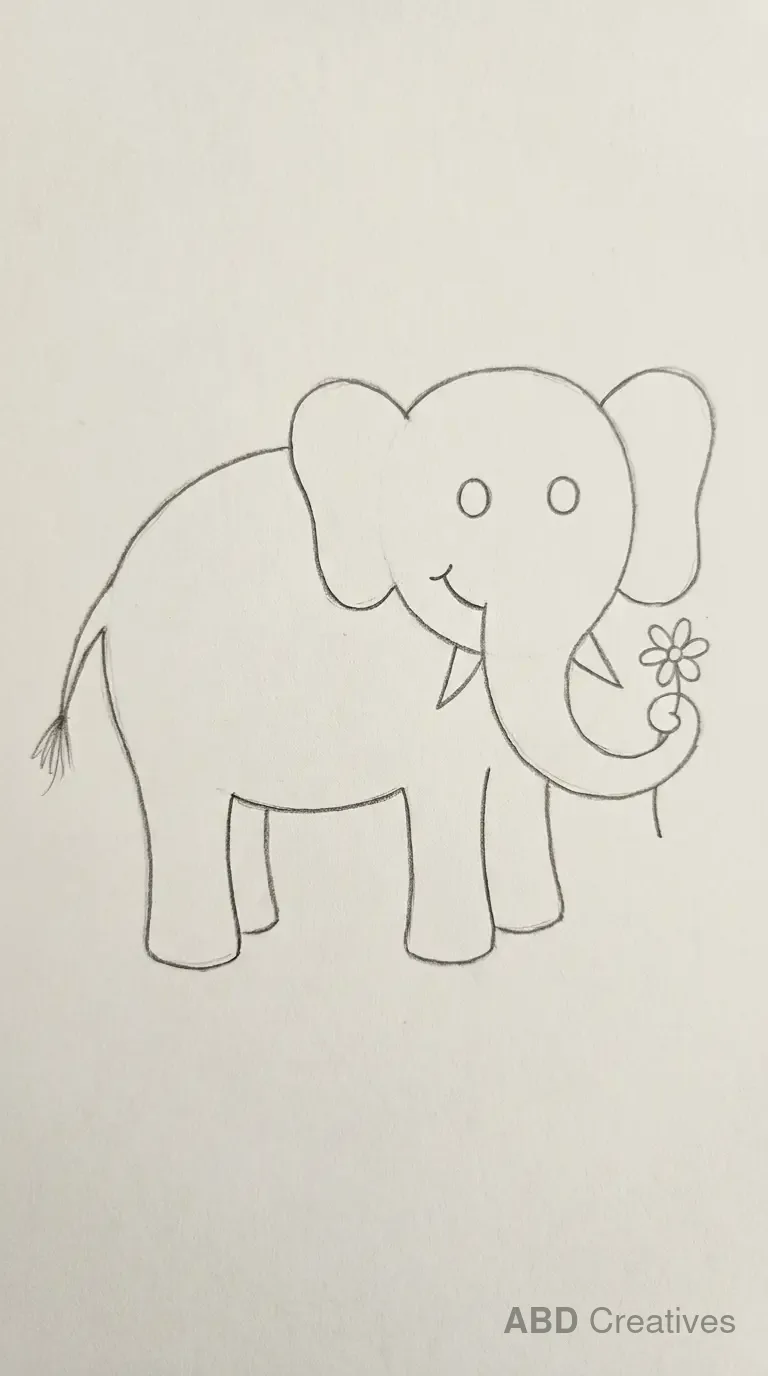
An elephant looks difficult because of the trunk, but the body underneath is simple: one big rounded shape with thick legs. Get the trunk right and the rest falls into place.
- Draw a large oval for the head, slightly flattened on top.
- Add two big fan-shaped ears on either side. Elephant ears are large and rounded at the bottom corners, not pointed.
- Draw the trunk hanging from the front of the head. Keep it long and slightly curved, wider where it joins the face and tapering to a rounded tip.
- Add a large rounded body behind the head, wider at the bottom than the top, like a big loaf shape.
- Add four thick, straight legs, almost like pillars, and a thin tail with a tuft at the end. Small tusks either side of the trunk are optional.
Darken your final lines at the end and rub out the guide shapes. That last step is what makes a drawing look finished rather than sketched.
Which elephant should you start with
If this is your first elephant
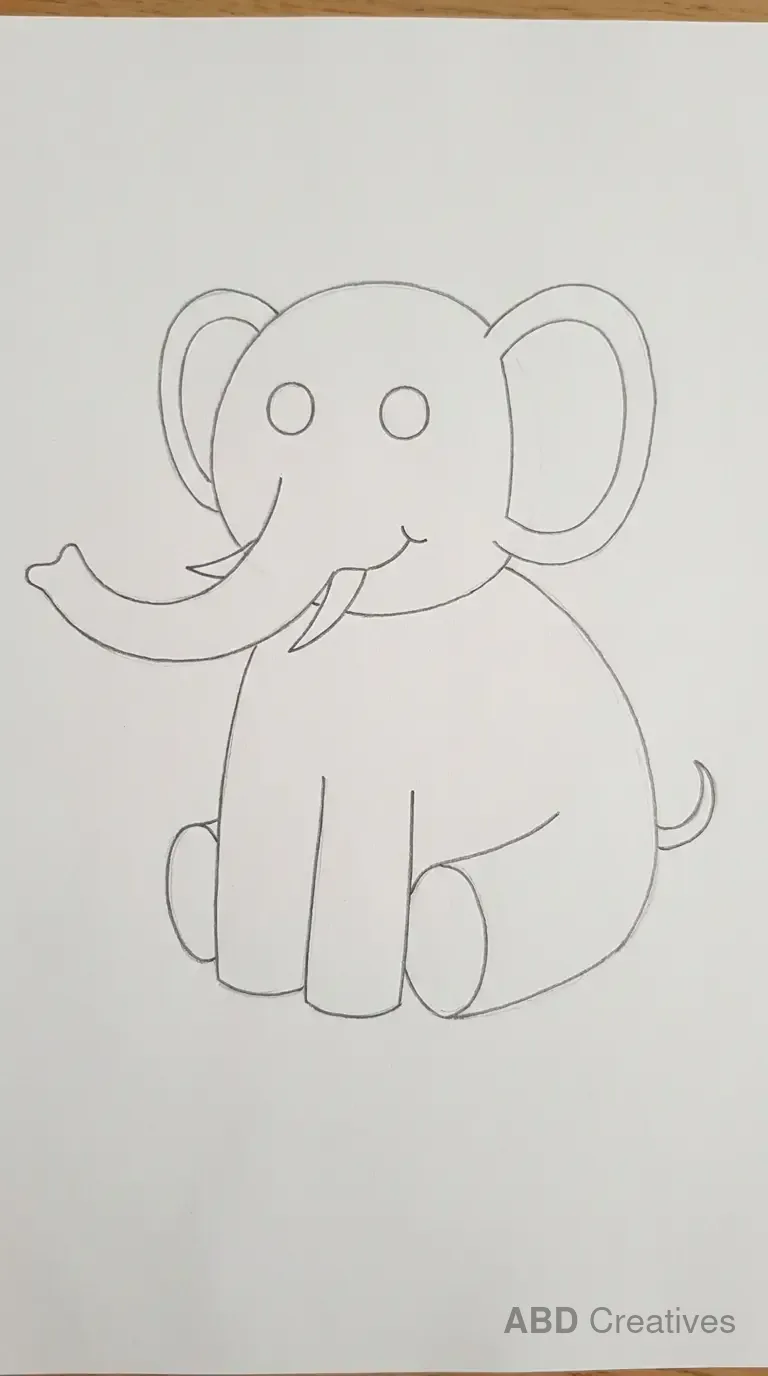
Start with the standing elephant or the sitting elephant. Both are shown from the side with nothing else on the page, so you can focus on the trunk and ears without worrying about a pose. The elephant outline is also a good first attempt, since it strips the drawing down to just the essential shapes.
If you have drawn animals before
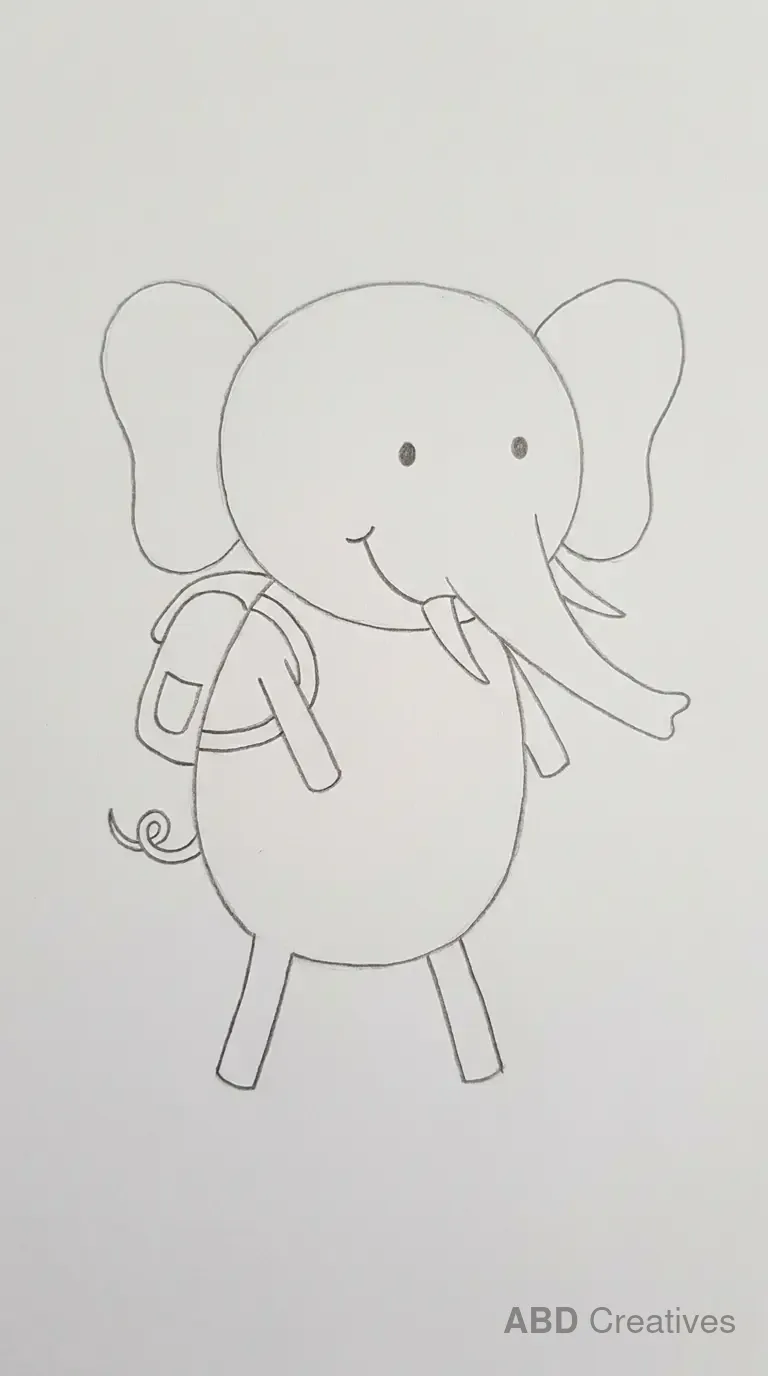
Try the elephant wearing a hat, the elephant with a backpack or the elephant holding an umbrella. The body stays simple and you are only adding one small prop, which is a good way to make a drawing feel finished without much extra difficulty.
If you want a challenge
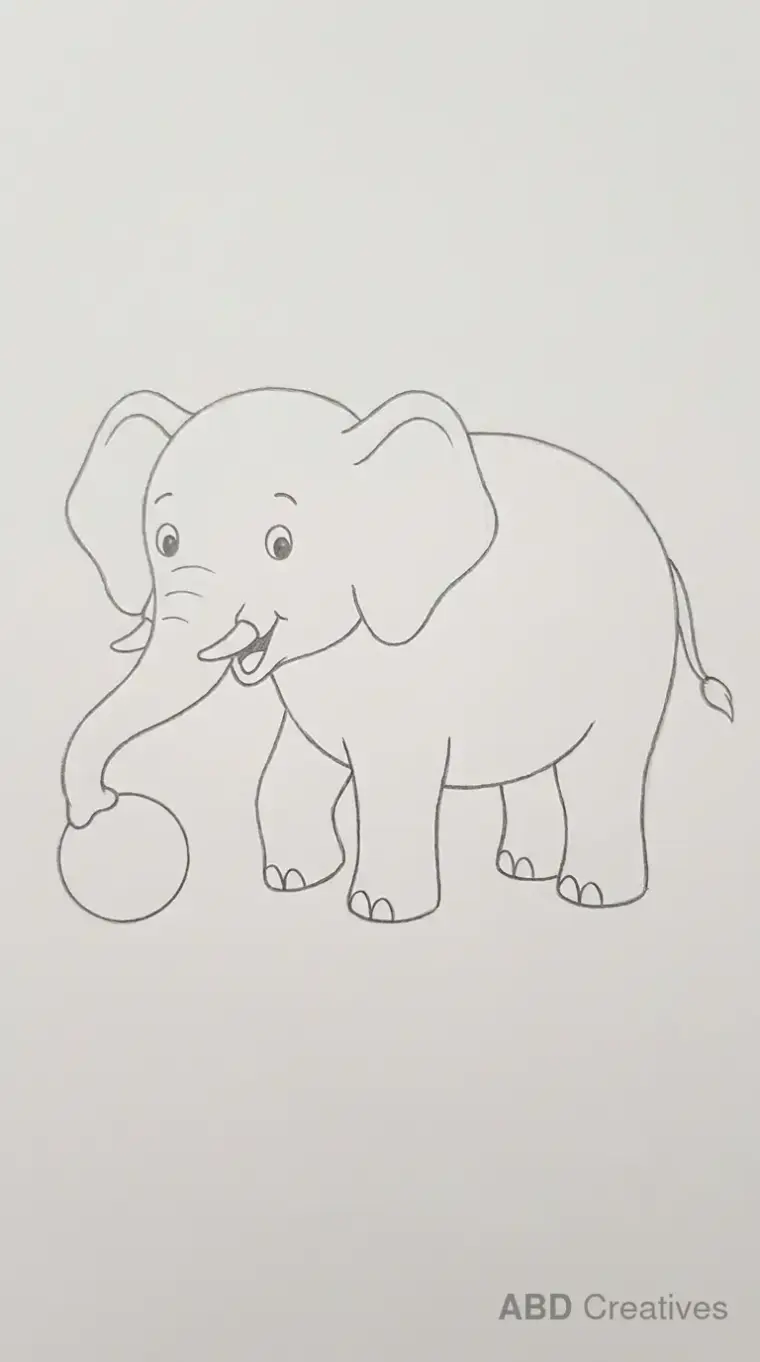
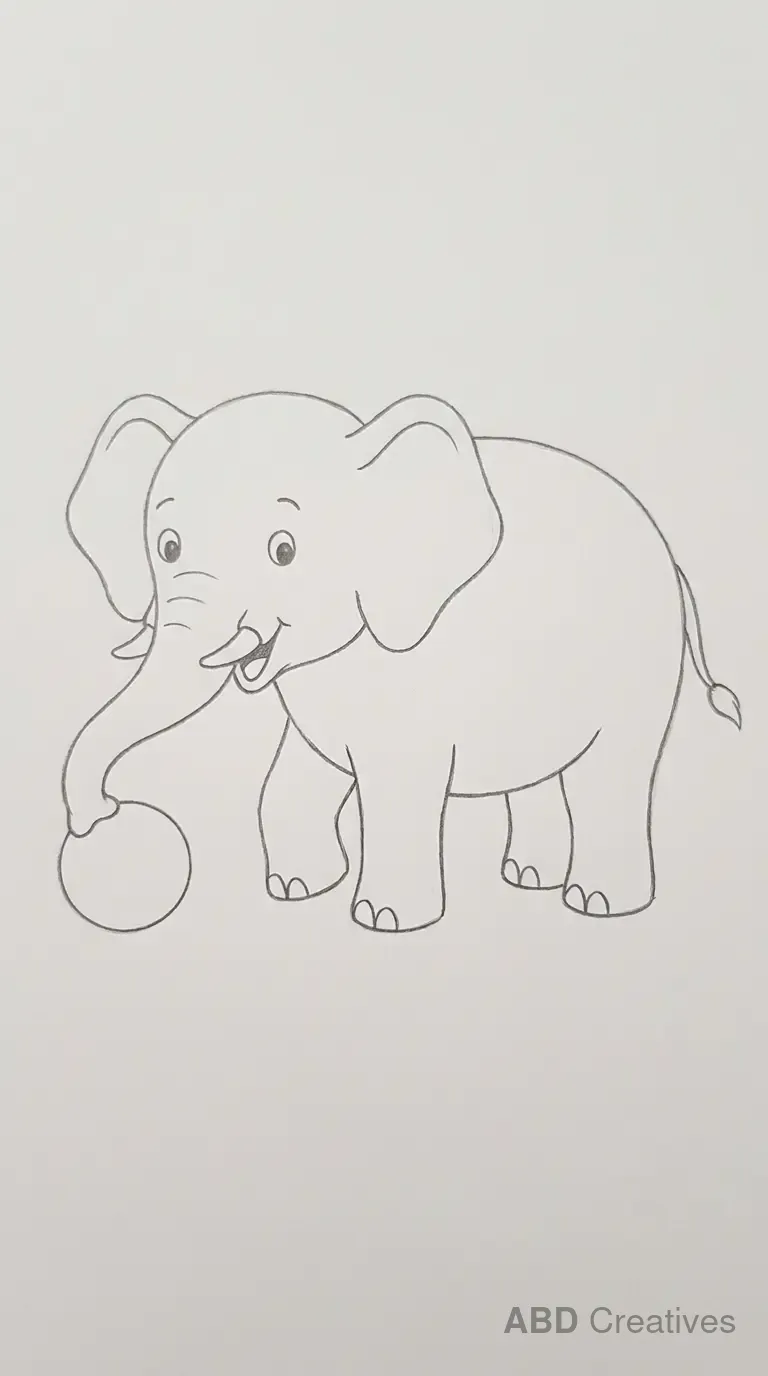
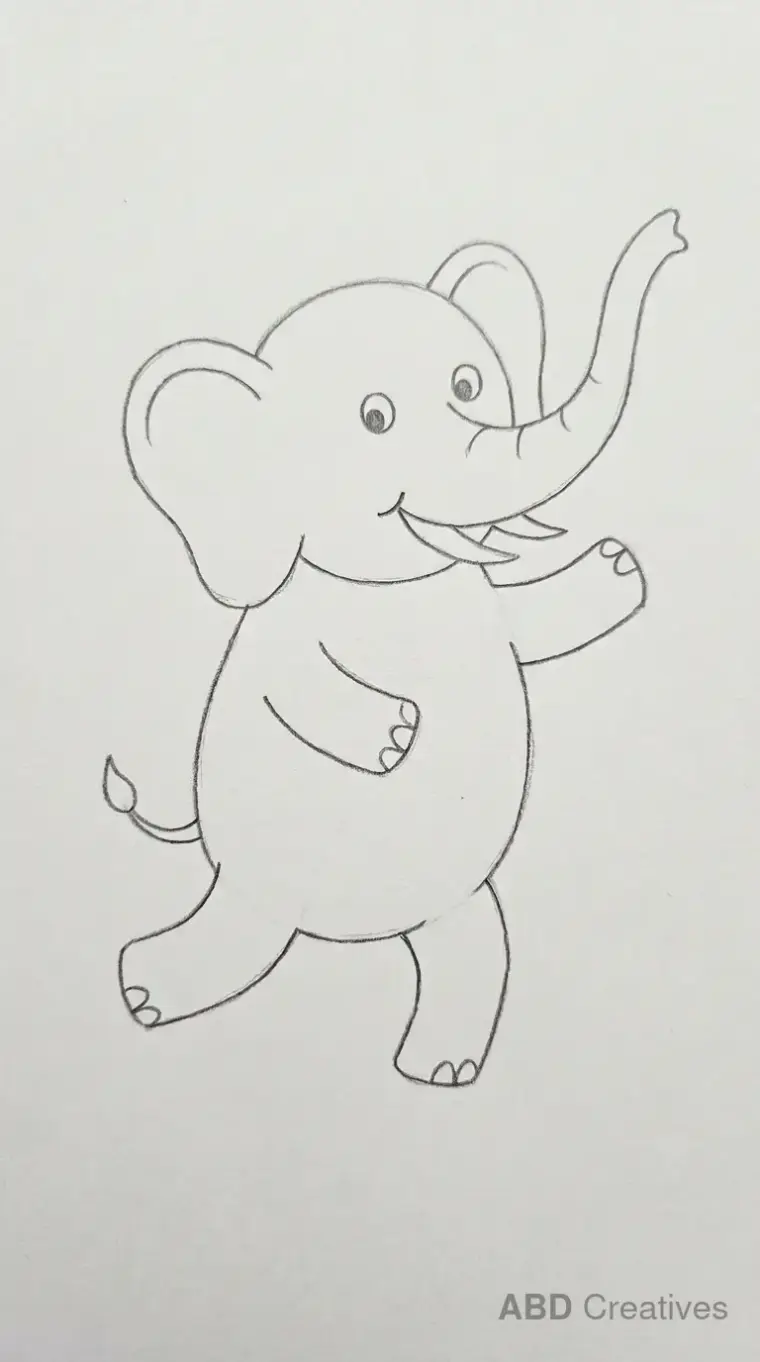
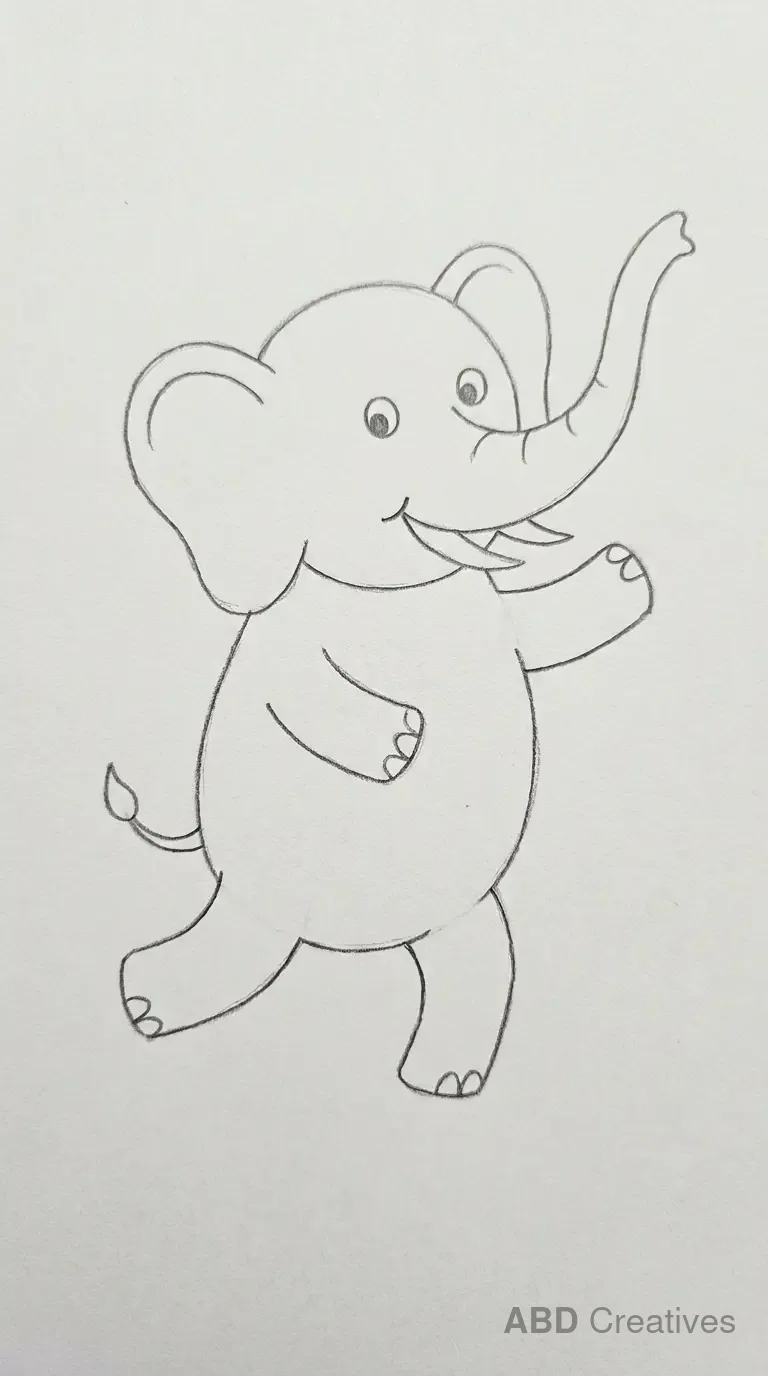
The dancing elephant and the elephant kicking a ball are the hardest here, because the body lifts off its usual four-legged stance and the trunk moves with it. Draw the line of the back first in both, and build the rest of the pose around it.
What you need
An HB pencil, plain paper and an eraser. A 2B pencil helps if you want darker final lines. Nothing on this page needs a tablet, a light box or special paper, and none of these were drawn with any.
Three things that make an elephant look like an elephant
- The trunk is too short. An elephant trunk should reach past the chin and almost to the ground on a standing pose. A short trunk starts to look like a pig snout.
- The ears are too small. Elephant ears are one of the biggest features on the animal. Draw them larger than feels natural and the drawing will look right.
- The legs are too thin. Elephant legs are thick and straight, more like pillars than limbs. Thin legs make the body look too light to be believable.
African or Asian elephant
The easiest way to tell them apart on paper is the ears and the back. An African elephant has much larger ears, shaped roughly like the continent of Africa, and its back dips in the middle. An Asian elephant has smaller, more rounded ears and a back that arches upward. Most of the drawings on this page use the larger African-style ears, since they read more clearly at a small size.
Ways to use these drawings
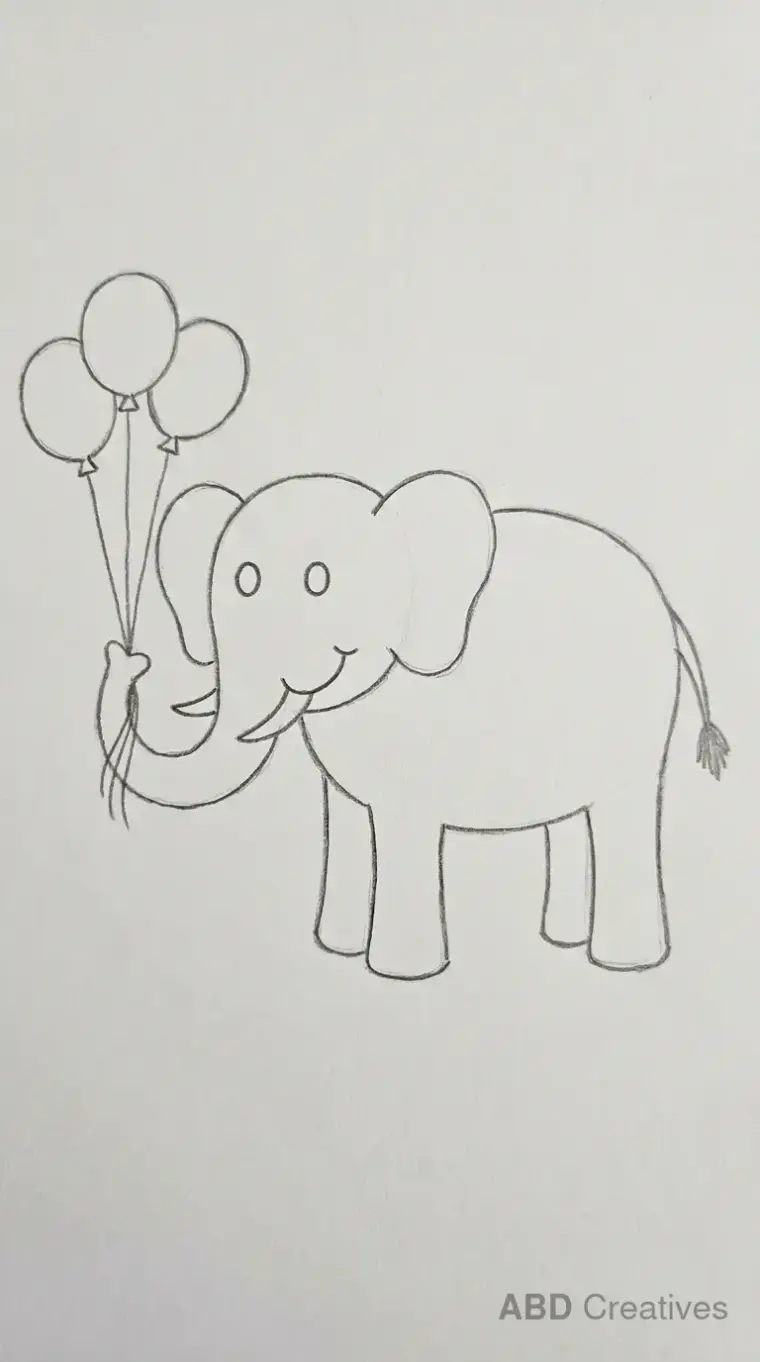
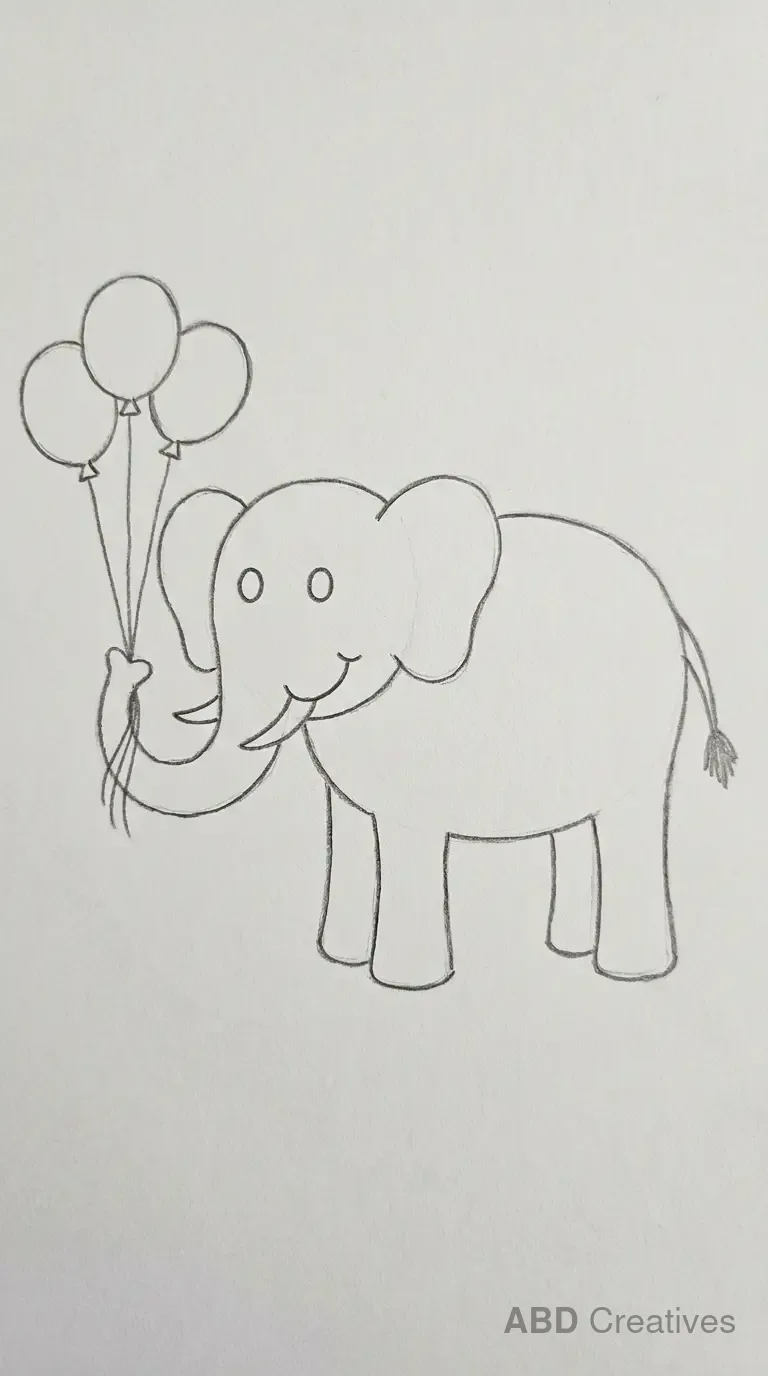
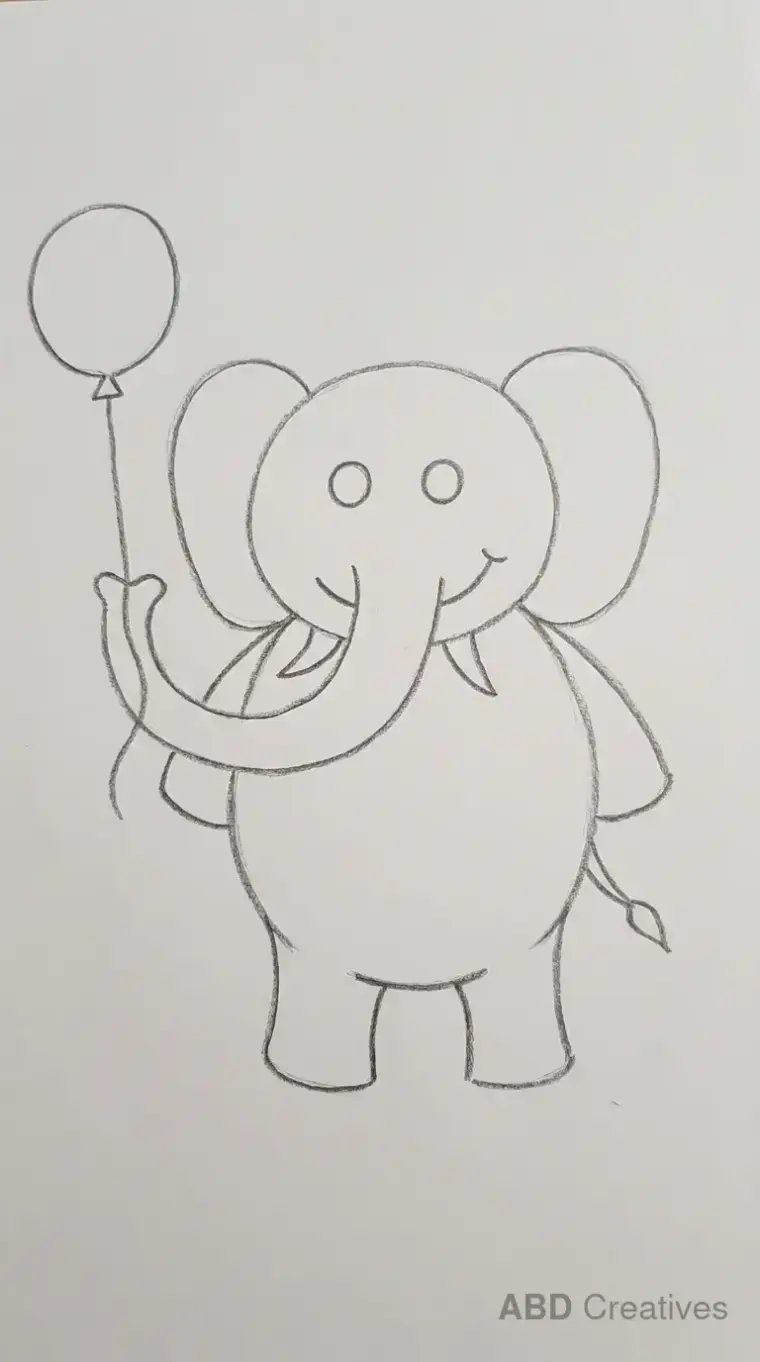
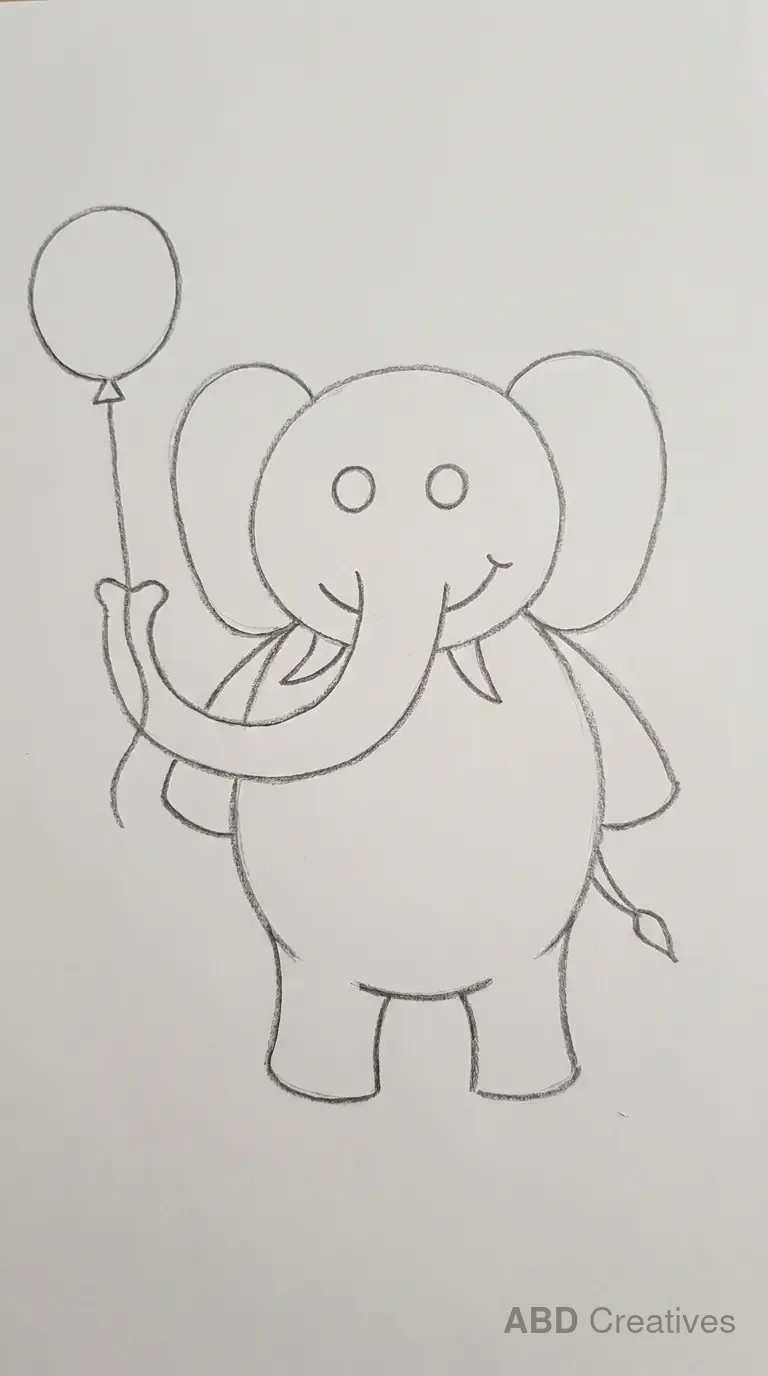
Copy any of these by hand, or download and print them for yourself, for your children or for your classroom. They work as colouring sheets, tracing practice, a warm up before a bigger drawing, or line art for a card. The balloon bouquet, the gift box and the party-style drawings all suit birthday cards. If you want to use one in something you sell, write to us first.
Questions people ask
What is the easiest elephant drawing on this page?
The standing elephant. It faces sideways, has no props and is built from one rounded body, two big ears and a simple trunk. The sitting elephant and the elephant outline are just as quick.
Are these elephant drawings free to download?
Yes. Every drawing here can be downloaded and printed for personal use, school use or classroom use at no cost. For commercial use, please contact us first.
Can young children draw these?
Most of them. The standing elephant, the sitting elephant, the elephant wearing a hat and the baby elephant all suit children around five and up. The dancing elephant and the one kicking a ball suit older children and adults.
Why does my elephant trunk look wrong?
Almost always the length or the curve. The trunk should be long enough to reach the ground on a standing pose and should have at least one gentle curve along its length, not a straight line.
How do I draw an elephant standing still?
Draw the head and ears first, then let the trunk hang down in a slight curve. Add a large rounded body behind the head and four thick, straight legs directly underneath it.
How do I draw a baby elephant instead of an adult?
Make the head bigger compared to the body, the eyes larger, the trunk shorter and the legs stubbier. The baby elephant on this page already uses these proportions.
What pencil should I use?
An HB for the light guide shapes and a 2B for the final lines. If you only have one pencil, an HB is fine. Press lightly at the start so the guides rub out cleanly.
Are these drawings made by hand?
Yes. Each one was drawn in pencil on plain paper and photographed. They are not computer generated or traced from photographs.