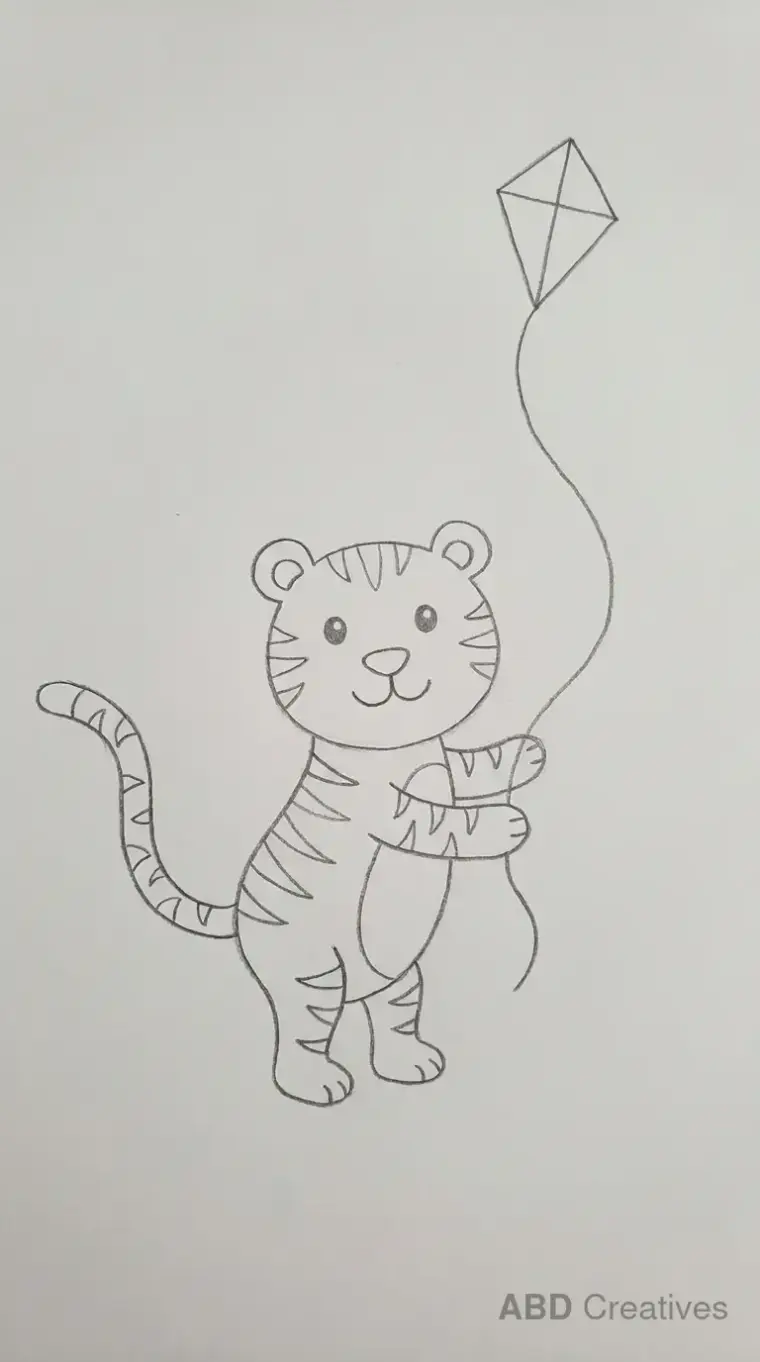
Tiger Drawing Ideas
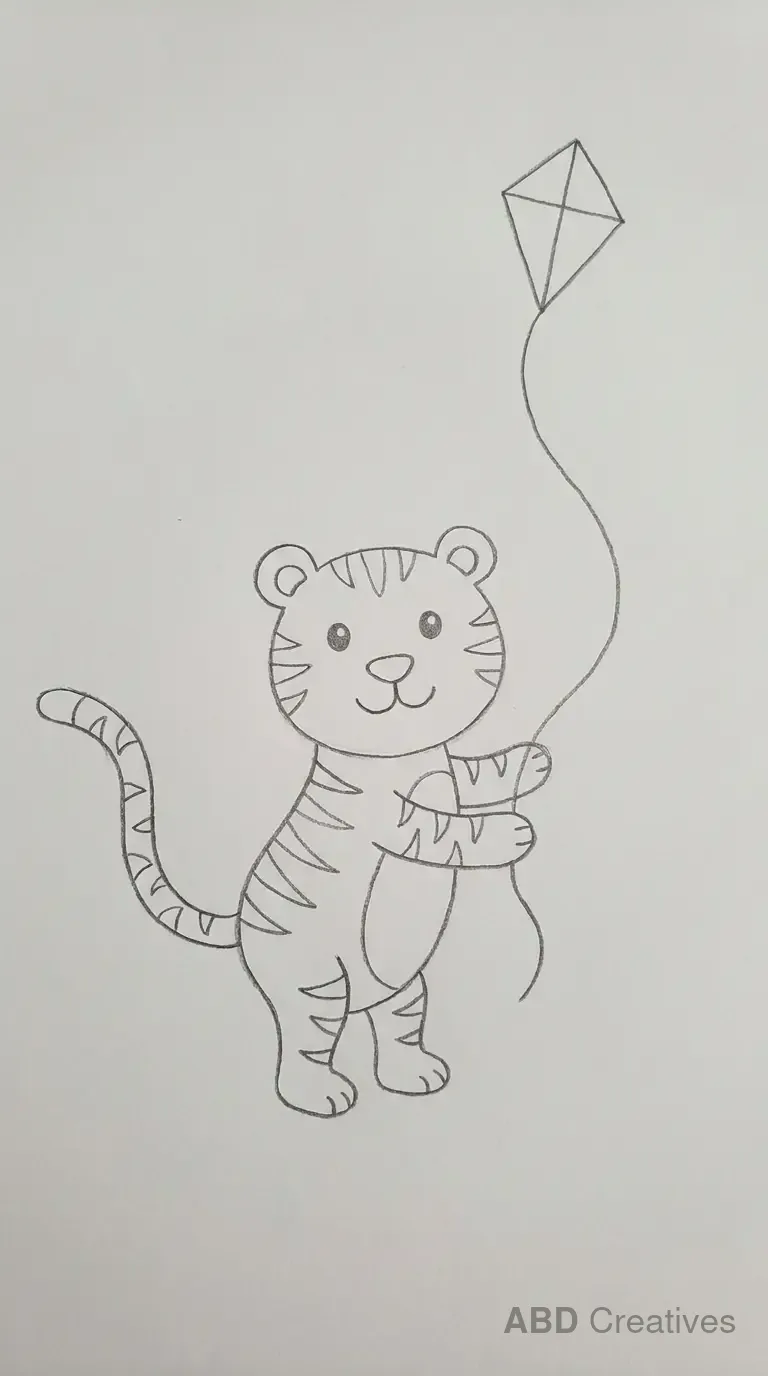
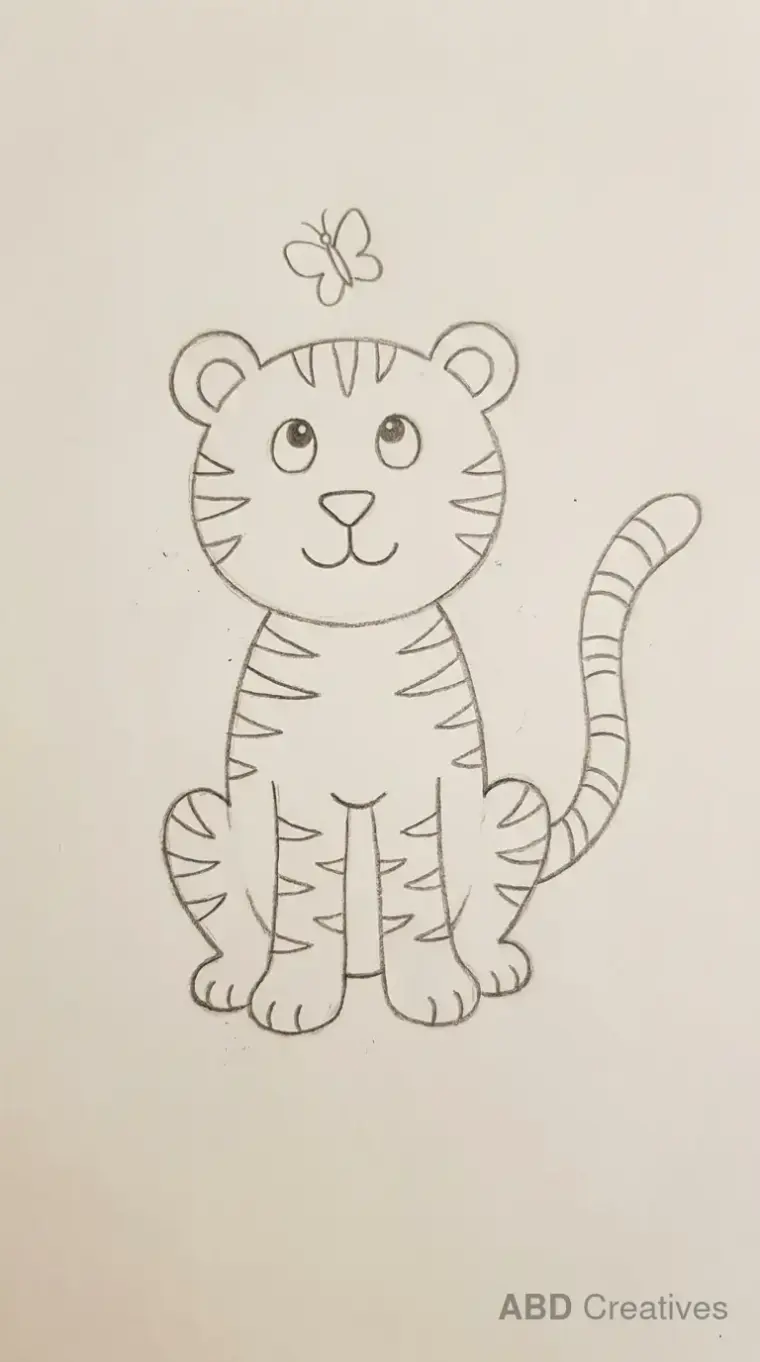
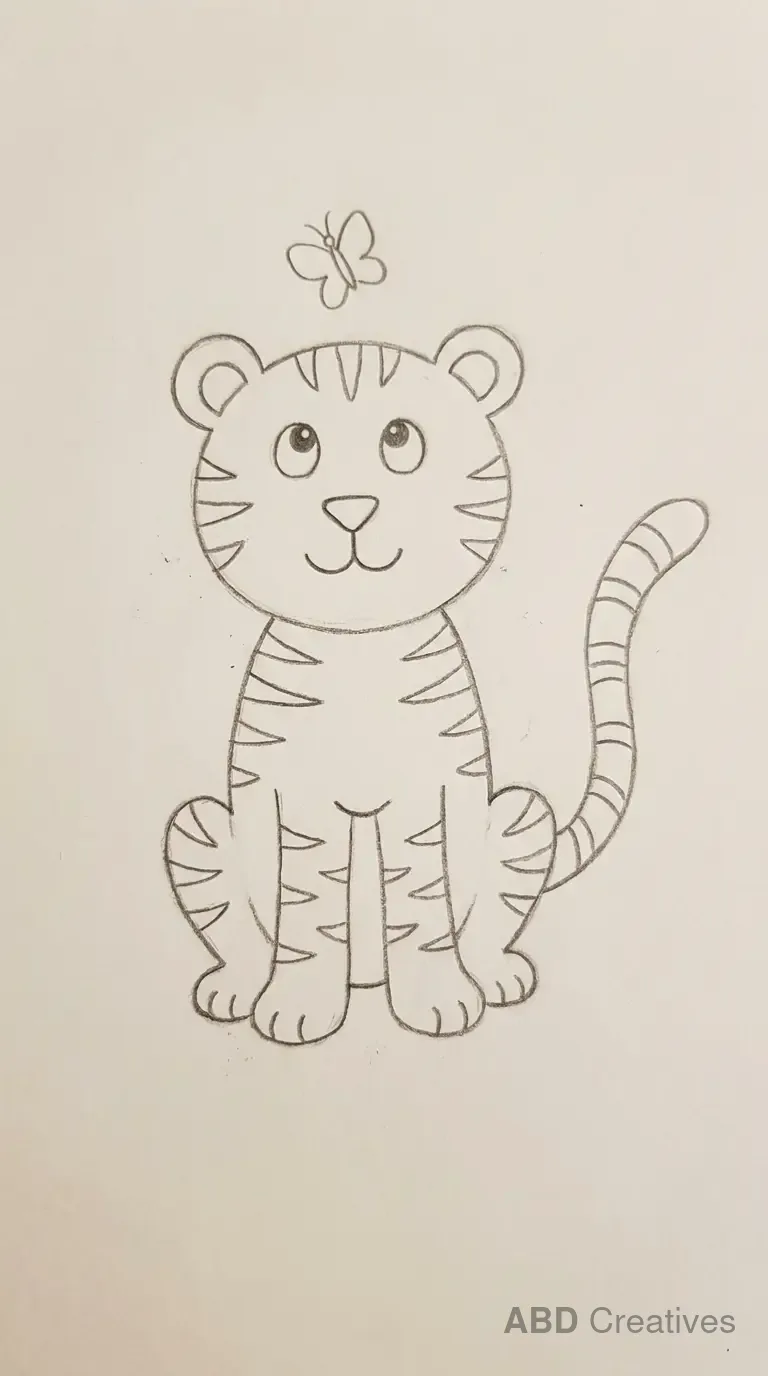
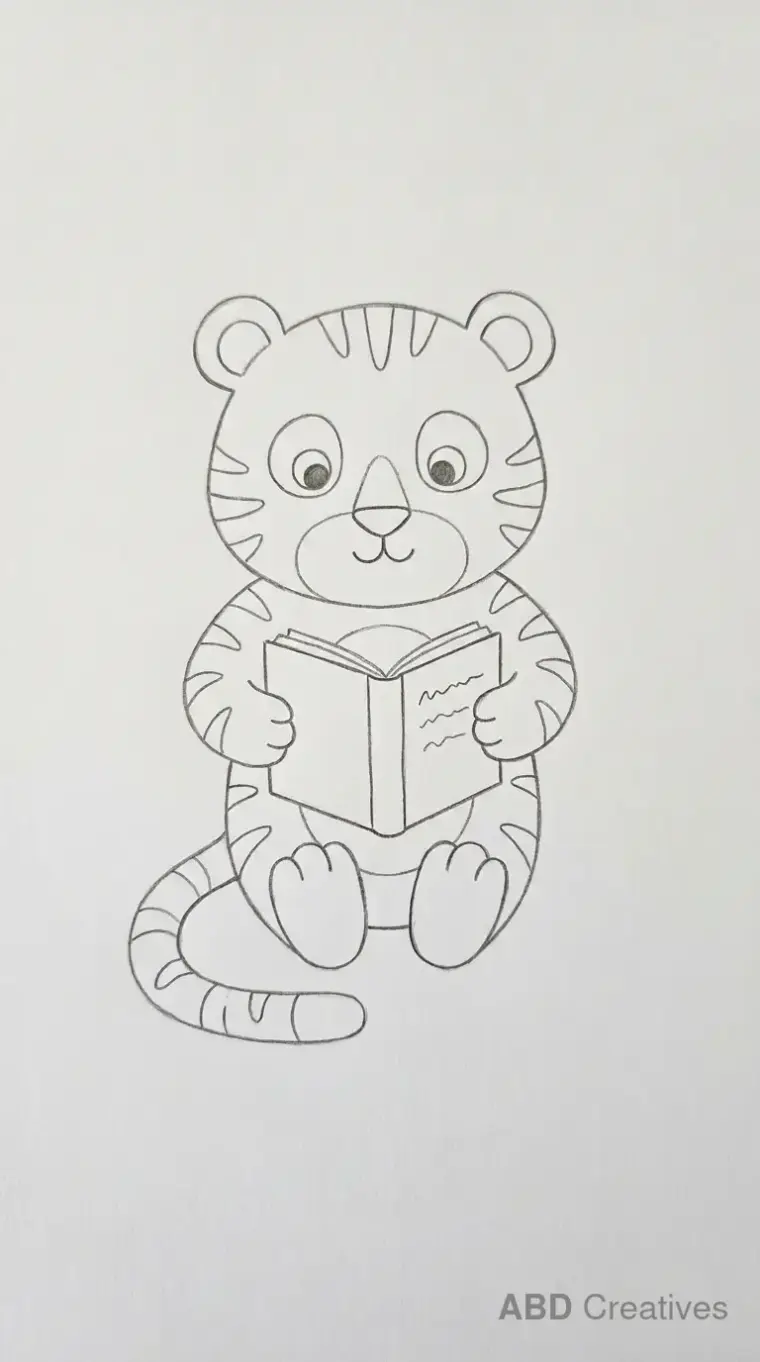
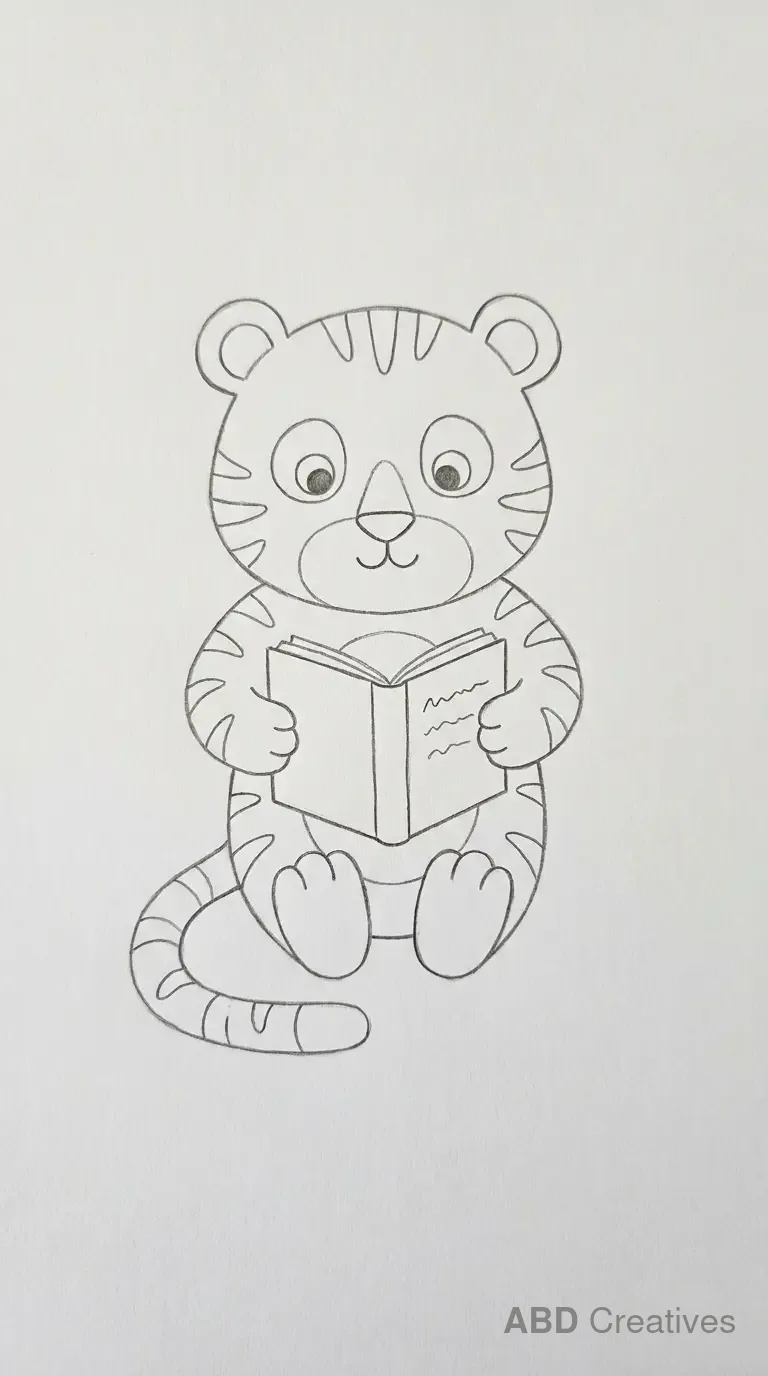
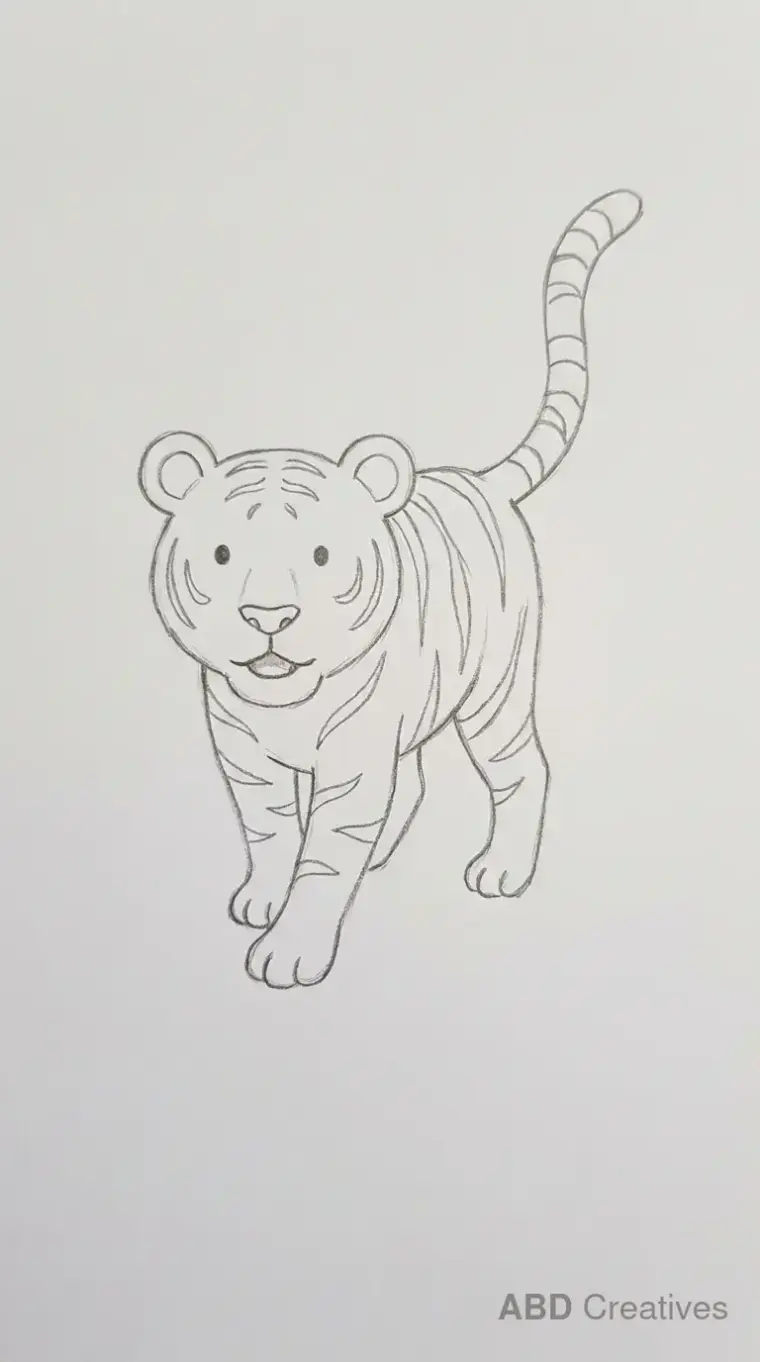
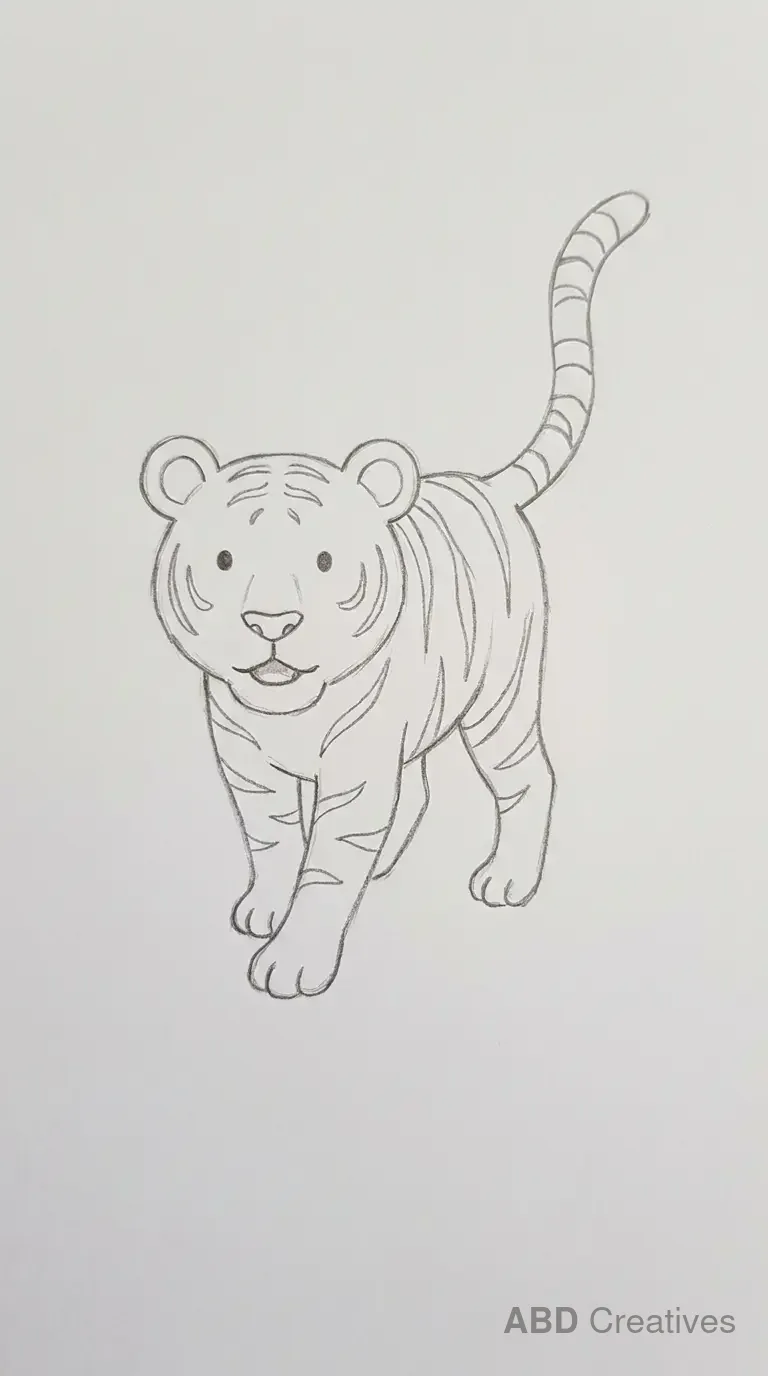
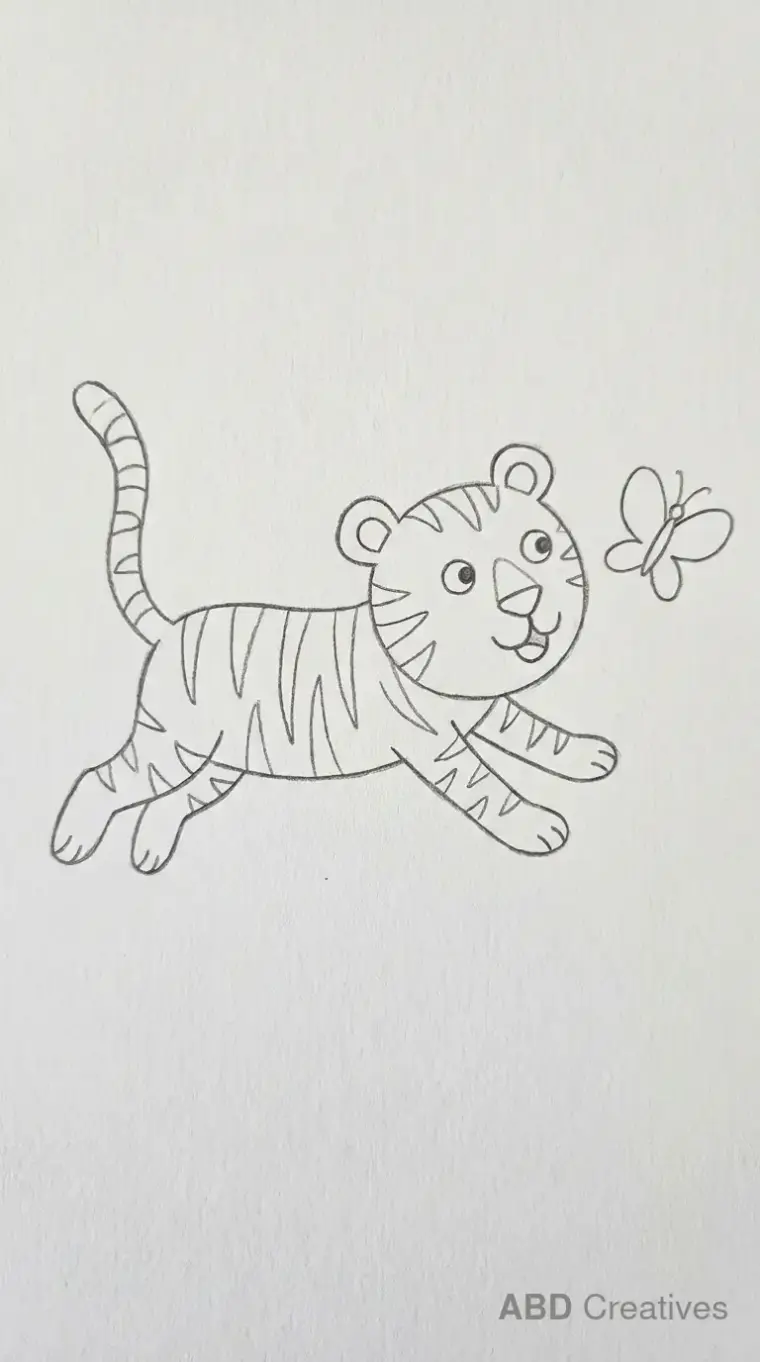
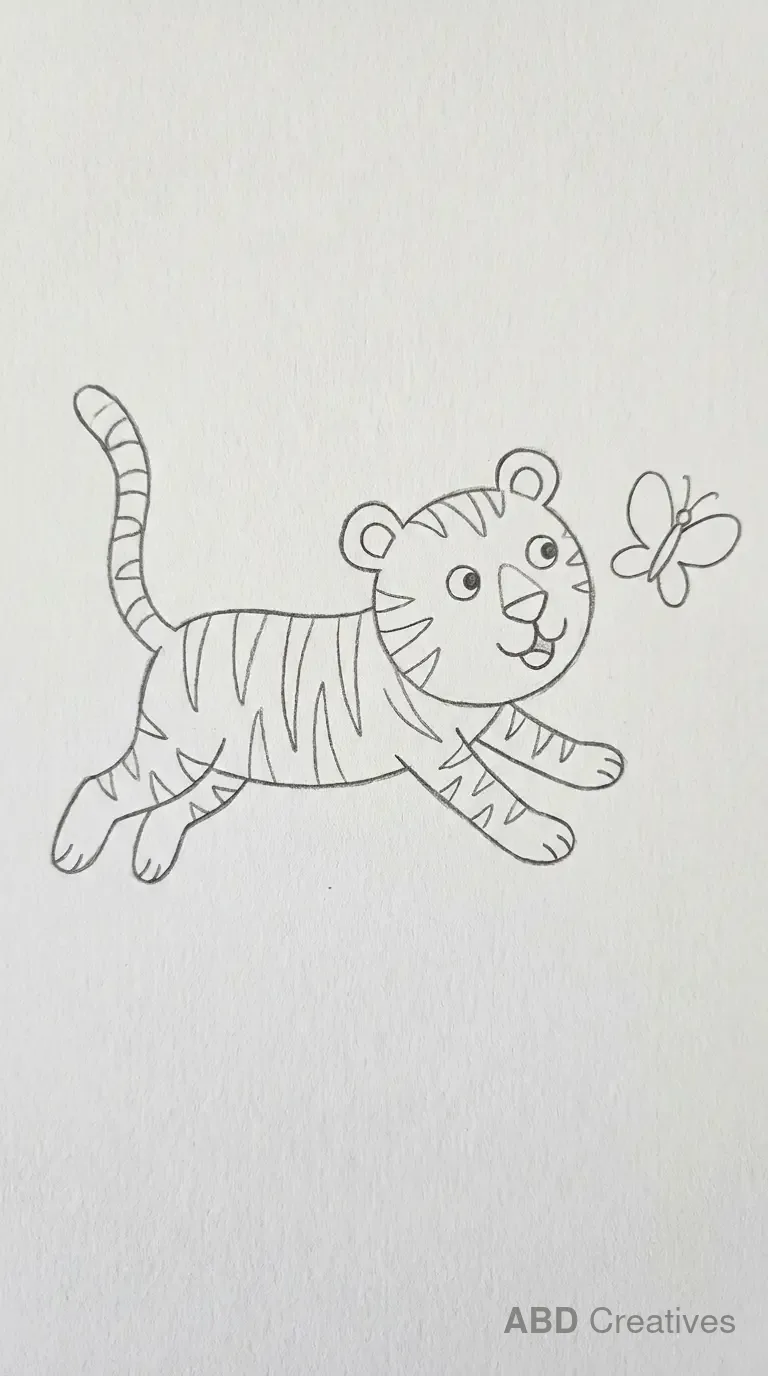
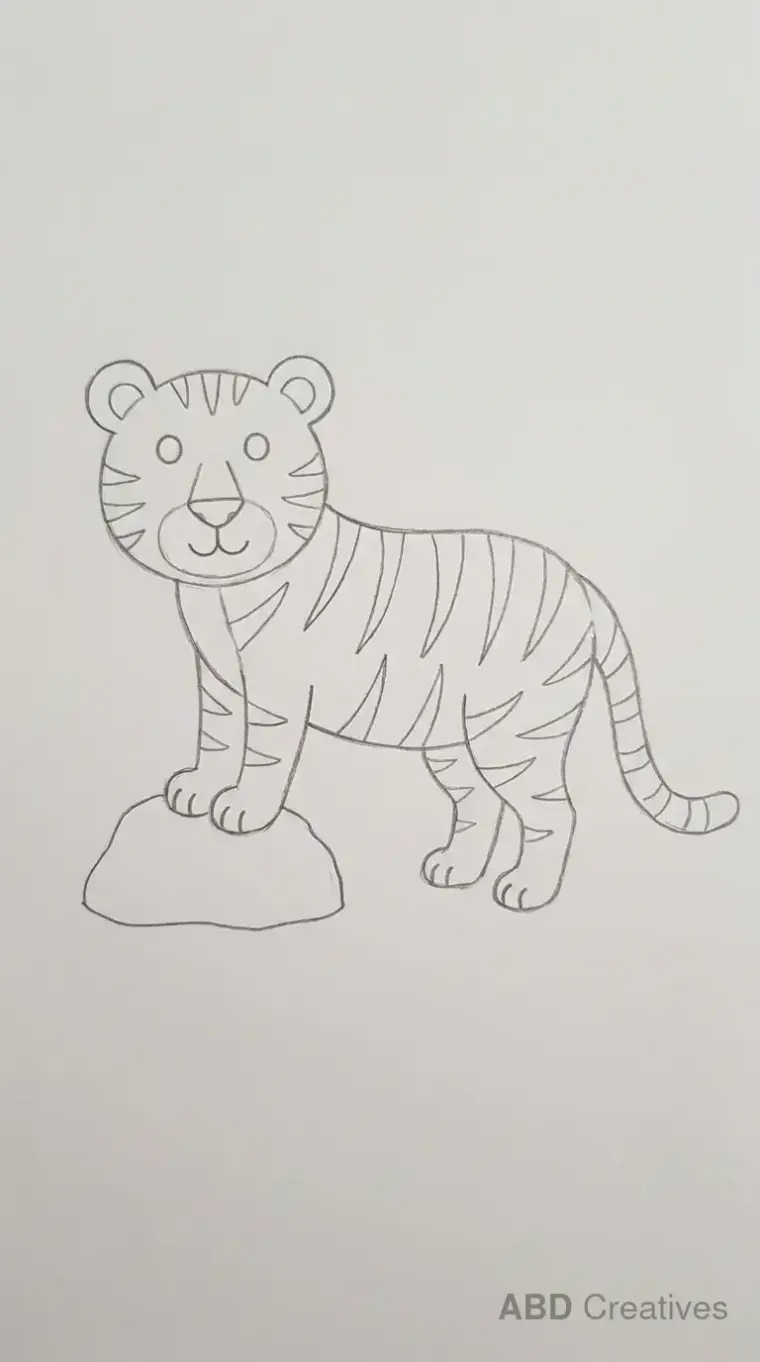
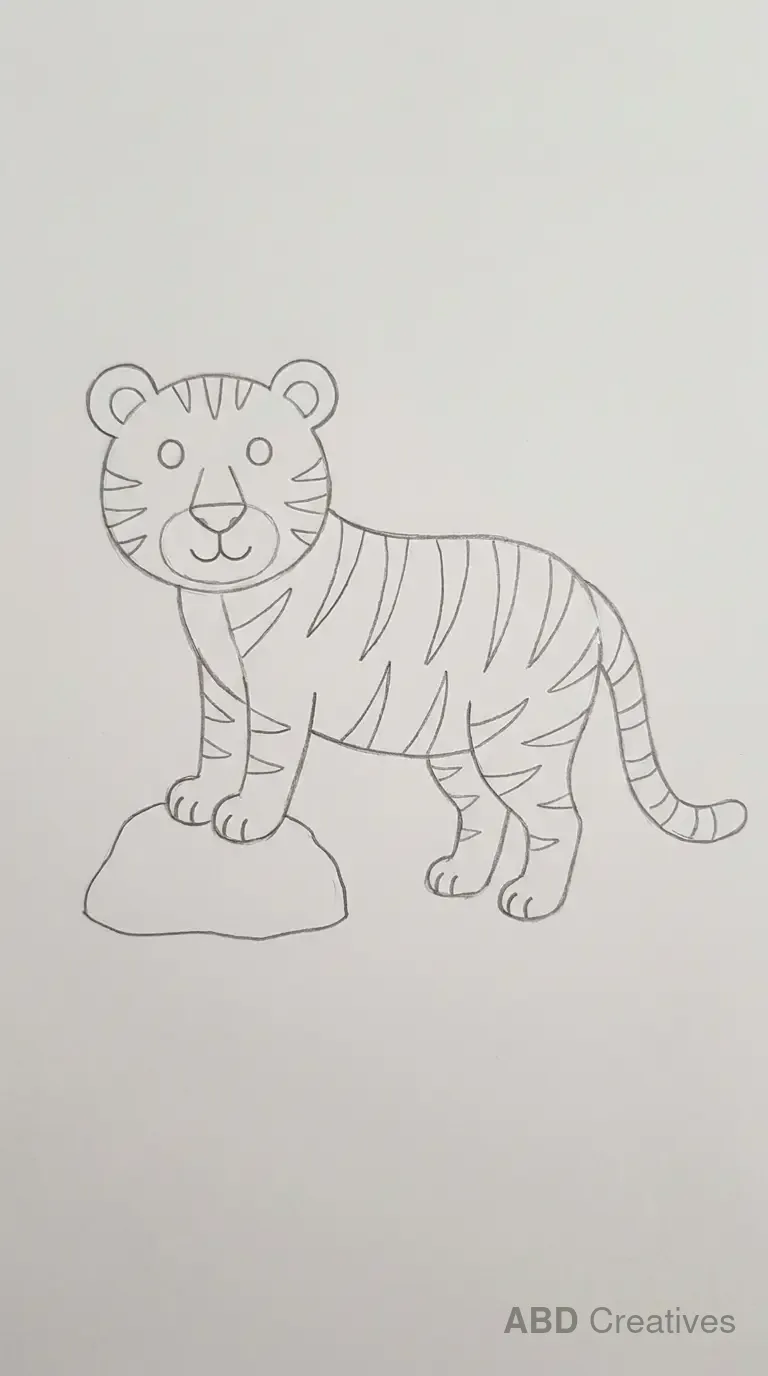
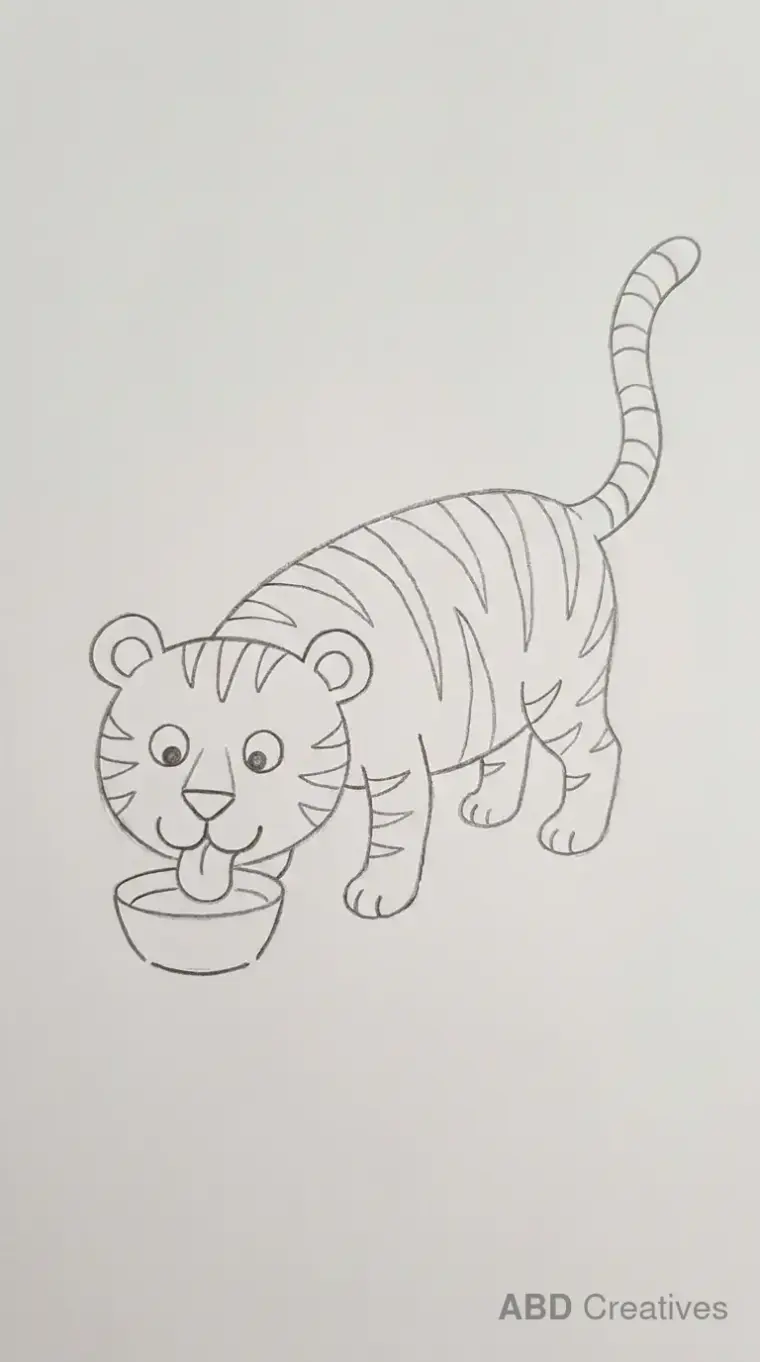
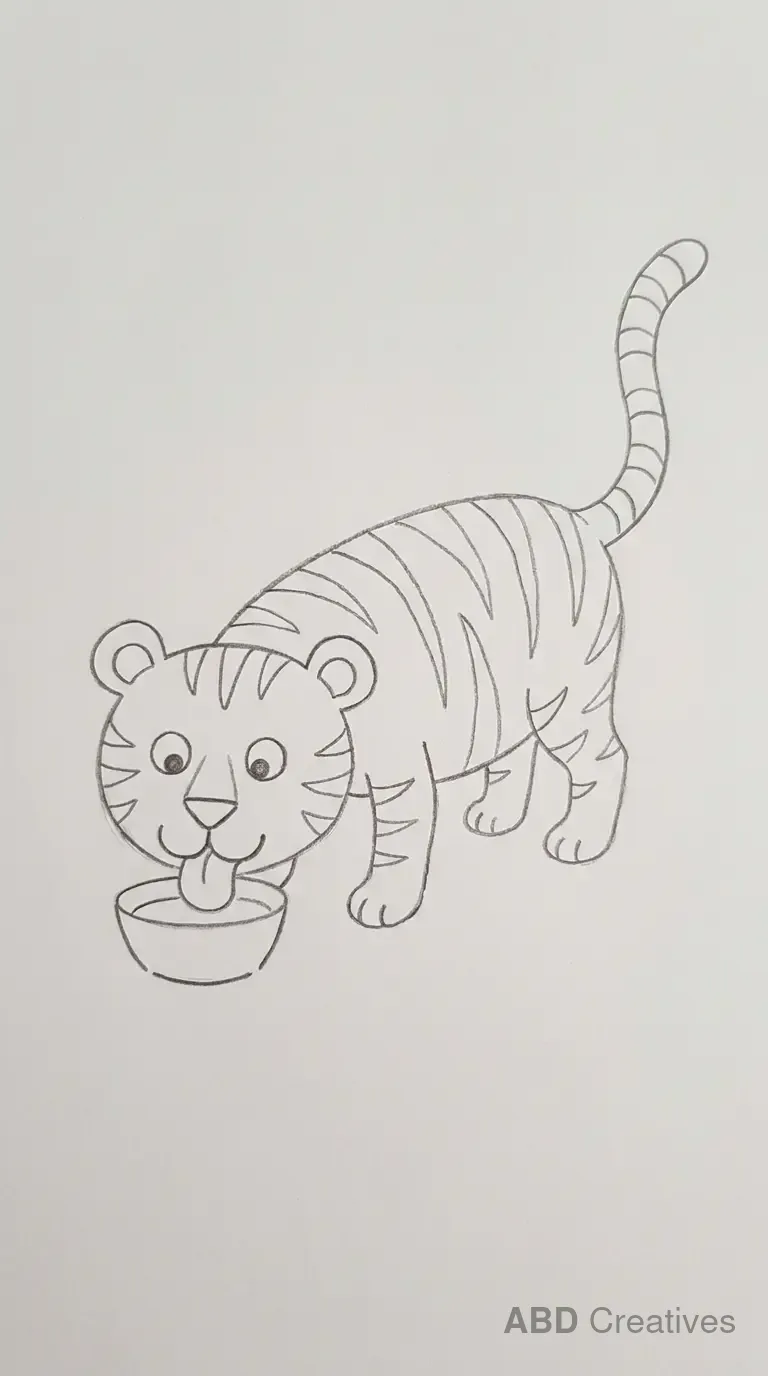
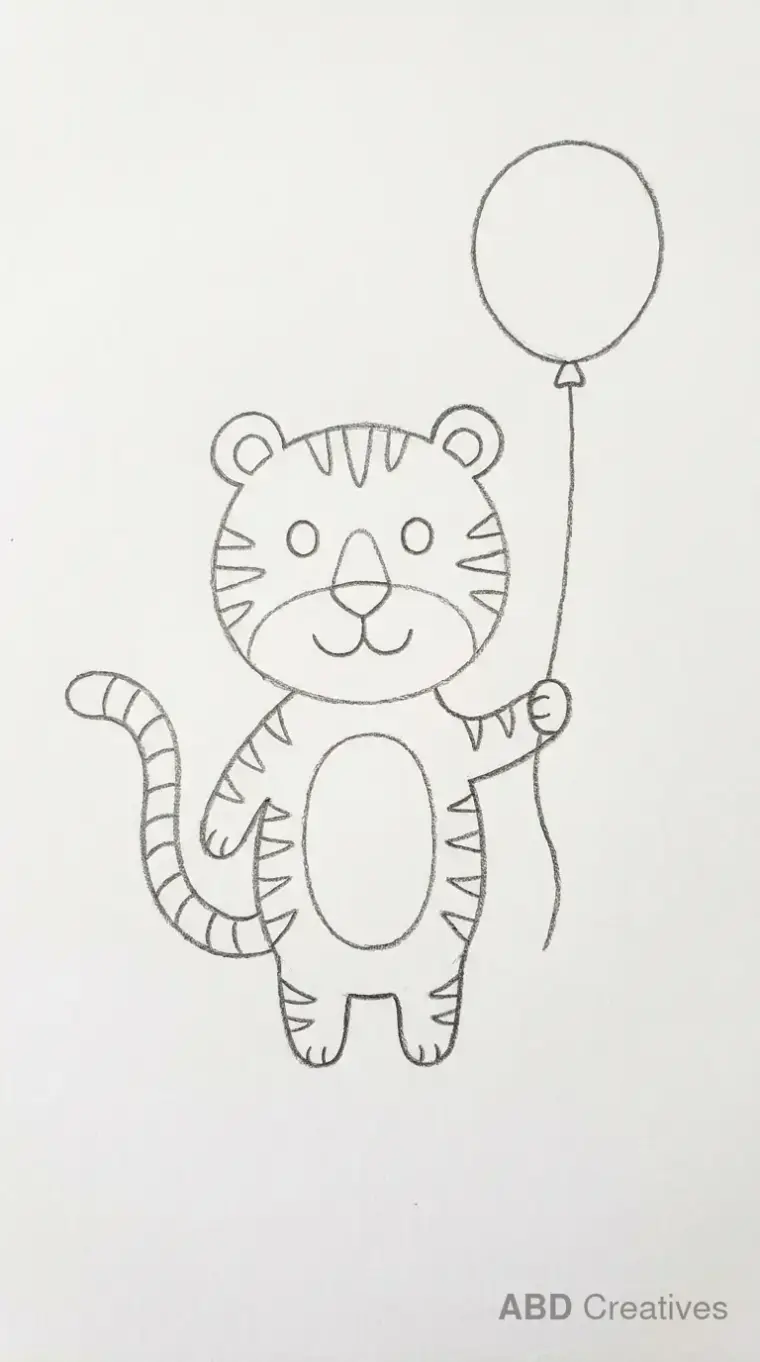
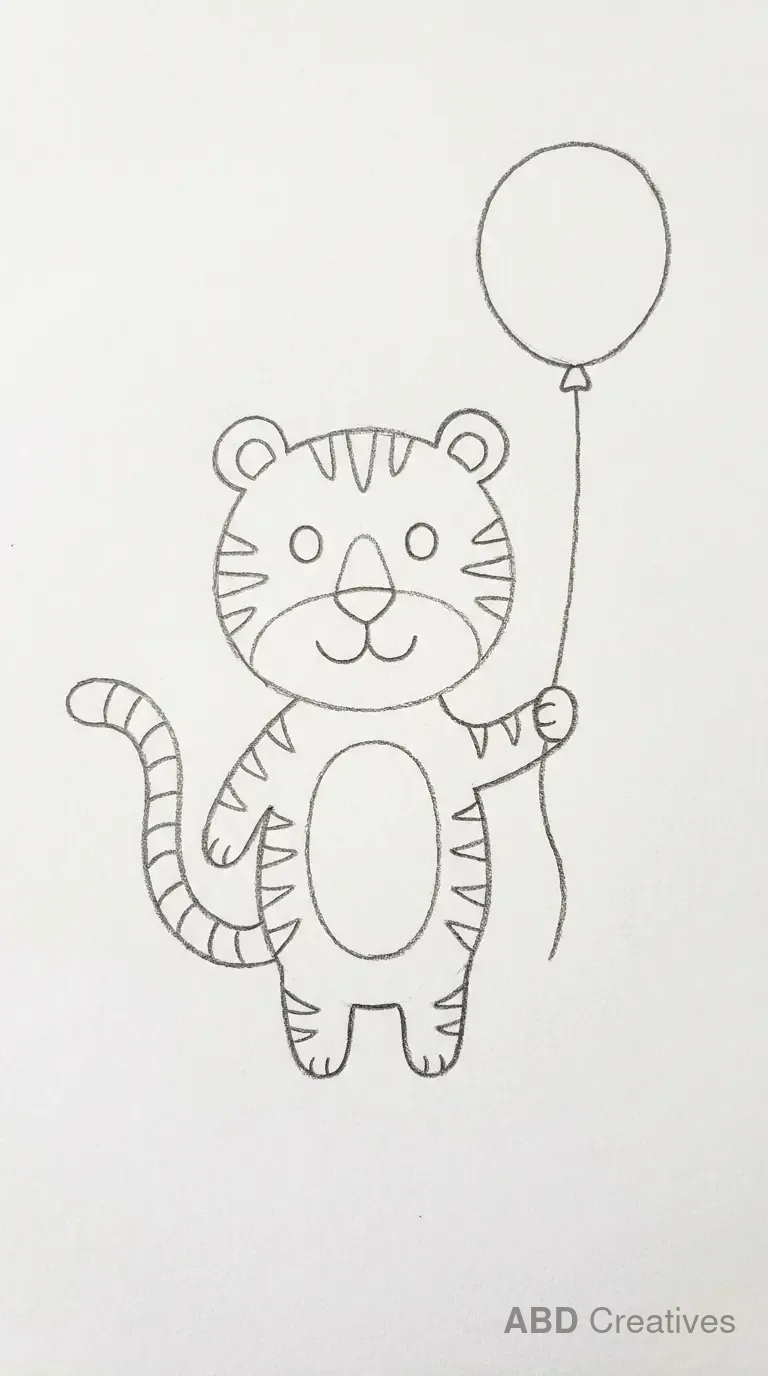
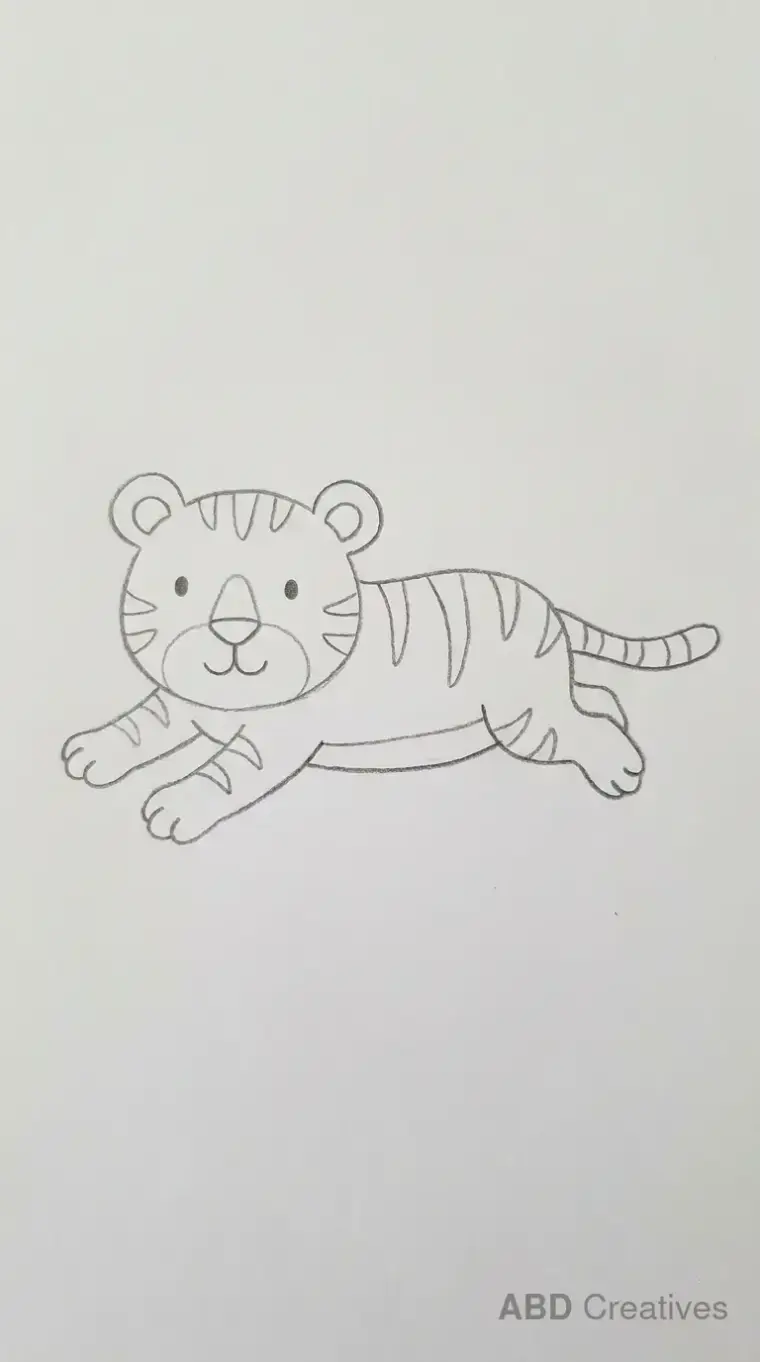
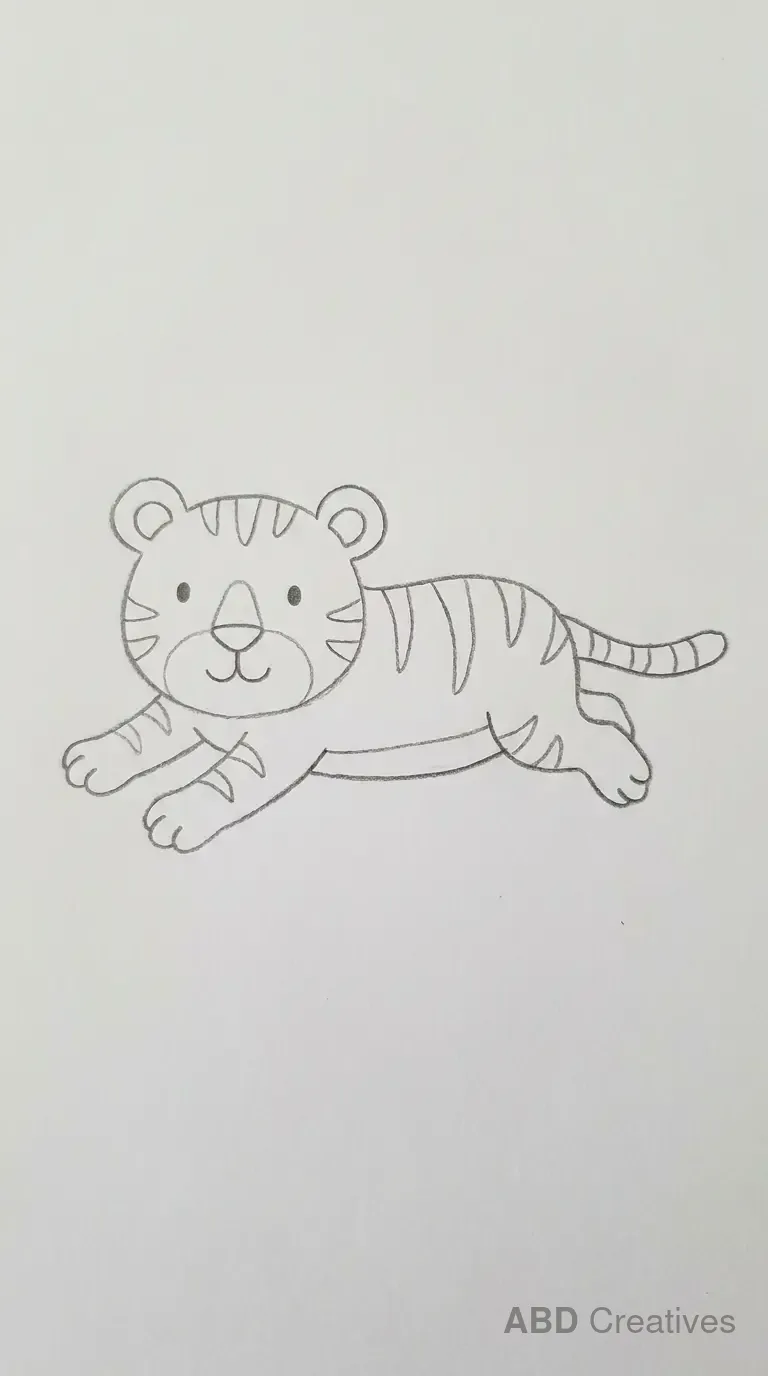
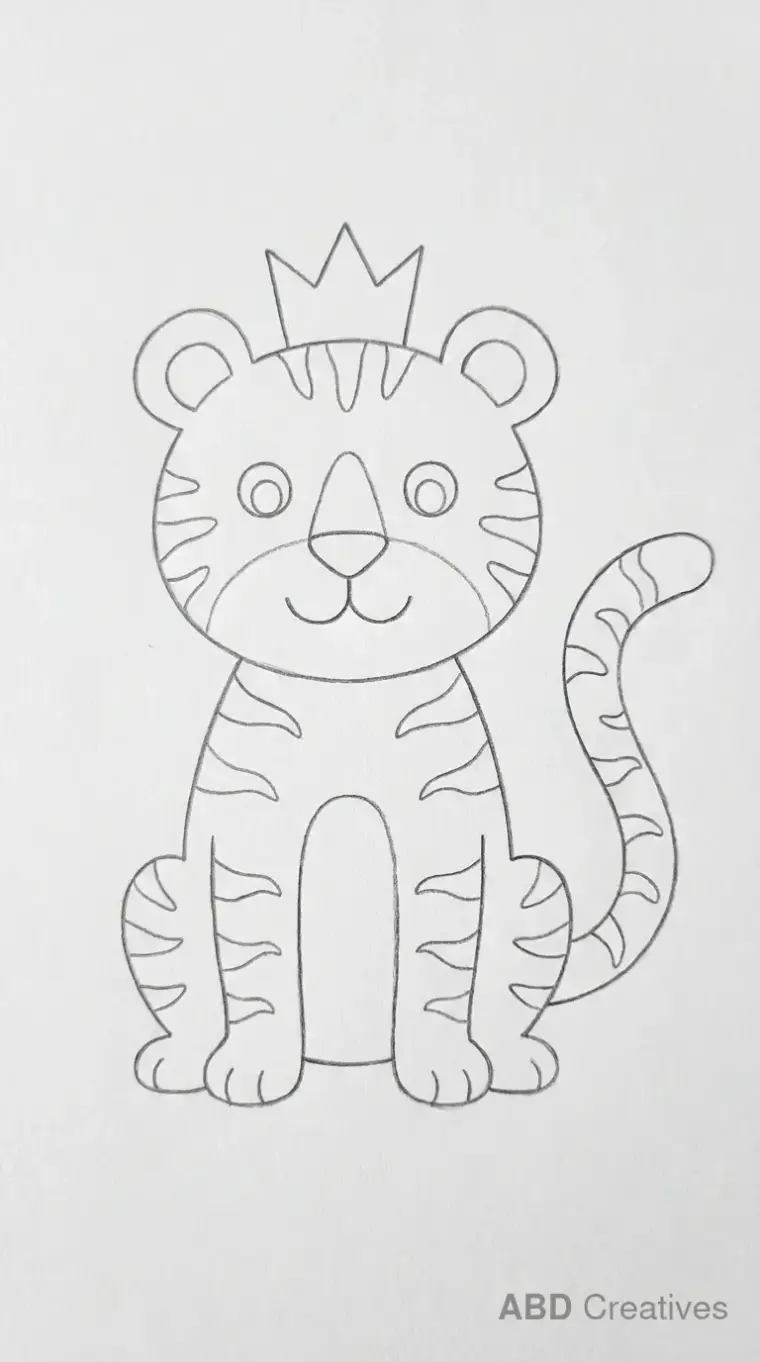
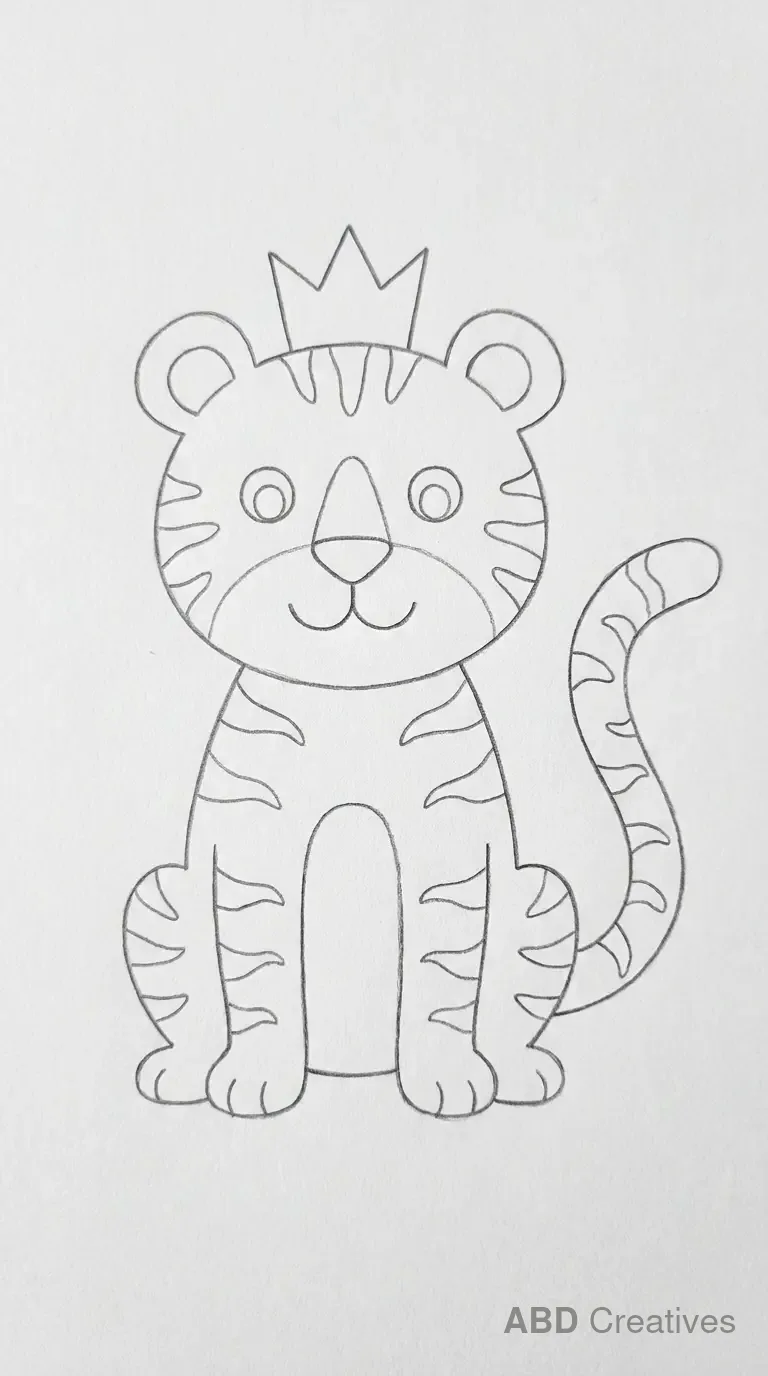
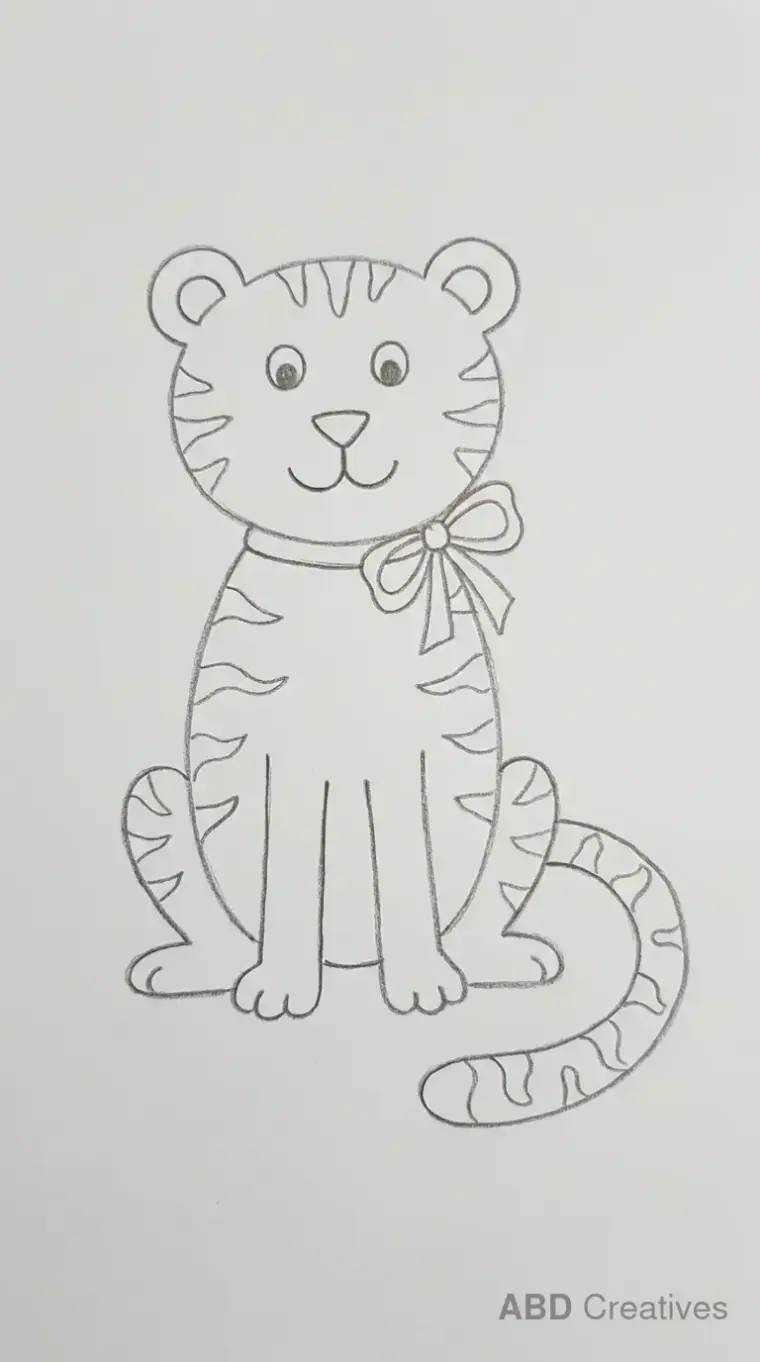
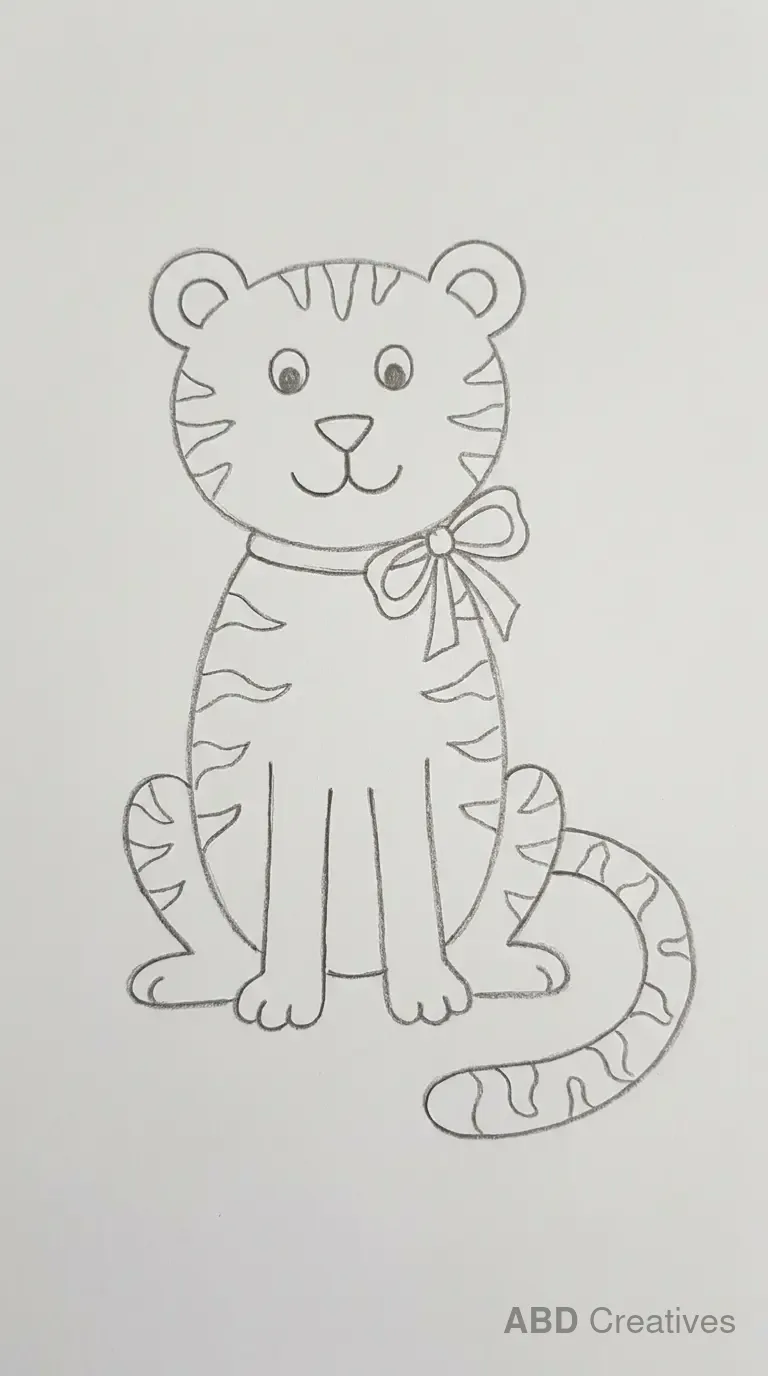
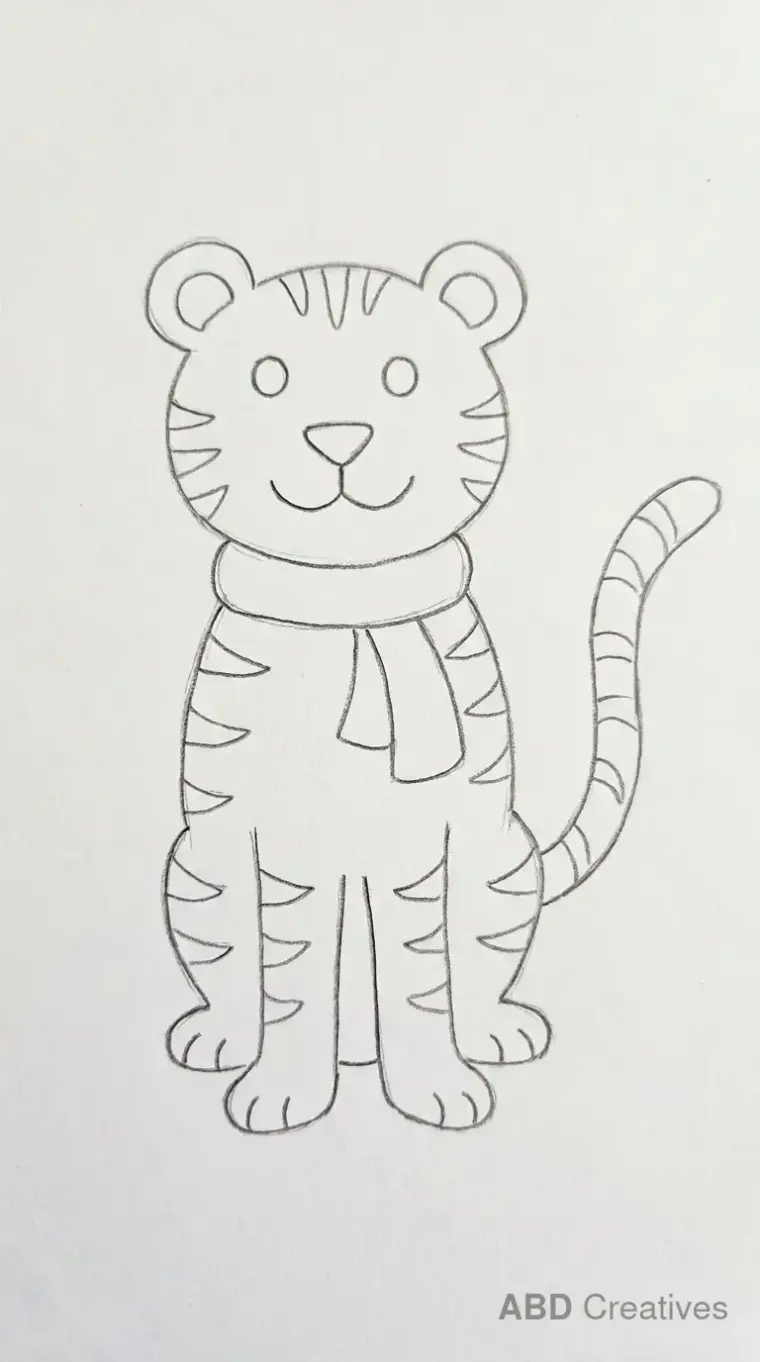
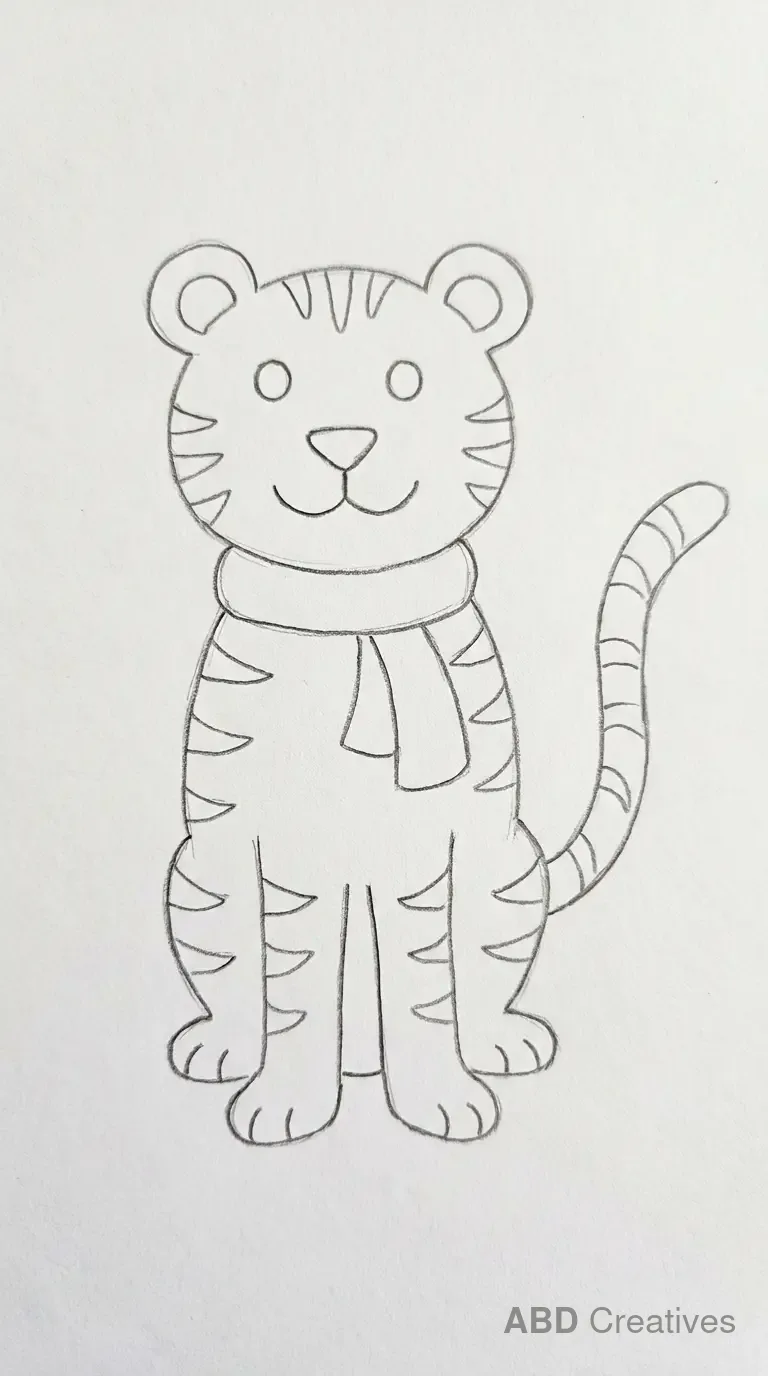
Twenty-seven tiger drawings you can copy straight onto paper, from a plain sitting tiger to a tiger chasing a butterfly. Every one is a clean pencil outline drawn by hand, with no shading and no colour. Pick one, keep it next to you, and copy it line by line.
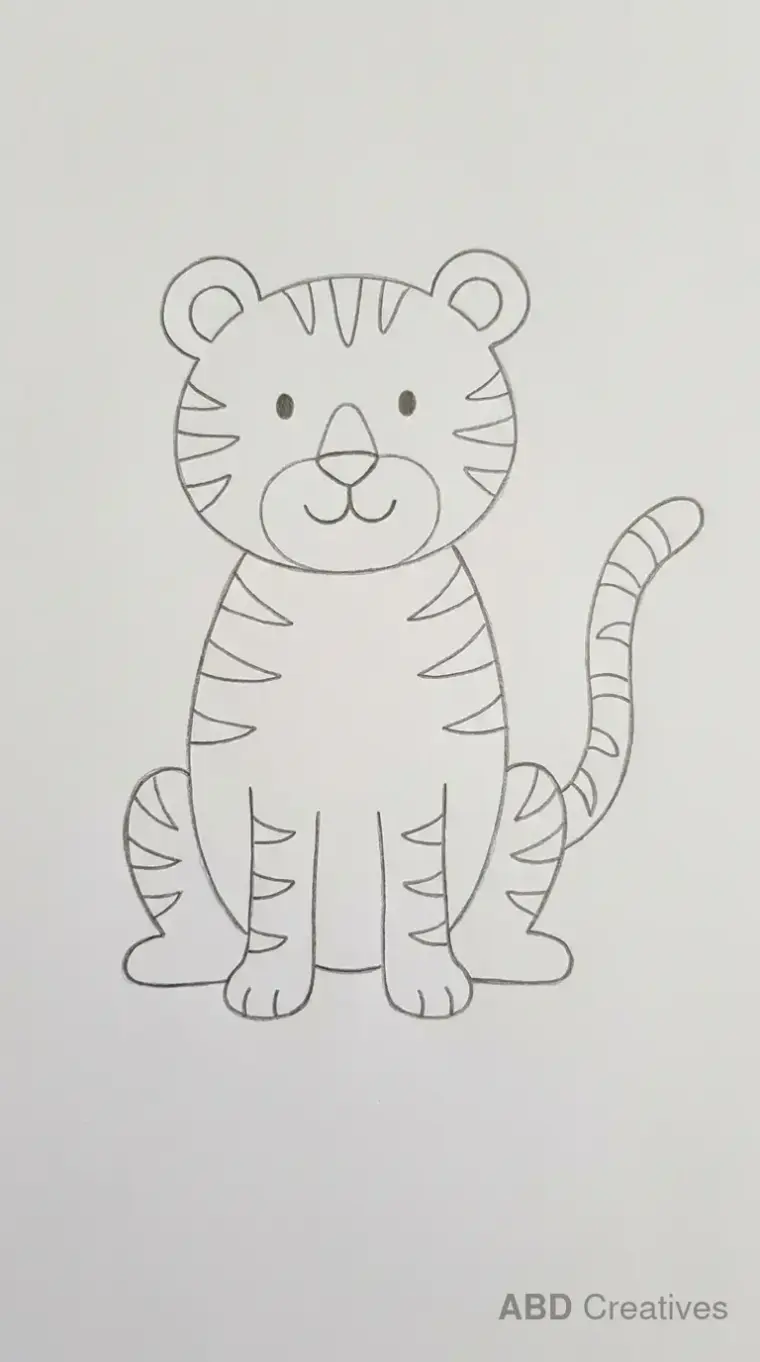
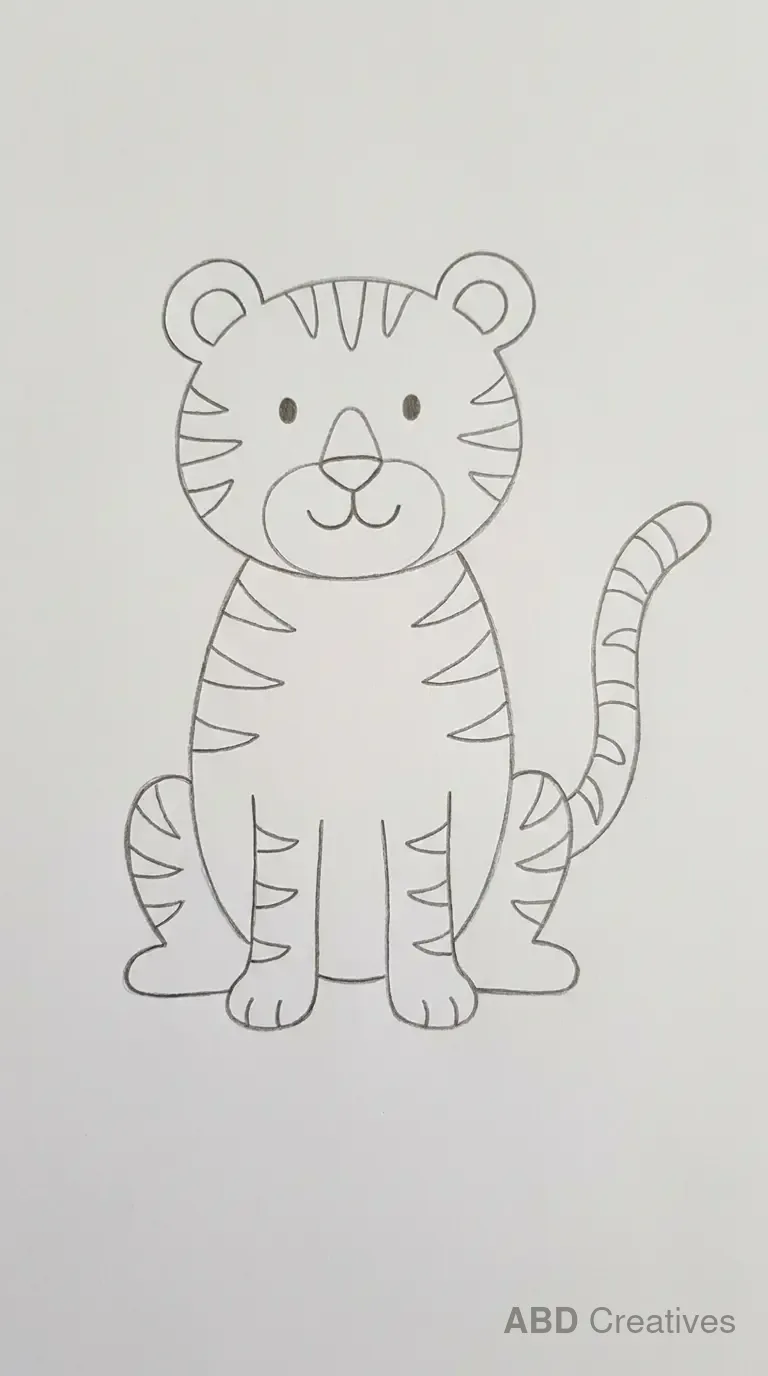
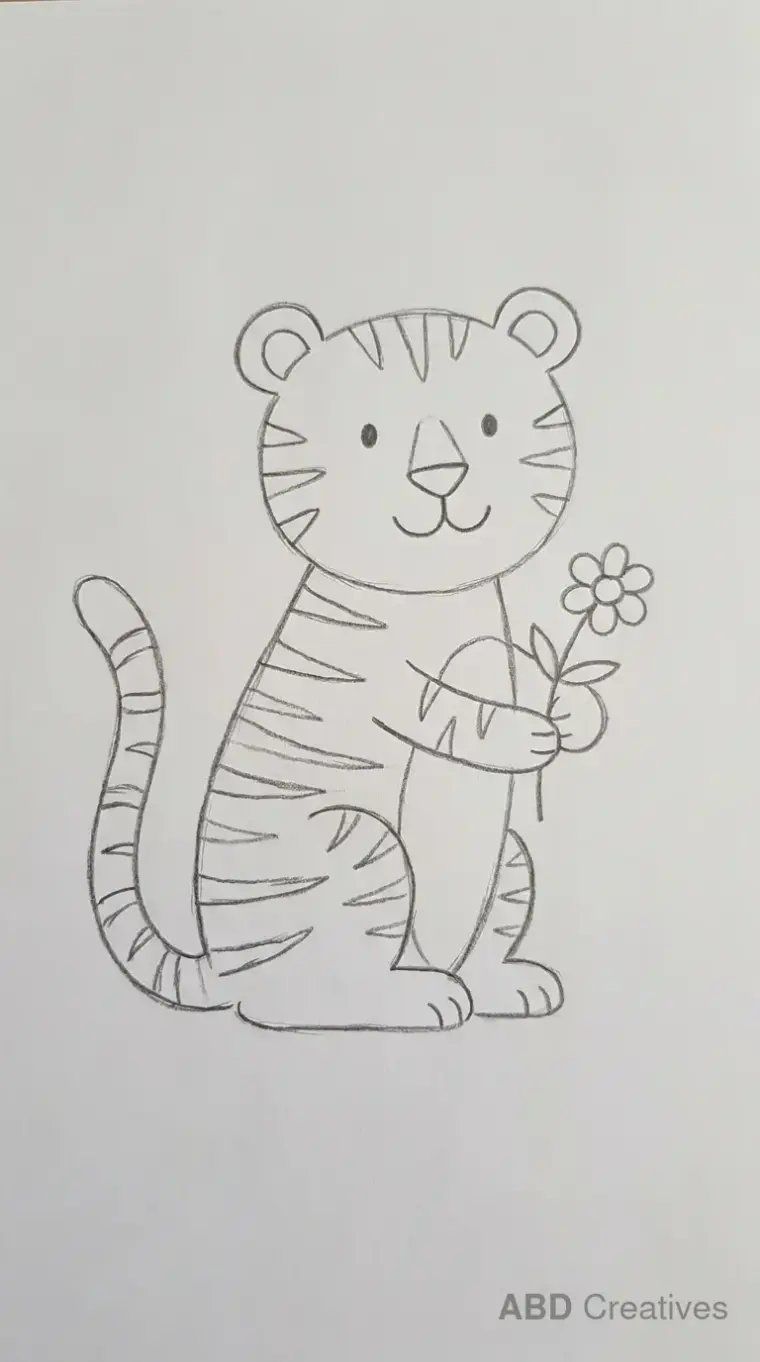
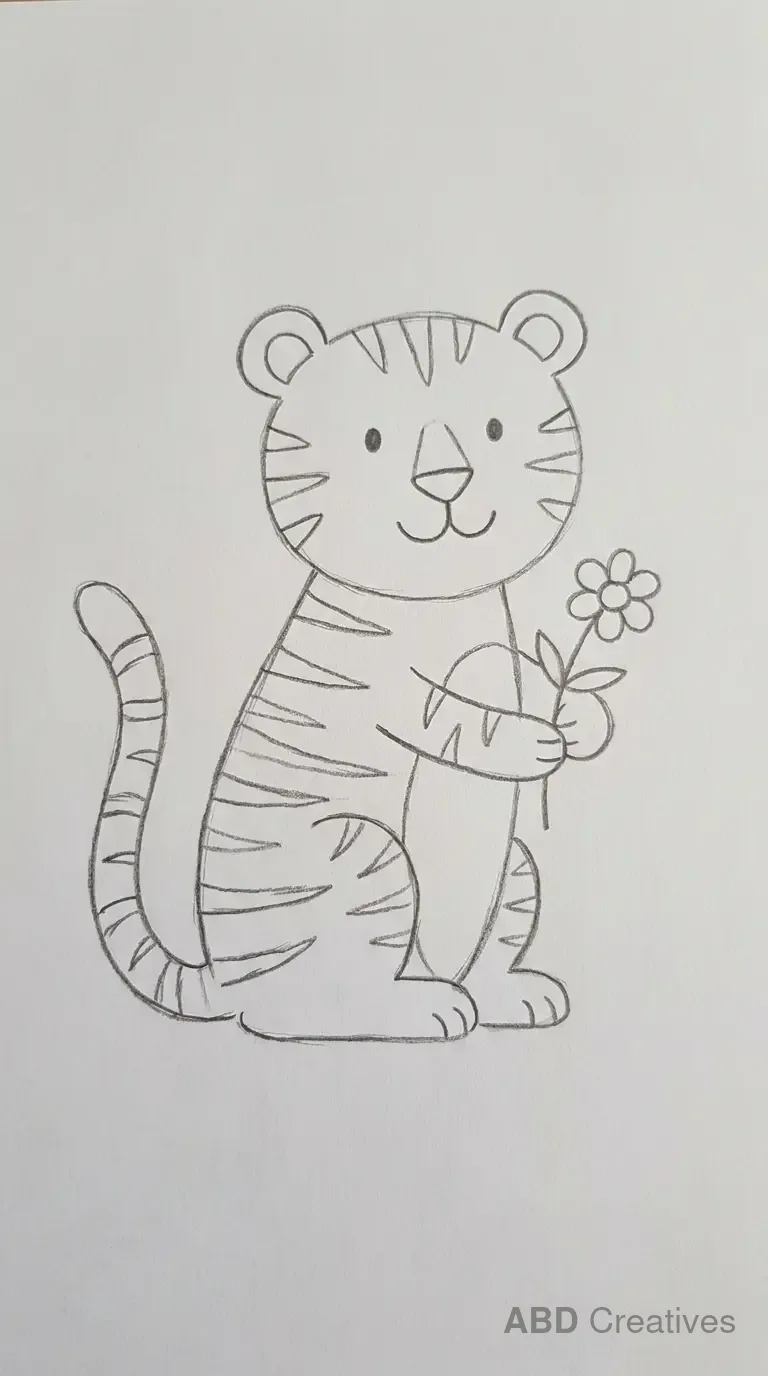
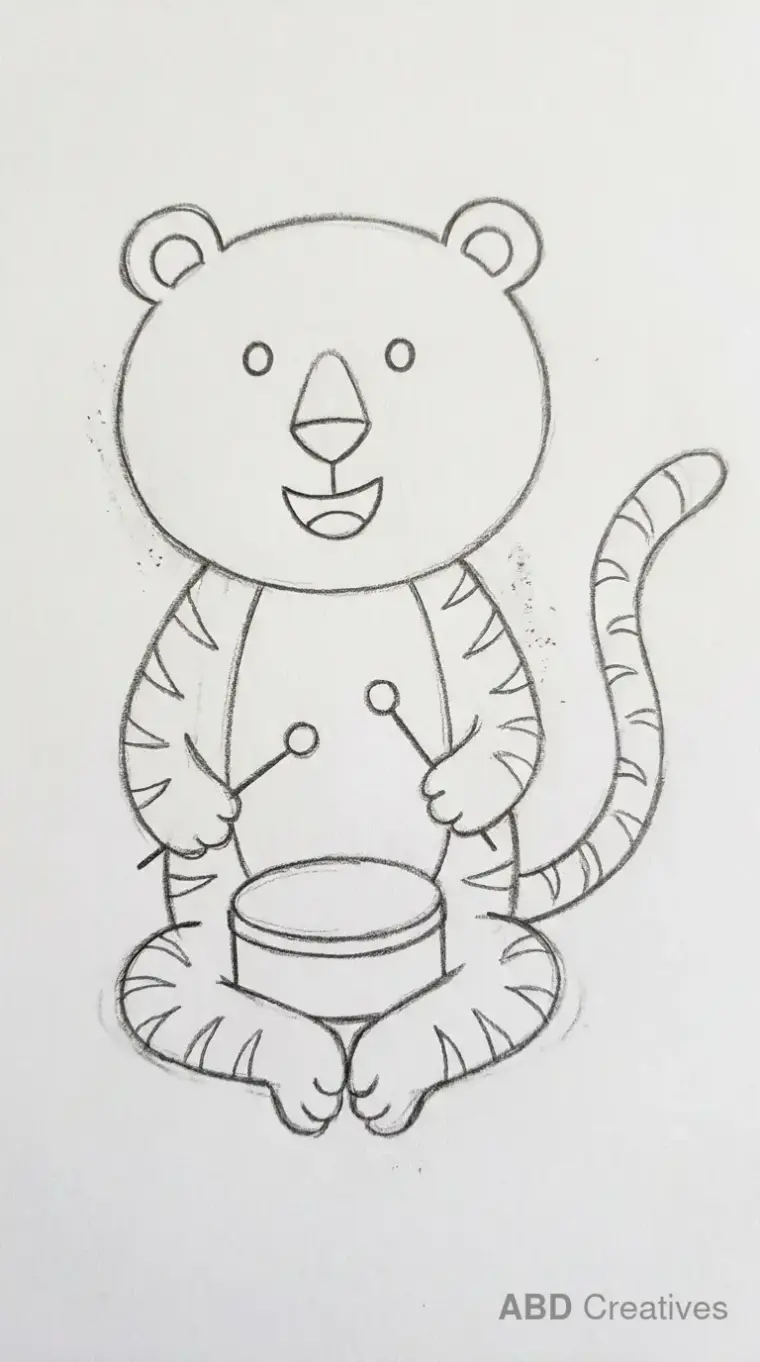
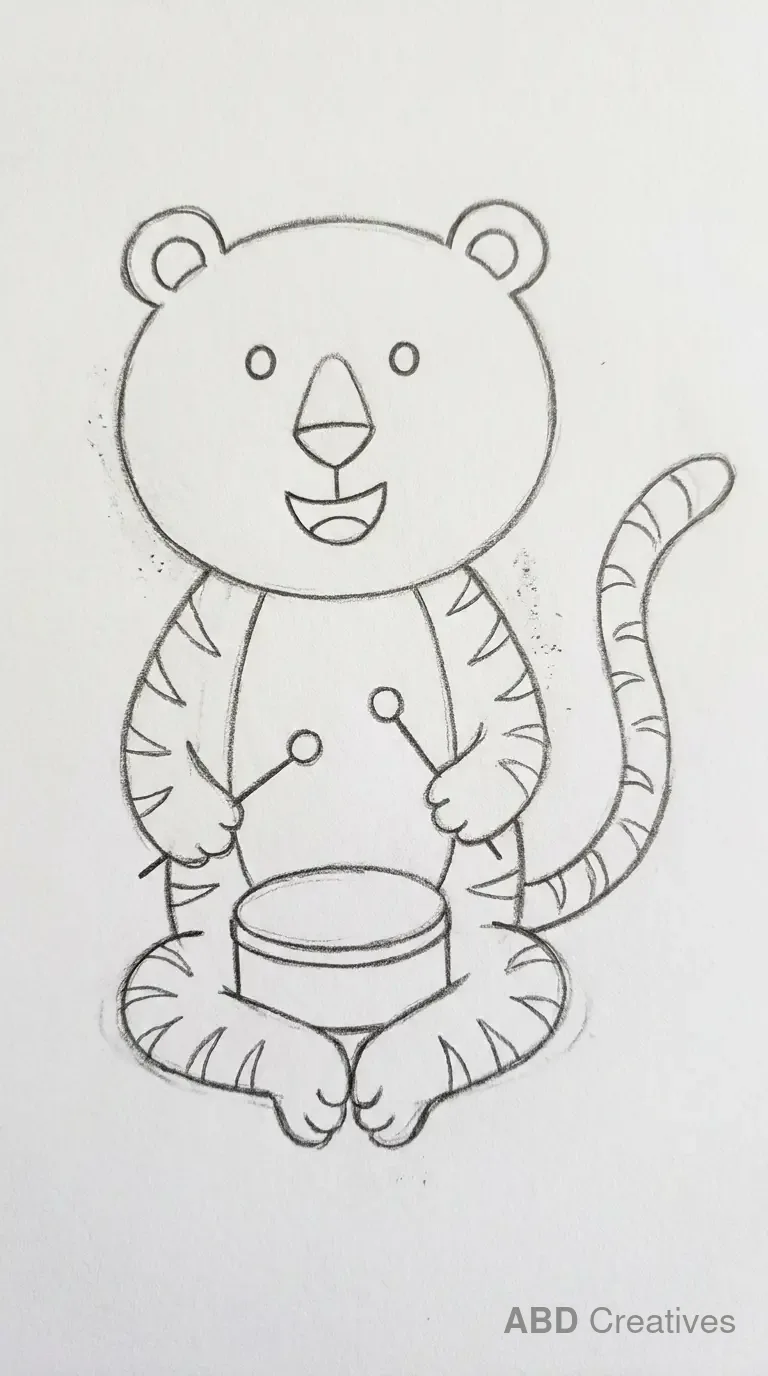
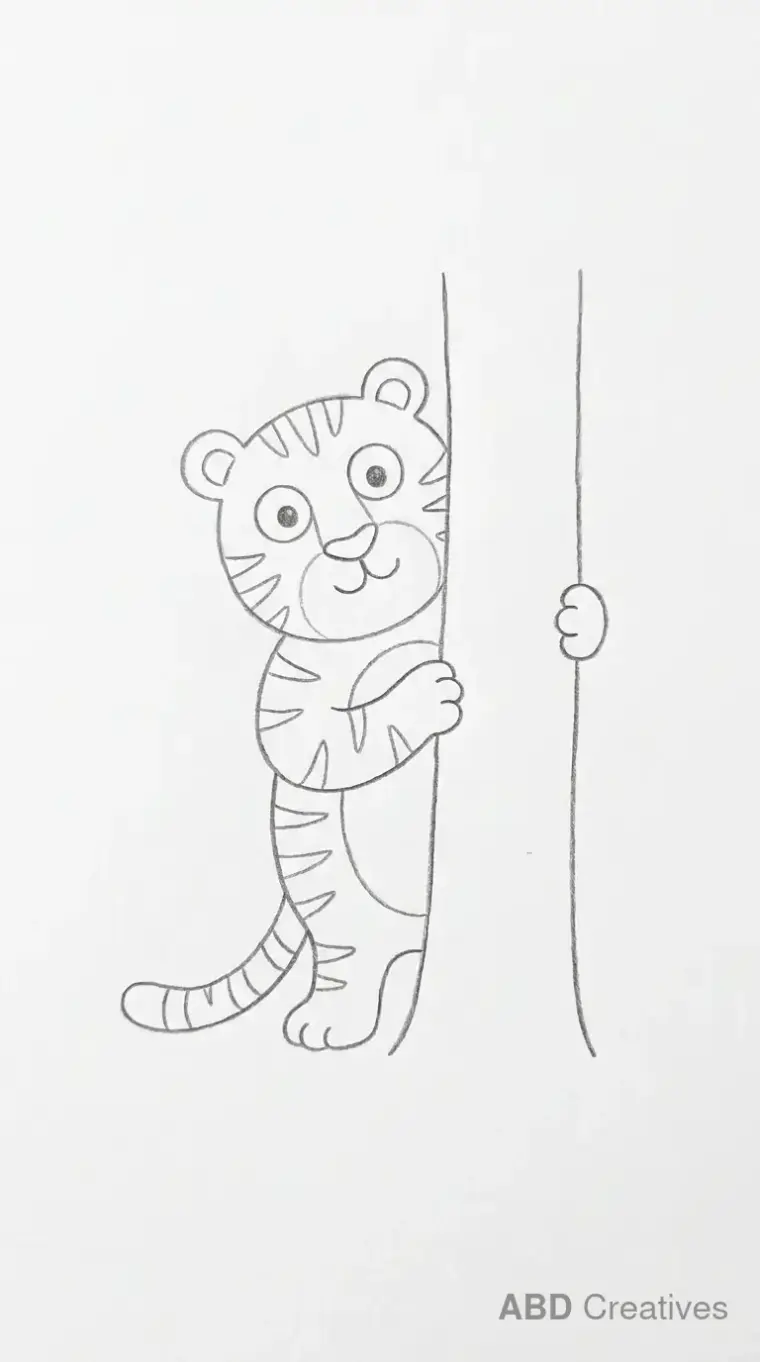
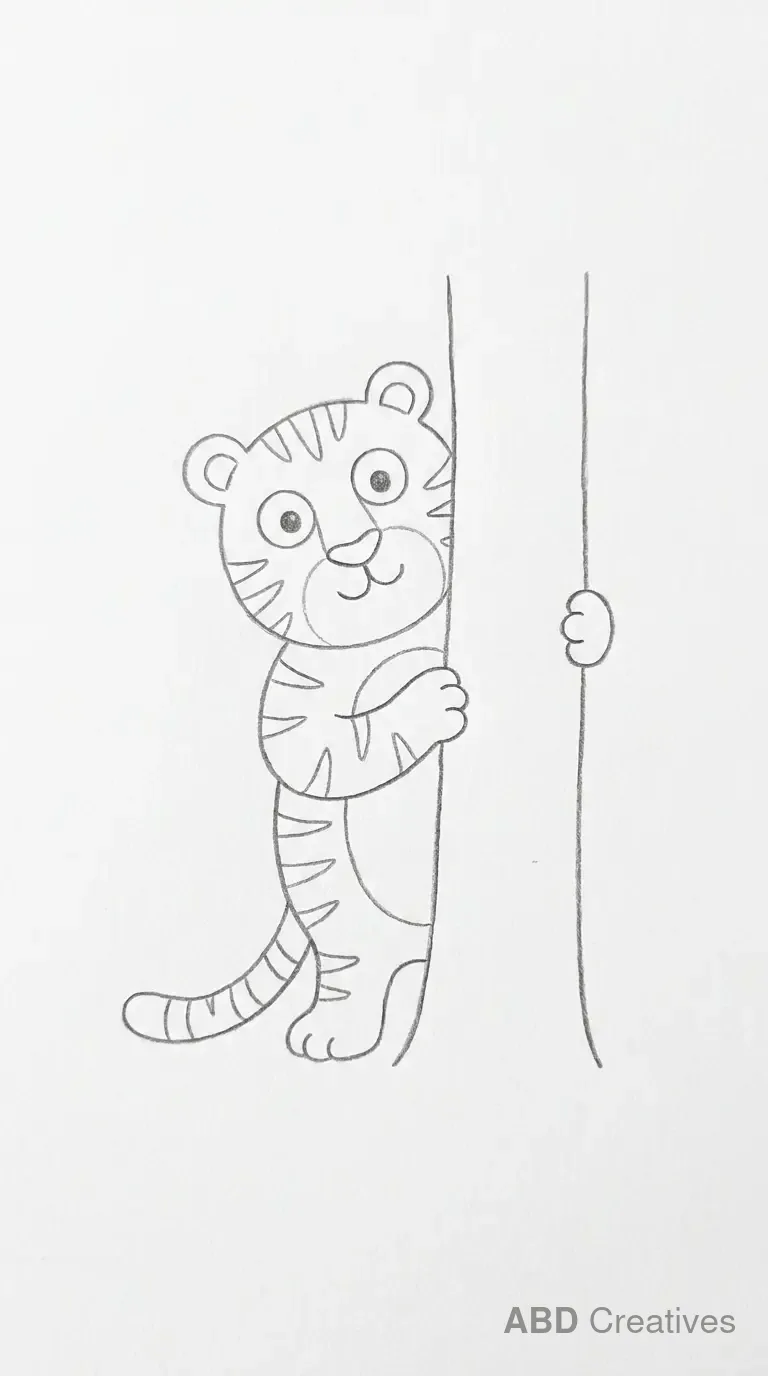
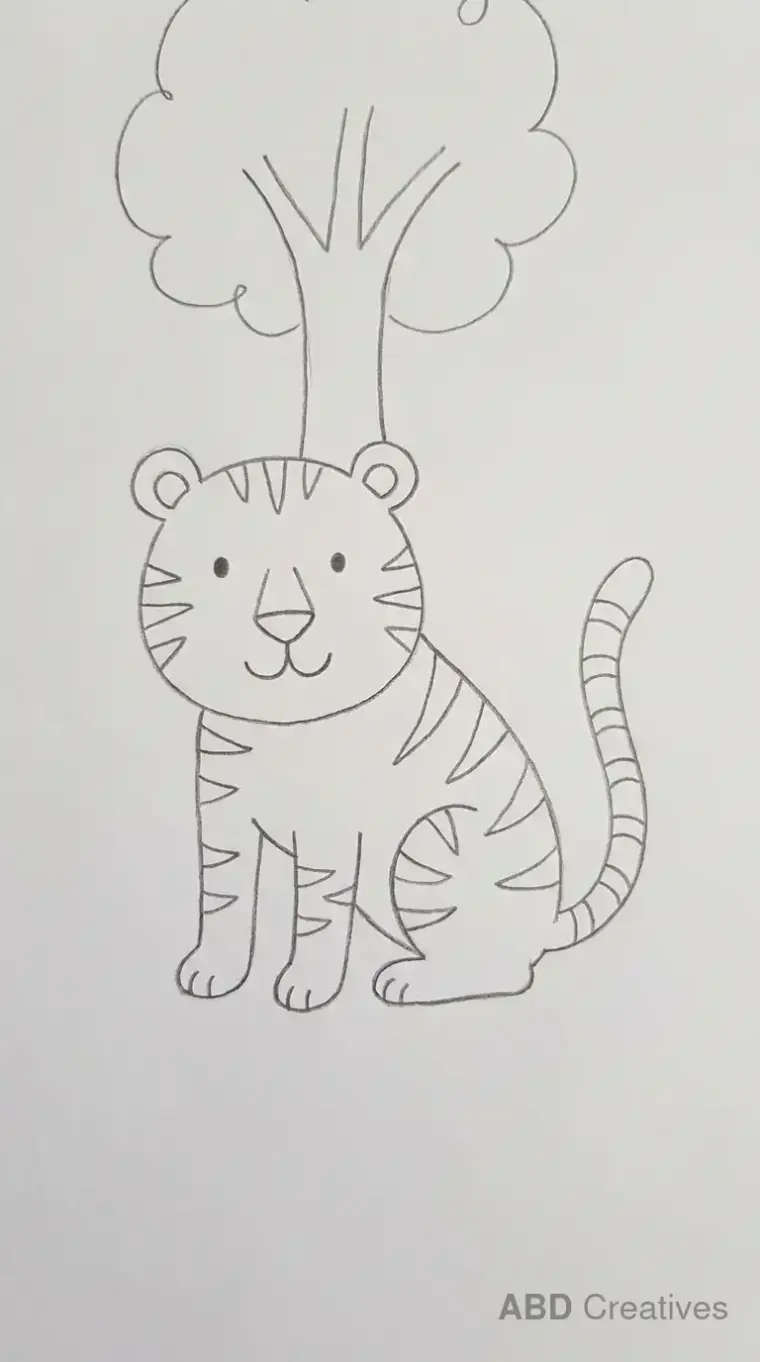
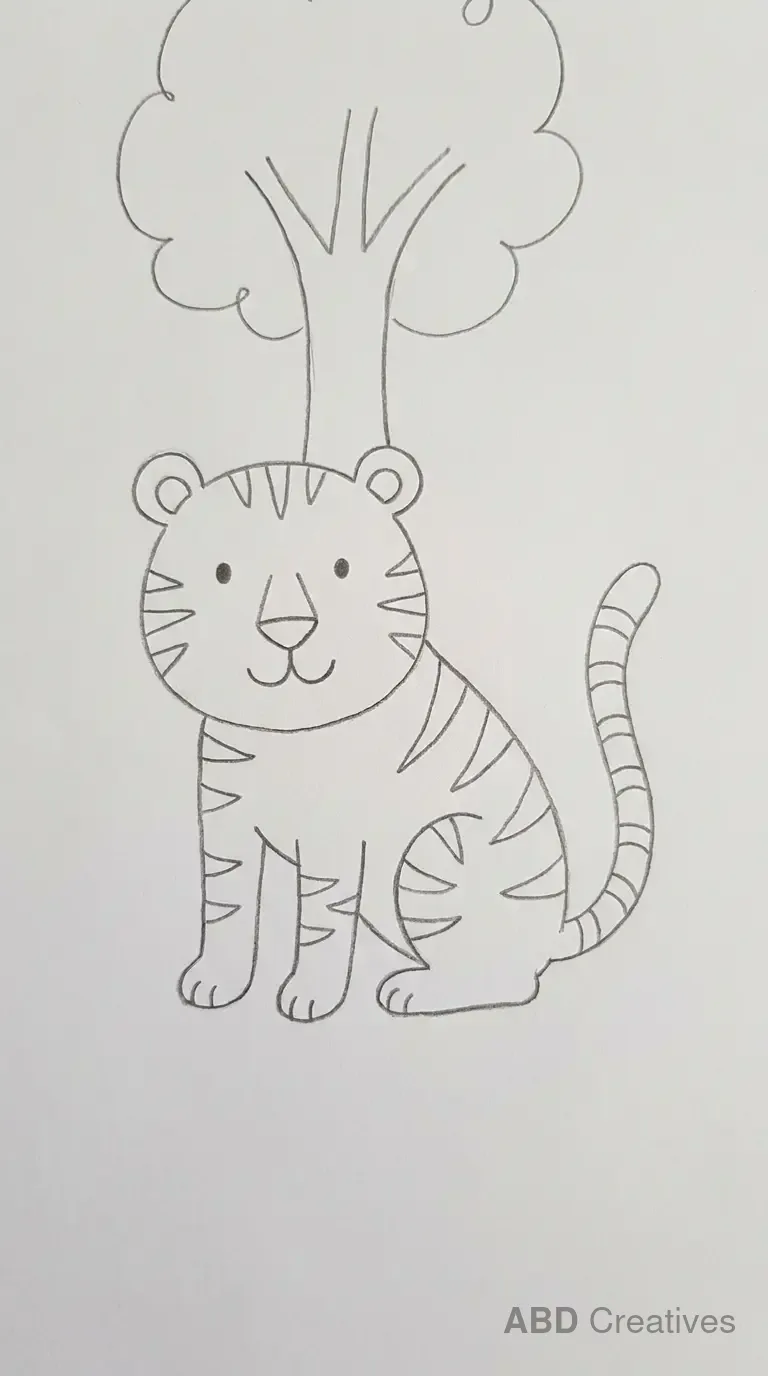
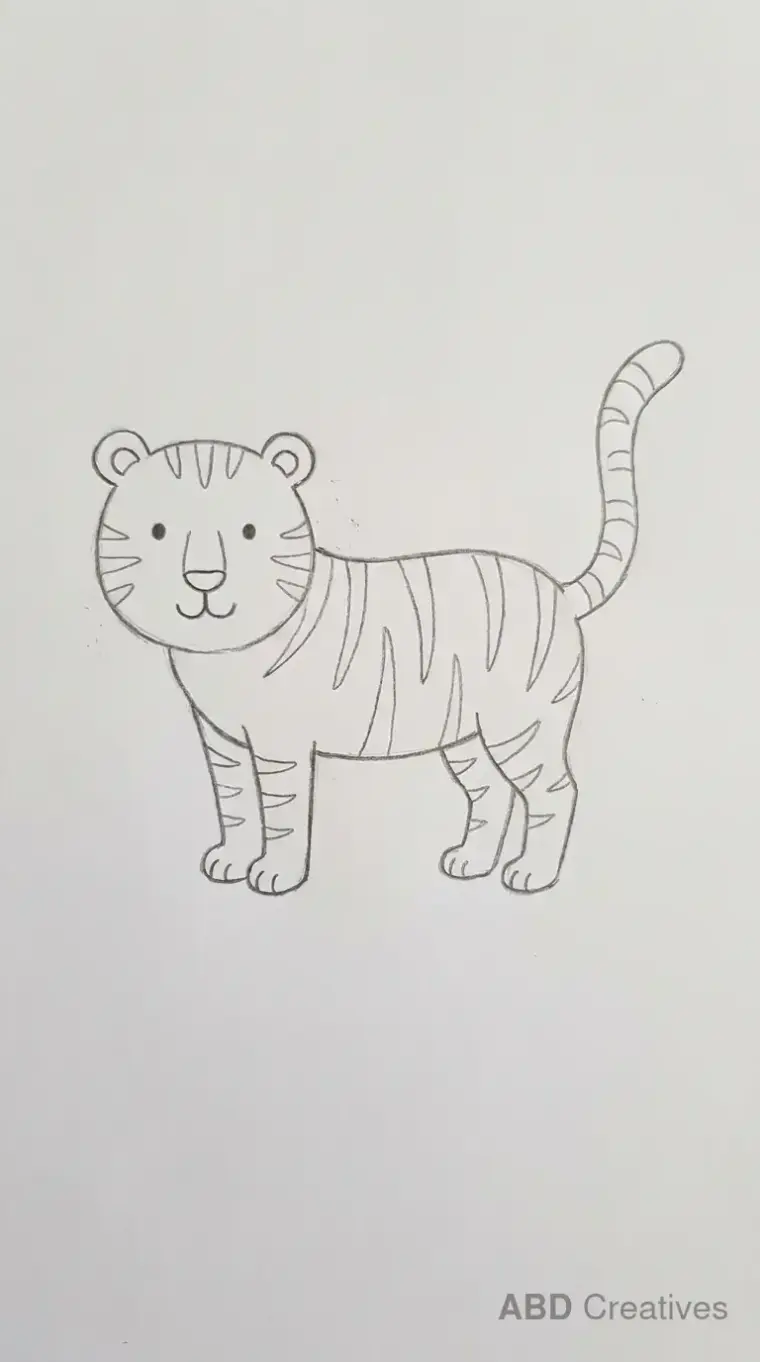
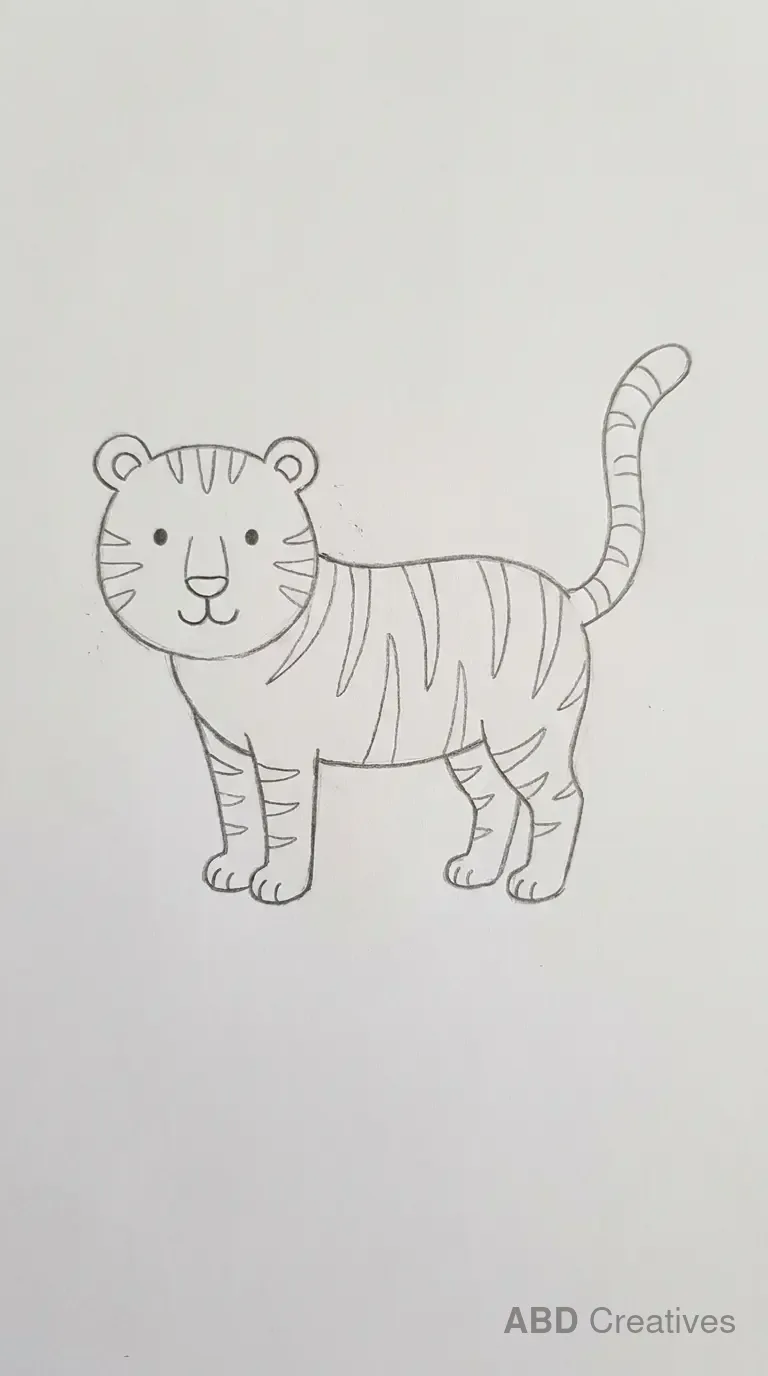
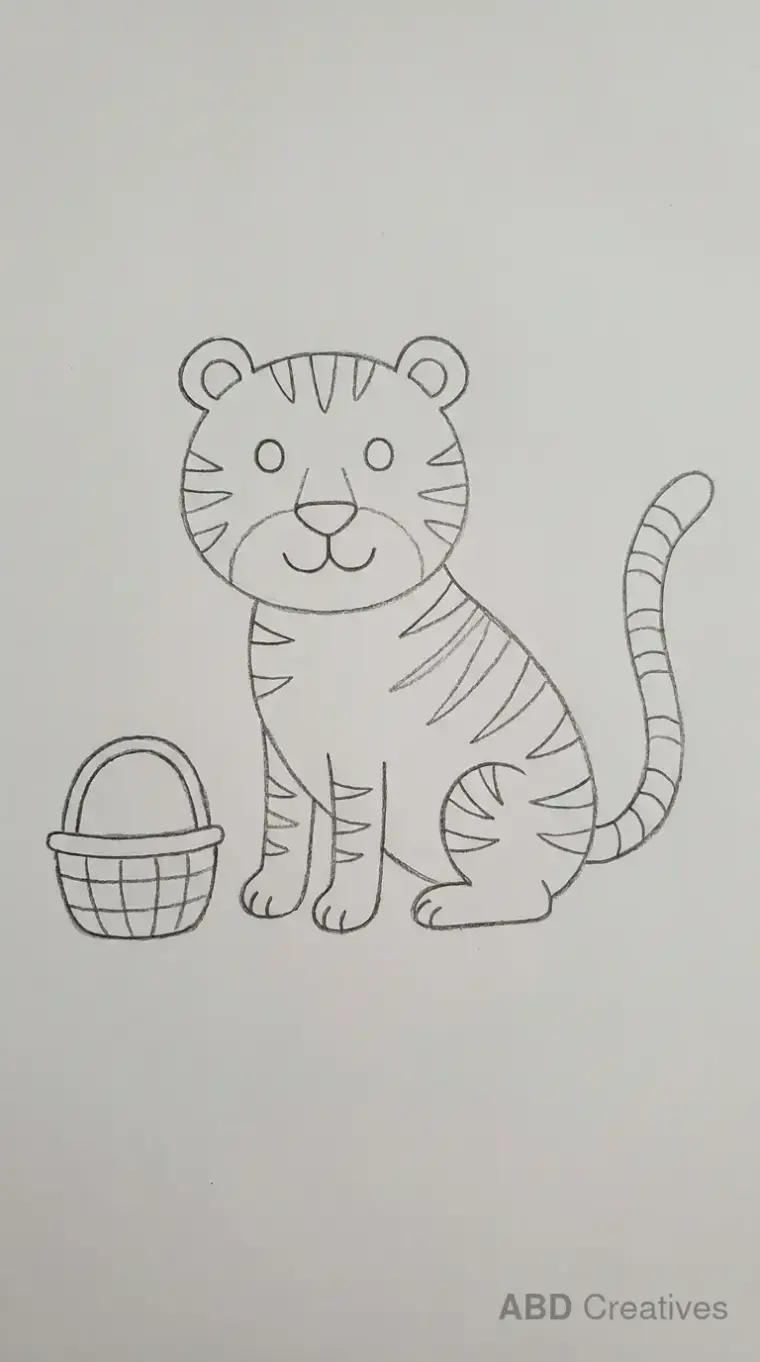
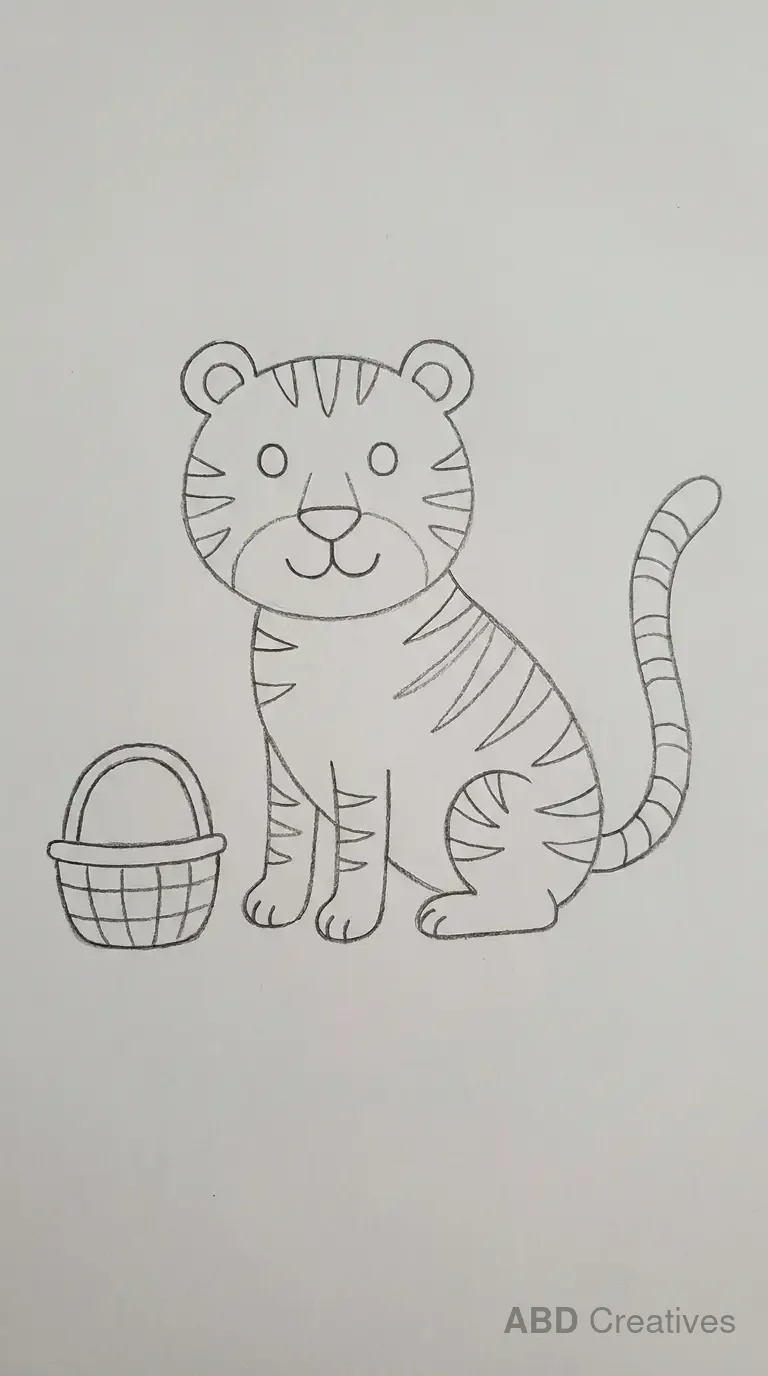
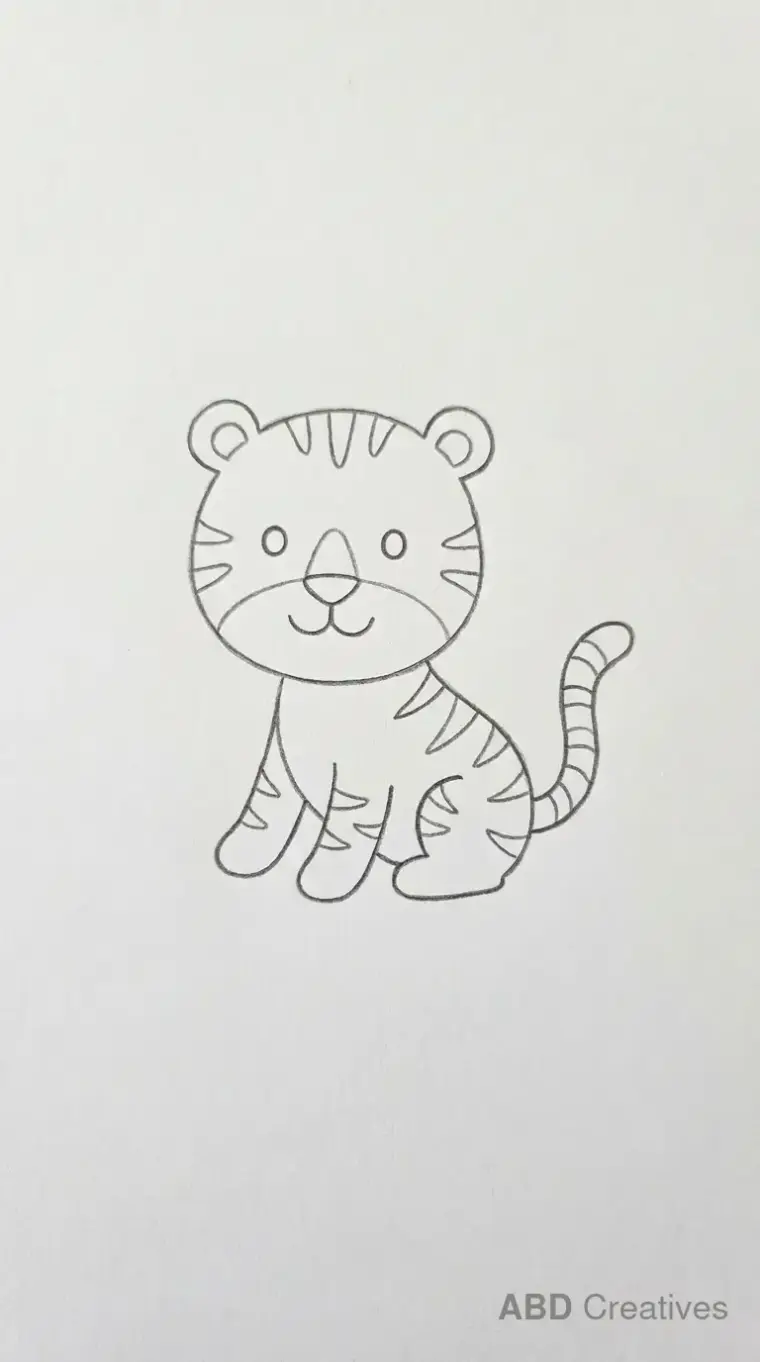
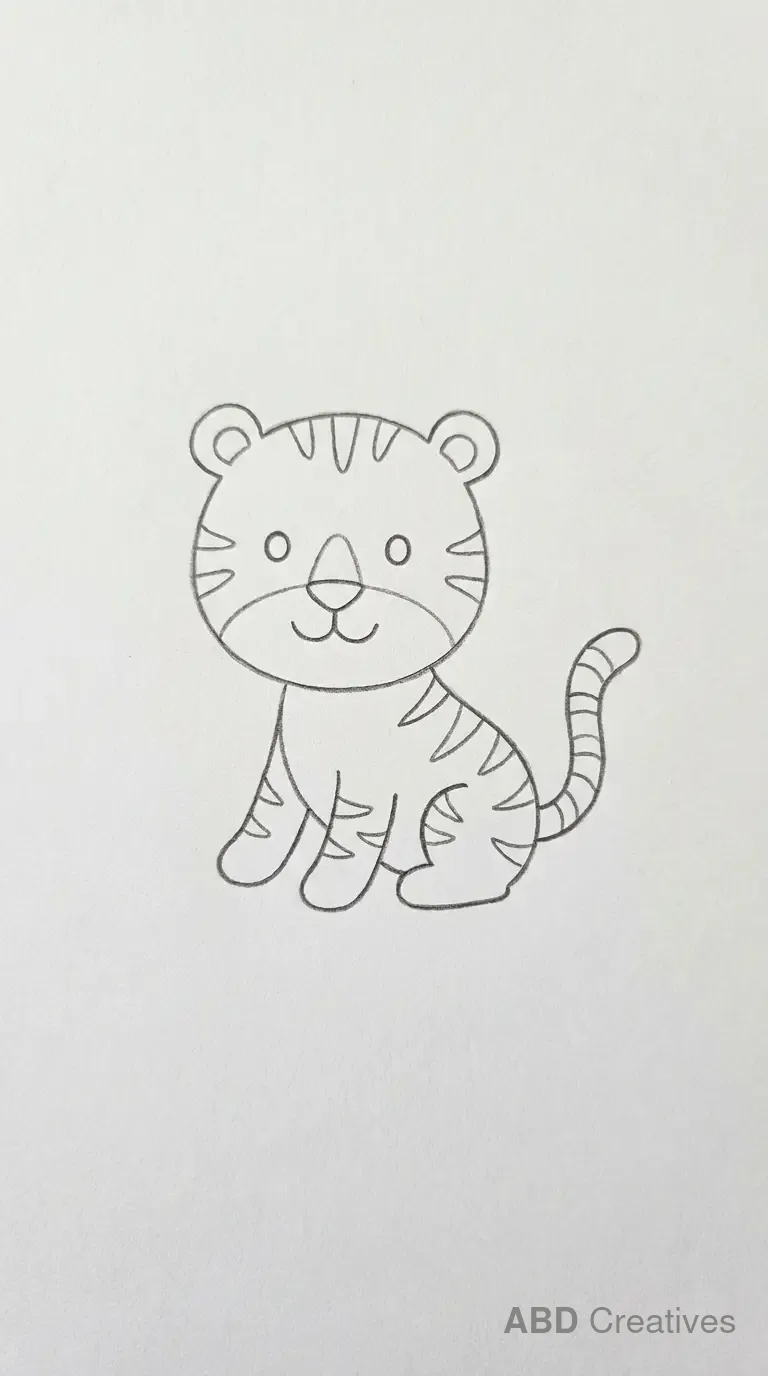
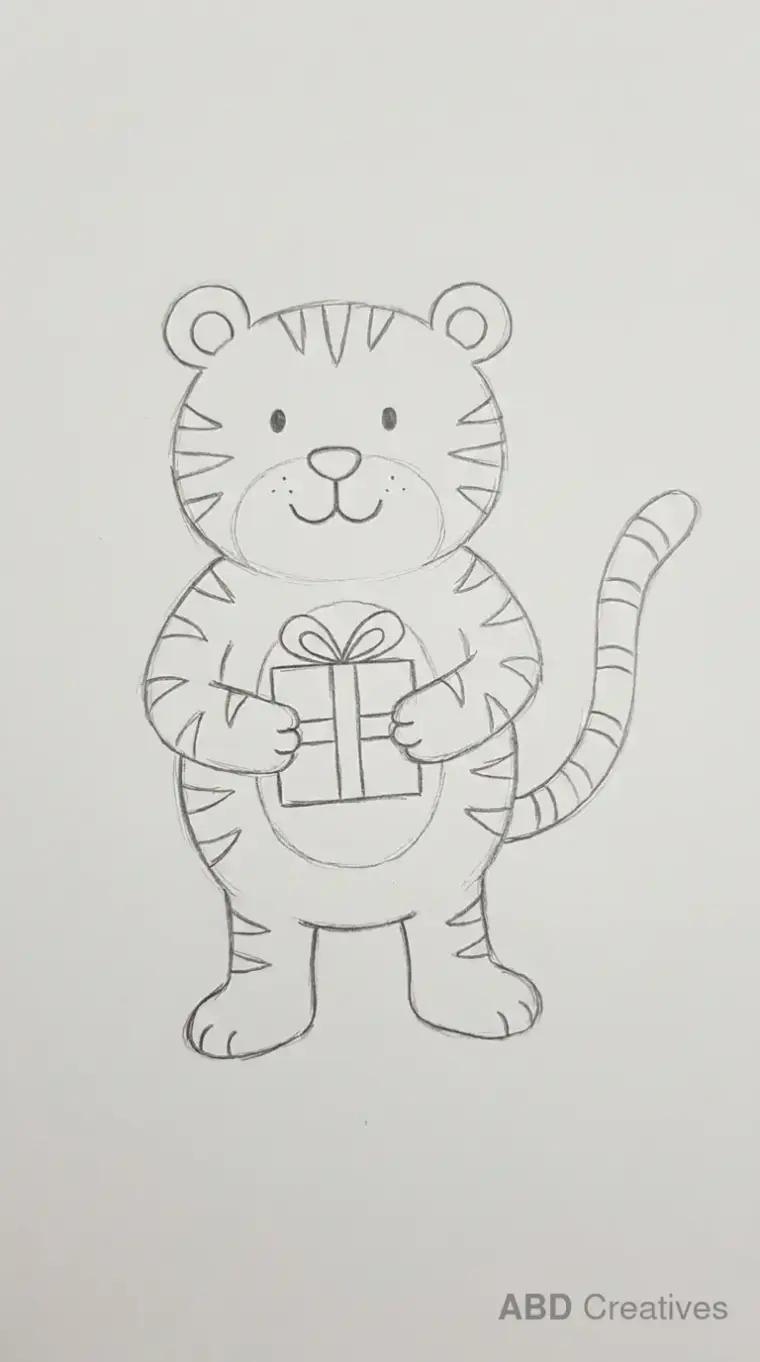
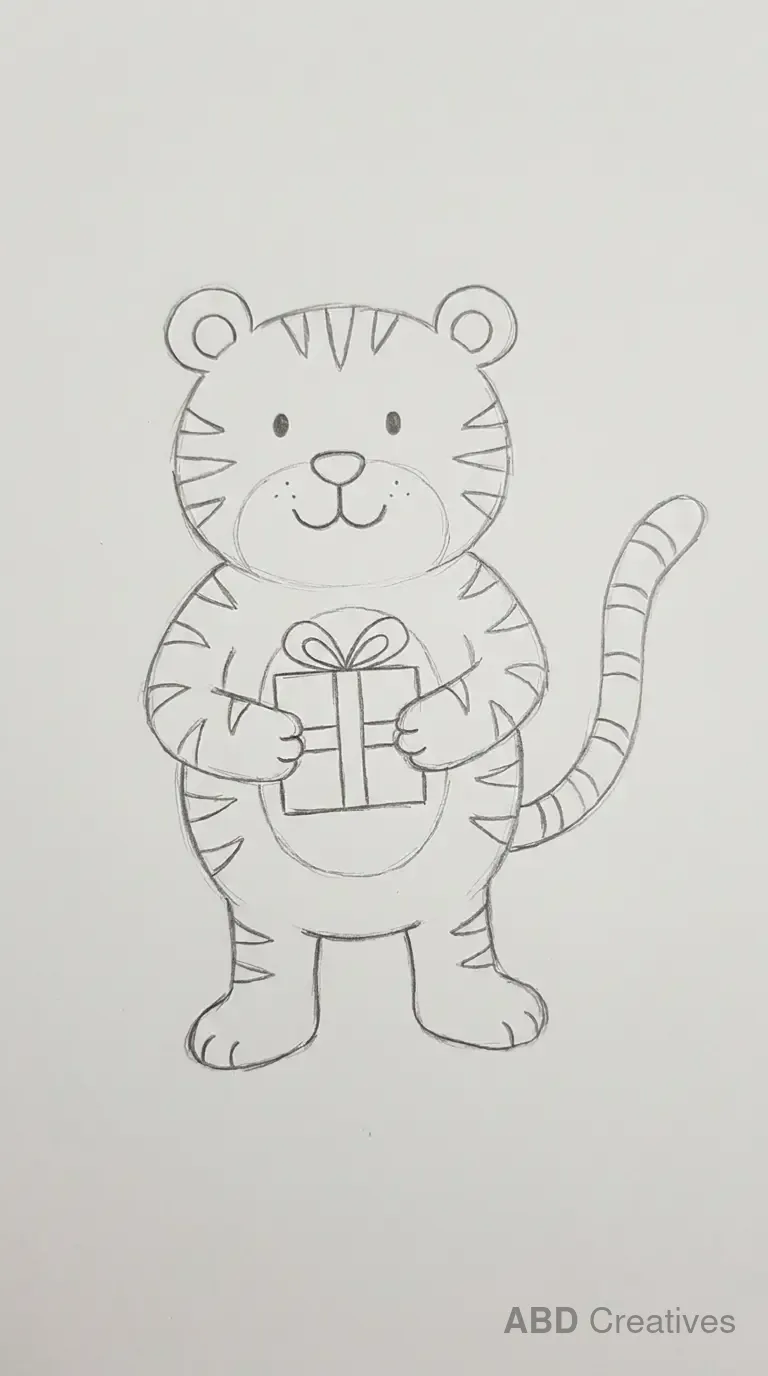
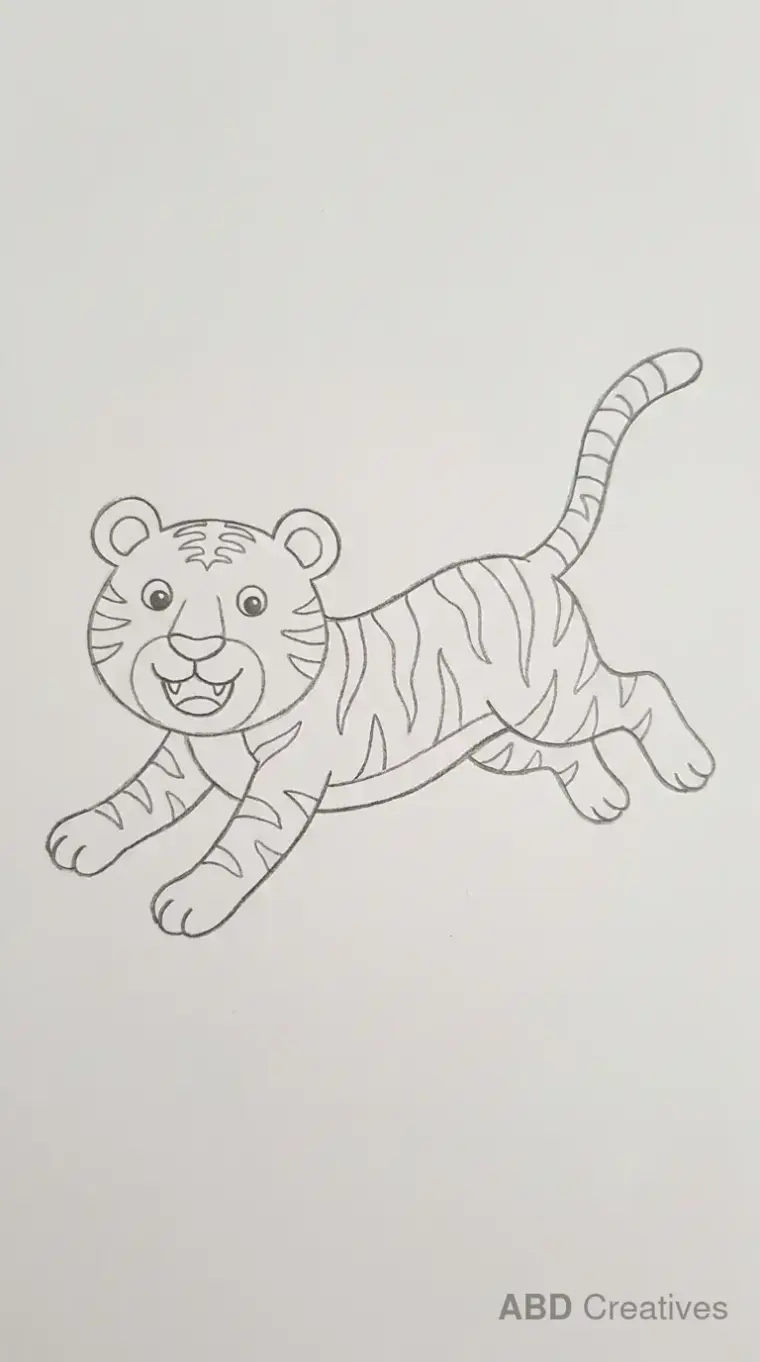
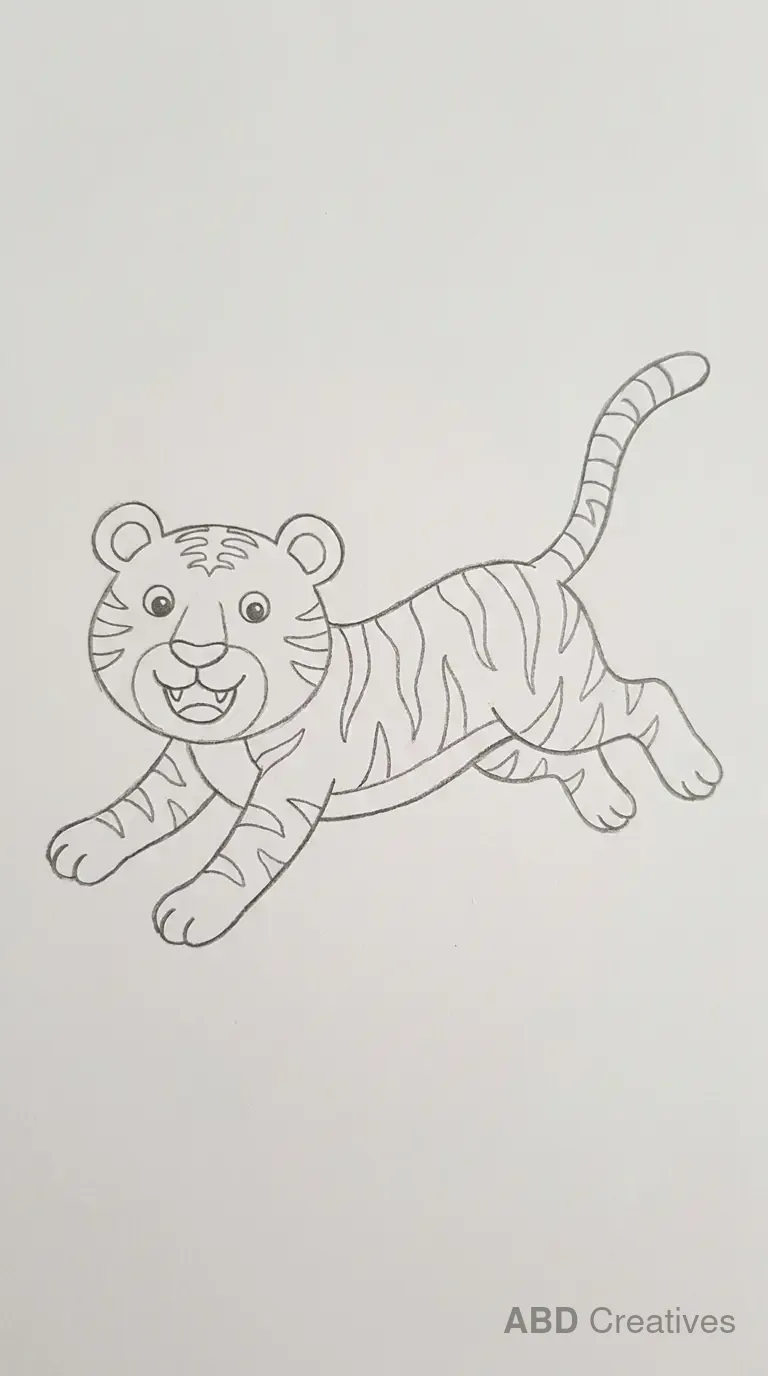
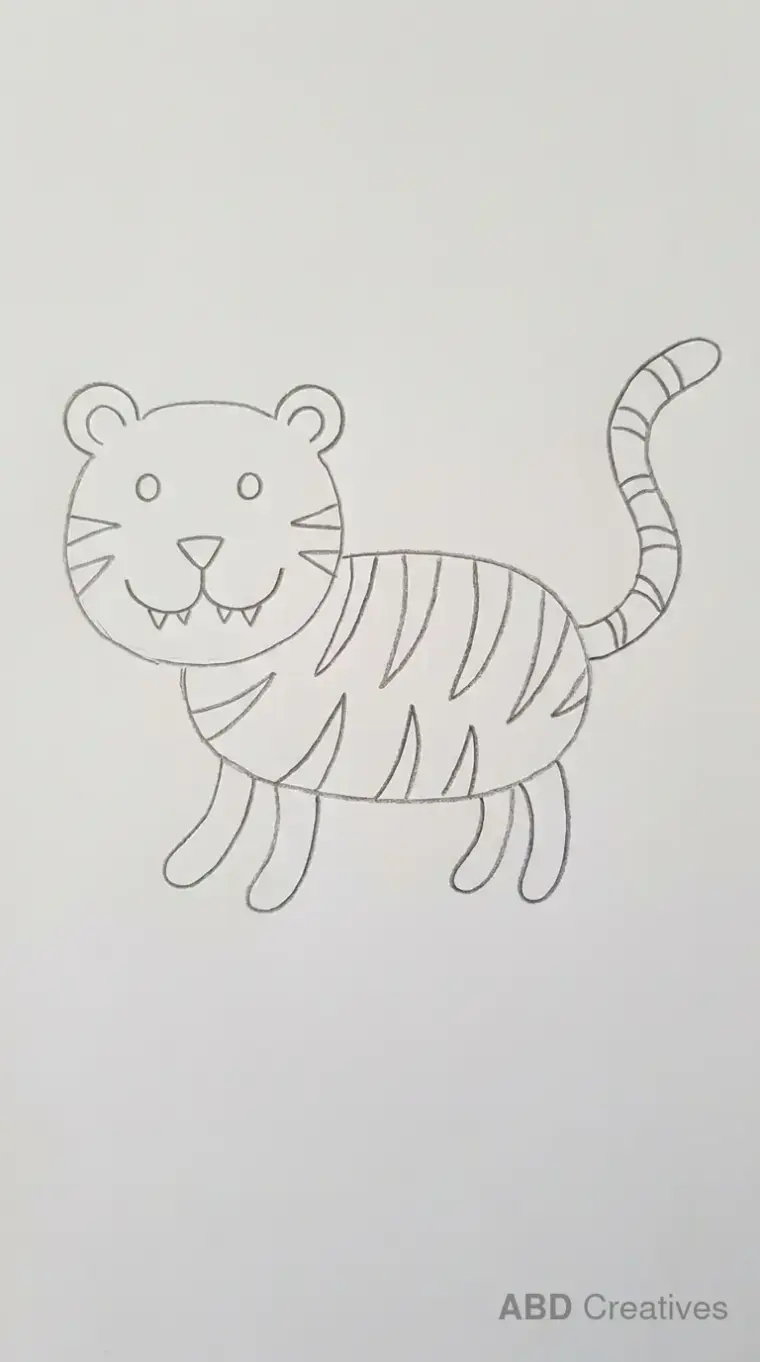
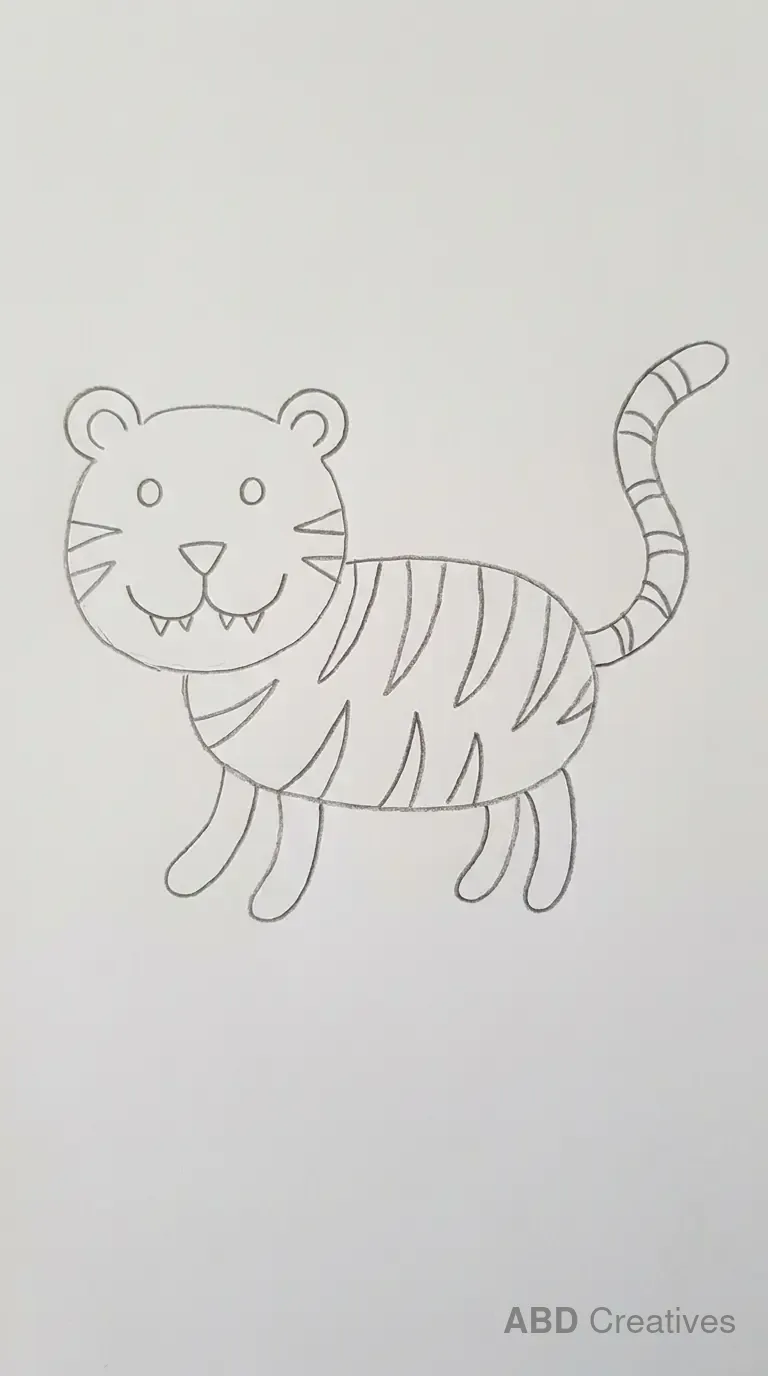
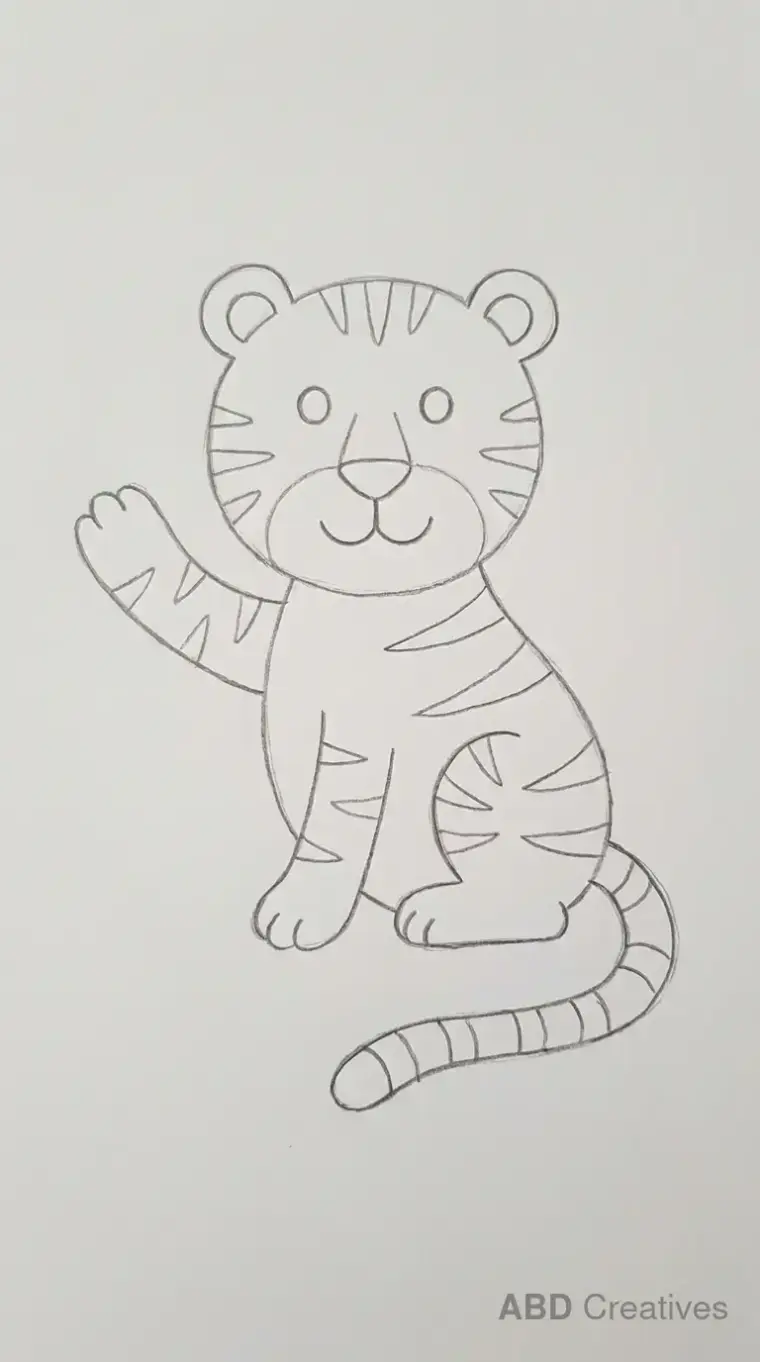
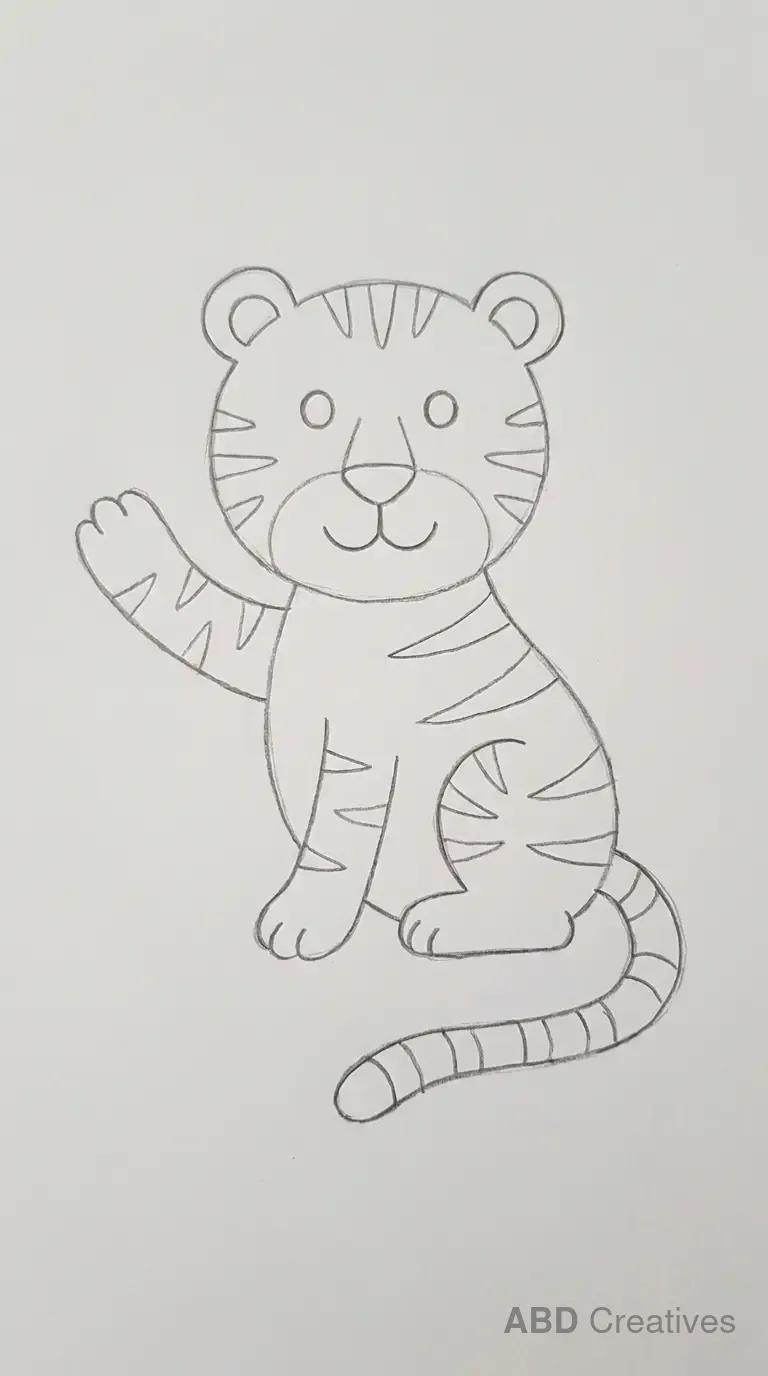
How to draw a tiger step by step
- Start with a simple oval for the head and a longer oval for the body.
- Join the two shapes with a short curved neck line.
- Add four leg shapes coming down from the body, keeping them fairly short and sturdy.
- Draw a wide, short muzzle at the front of the head, with two small round ears on top.
- Add a long curved tail coming out from the back of the body.
- Go over your pencil sketch with a clean, confident outline.
- Finish with the stripes, drawn as short curved lines running across the body, legs and tail.
Which tiger should you start with
If this is your first tiger
Pick a plain sitting or standing tiger with no props. This lets you focus on getting the basic body shape and stripes right before adding anything extra.
If you have drawn animals before
Try one of the tigers holding an object or wearing something, like a tiger holding a balloon or wearing a bow. These add a little more detail without changing the pose too much.
If you want a challenge
Choose a tiger in a jumping, leaping or stretching pose. These poses stretch the body at an angle and take more practice to get the proportions right.
What you need
A pencil, an eraser and plain paper are all you need to copy these drawings. A fine liner pen is useful if you want to go over your final lines once you are happy with the pencil sketch.
Three things that make a tiger look like a tiger
- Stripes Keep the stripes short, curved and slightly uneven rather than straight lines, since a tiger’s stripes are never perfectly straight.
- Muzzle shape Draw the muzzle wide and short rather than long and pointed, which is what separates a tiger face from a dog or a wolf.
- Round ears Keep the ears small and rounded rather than tall and pointed, since tall pointed ears will make the drawing look like a different cat.
Ways to use these drawings
Print a few pages and use them as a simple colouring activity for kids, trace them onto card for a birthday craft, or use them as warm up sketches before you draw a tiger of your own from scratch.
Questions people ask
Are these tiger drawings free to use?
Yes. You can download, print and copy every drawing on this page for personal or classroom use at no cost.
What do I need to copy these drawings?
Just a pencil, an eraser and a sheet of plain paper. A fine liner pen is optional if you want to darken your final lines.
Are these drawings suitable for beginners?
Yes. Several of the tigers are drawn in a plain, simple pose with no props, which makes them a good starting point if you have never drawn a tiger before.
Can I use these tiger drawings for a school project?
Yes. They work well for animal projects, colouring sheets and step by step art lessons in the classroom.
Do I need to draw the stripes exactly like the picture?
No. The stripes are meant as a guide. You can space them however feels natural as long as they curve gently across the body.
Can kids copy these drawings on their own?
Yes. The outlines are simple enough for children to copy with a little patience, and an adult can help with the first few tries.
Where can I find more animal drawings like these?
This tiger set sits alongside other animal categories on the site, so you can browse more drawing ideas once you have finished these.
Are these drawings made by hand?
Yes. Each one was drawn in pencil on plain paper and photographed. They are not computer generated or traced from photographs.