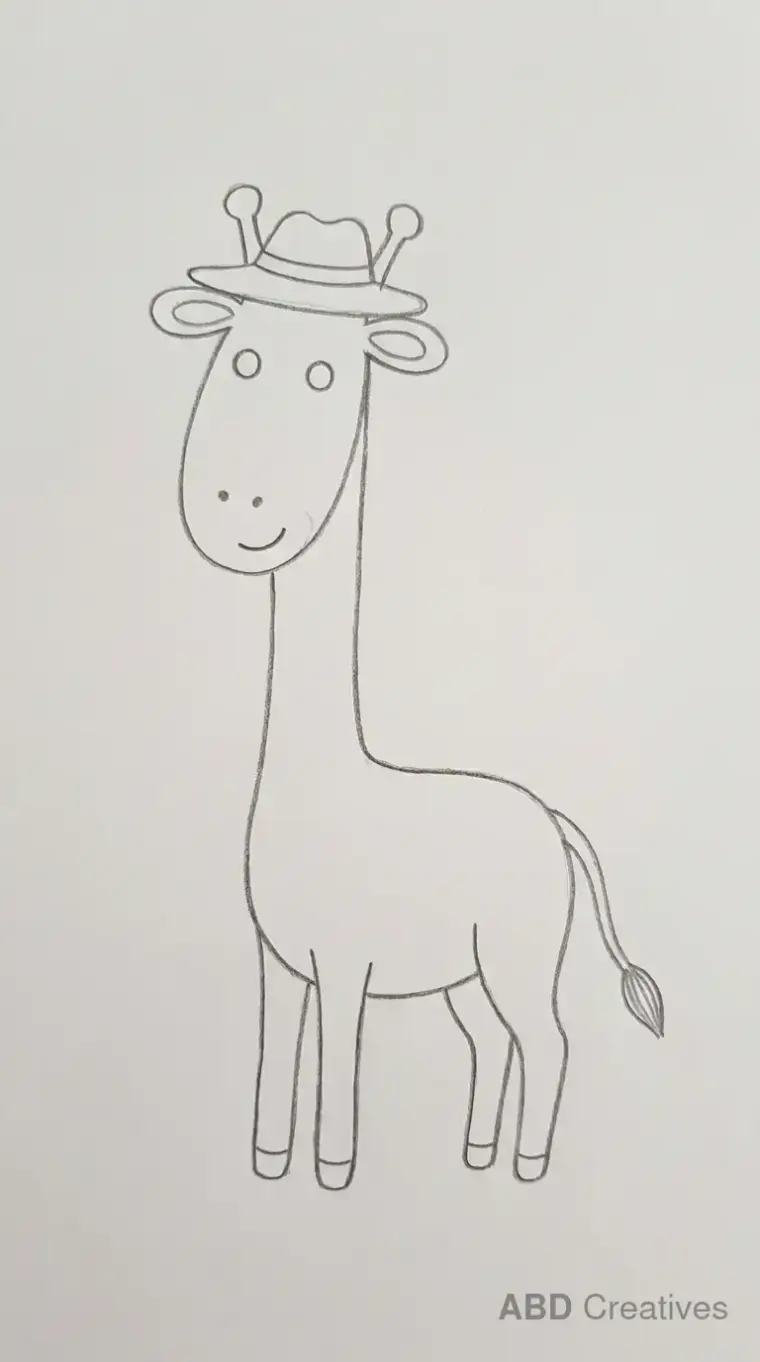
Giraffe Drawing Ideas
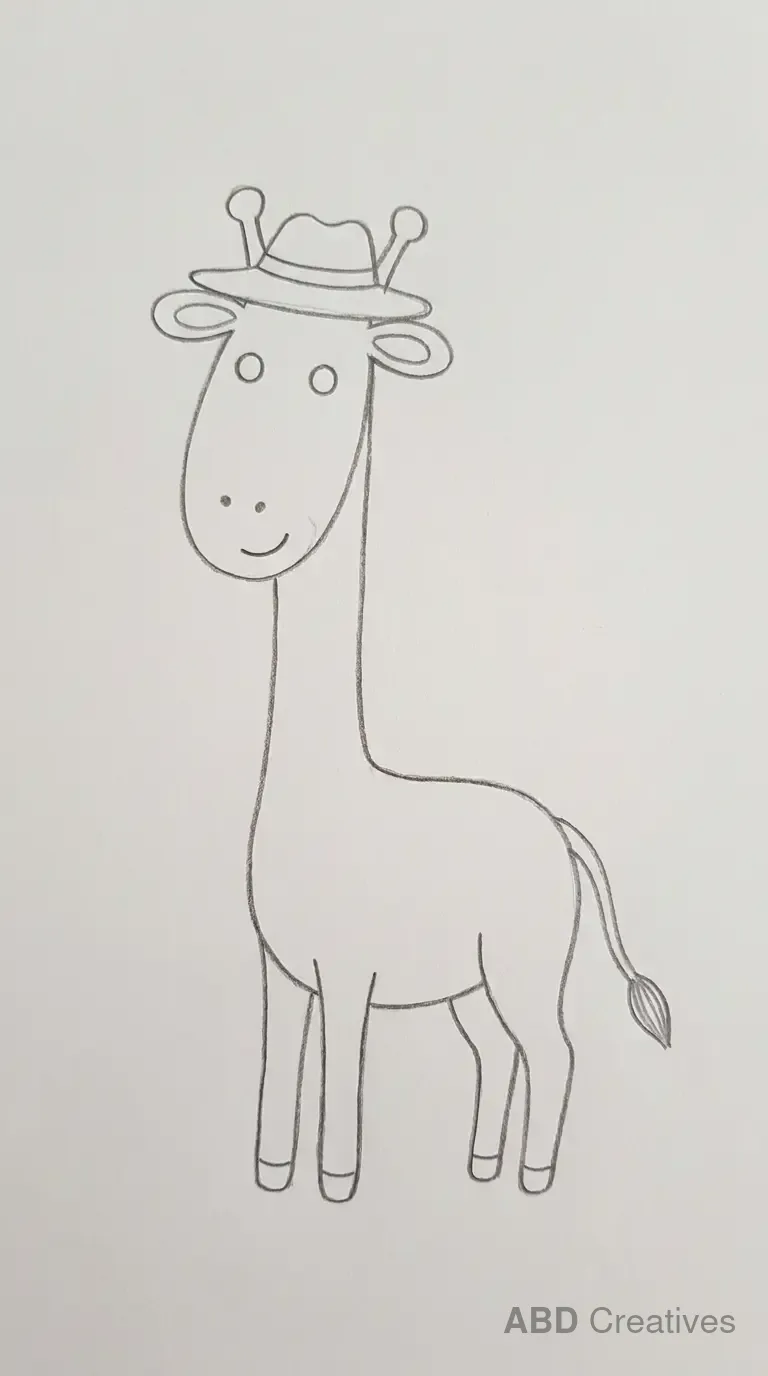
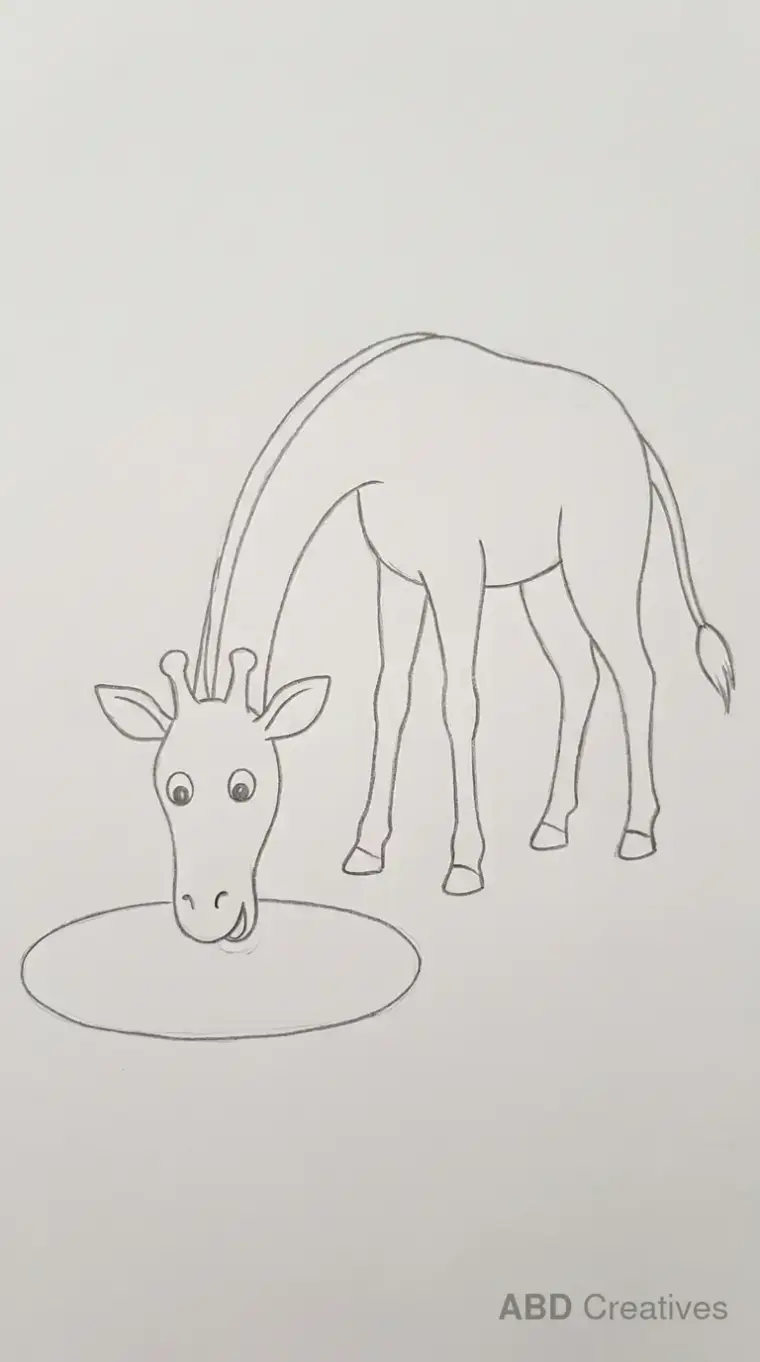
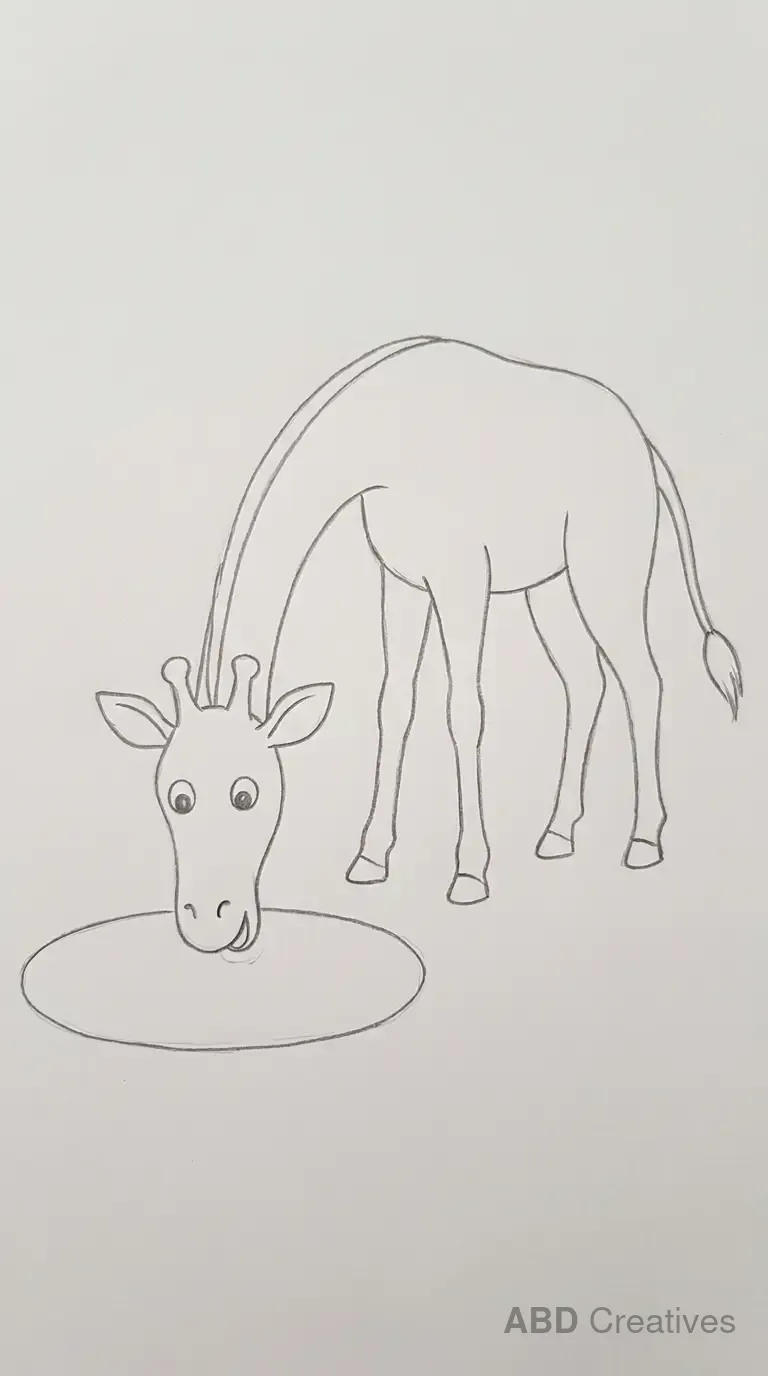
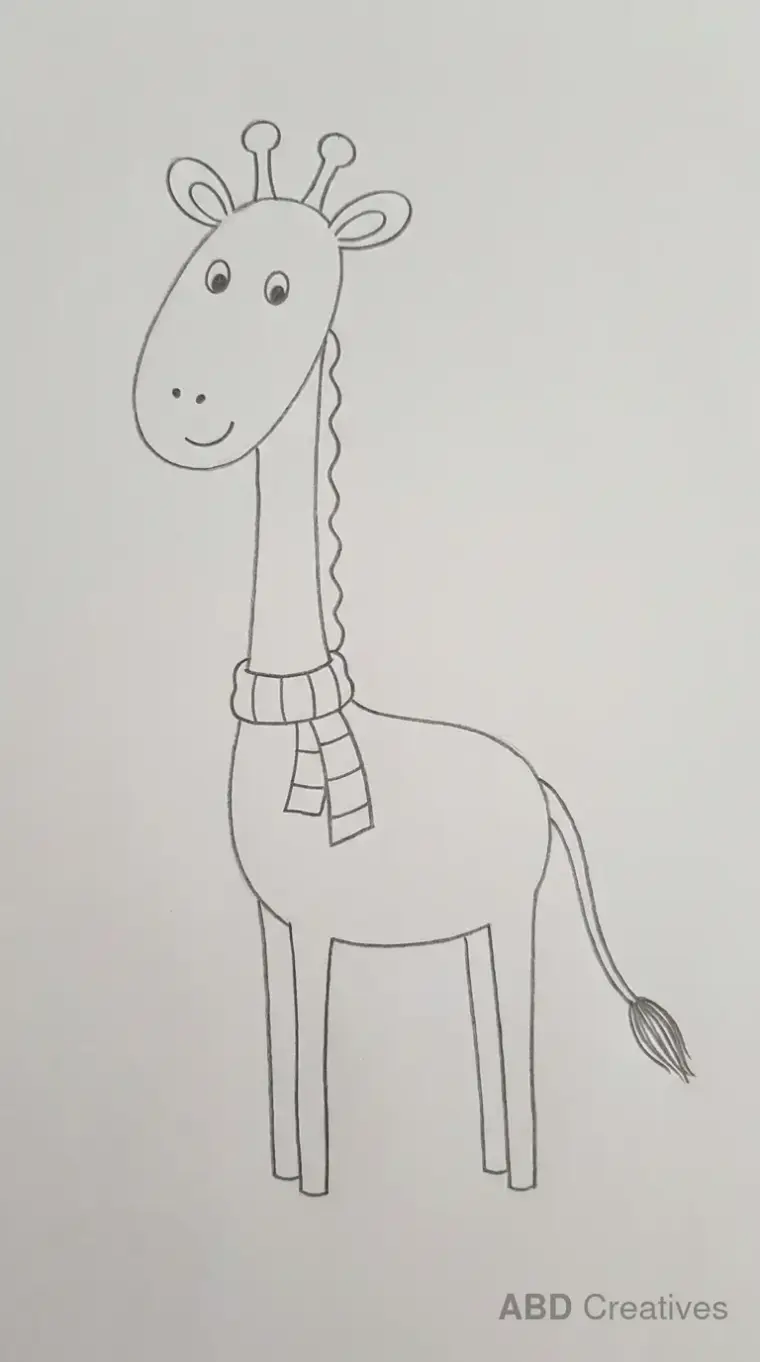
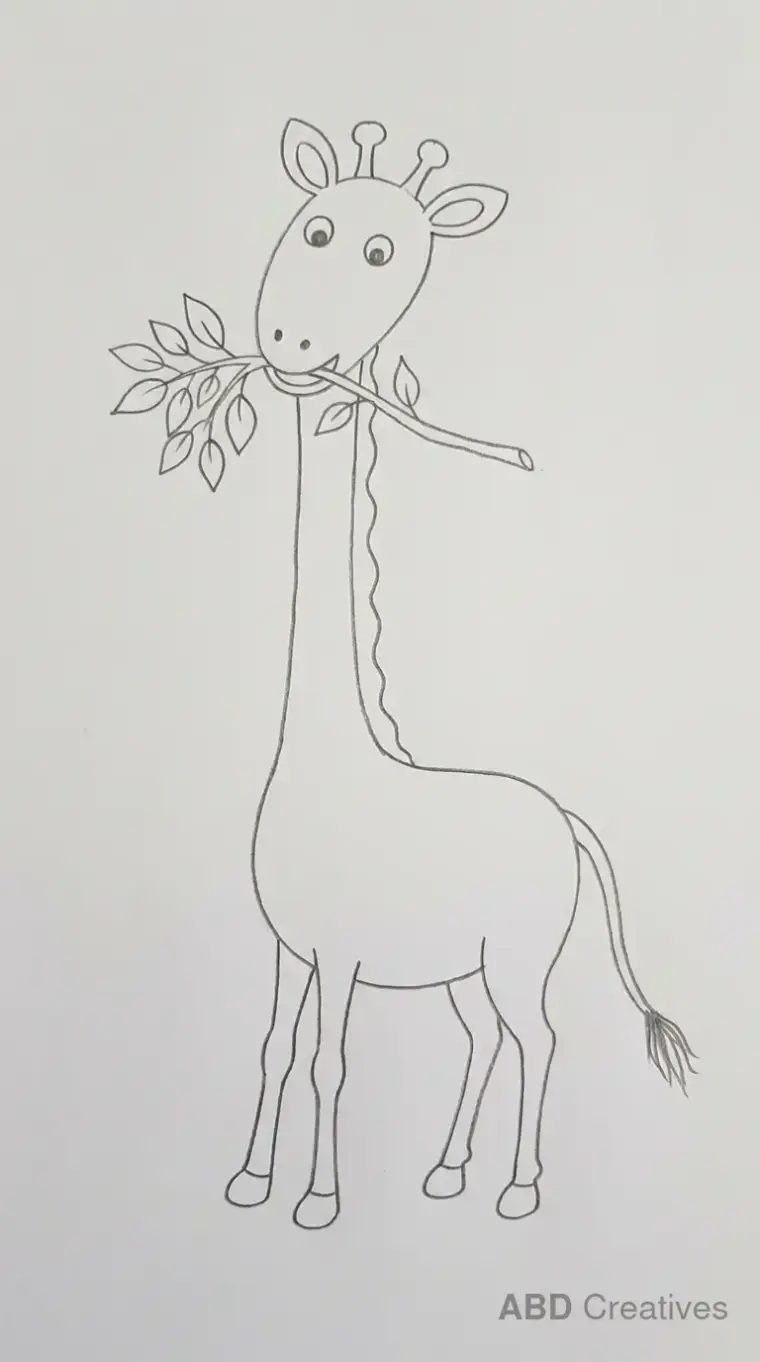
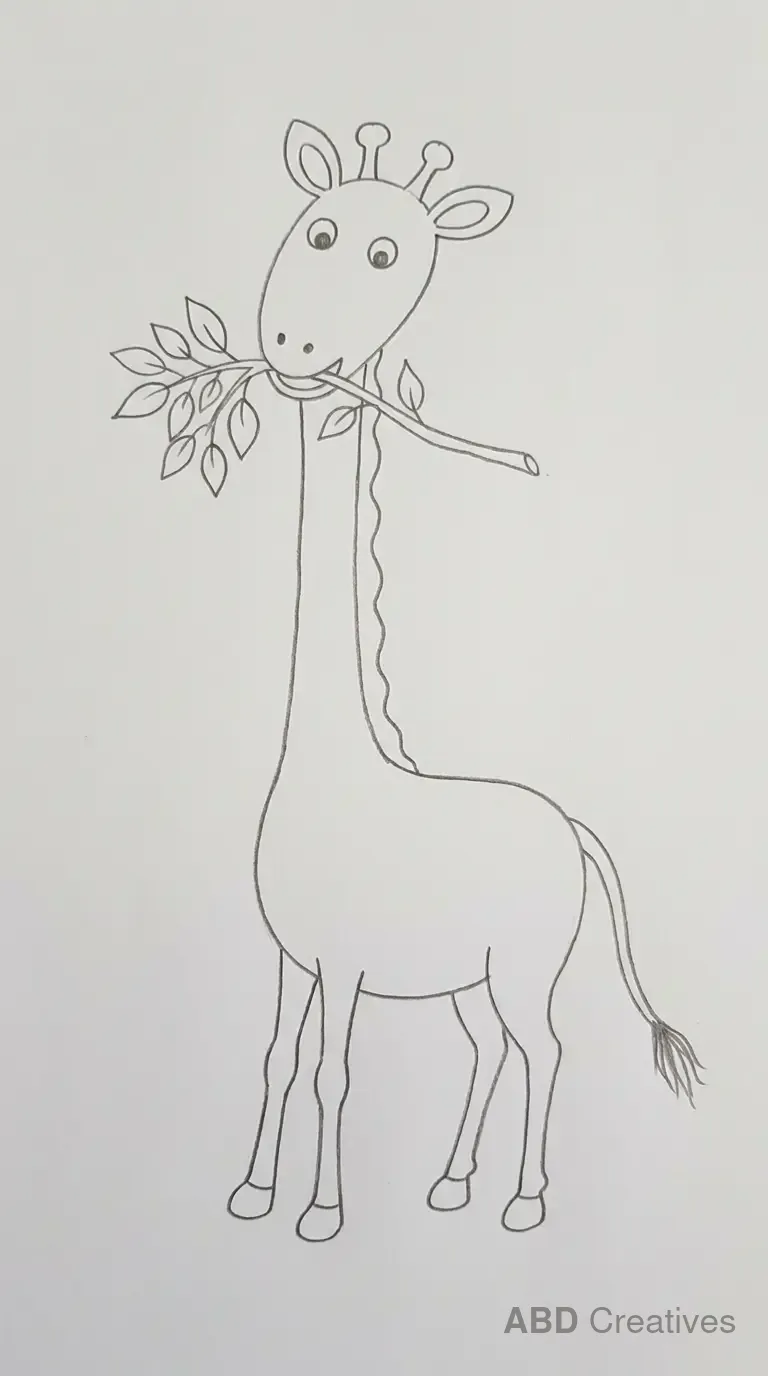
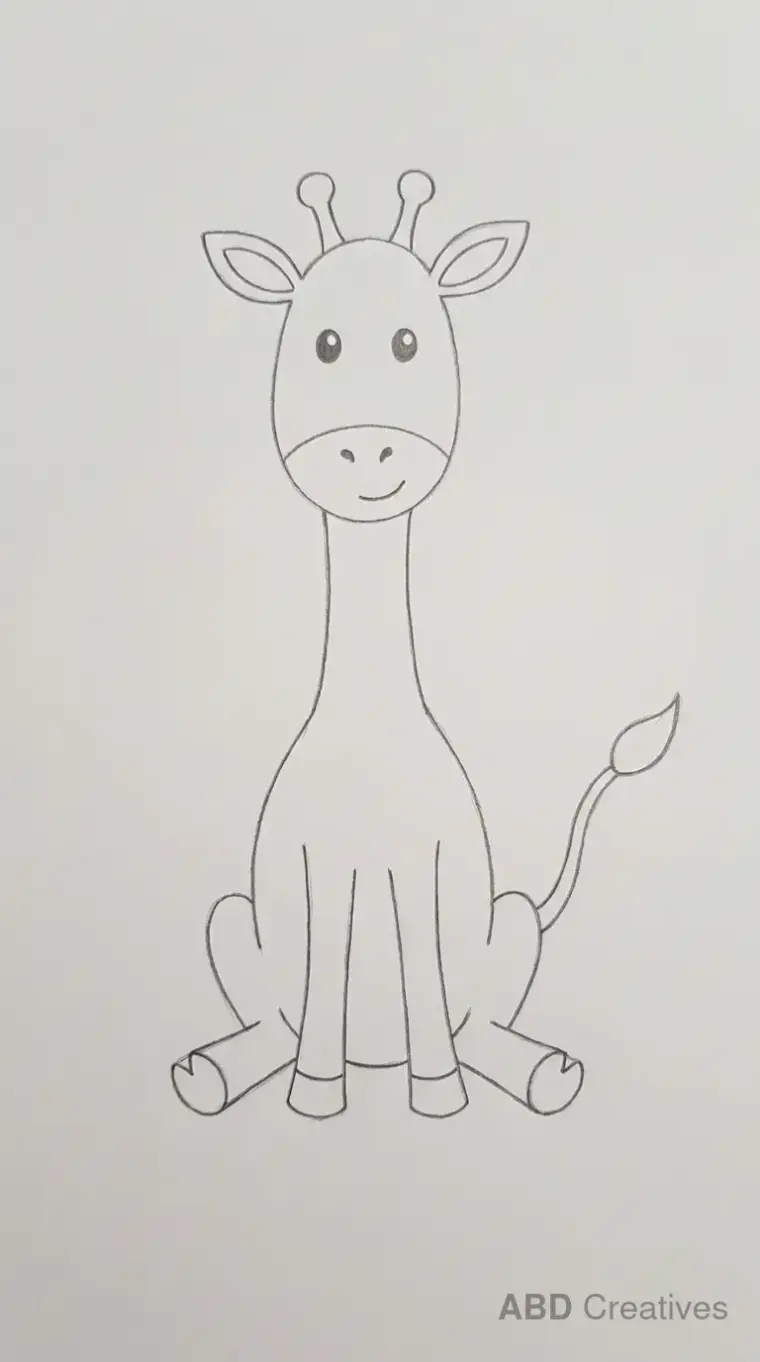
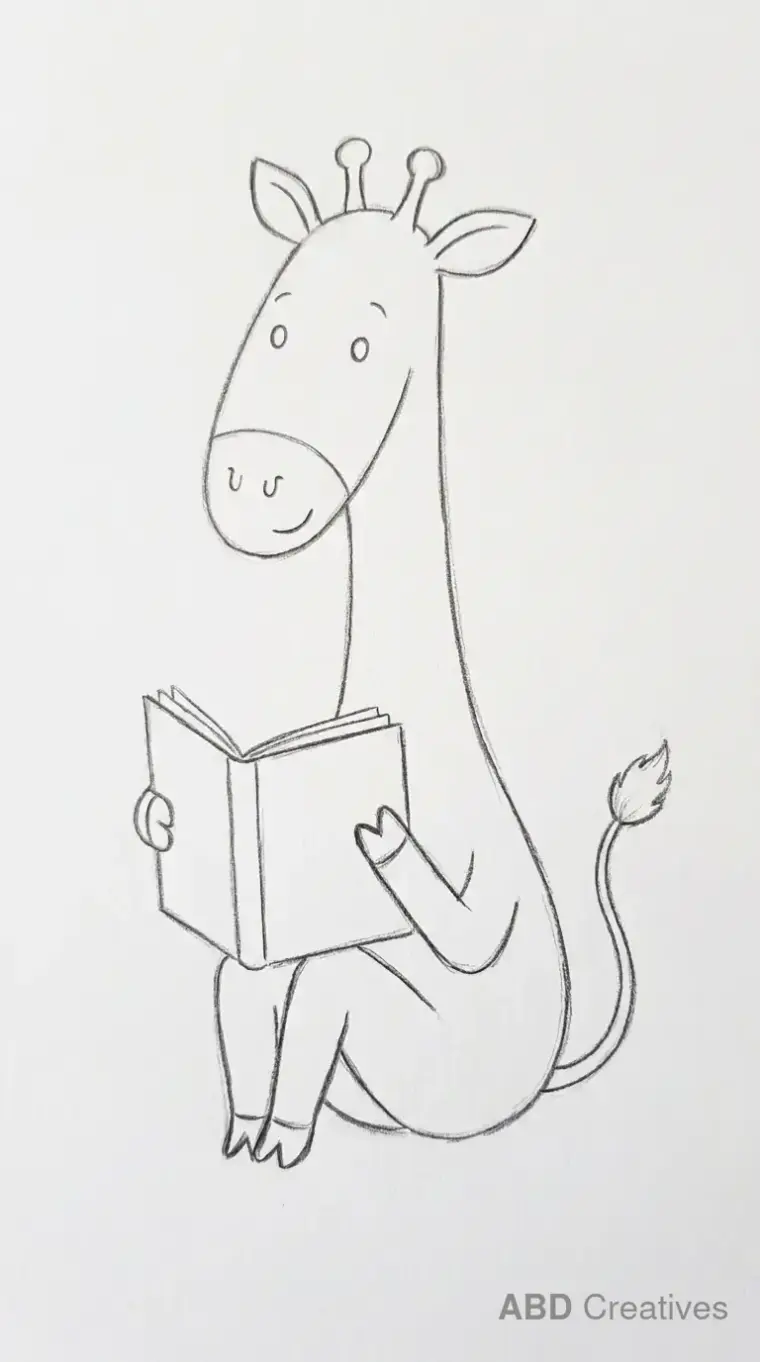
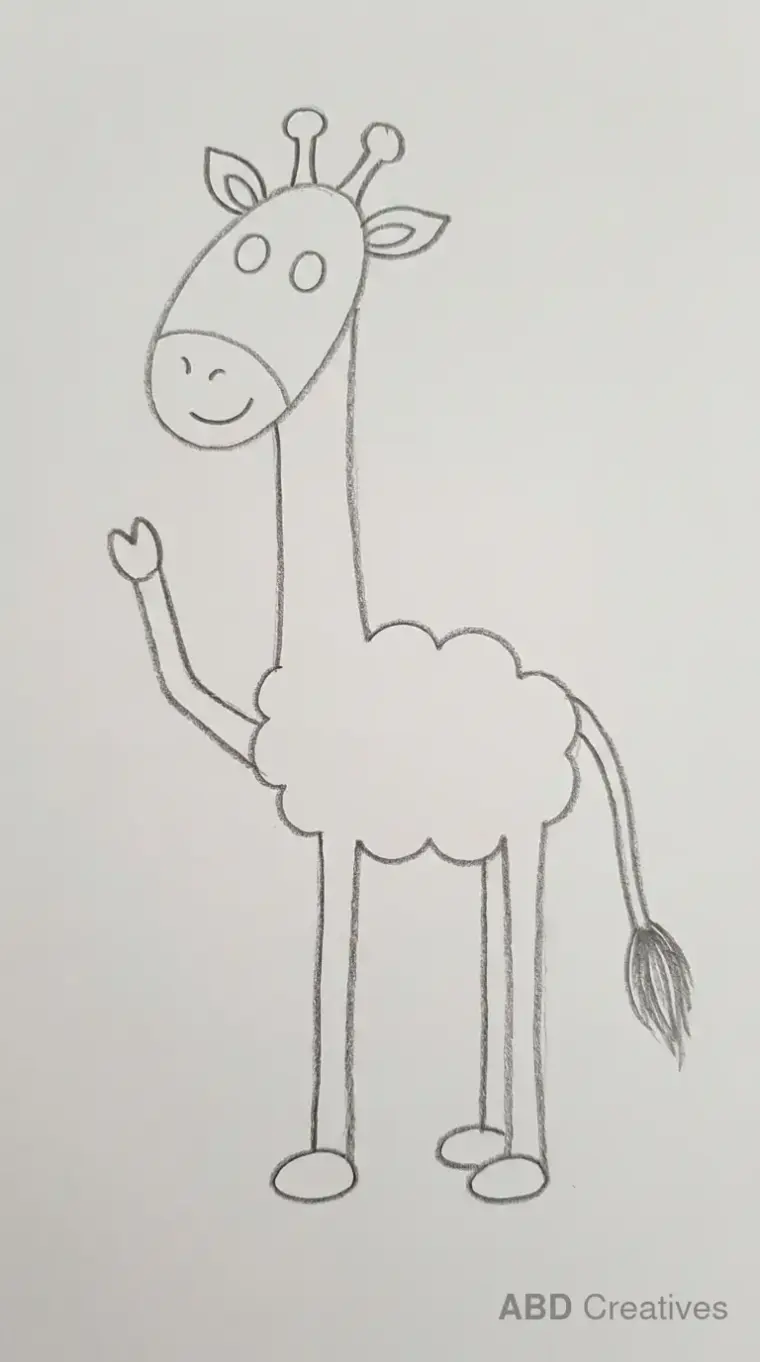
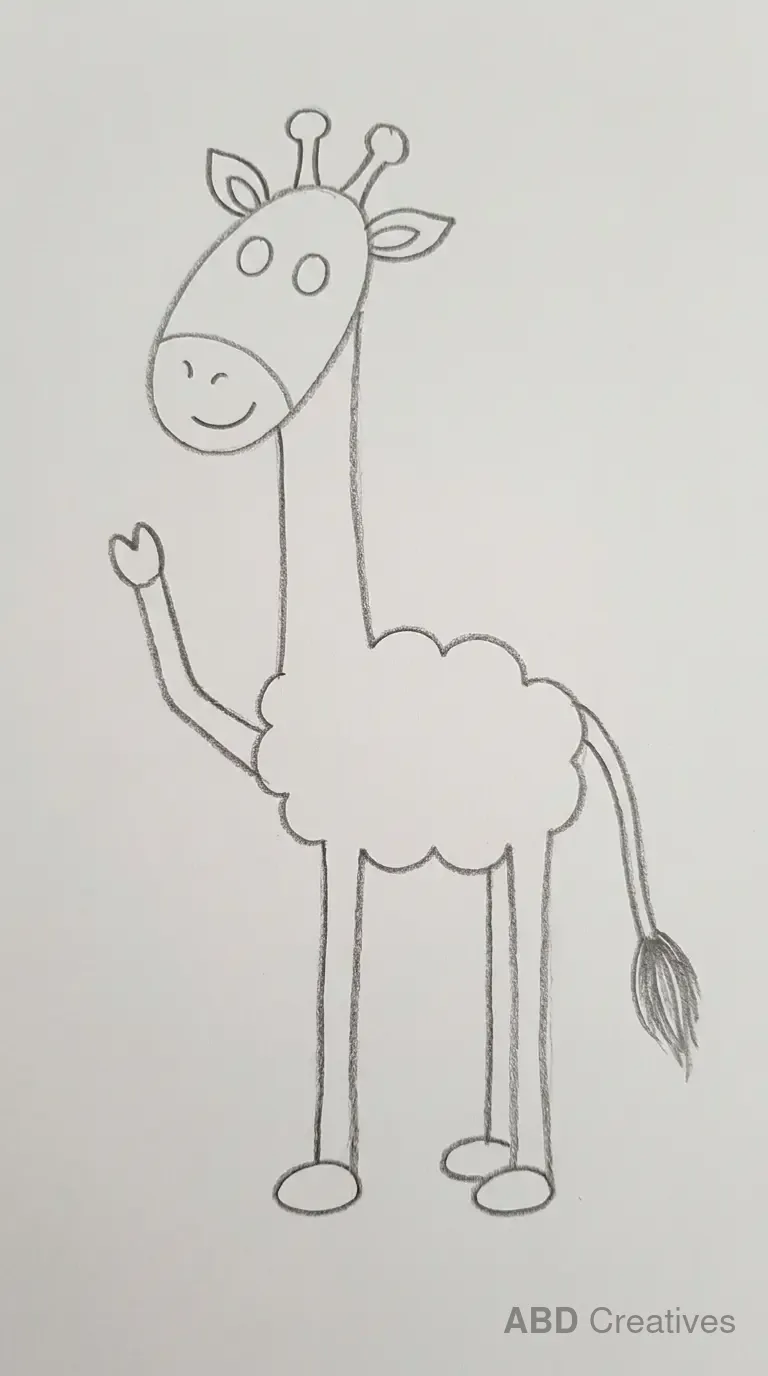
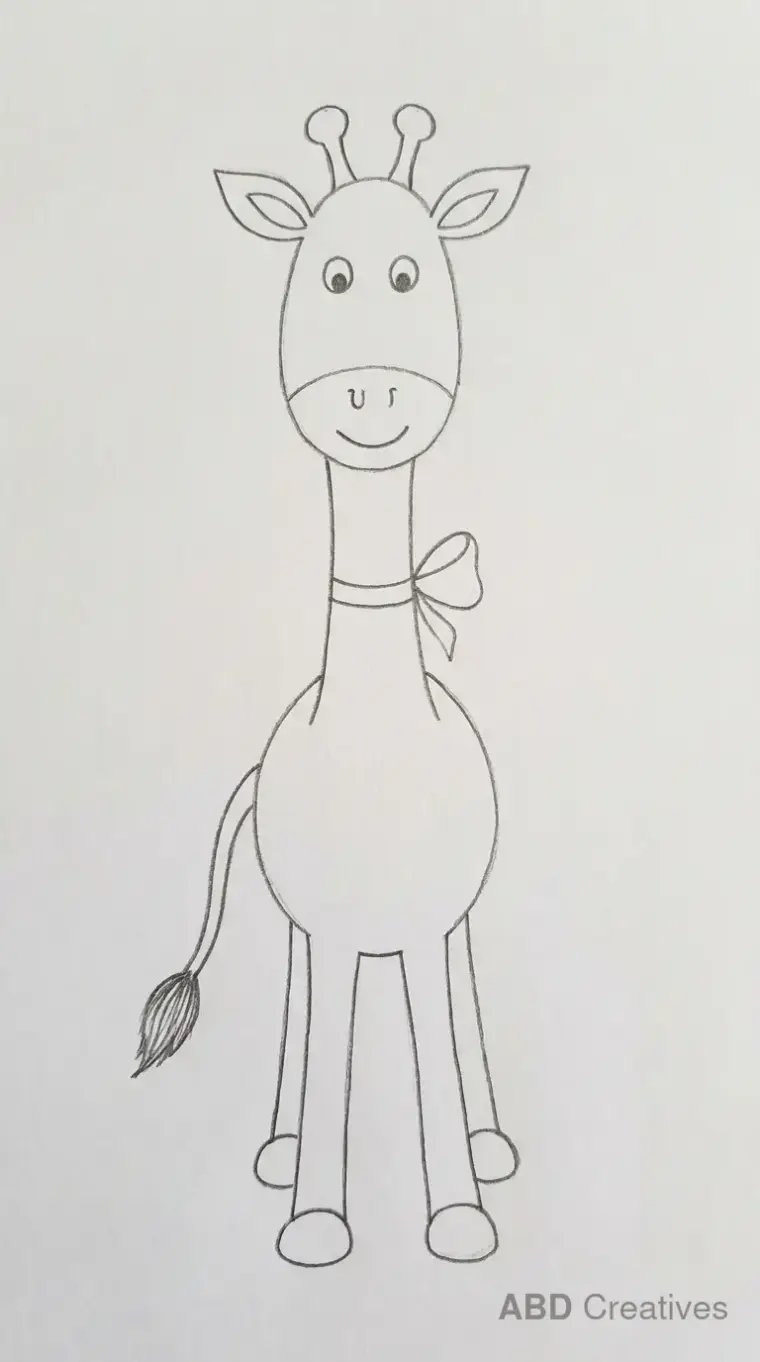
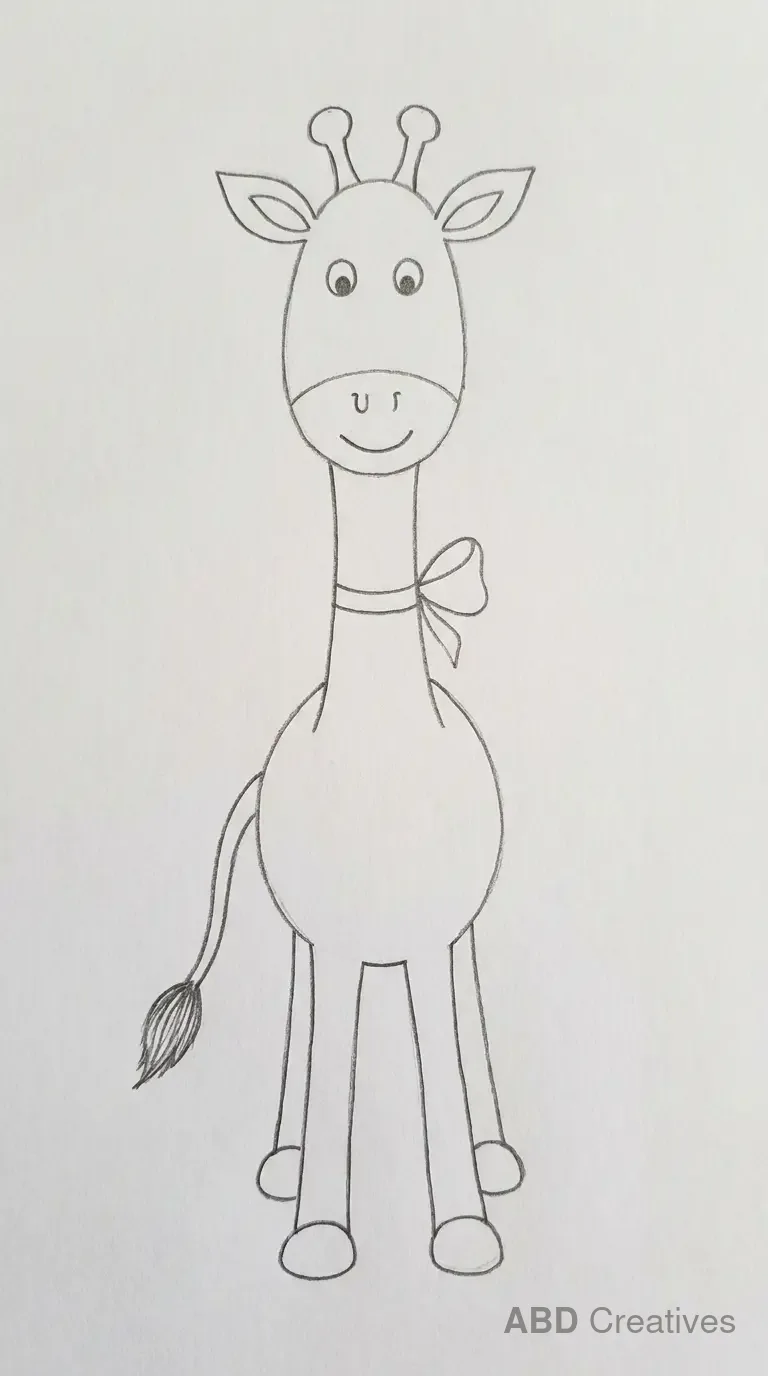
Twenty-one giraffe drawings you can copy straight onto paper, from a plain standing giraffe to a giraffe eating leaves from a branch. Every one is a clean pencil outline drawn by hand, with no shading and no colour. Pick one, keep it next to you, and copy it line by line.
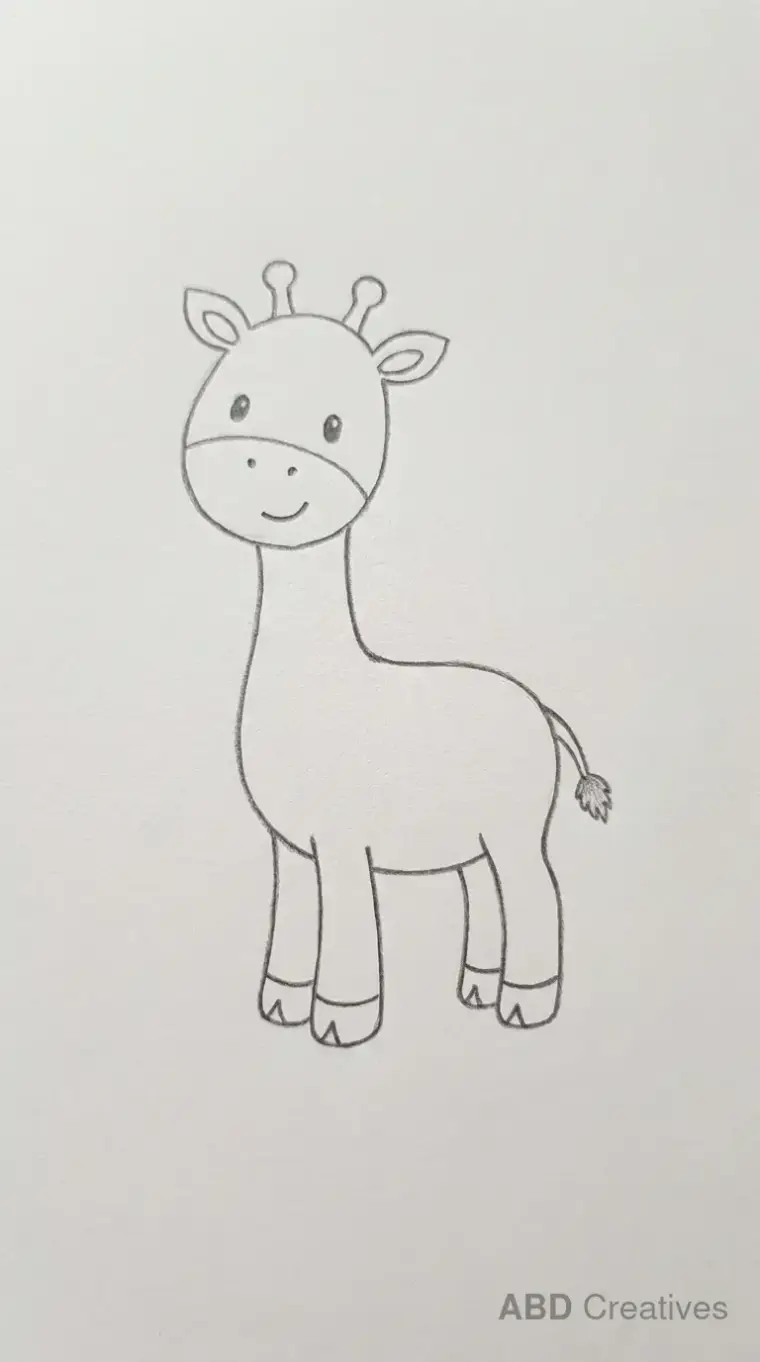
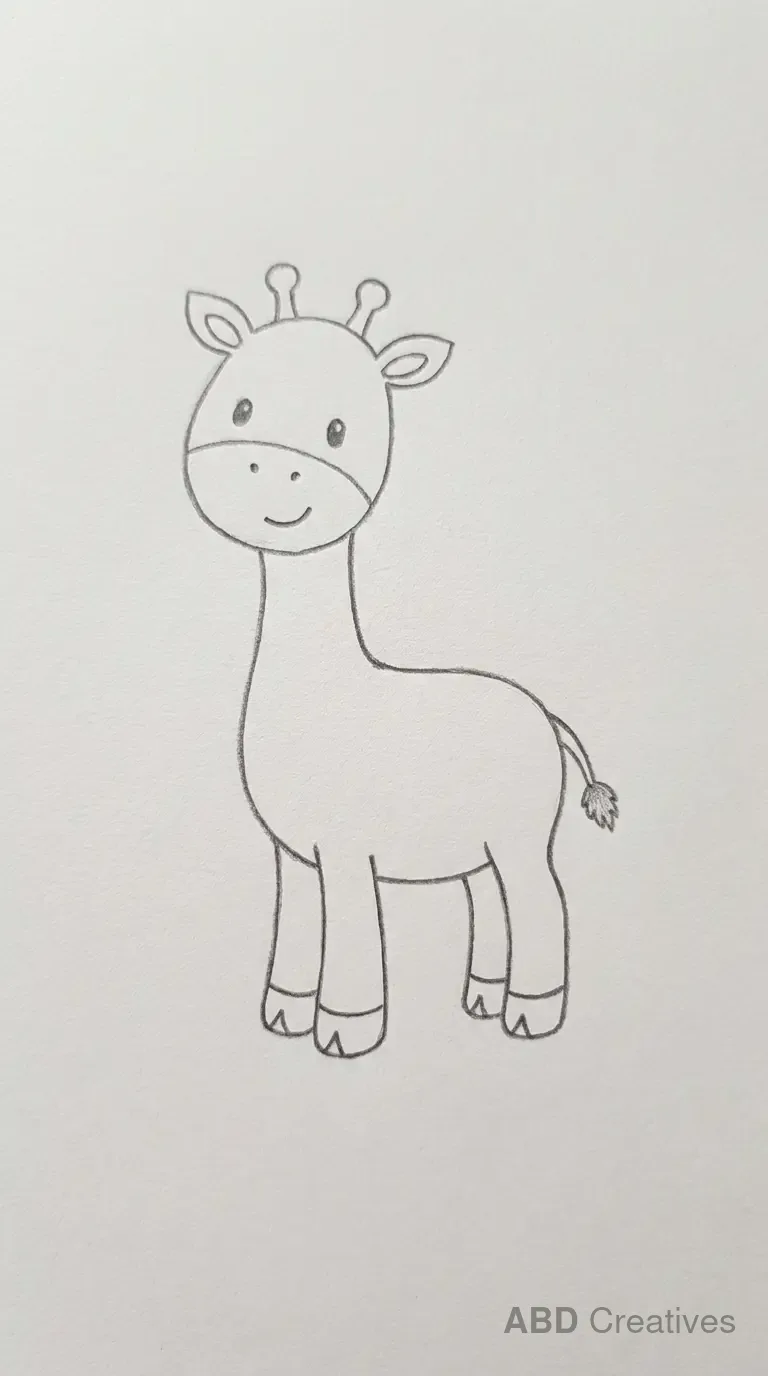
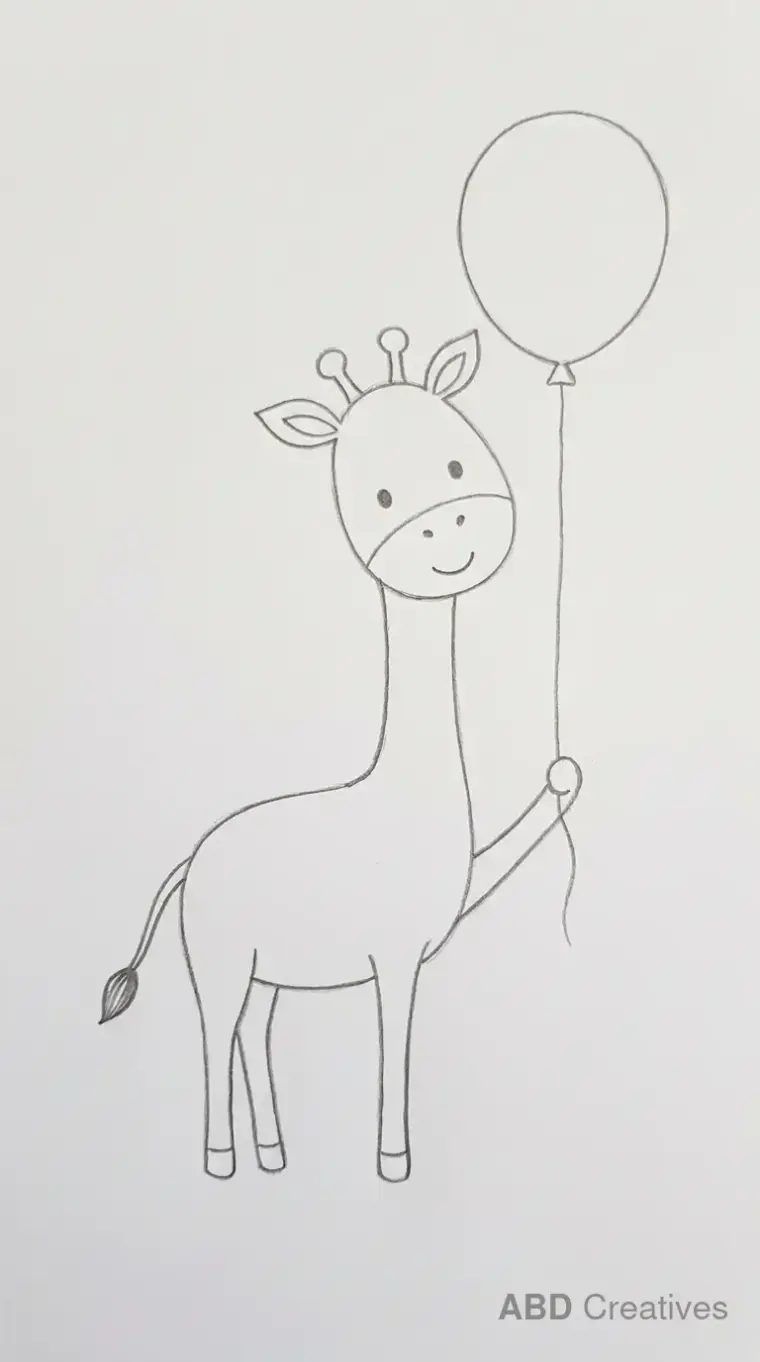
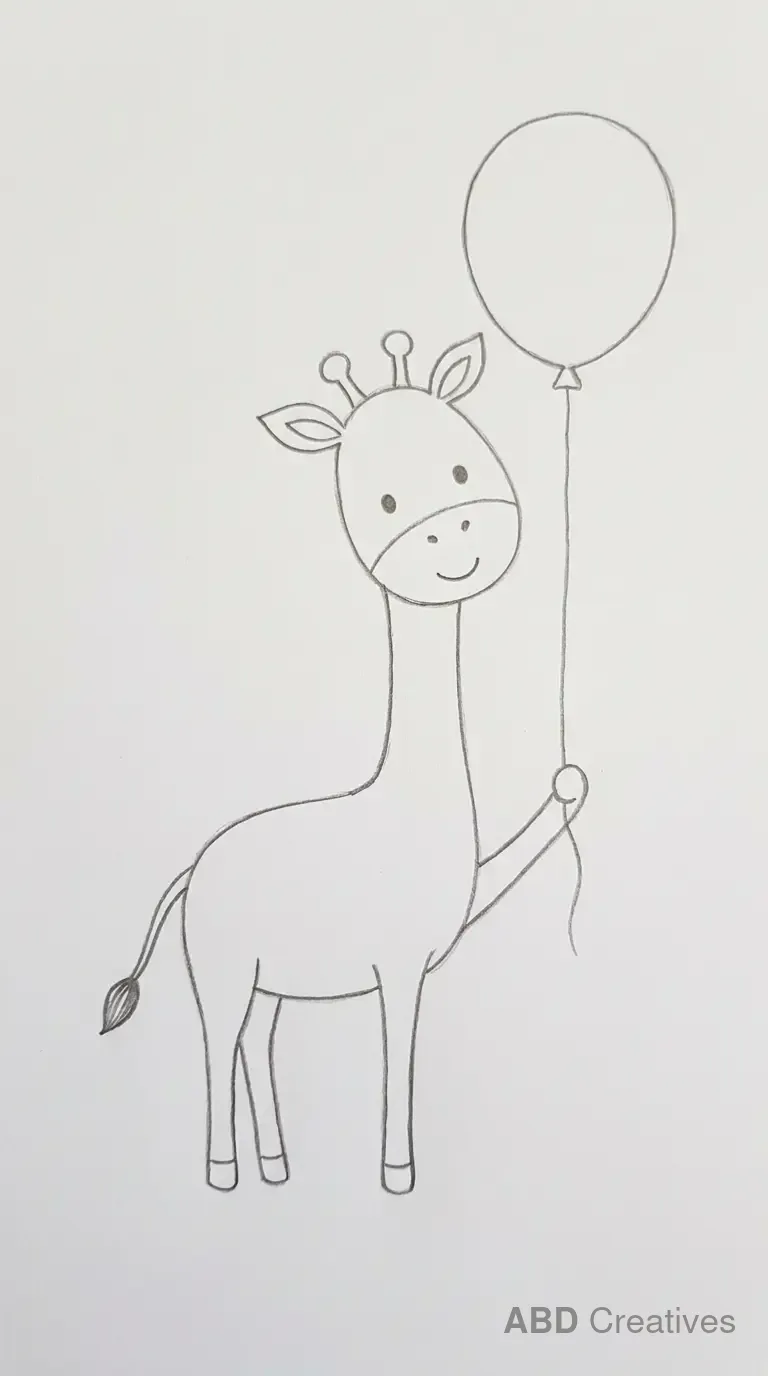
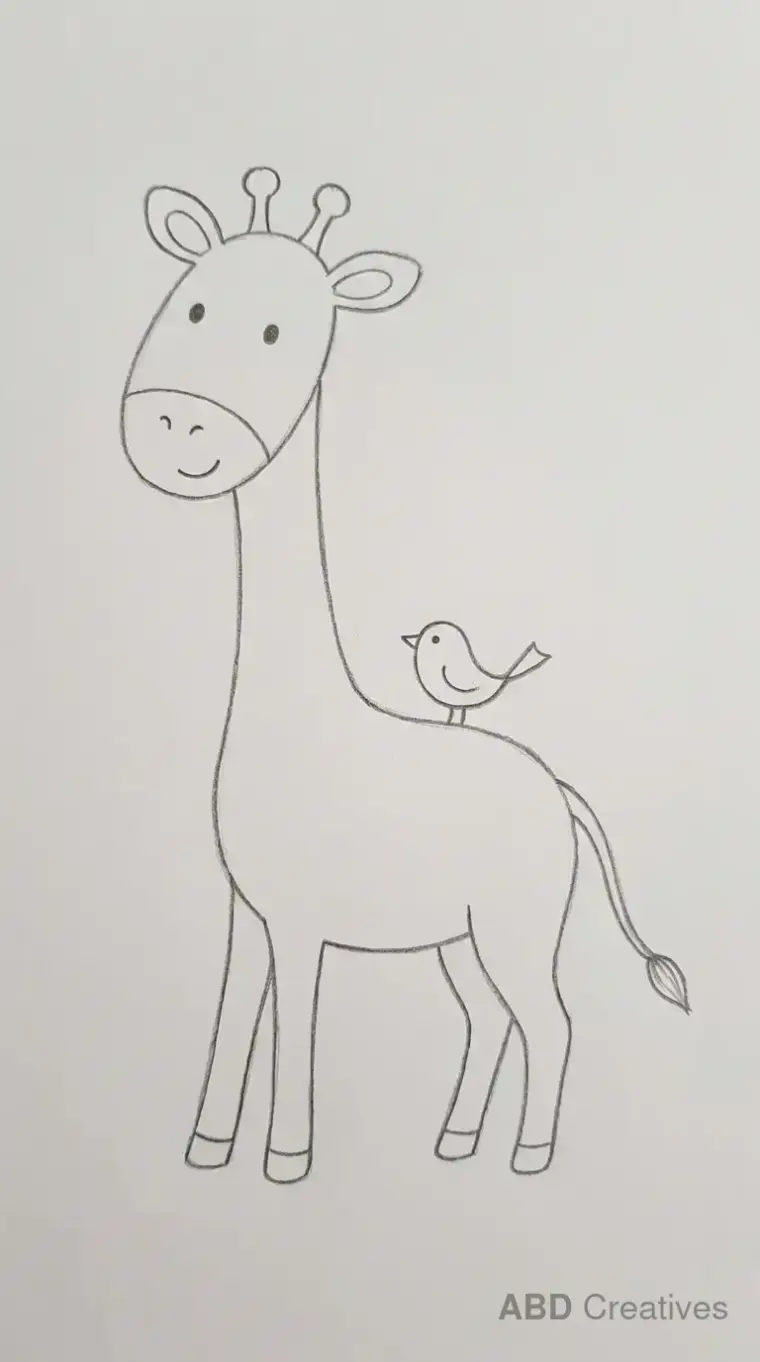
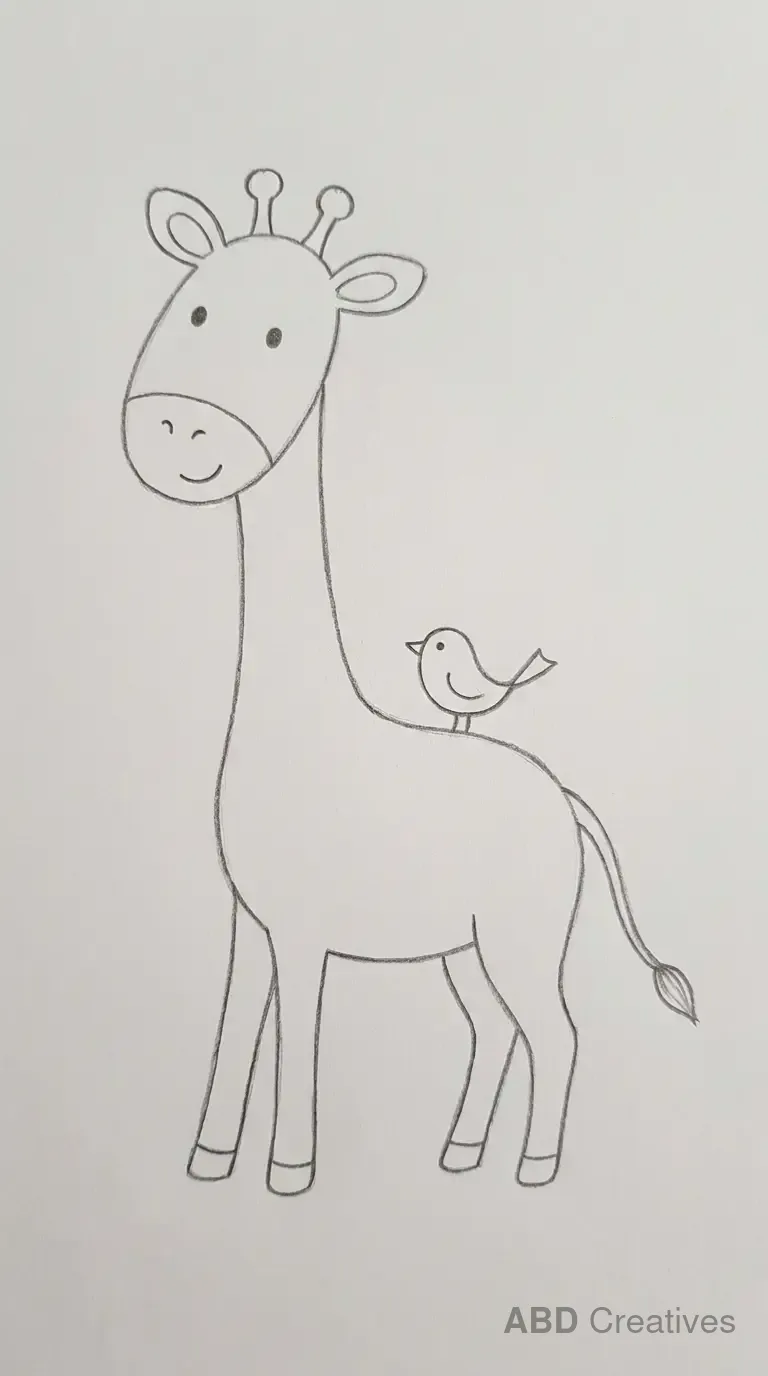
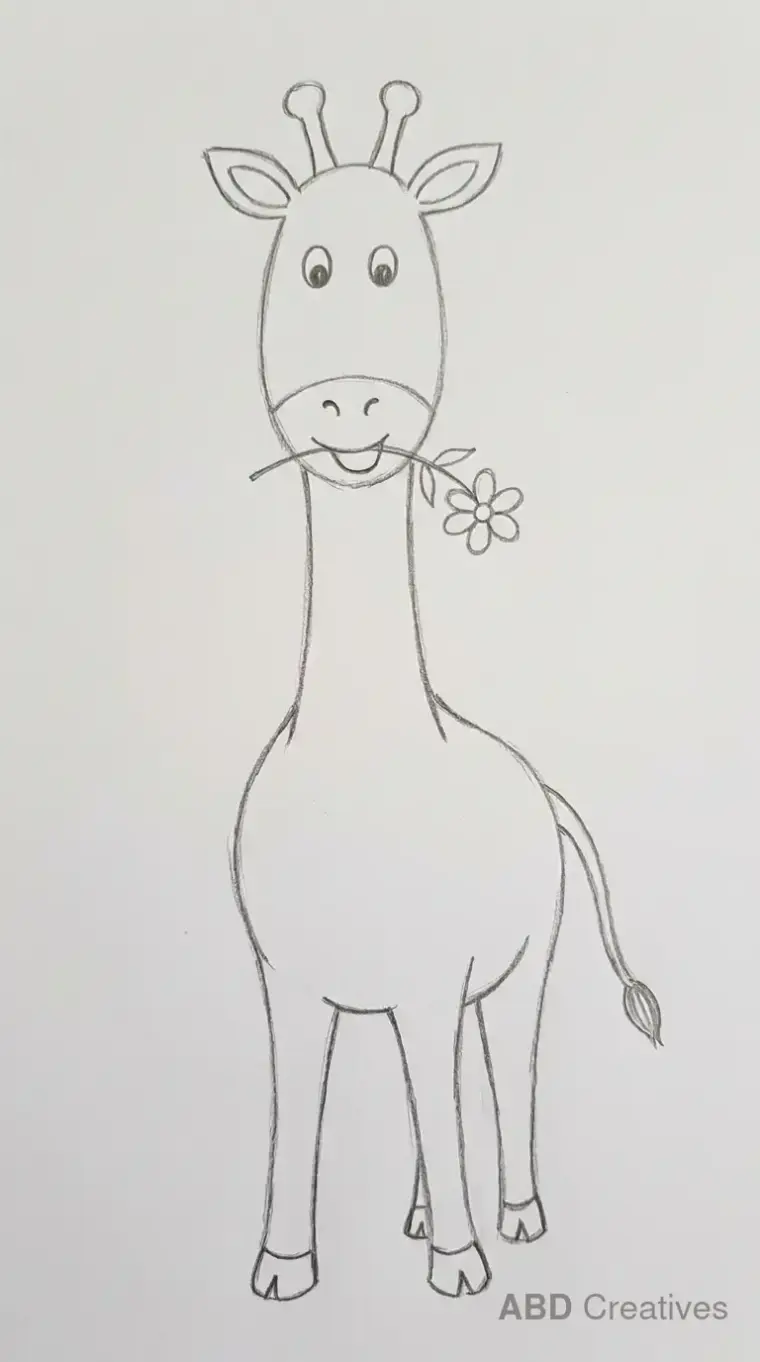
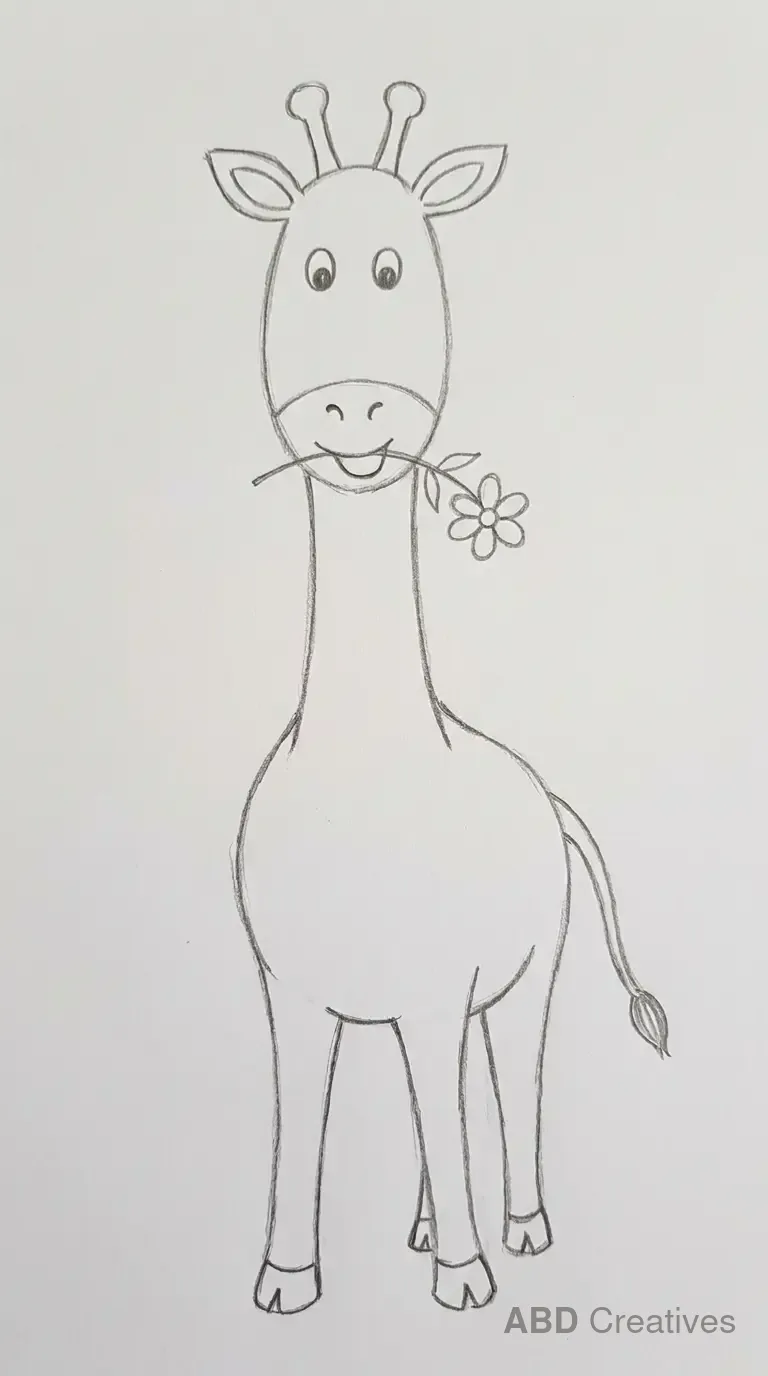
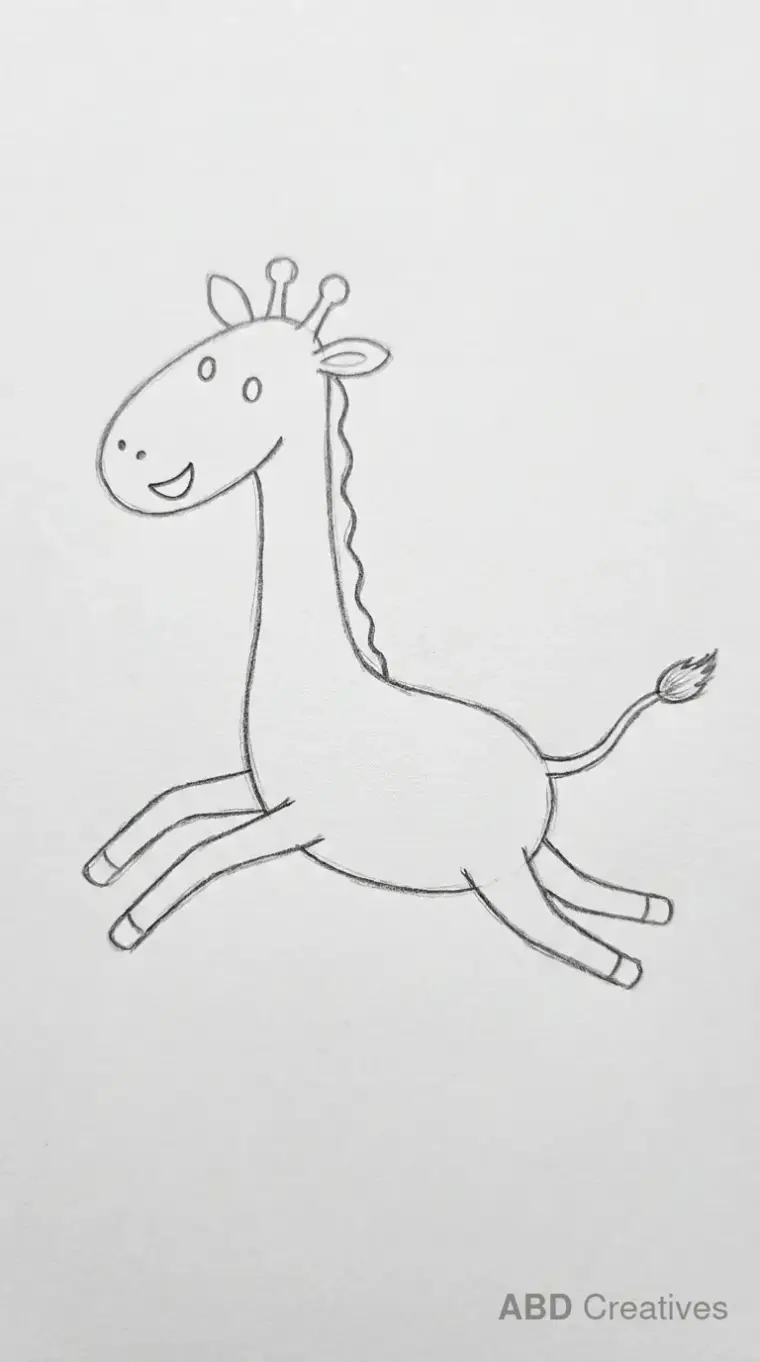
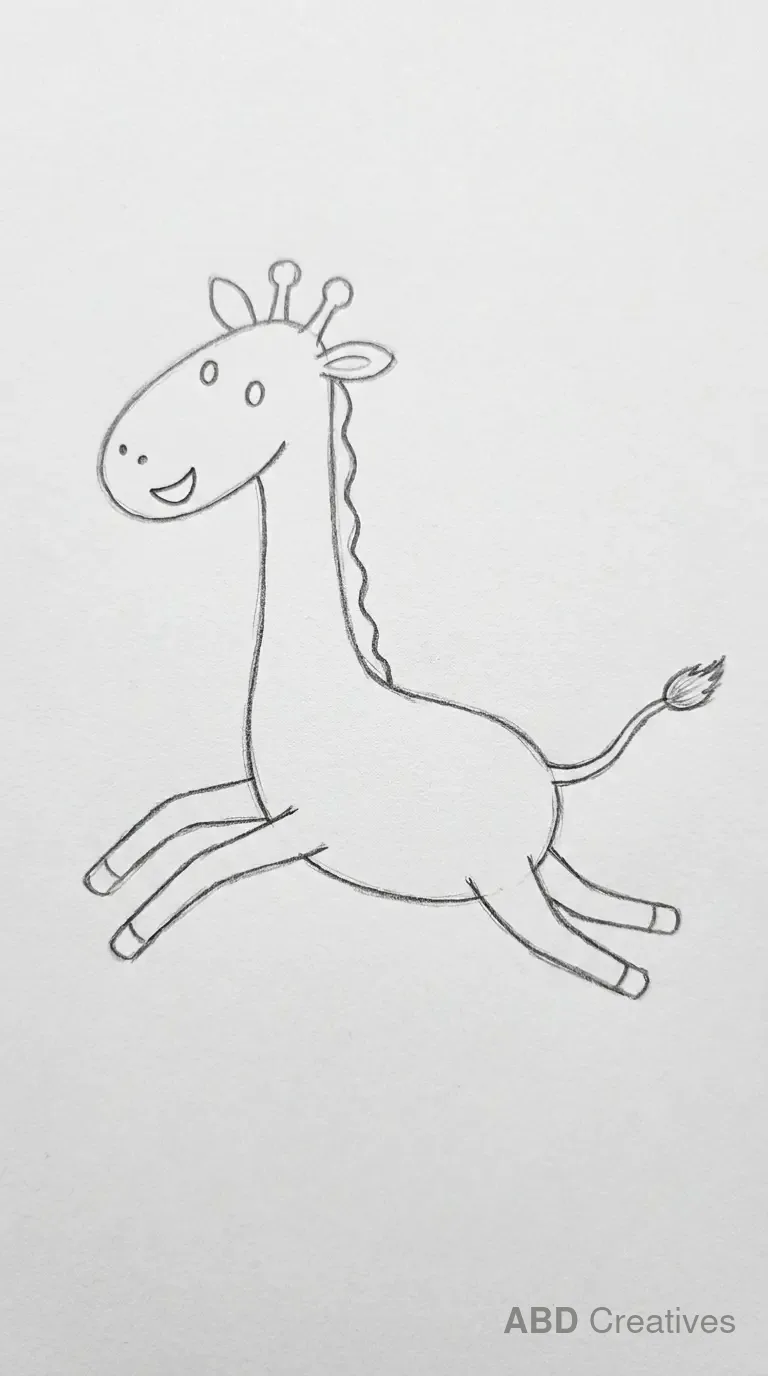
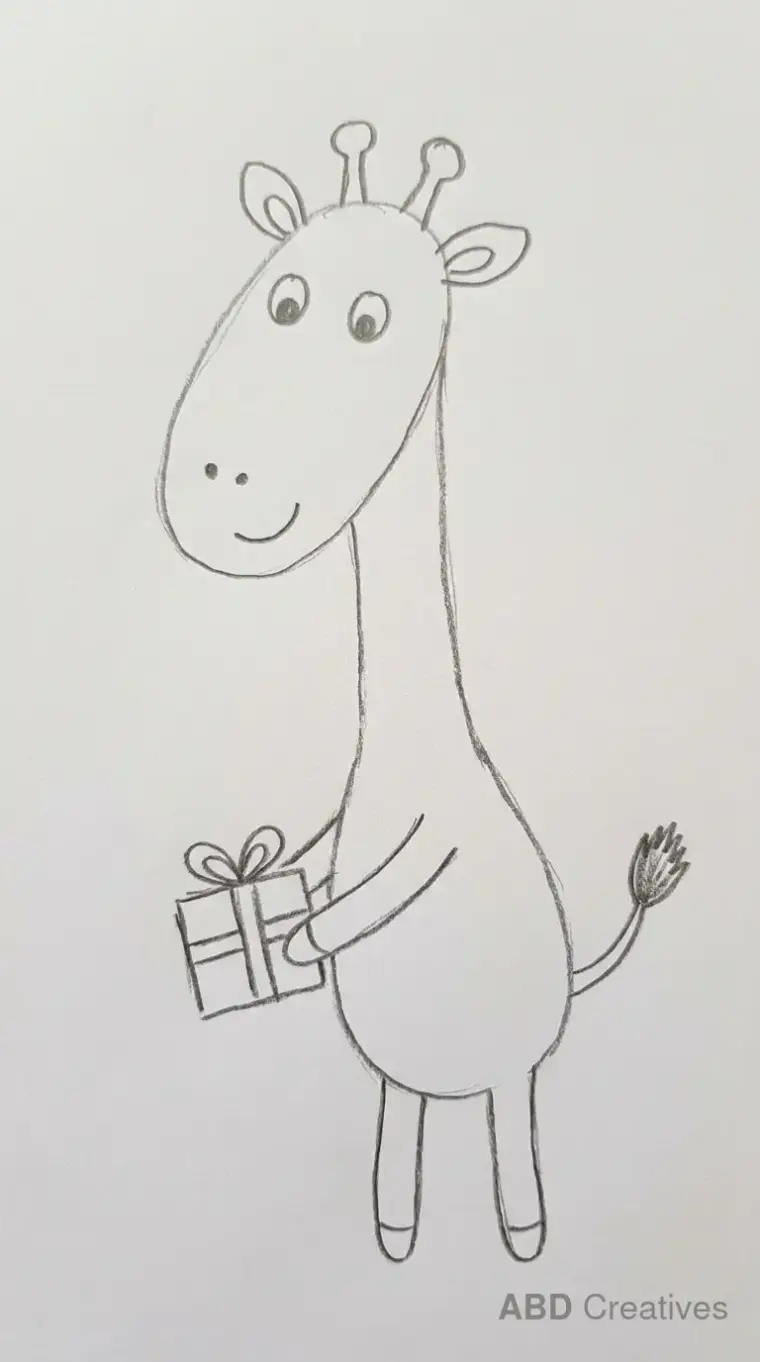
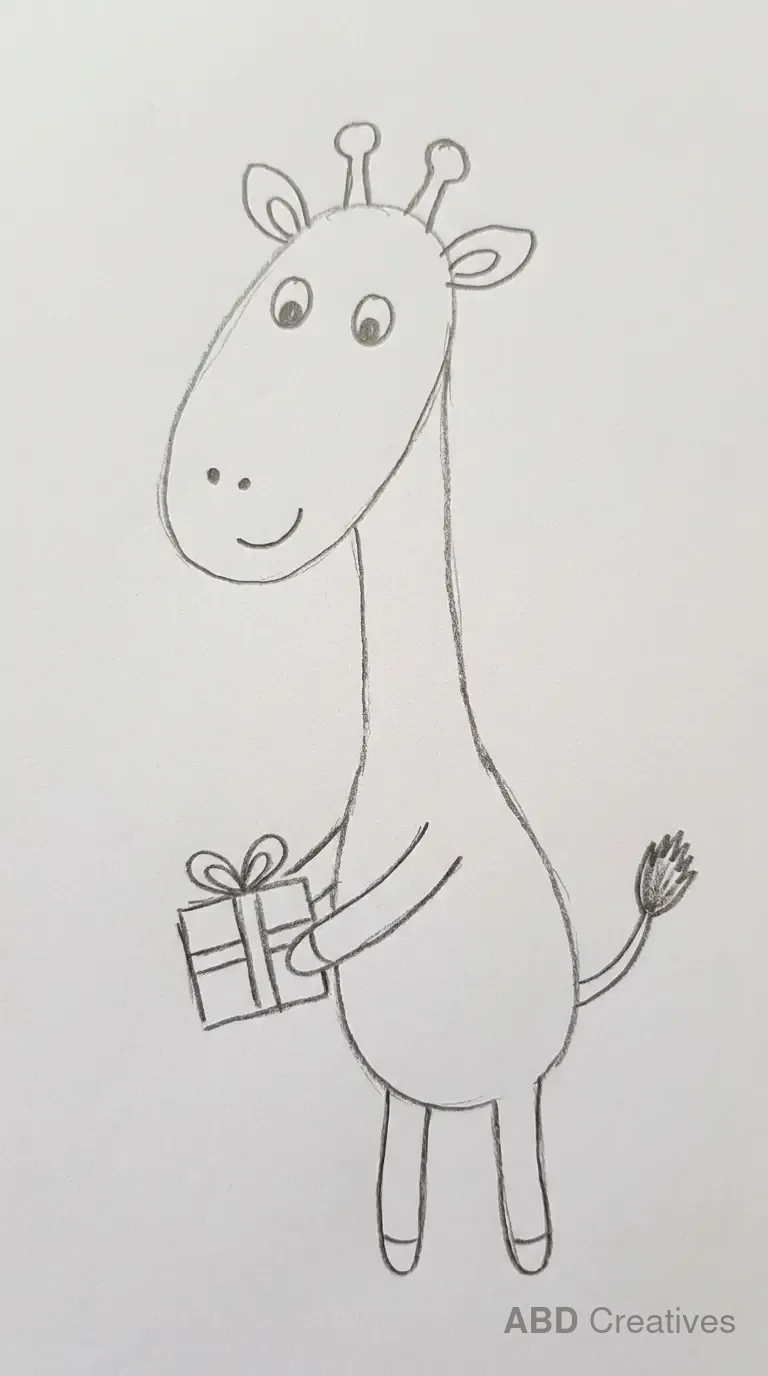
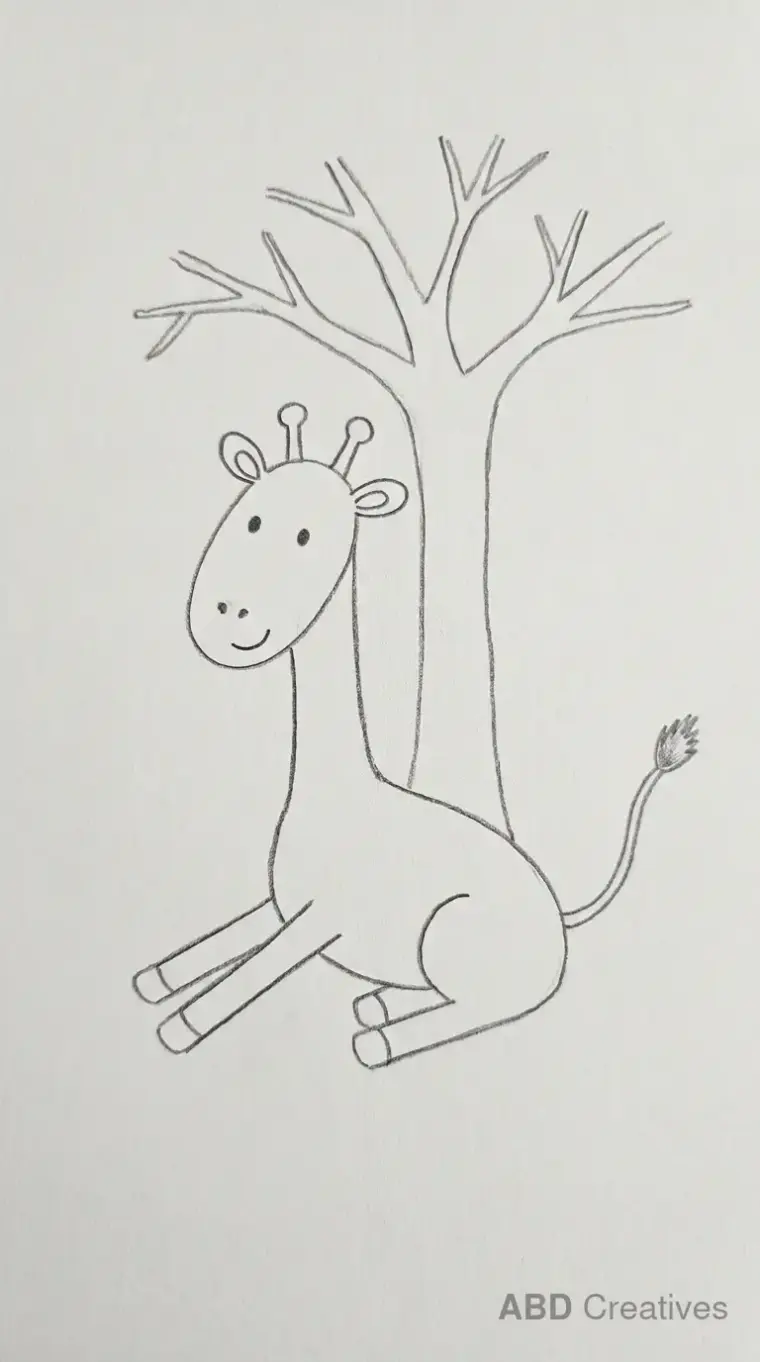
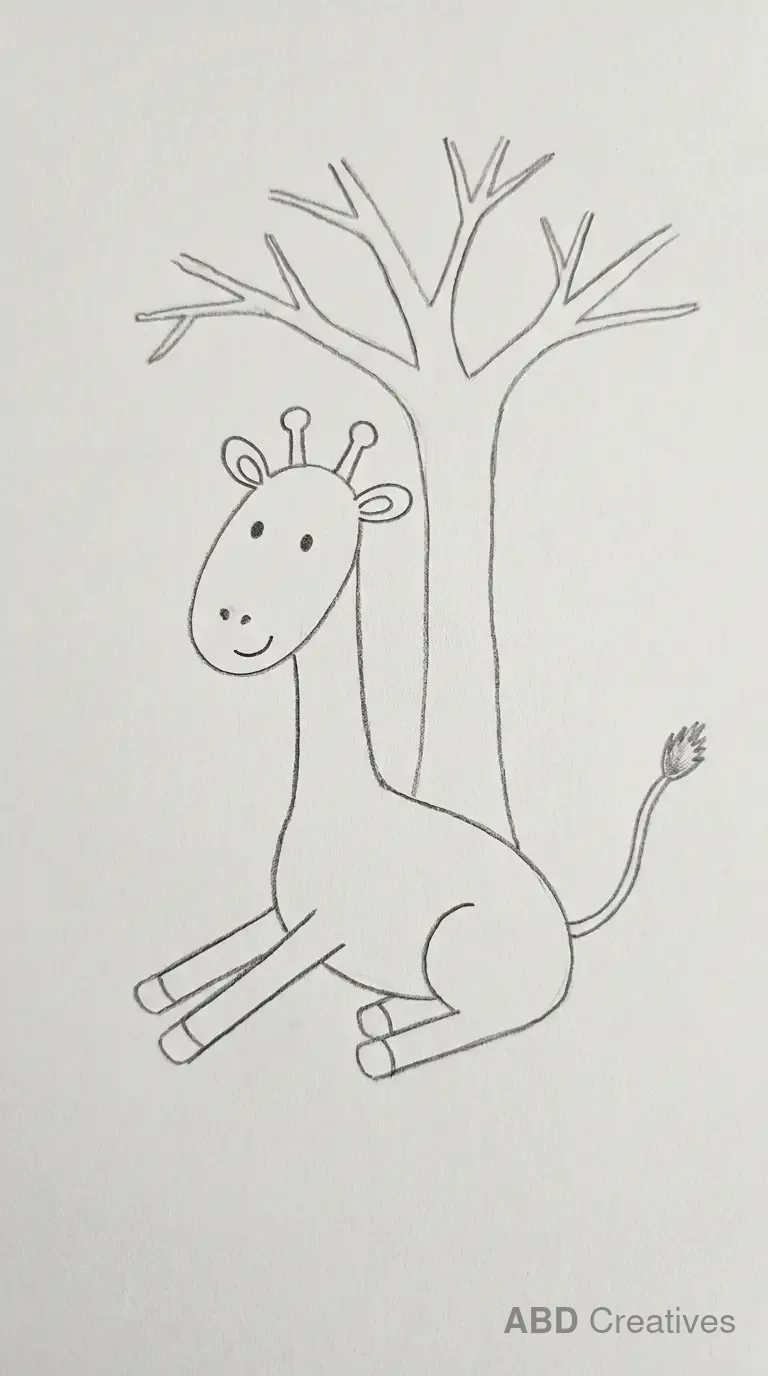
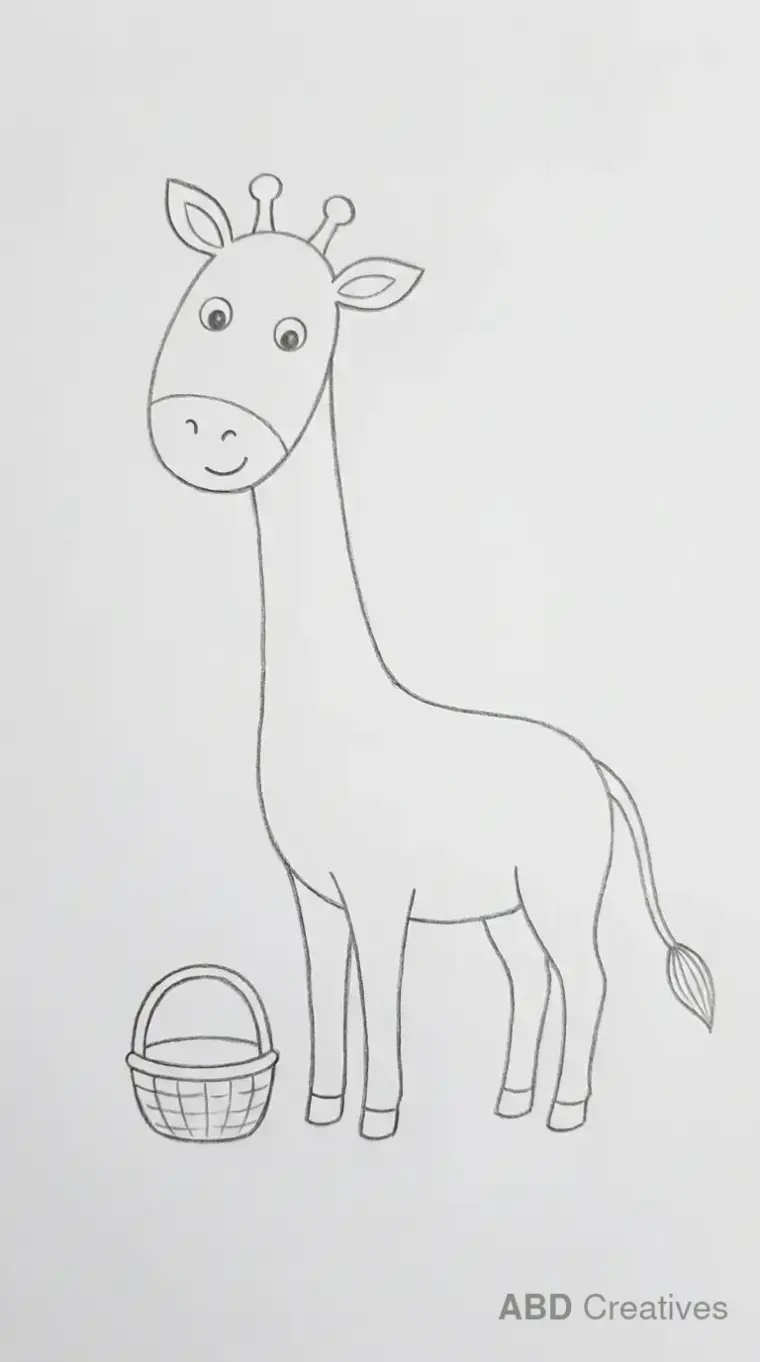
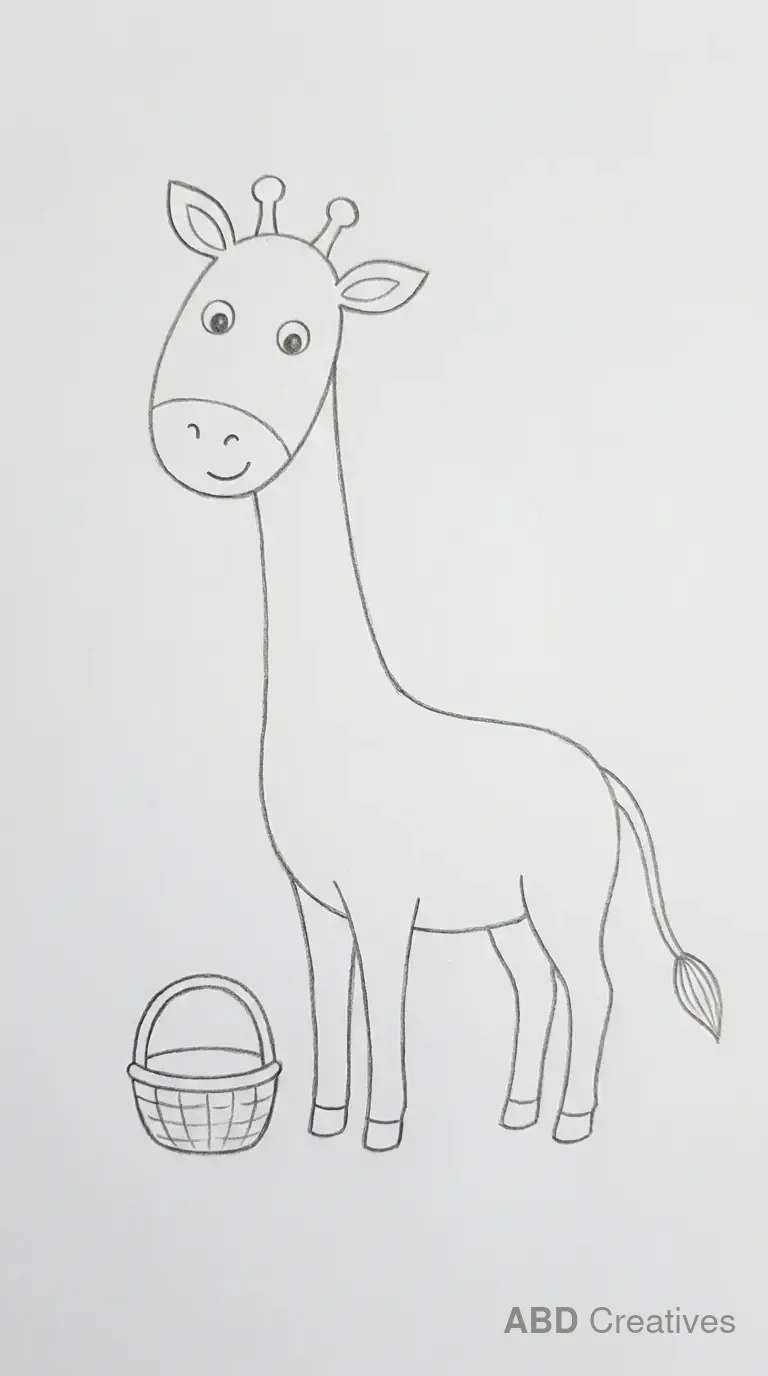
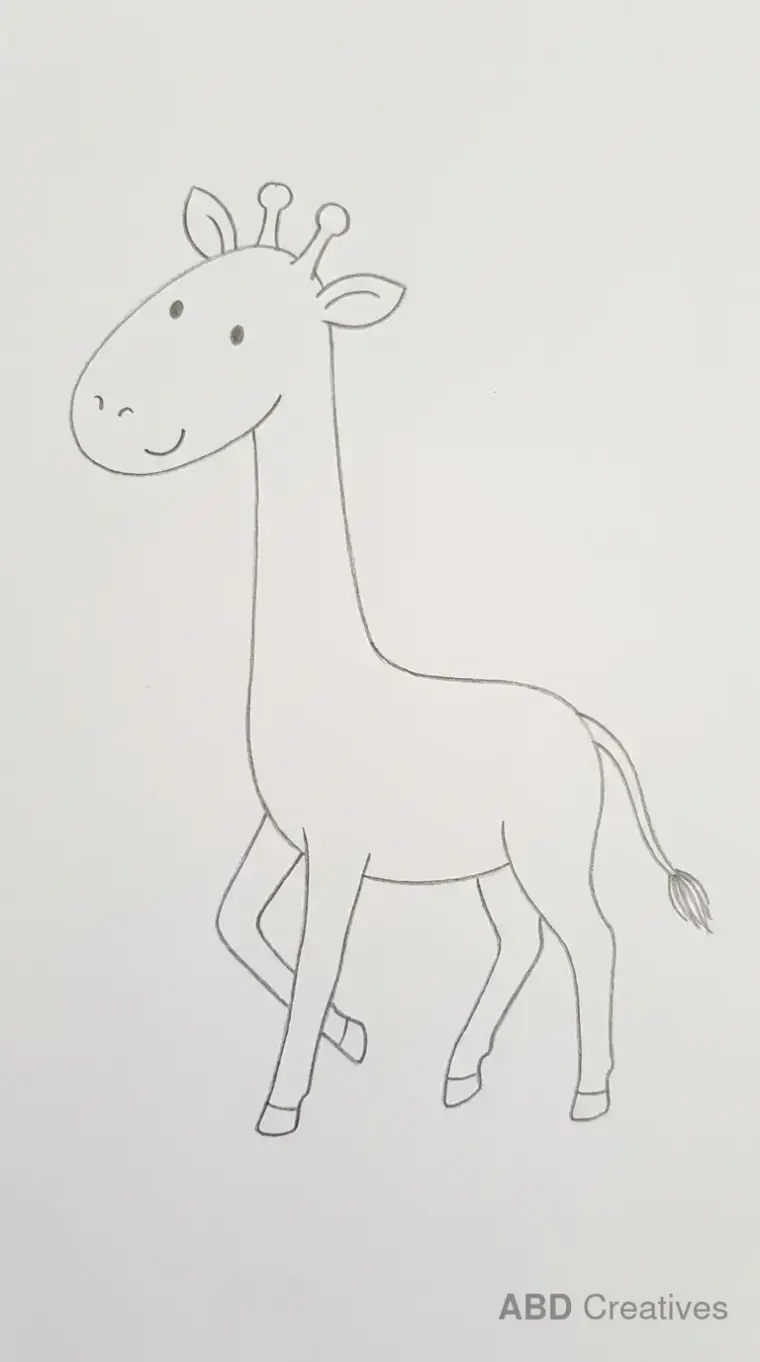
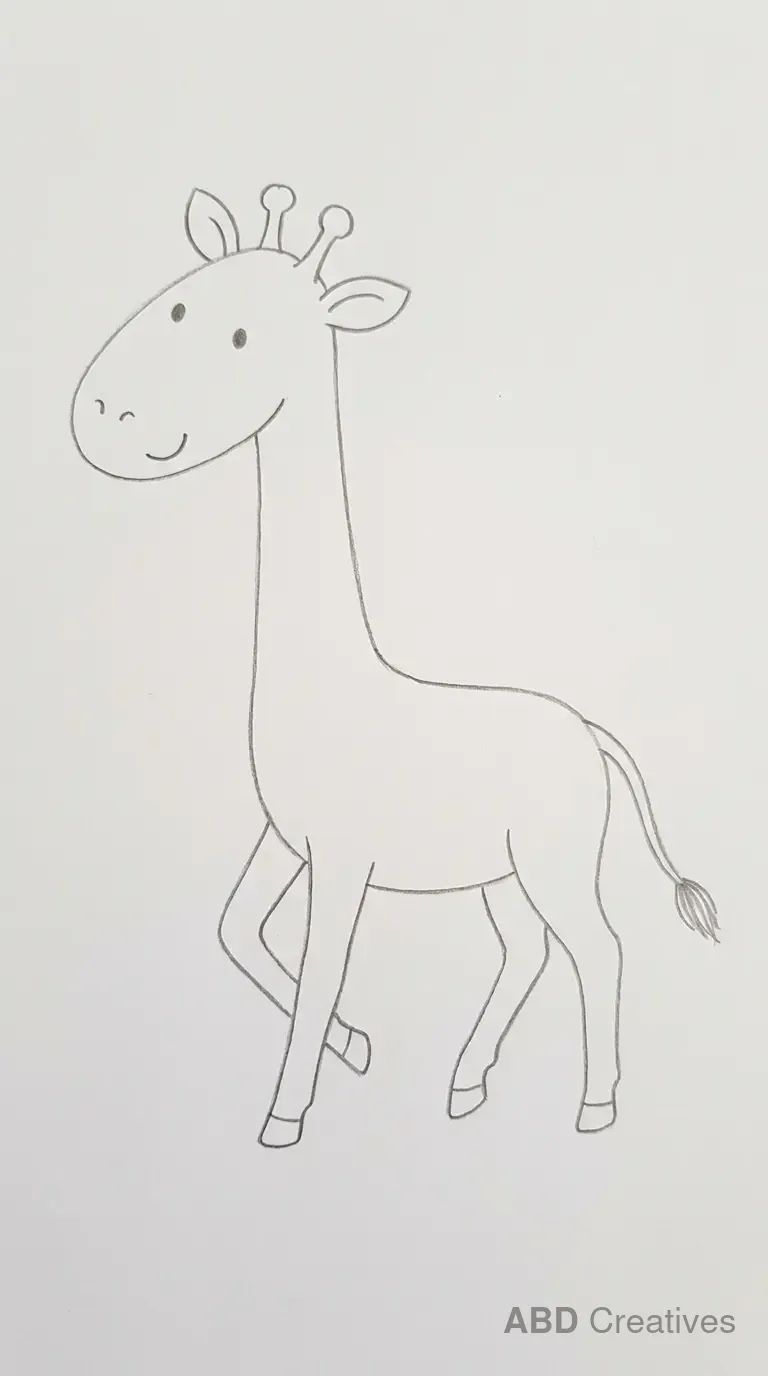
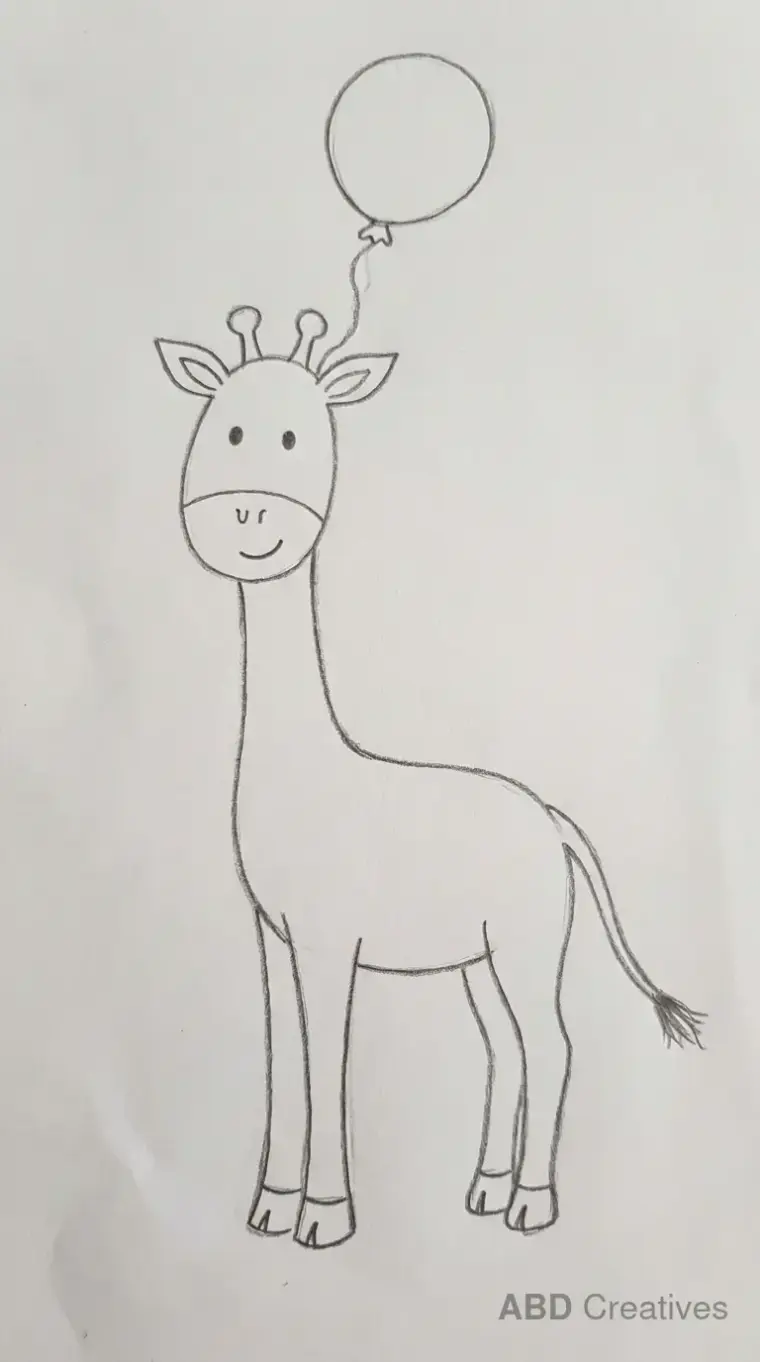
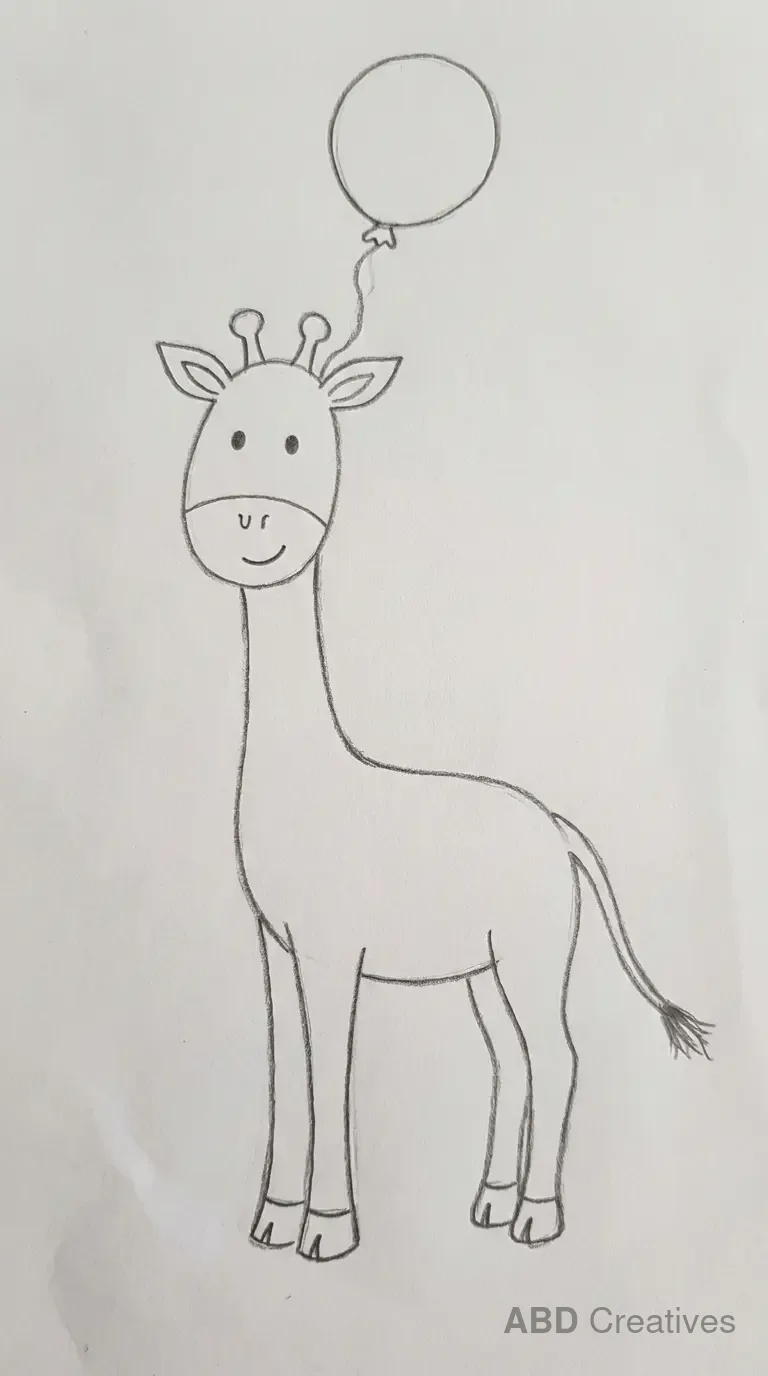
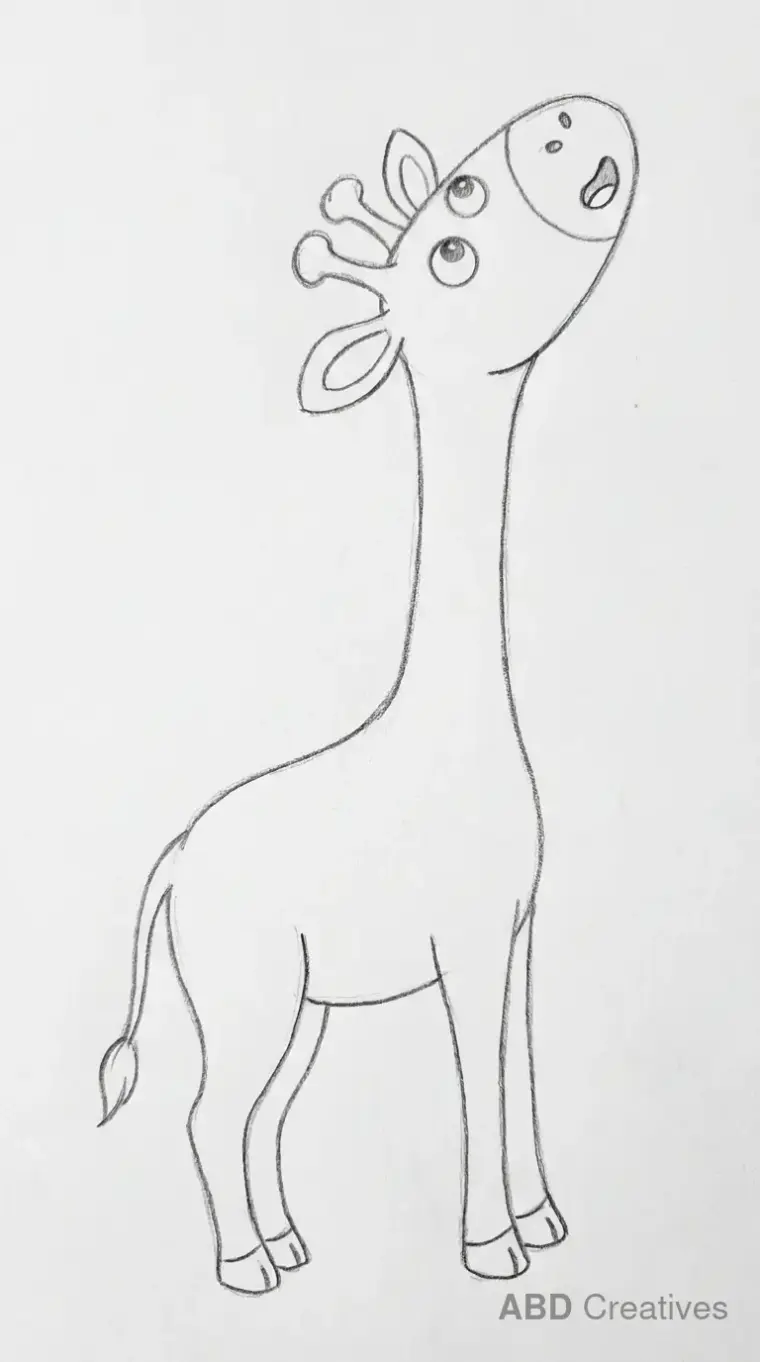
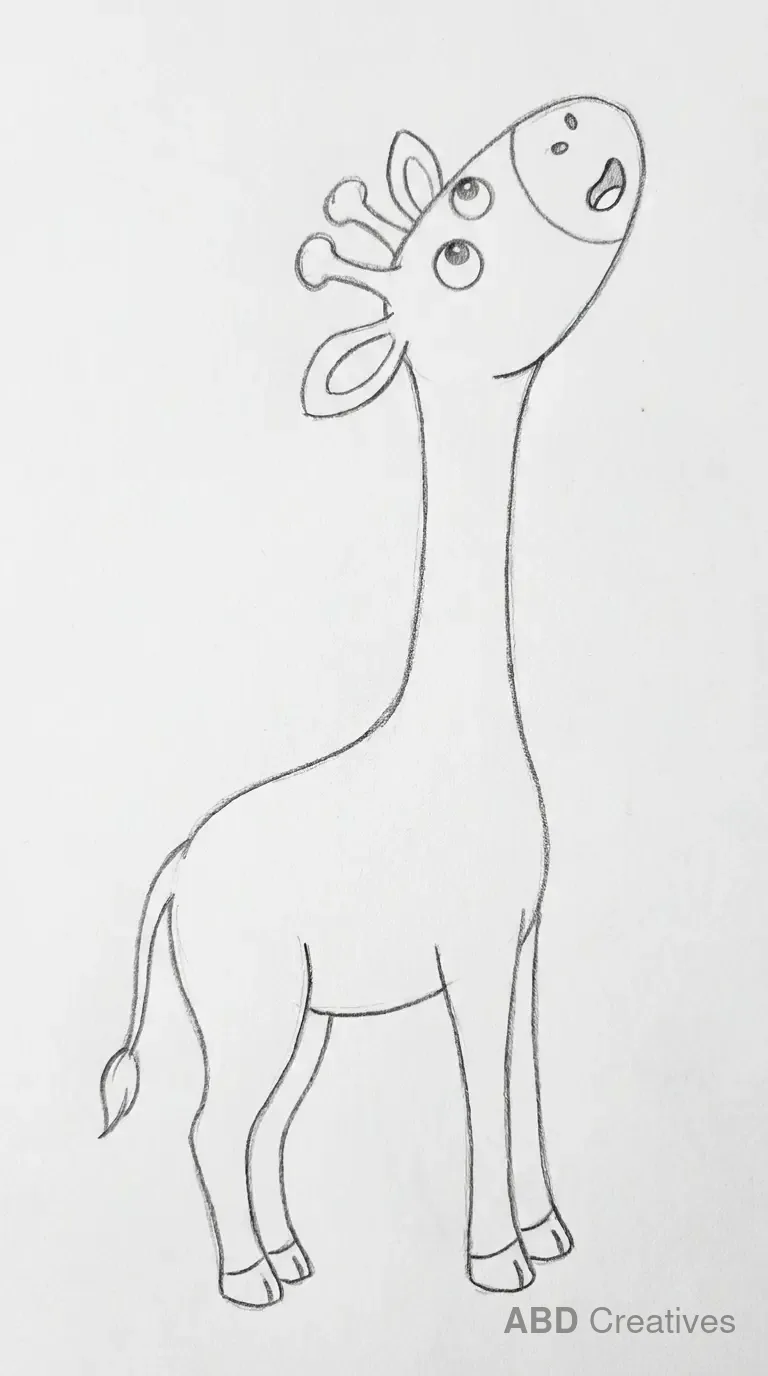
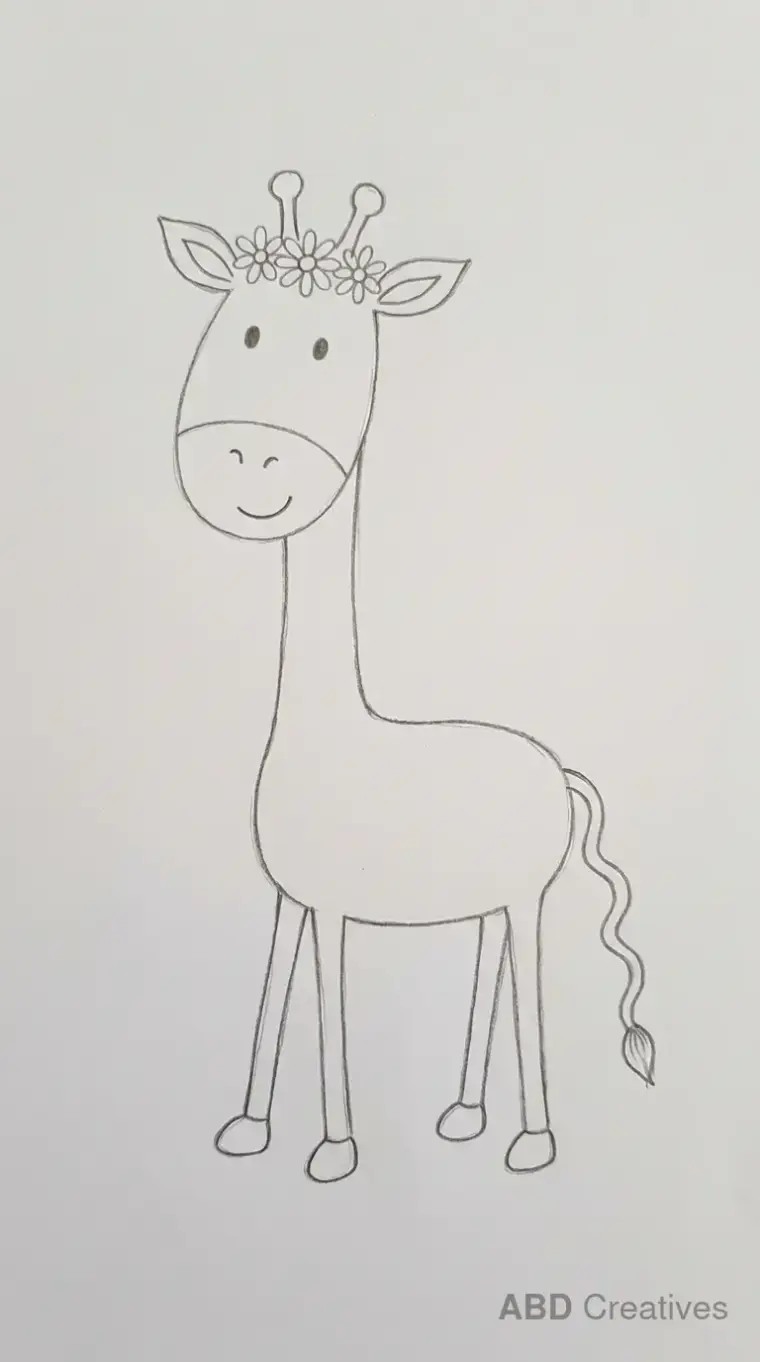
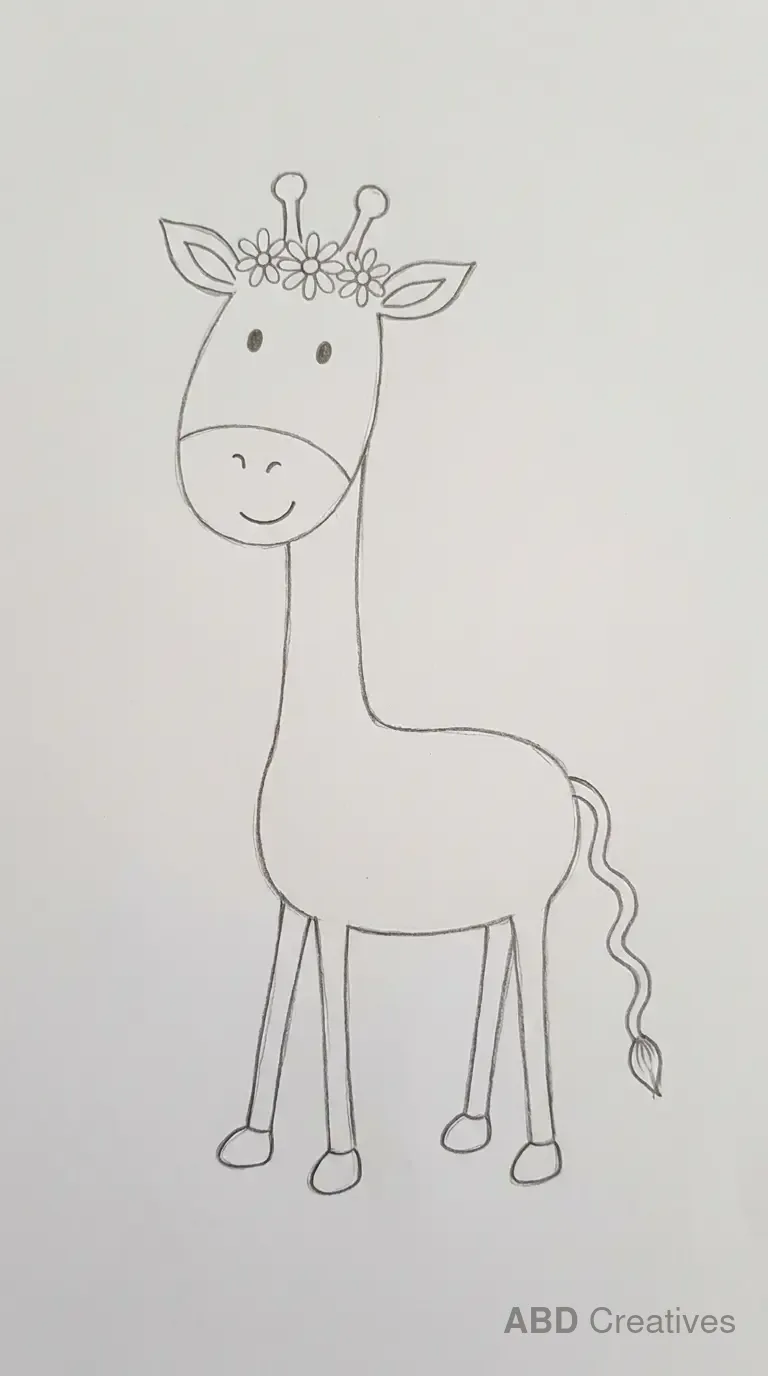
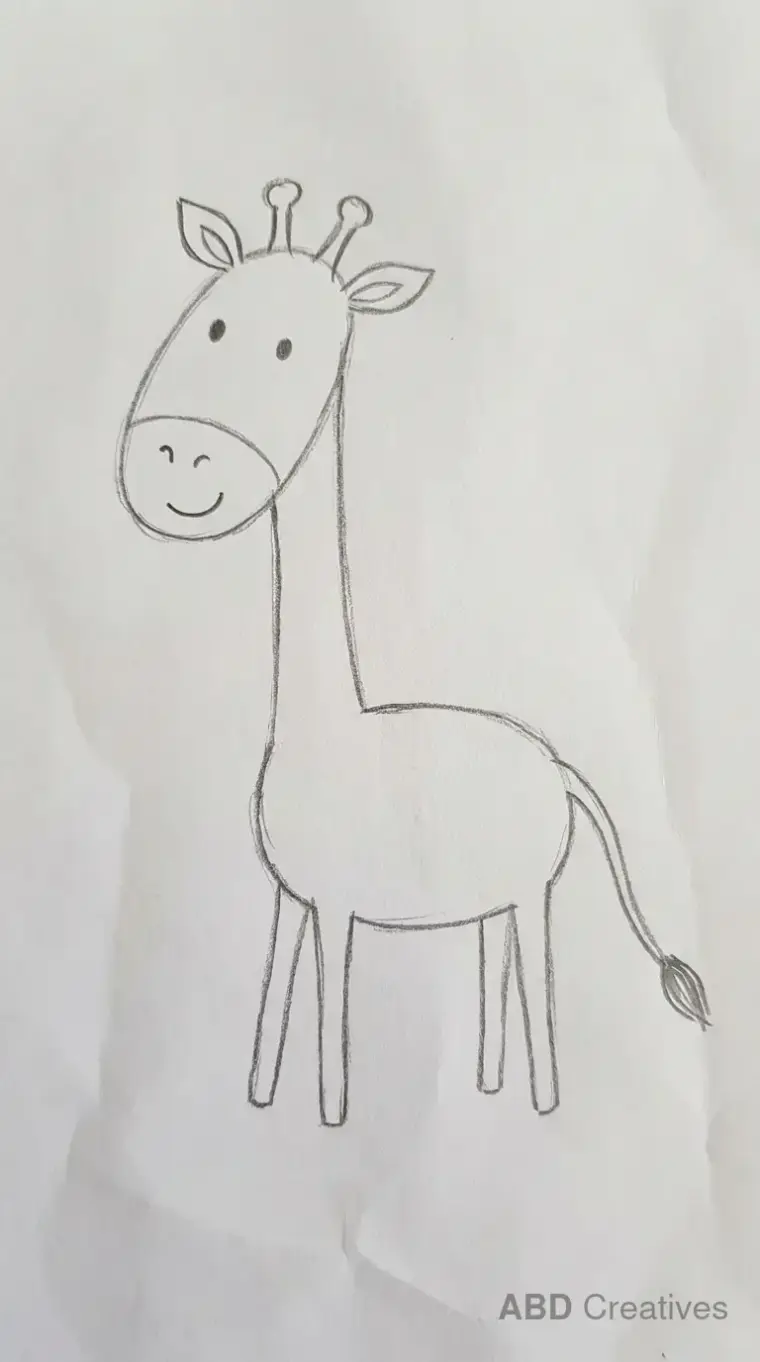
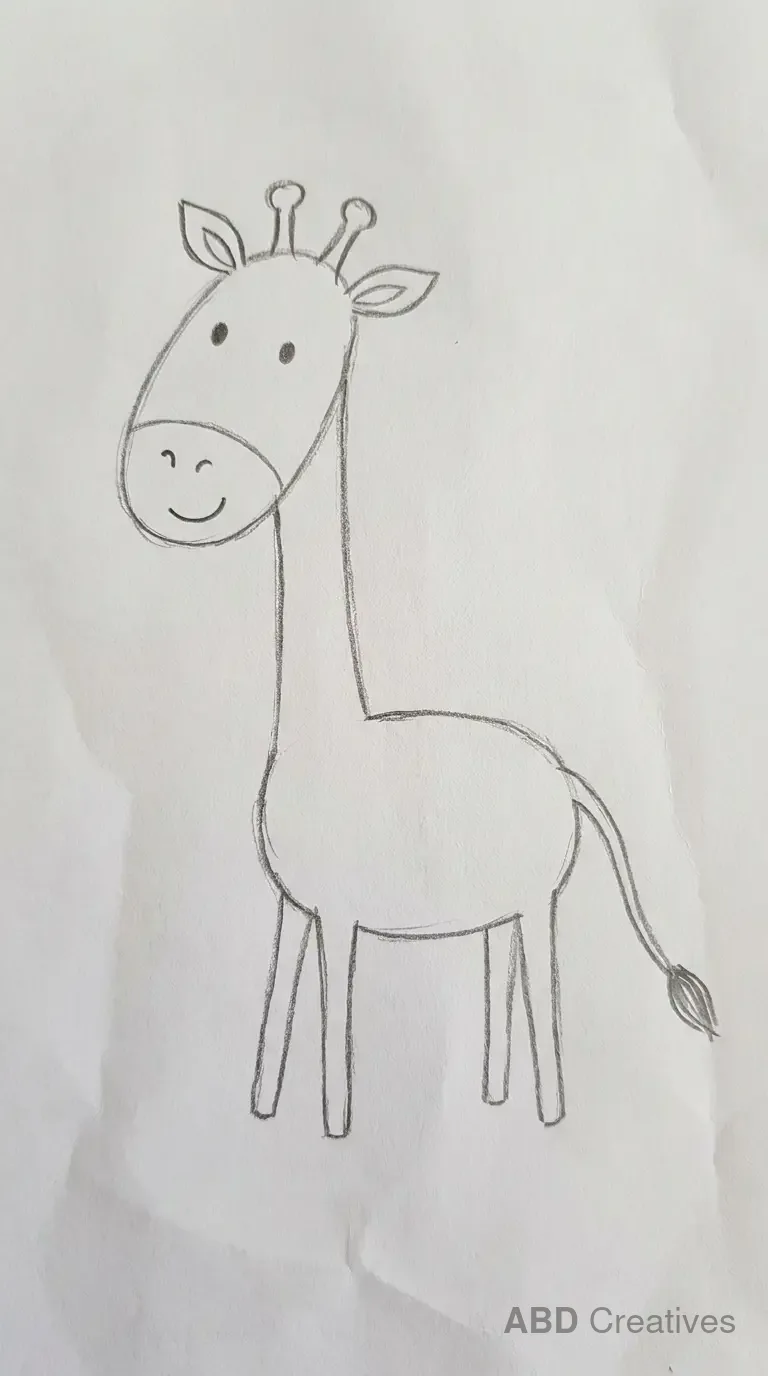
How to draw a giraffe step by step
- Start with the head. Draw a long oval tilted slightly to one side for the face.
- Add two small ears on either side of the head, and two short knobs (called ossicones) on top.
- Draw the eyes, nose and a small smiling mouth low on the face.
- From the base of the head, draw two long curved lines down to the body. This is the neck, and it should be much longer than you first expect.
- Draw a rounded body attached to the bottom of the neck.
- Add four long, thin legs under the body, with small rounded hooves at the end of each one.
- Finish with a thin tail ending in a small tuft, and rub out any extra pencil lines.
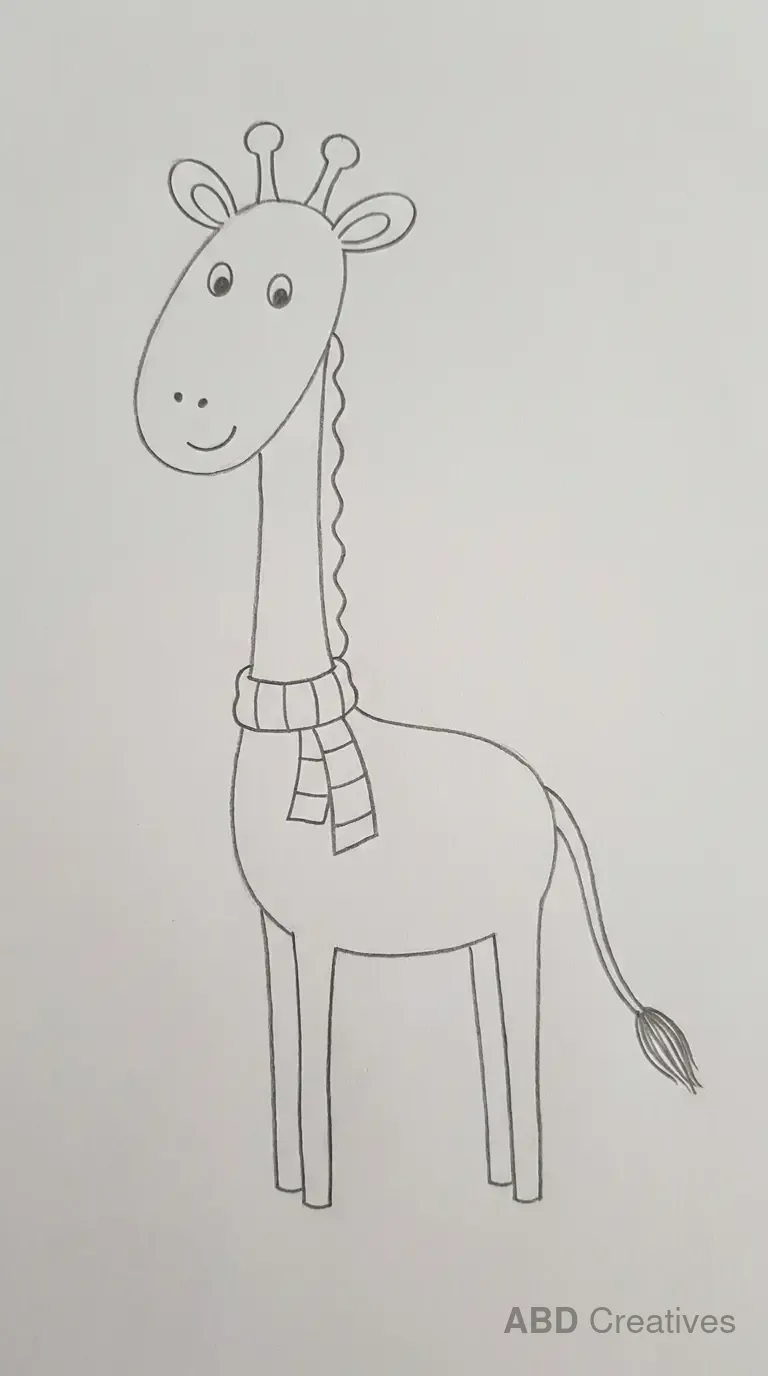
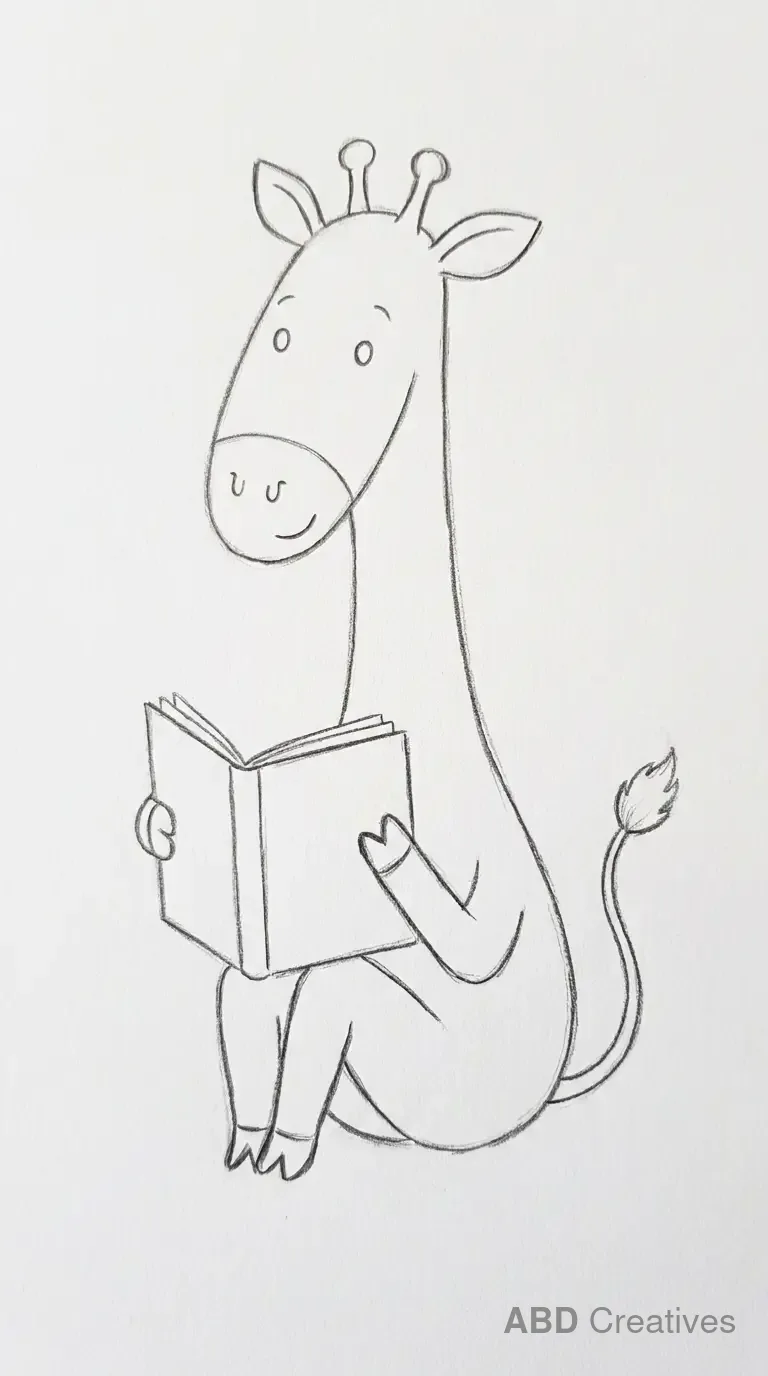
- If you like, add a simple prop such as a balloon, a scarf or a flower to give the drawing some character.
Which giraffe should you start with
If this is your first giraffe
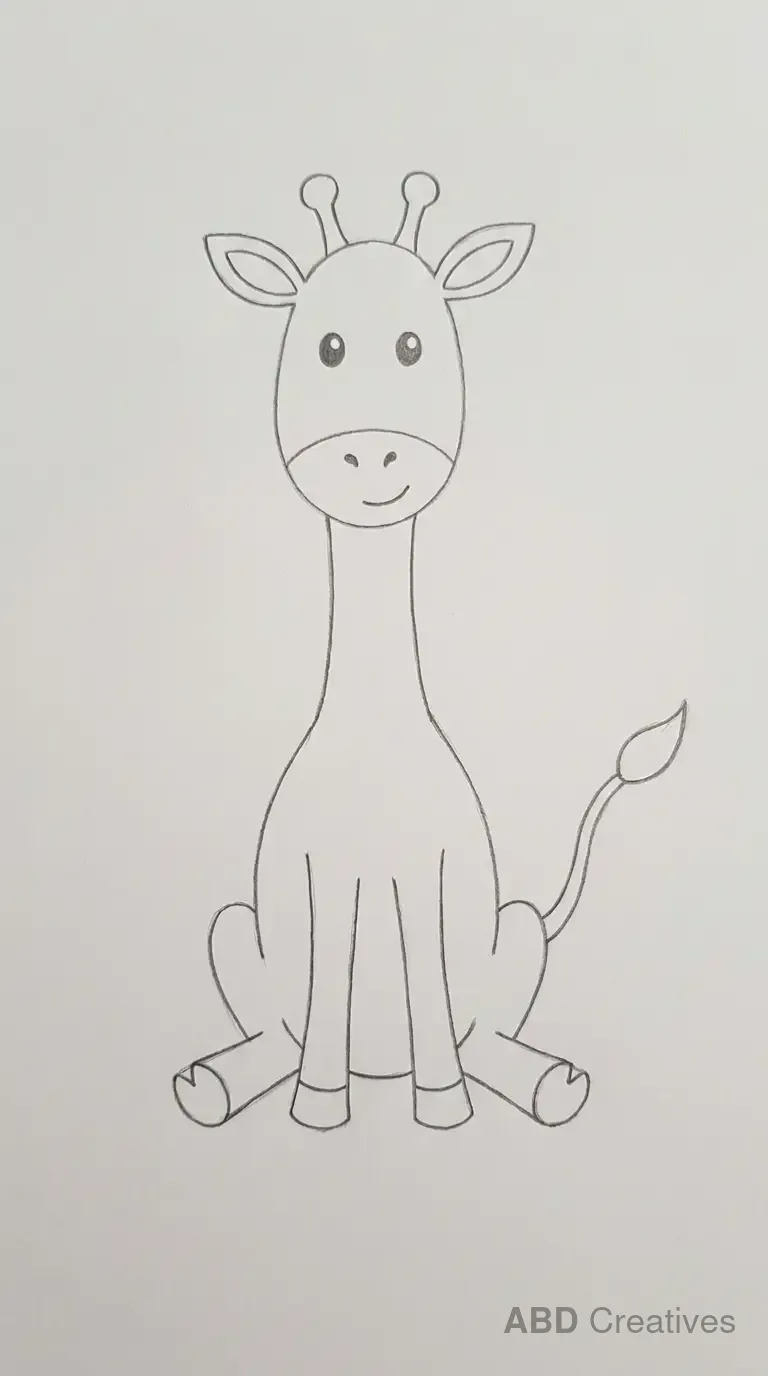
Start with the Simple Sitting Giraffe or the Standing Giraffe Side View. Both are plain, front on or side on, with no extra props to worry about. They let you focus on getting the long neck and legs right before adding anything else.
If you have drawn animals before
Try the Giraffe Wearing a Scarf or the Giraffe Holding a Flower. These add one small prop on top of the basic shape, which is a gentle way to practise adding detail without changing the pose too much.
If you want a challenge
The Jumping Giraffe and the Sitting Giraffe Under a Tree both use a bent or foreshortened pose, which is harder to get right than a plain standing giraffe. Try these once you are comfortable with the basic shape.
What you need
A pencil, an eraser and plain paper are enough to copy any of these drawings. A ruler is not needed, since every line in a giraffe is curved or slightly angled. If you want to trace instead of copy freehand, hold the drawing up to a window or use a light pad.
Three things that make a giraffe look like a giraffe
- Making the neck too short. A giraffe neck should look almost too long. If it looks in proportion to the body, it is probably too short.
- Forgetting the ossicones. The two small knobs on top of the head are a giraffe’s clearest feature. Without them, the drawing can look like a horse or a llama.
- Drawing straight legs. Giraffe legs are long and thin, but they are not perfectly straight. A small bend at the knee makes the pose look more natural.
Ways to use these drawings
Print a few pages and use them as a simple colouring set for kids. Copy one by hand as a quick sketching warm up. Use them as a base for a greetings card, a classroom worksheet, or a small art project. Since every drawing is a plain pencil outline, they are easy to colour, trace or scale up to a bigger sheet of paper.
Questions people ask
How long does a giraffe neck take to get right?
Most people need a few tries. Draw the neck longer than feels natural, since it is easy to underestimate just how long a giraffe neck really is.
Can I skip the ossicones on top of the head?
You can, but the drawing will look less like a giraffe and more like a generic long necked animal. They only take two small lines to add.
Do I need to draw the patches on the skin?
No. All of these drawings are plain outlines with no patches or shading, so they are easy to copy and colour in later.
What paper should I use?
Any plain paper works. A4 printer paper is fine for practising, and a sketchbook is better if you want to keep your drawings.
Can I use these for a school project?
Yes. These are simple, print friendly drawings that work well for worksheets, classroom projects and colouring sheets.
Which drawing is best for young kids?
The Baby Giraffe and the Simple Sitting Giraffe are both plain and rounded, which makes them easier for young children to copy or colour.
How do I make the legs look less stiff?
Add a small bend at the knee joint instead of drawing each leg as one straight line from body to hoof.
Are these drawings made by hand?
Yes. Each one was drawn in pencil on plain paper and photographed. They are not computer generated or traced from photographs.