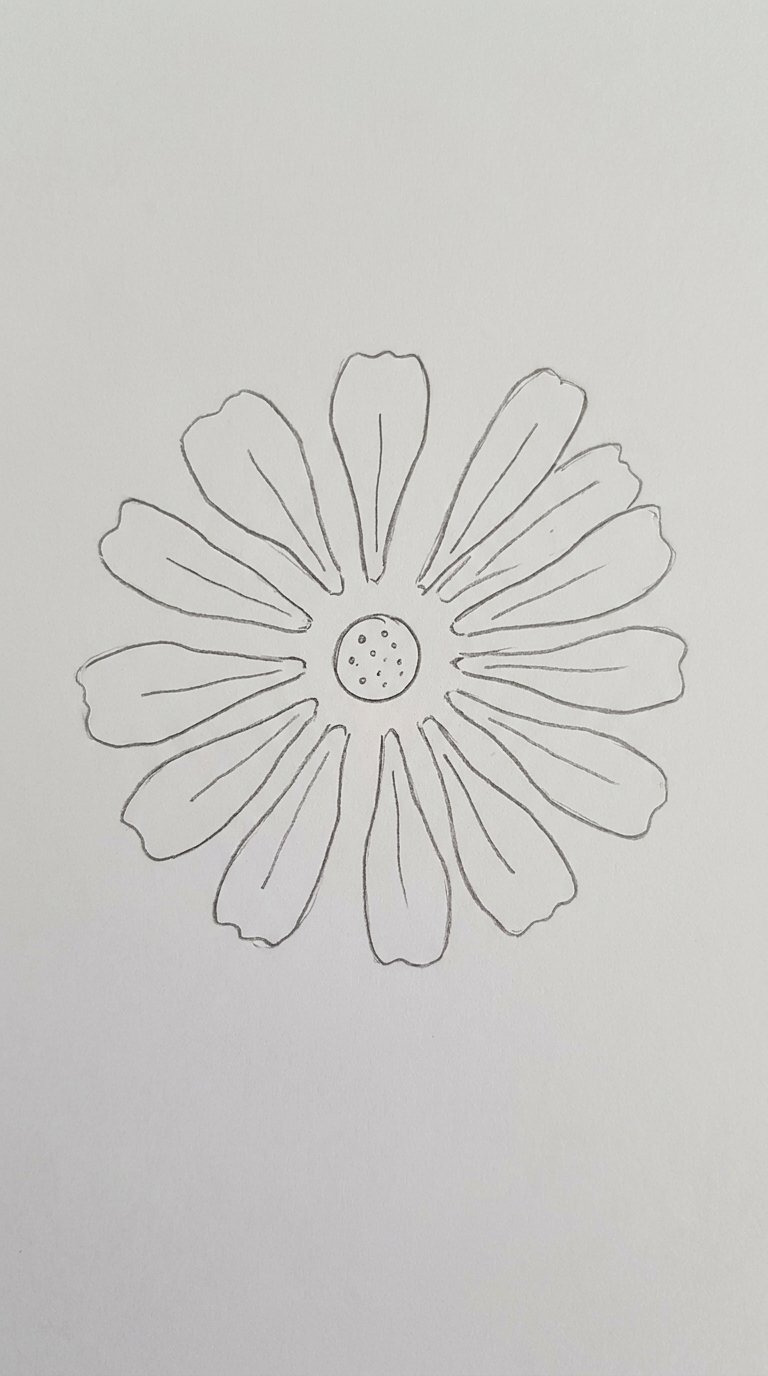
If you have ever looked at a zinnia flower and thought it would be too complicated to draw, you are not alone. Most beginners see those layered petals and immediately feel overwhelmed. But here is the good news: zinnia flowers are actually one of the most beginner-friendly flowers you can draw. Their petals repeat in a simple pattern, their center is a small circle, and once you understand the basic shape, the rest comes naturally.
This guide gives you 12 zinnia flower drawing ideas that are perfect for beginners, kids, and anyone who wants to practice floral art with just a pencil and paper. You do not need fancy art supplies, special skills, or years of experience. All you need is a pencil, a sheet of white paper, and a little patience.
Every drawing idea in this article uses simple shapes. Most of the time, you will start with a circle or an oval for the center, then add petals around it using curved lines. Some ideas focus on a single bloom, while others show a zinnia from different angles or in combination with leaves and stems. None of the drawings require shading, blending, or any advanced technique.
Whether you are a student looking for a fun art project, a teacher searching for easy floral drawing activities, or a Pinterest lover collecting drawing references, this collection covers everything you need. By the end of this article, you will have 12 fresh ideas to fill your sketchbook with beautiful zinnia drawings, along with tips to avoid the most common mistakes beginners make.
Let us start drawing.
Simple Single Zinnia Bloom Drawing
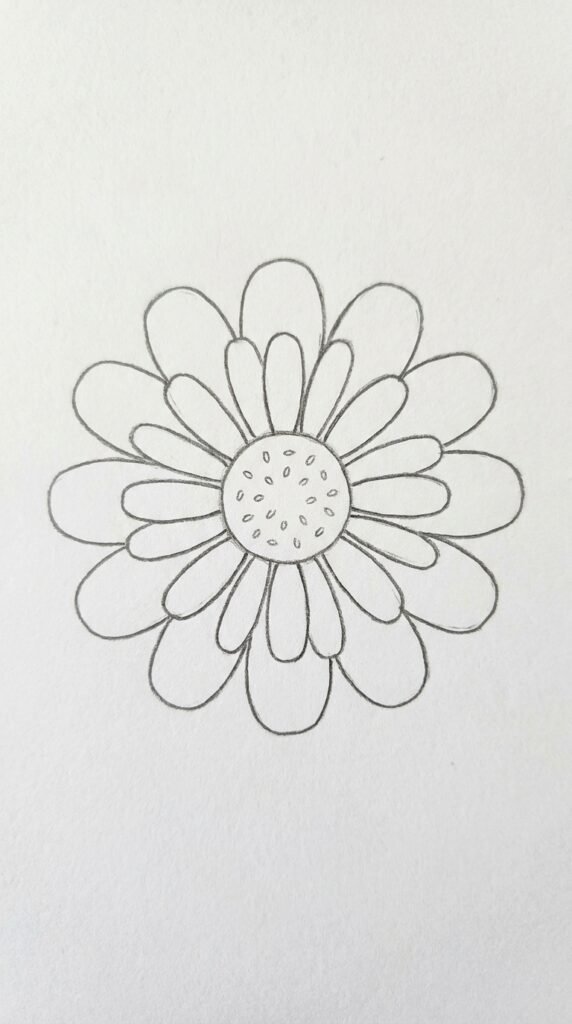
A single zinnia bloom is the best starting point for any beginner. This idea focuses on one flower viewed directly from the front, showing the round center and the petals fanning outward in a circular pattern. The symmetry of this design makes it easy to control and satisfying to complete. It is also one of the most popular zinnia drawing references on Pinterest because of its clean, balanced appearance.
Step-by-Step Instructions:
- Draw a small circle in the center of your paper, roughly the size of a large coin. This is the flower center.
- Starting from the outer edge of the circle, draw one petal by making two slightly curved lines that meet at a rounded tip. The petal should be about twice the size of the center circle.
- Continue adding petals all the way around the center circle, spacing them as evenly as possible. Aim for about 10 to 12 petals in the first layer.
- Add a second shorter layer of petals between the first layer, partially tucked behind the outer petals to give depth.
- Add tiny lines or small oval shapes inside the center circle to suggest the textured seed area.
Zinnia Bud Drawing
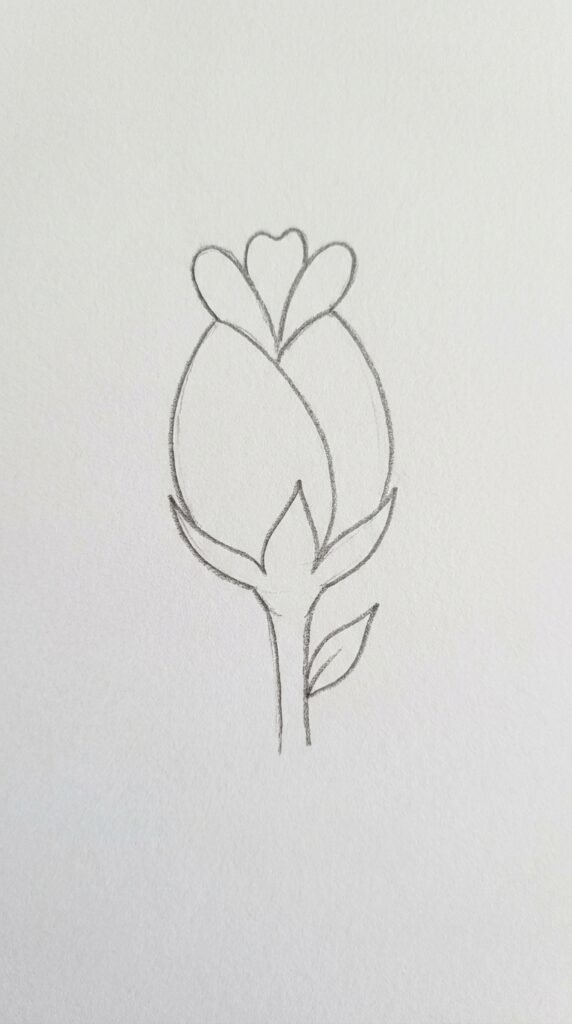
Drawing a zinnia bud is a wonderful way to practice curves and show a flower in an earlier stage of blooming. A bud is essentially a cluster of tightly folded petals wrapped around the center, making it simpler to draw than a fully open flower. This idea also pairs well with a full bloom in the same composition.
Step-by-Step Instructions:
- Draw a small oval shape in the center of the page. This is the base of the bud.
- From the top of the oval, draw three to four curved petal shapes that curve inward toward each other, as if wrapping the center. These petals should be tall and narrow.
- Below the oval base, draw a short stem line going downward.
- On either side of where the stem meets the bud, draw two small pointed shapes called sepals. These look like narrow triangles hugging the base of the bud.
- Add one small leaf on the stem to complete the composition.
Side View Zinnia Drawing
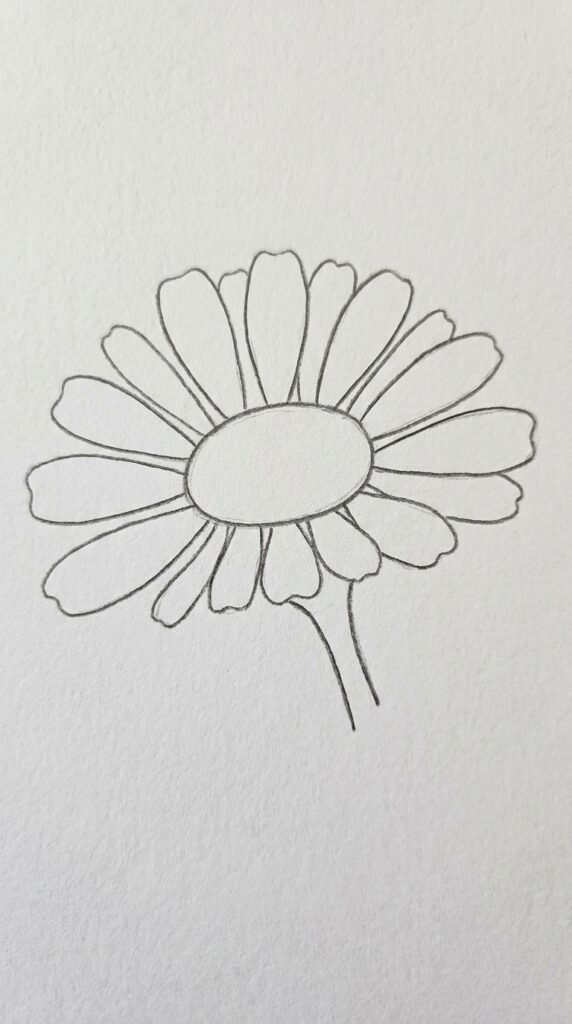
Drawing a zinnia from the side gives a completely different look from the front view. This angle shows the depth of the flower and how the petals curve slightly downward from the center. It is a great exercise for understanding three-dimensional shape through flat line drawing alone.
Step-by-Step Instructions:
- Draw a small oval or slightly flattened circle near the upper center of your paper. This represents the flower center seen from the side.
- From the top edge of the oval, draw petals that curve upward and outward, spreading out like a fan.
- From the bottom edge of the oval, draw petals that curve slightly downward and outward, mirroring the top petals.
- The petals on the sides should be the widest, while petals near the top and bottom are narrower and shorter.
- Below the flower center, draw a short line for the upper stem connecting into the base of the flower.
Double-Petal Zinnia Drawing
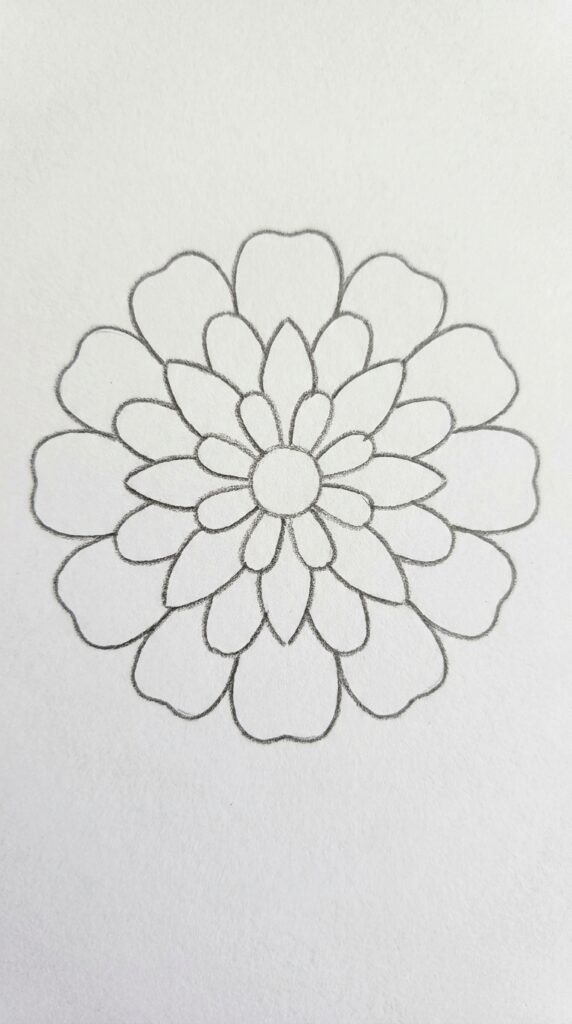
Some zinnia varieties have a second or even third layer of petals that sit just inside the outer ring, creating a lush and full appearance. This drawing idea teaches beginners how to suggest volume and layering without any shading at all, using only overlapping line shapes.
Step-by-Step Instructions:
- Begin with a small center circle.
- Draw the first layer of 10 to 12 outer petals around the center, keeping them evenly spaced and rounded at the tips.
- Draw a second layer of petals in between the gaps of the first layer, making these petals slightly shorter and positioned just inside the outer ring.
- Draw a third, even shorter row of petals tucked right against the center circle, pointing slightly upward.
- The result should look like a very full, densely petaled flower. Make sure each petal has clear outlines so layers are visually distinct.
Zinnia Flower With Butterfly Drawing
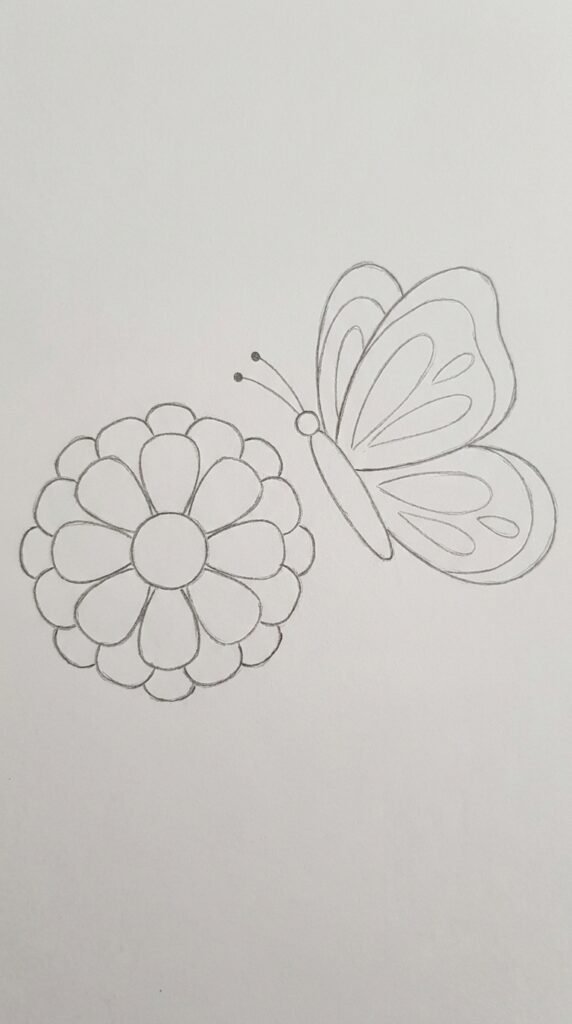
Pairing a zinnia with a simple butterfly adds storytelling to your drawing and creates an eye-catching composition. This combination is extremely popular in art journals and Pinterest boards because it brings together two naturally connected subjects. The butterfly shape is made from basic wing outlines.
Step-by-Step Instructions:
- Draw a zinnia bloom slightly to the left or right of center on your paper, using the front-view method with a center circle and two layers of petals.
- Just above and to the side of the flower, draw the body of the butterfly as a narrow oval pointing diagonally.
- On each side of the body, draw one upper wing and one lower wing. The upper wings are larger and fan-shaped, while the lower wings are smaller and slightly rounded.
- Inside each wing, draw one or two simple curved lines or small oval shapes to suggest wing patterns.
- Add two thin antenna lines rising from the top of the butterfly body with a tiny dot at each tip.
Zinnia Flower With Long Stem and Leaves
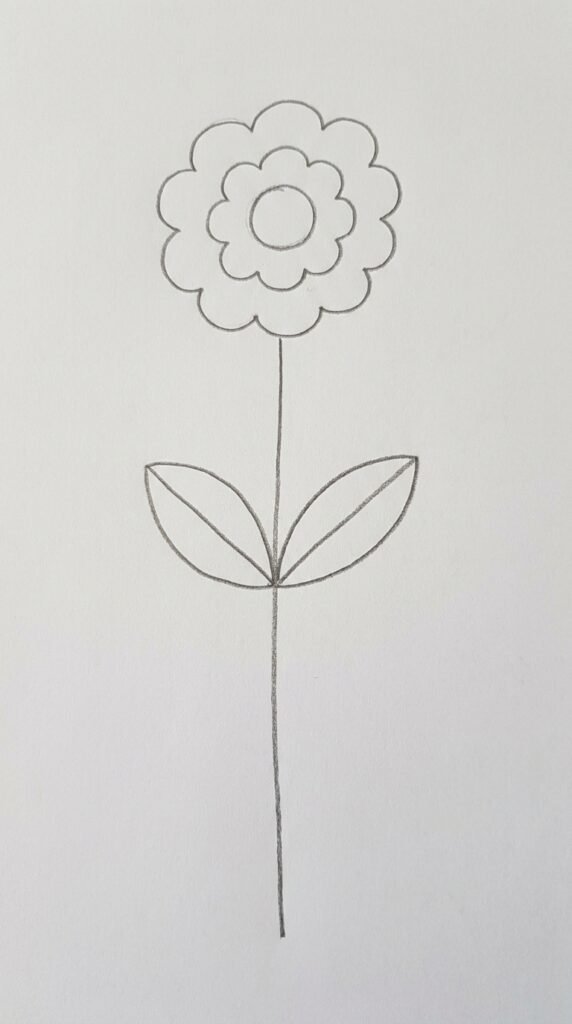
Adding a stem and a pair of leaves transforms a simple bloom into a complete botanical illustration. This idea is great for beginners who want to practice drawing organic curves and leaf shapes alongside a flower. The tall straight stem grounds the composition and makes the drawing feel more complete and natural.
Step-by-Step Instructions:
- Draw a vertical straight line in the lower two-thirds of your paper. This is the main stem.
- At the top of the stem, draw your zinnia bloom using the same center circle and petal method described above.
- About halfway down the stem, draw a leaf on each side. Each leaf starts as a long oval that tapers to a pointed tip. The base of each leaf connects directly to the stem.
- Add a central vein line inside each leaf by drawing a thin line from the base to the tip.
- Add a few short diagonal lines branching off the central vein to suggest secondary veins.
- Make sure the stem line connects cleanly into the bottom of the flower center.
Loose Zinnia Petal Arrangement Drawing
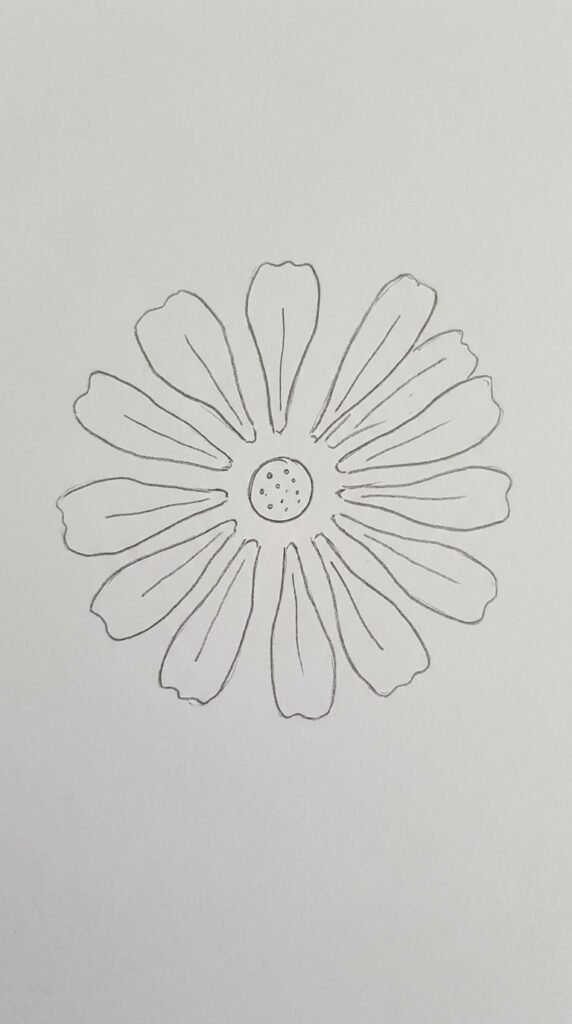
This idea breaks the flower apart into individual floating petals arranged in a loose circular composition. It is a fun artistic interpretation that helps beginners practice drawing individual petal shapes and understand how they relate to each other when assembled into a full bloom.
Step-by-Step Instructions:
- In the center of your paper, draw a small circle for the flower center.
- Around it, instead of attaching the petals directly, draw each petal with a small gap between its base and the center circle, as if the flower is slightly exploded outward.
- Draw 10 to 12 petals evenly spaced in this detached arrangement, each petal clearly separate.
- Inside each petal, draw a single thin line running from the base to the tip to show the central petal vein.
- Optionally, draw a few tiny dots around the center circle to suggest pollen.
Zinnia Garden Row Drawing
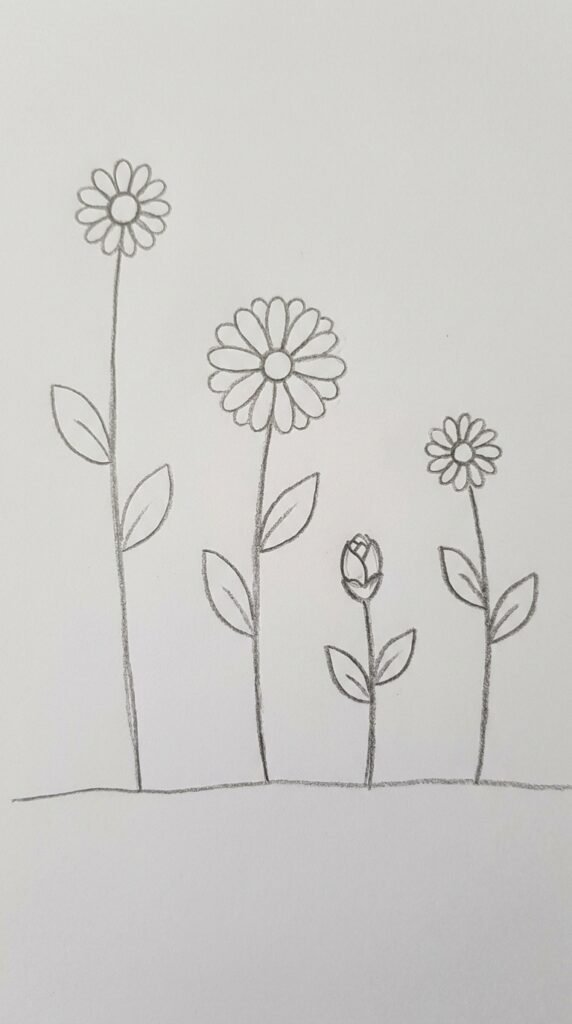
Drawing a row of zinnia flowers at different heights creates a garden scene that is surprisingly easy to achieve. This idea introduces the concept of varying size to show distance, where flowers in the front are slightly larger and those in the back are slightly smaller.
Step-by-Step Instructions:
- Draw a horizontal baseline near the bottom of your paper.
- Draw three to five vertical stem lines of different heights rising from the baseline, spacing them unevenly for a natural look.
- At the top of each stem, draw a zinnia bloom. Make the tallest stems have the smallest blooms to suggest they are farther away.
- Add two leaves to each stem at different heights, alternating sides.
- Optionally, add two or three small bud shapes on the shortest stems to vary the composition.
Zinnia Inside a Circle Frame Drawing
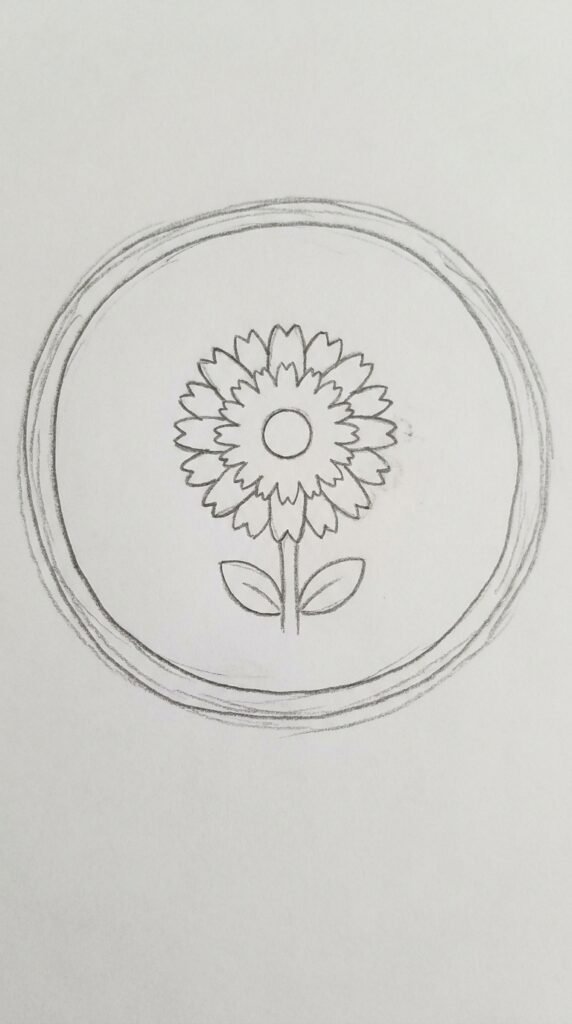
Placing a zinnia bloom inside a simple circle frame is a classic composition used in botanical art and journaling. The circular border makes the drawing feel finished and polished without requiring extra artistic skill. This idea works beautifully for greeting card designs and art journal pages.
Step-by-Step Instructions:
- Draw a large circle that fills most of your paper, using a compass or tracing around a cup.
- In the center of the large circle, draw your zinnia bloom with a front-facing center circle and two layers of petals.
- Draw a short stem going downward from the bloom base, stopping before it reaches the edge of the large circle.
- Add two small leaves on either side of the stem.
- The outer circular frame should be a clean, even line drawn with consistent pressure.
Zinnia With Drooping Petals Drawing
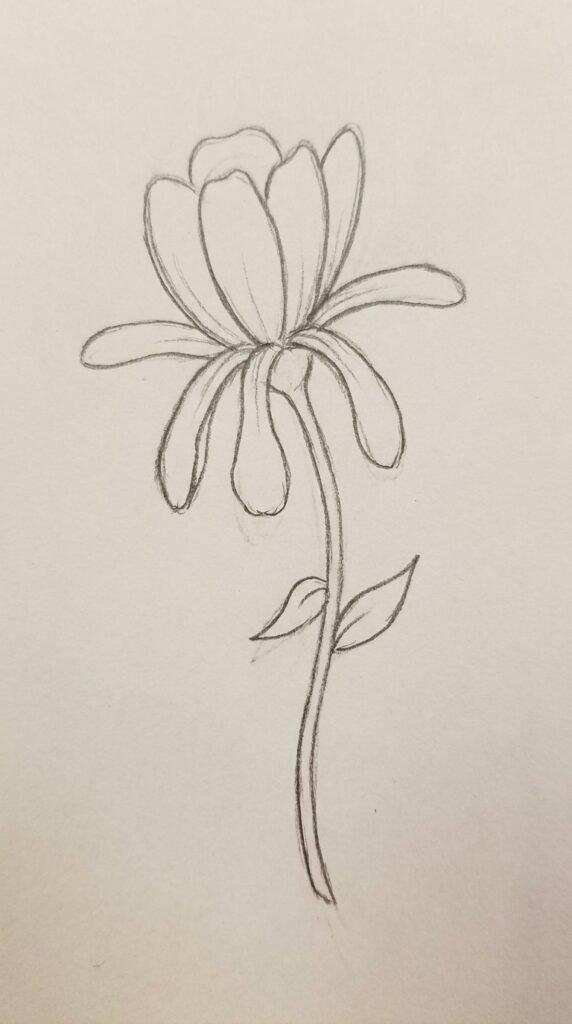
This variation shows a slightly wilting zinnia where some petals curve or droop downward. It gives the drawing a more natural and realistic character without adding any complexity in technique. Curved and drooping petals are easy to draw and give your sketch personality.
Step-by-Step Instructions:
- Draw a small center circle in the upper half of your paper.
- Draw the top half of the petals curving upward and outward as usual.
- For the lower half of the petals, curve them downward so the tips point toward the stem rather than outward.
- A few petals in the middle section should curve slightly sideways to create variety.
- Add a stem and two small leaves below. Make the stem curve slightly rather than going perfectly straight, to suggest the weight of the drooping bloom.
Two Zinnias on One Branch Drawing
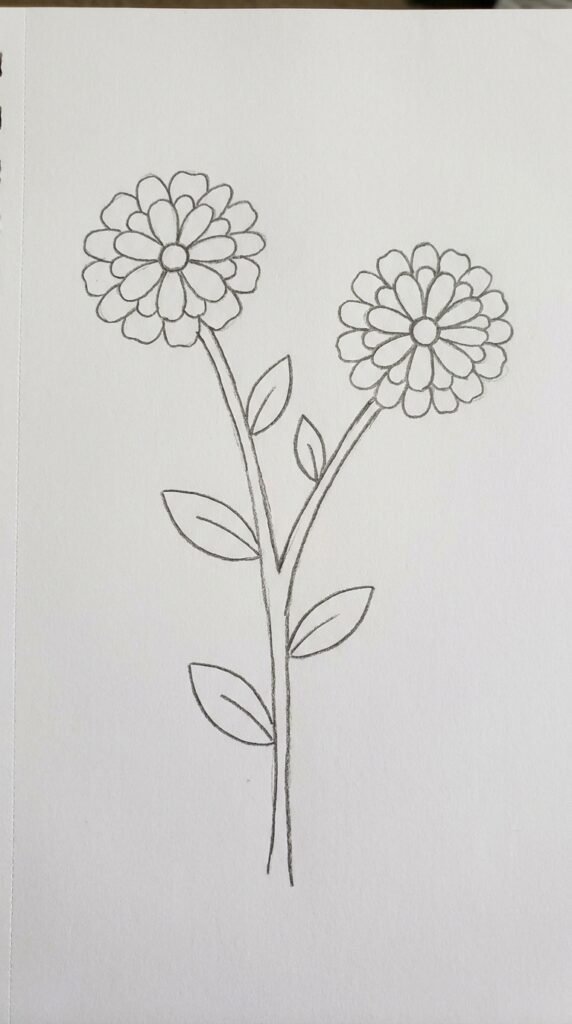
Drawing two zinnia blooms sharing a branching stem creates a more dynamic and complete composition. This idea introduces the concept of a forked stem and teaches beginners how to arrange multiple flowers on the same plant convincingly.
Step-by-Step Instructions:
- Draw a single vertical stem line in the center of your paper.
- About two-thirds of the way up the stem, draw the stem forking into two branches, one angling left and one angling right.
- At the tip of each branch, draw a zinnia bloom facing slightly different directions to add variety.
- Add two to three leaves along the main stem at different heights.
- Add one small leaf at the fork point where the stem splits, which is a common feature in real zinnia plants.
Zinnia Mandala Pattern Drawing
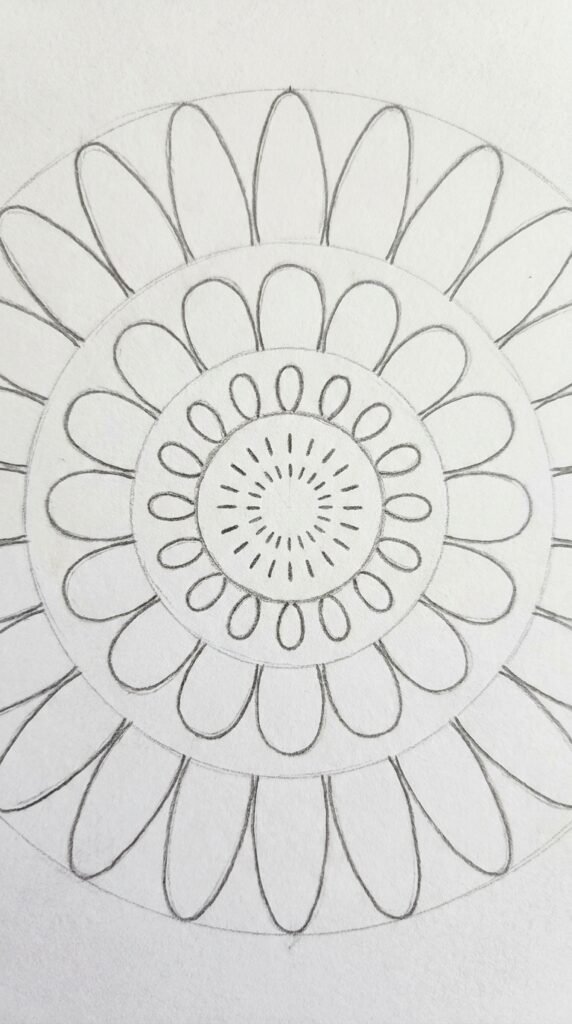
This final idea turns the zinnia’s natural radial symmetry into a decorative mandala-inspired drawing. By repeating petal shapes in rings and adding simple geometric accents, you create a stunning decorative piece that looks far more advanced than it actually is to make.
Step-by-Step Instructions:
- Draw a small circle in the absolute center of your paper.
- Draw a medium circle around it, leaving about a half-inch gap between the two circles.
- In the gap between the two circles, draw small oval petal shapes all the way around.
- Outside the medium circle, draw a full ring of longer zinnia-style petals.
- Outside that, add another ring of petals that are slightly different in shape, perhaps more pointed.
- Fill the innermost small circle with small dots or a starburst of tiny lines to complete the mandala center.
Drawing Tips for Zinnia Flowers
Start with a light pencil grip when sketching your initial shapes. A loose hand makes it easier to draw smooth, natural curves in petals. Once you are happy with the basic outline, you can go over the lines with slightly firmer pressure to make them bolder and cleaner.
Always draw the center circle first before adding any petals. The center circle is your anchor point, and all petals should radiate outward from it in an evenly spaced arrangement. If the center is off-center or too large, the whole flower will look unbalanced.
Use a ruler only for straight stem lines if needed. All curves, petals, and leaves should be drawn freehand to keep the drawing looking natural and organic rather than stiff.
Practice drawing a single petal shape several times on a scrap piece of paper before adding it to your main drawing. Getting comfortable with the basic petal shape saves a lot of erasing and frustration later.
Keep your pencil sharp throughout the drawing process. A sharp pencil gives you cleaner lines and more control, which is especially important when drawing smaller inner petals and fine vein lines in leaves.
Common Mistakes to Avoid
Making the center circle too large is one of the most common beginner errors. When the center takes up too much space, there is not enough room for the petals, and the flower looks like a sunflower rather than a zinnia. Keep the center small, roughly the size of a penny.
Drawing petals that are all exactly the same size and angle can make your flower look mechanical. In real zinnias, petals have slight variations in width and angle. Try to let your hand move naturally rather than measuring each petal with extreme precision.
Placing petals too far apart from each other creates gaps that break the visual fullness of the zinnia. Petals should sit close together, nearly touching at their bases, so the flower looks full and rounded.
Pressing too hard with the pencil from the very beginning makes it difficult to erase guide lines later. Always start with very light strokes for your preliminary shapes and circles before committing to darker final lines.
Forgetting to connect the stem cleanly to the base of the flower is a small but noticeable mistake. Make sure the stem line disappears into the lower edge of the flower center, as if it is actually holding the bloom up.
Frequently Asked Questions
What is the easiest way to draw a zinnia flower for beginners?
The easiest approach is to start with a small circle for the center and then add petals one by one around the outside. Begin at the top and work your way clockwise, keeping petals evenly spaced. Use rounded tips on each petal and add a second shorter inner row once the outer row is complete. This method works for beginners of all ages, including young children.
How many petals does a zinnia flower have in a drawing?
For a basic beginner drawing, 10 to 12 outer petals give a realistic and balanced look without making the drawing too complicated. If you want a fuller double-petal zinnia, add a second row of 8 to 10 petals between the outer ones and a third shorter row close to the center.
Do I need to add shading to make a zinnia drawing look good?
No. A clean pencil outline without any shading is completely valid and can look very polished. Many popular drawing styles, including botanical line art and flat illustration, use only outlines with no shading at all. For beginners, skipping shading actually helps you focus on getting accurate shapes and clean lines, which are the foundation of any good drawing.
What pencil should I use for drawing zinnia flowers?
An HB pencil is the best all-purpose choice for zinnia flower drawings. It is firm enough to give clear visible lines but not so soft that it smudges easily. If you want slightly lighter guide lines, use an H or 2H pencil for your preliminary sketching, then go over the final outlines with a sharp HB pencil.