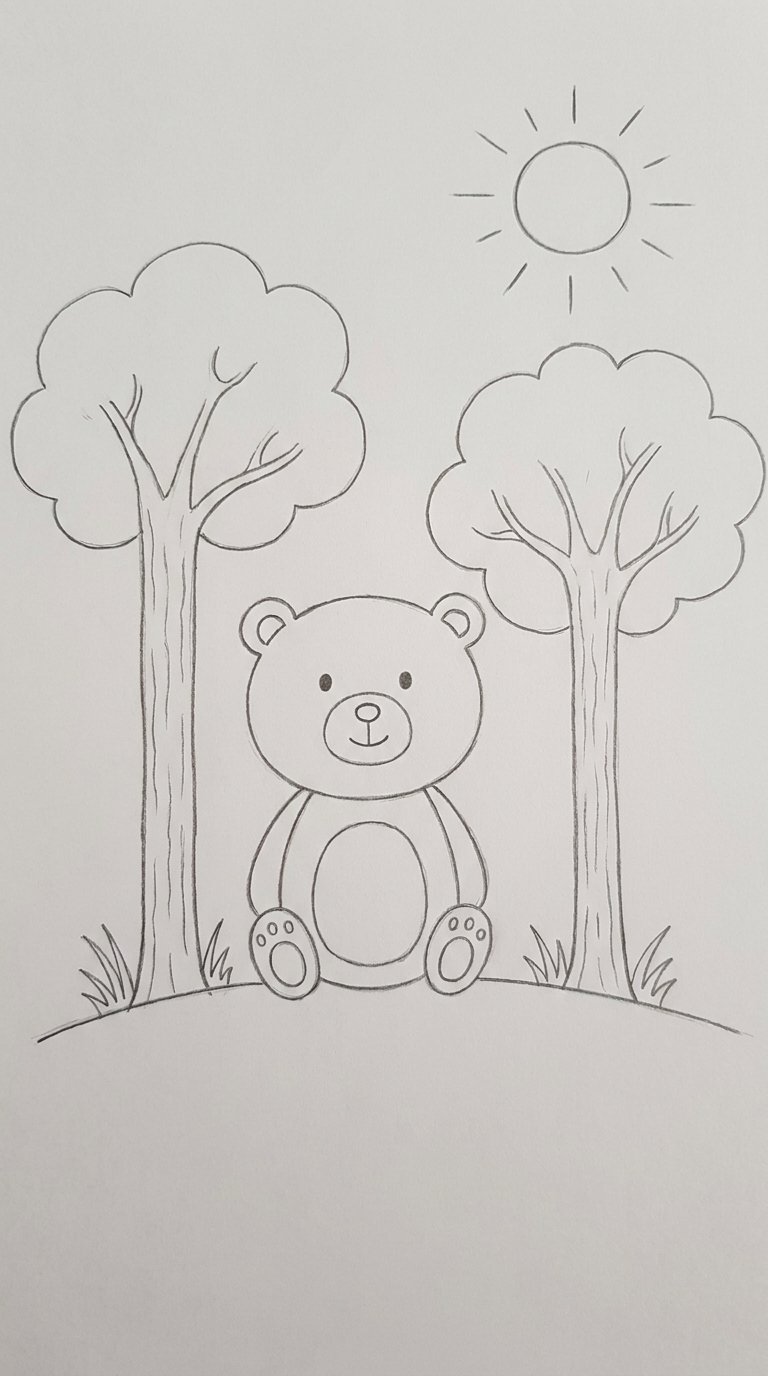
If you have ever wanted to draw a bear but did not know where to begin, you are in the right place. Bears are one of the most popular animals to sketch, and they are surprisingly simple to draw once you break them down into basic shapes. Whether you are a complete beginner, a parent looking for fun activities for your kids, or someone just getting back into drawing after a long break, these bear drawing ideas will help you build your skills one step at a time.
The best part is that you do not need fancy art supplies or years of practice. All you need is a pencil, an eraser, and a sheet of plain white paper. Every idea in this list starts with simple shapes like circles, ovals, and curved lines. There is no shading required for any of these drawings, which makes them perfect for young learners and beginners who want clean, clear results without the frustration of blending techniques.
Bears come in so many different styles and poses, which means there is something in this list for everyone. You will find cute cartoon bears, sitting bears, standing bears, bear faces, polar bears, panda bears, and more. Each drawing idea includes step-by-step instructions written in plain and easy English so you always know exactly what to do next.
Drawing bears is also a wonderful way to build foundational art skills. You will practice drawing circles, adding ears, creating expressions, and putting together a complete animal figure. These skills carry over to many other drawings as well. By the time you finish a few of these ideas, you will feel much more confident picking up a pencil and drawing any animal you like.
So grab your pencil, find a quiet spot, and let us get started with twelve fun and simple bear drawing ideas that anyone can do.
Cute Cartoon Bear Face
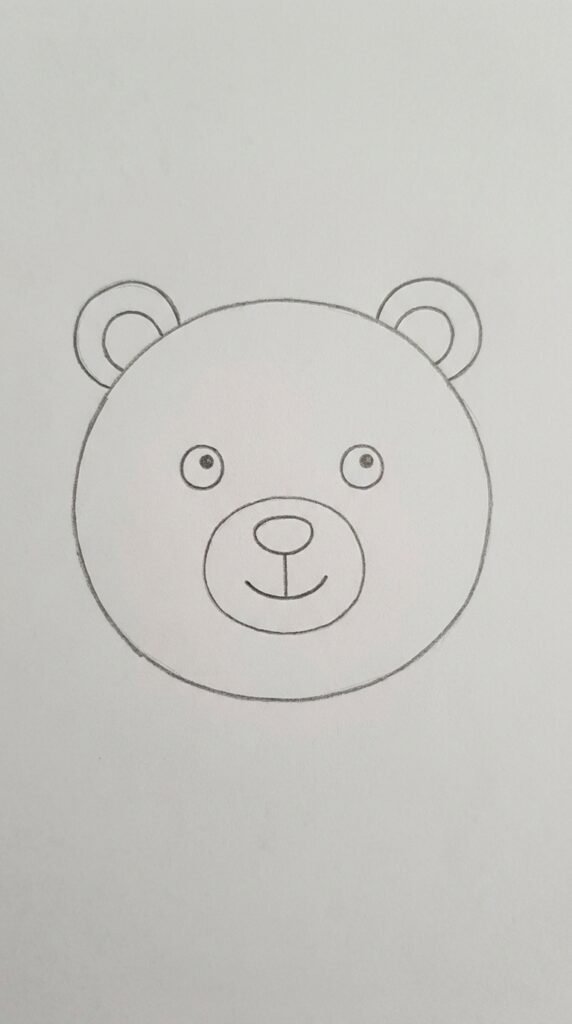
A cartoon bear face is the perfect starting point for any beginner. It uses simple round shapes and gives you a friendly, expressive result that looks great on greeting cards, notebooks, or as a standalone sketch. This is one of the most searched bear drawing ideas on Pinterest and art tutorial sites because it is achievable in minutes.
Step-by-Step Instructions:
- Draw a large circle in the center of your page. This will be the bear’s head. Make it about the size of a tennis ball if you were holding it at arm’s length.
- Add two small rounded ears at the top of the circle, one on the left and one on the right. Each ear should look like a small half-circle sitting on the edge of the big circle.
- Inside each ear, draw a slightly smaller half-circle to show the inner ear detail.
- Draw a small oval in the lower center of the face for the muzzle area. This oval should sit just below the middle of the circle.
- Add two small circles for the eyes above the muzzle. Place them evenly apart. Draw a tiny dot inside each circle for the pupils.
Sitting Teddy Bear
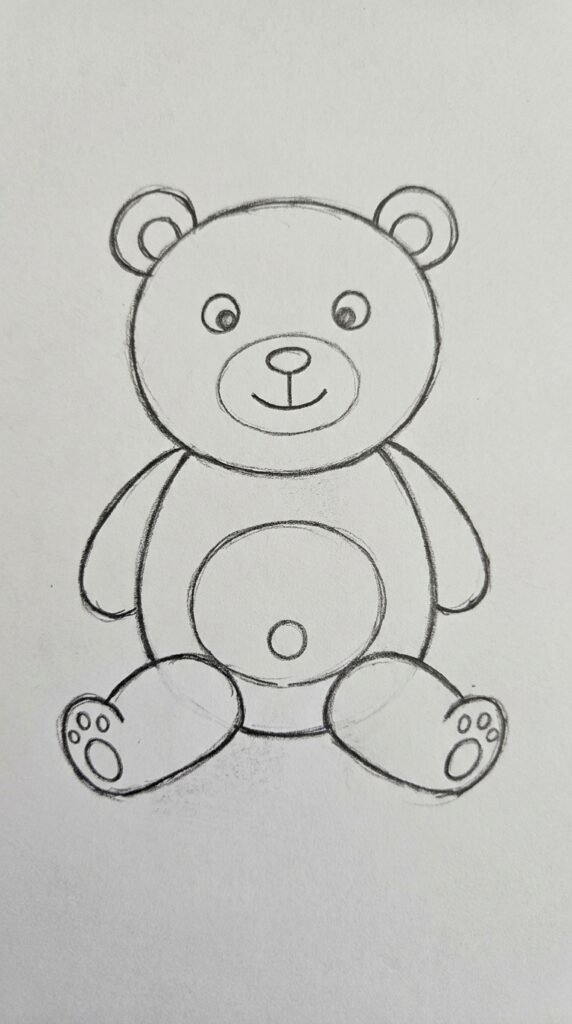
A sitting teddy bear is a classic drawing that never goes out of style. It is a great way to practice drawing a full bear body with arms and legs, and the sitting pose makes it simpler to balance than a standing figure. This idea is popular with kids who love stuffed animals and want to draw their favorite toy.
Step-by-Step Instructions:
- Start by drawing a large circle for the bear’s head near the top center of your paper.
- Below the head, draw a larger oval for the body. The oval should be slightly wider than the head and centered beneath it.
- Add two short curved arms on either side of the body. Each arm should curve outward slightly, like the bear is resting its arms at its sides.
- At the bottom of the body oval, draw two short rounded legs that point outward and slightly down, like the bear is sitting on a flat surface.
- Add small rounded paws at the ends of the arms and feet at the ends of the legs.
Standing Grizzly Bear
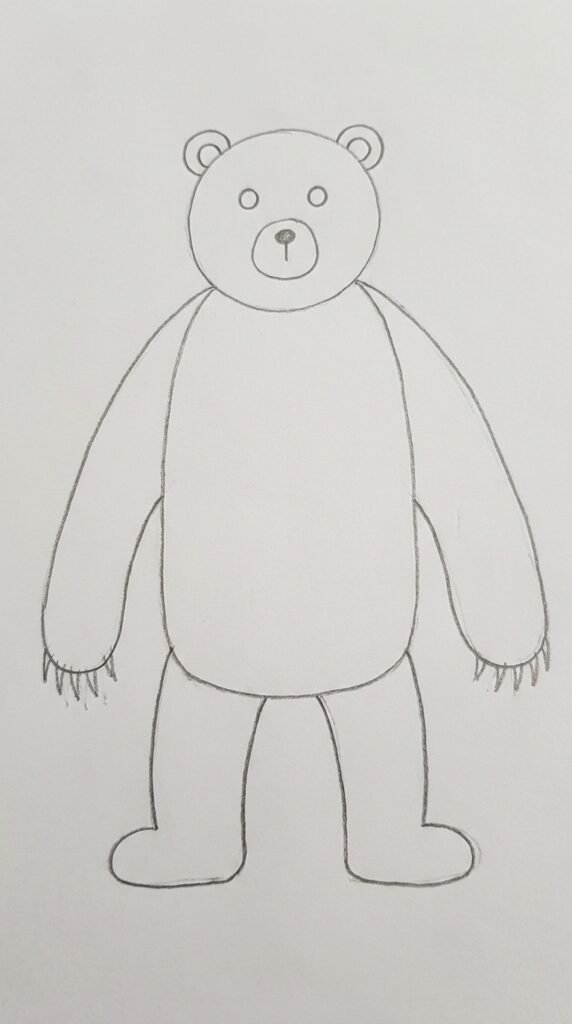
A standing grizzly bear is a step up in difficulty but still very manageable for beginners. This drawing captures the powerful upright pose of a bear standing on its hind legs and is a great exercise in drawing a taller, more elongated bear body. It works beautifully as a nature-themed sketch.
Step-by-Step Instructions:
- Draw a medium-sized circle near the upper center of your paper for the head.
- Below the head, draw a large rounded rectangle shape for the body. Make it taller than it is wide, about two to three times the height of the head.
- Add two long arms on either side of the body, curving them slightly outward. The arms should reach roughly halfway down the body.
- At the bottom of the body, draw two thick, slightly bent legs. Add wide flat paws at the bottom of each leg.
- Draw large rounded ears at the top of the head.
Baby Bear Cub
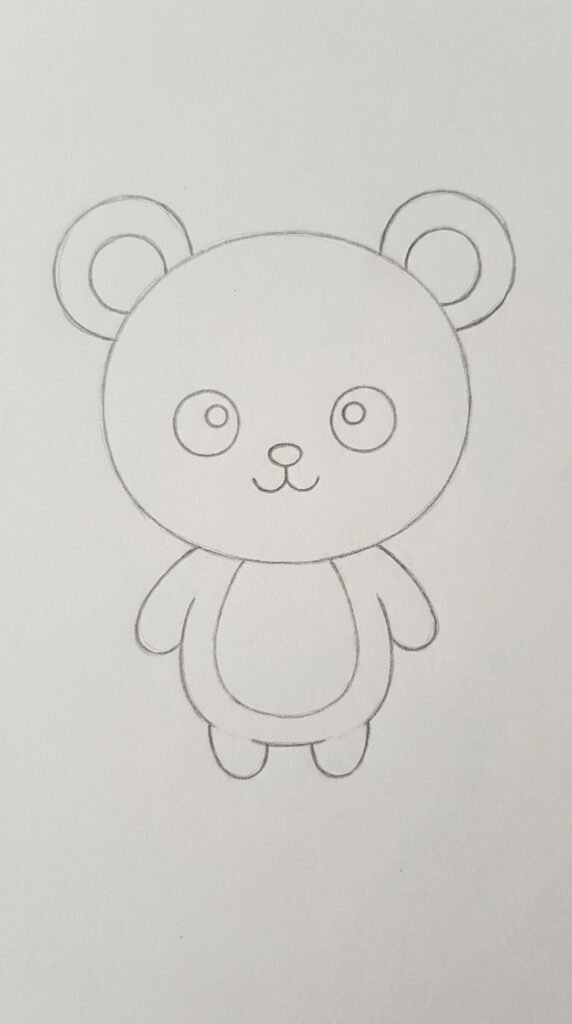
Baby bears are irresistibly cute and very popular in beginner drawing tutorials. The key to drawing a bear cub is making the head larger in proportion to the body than you would for an adult bear. This exaggerated proportion creates that adorable baby animal look that everyone loves.
Step-by-Step Instructions:
- Draw a very large circle for the cub’s head. This should take up nearly half your drawing space.
- Draw a small rounded oval body directly below the head. Keep it noticeably smaller than the head to emphasize the baby proportions.
- Add two short stubby arms on the sides of the body and two tiny round legs at the bottom.
- Draw two large rounded ears at the top of the head. Make them slightly bigger relative to the head than you would for an adult bear.
- Inside each ear, add a small inner ear circle.
Panda Bear
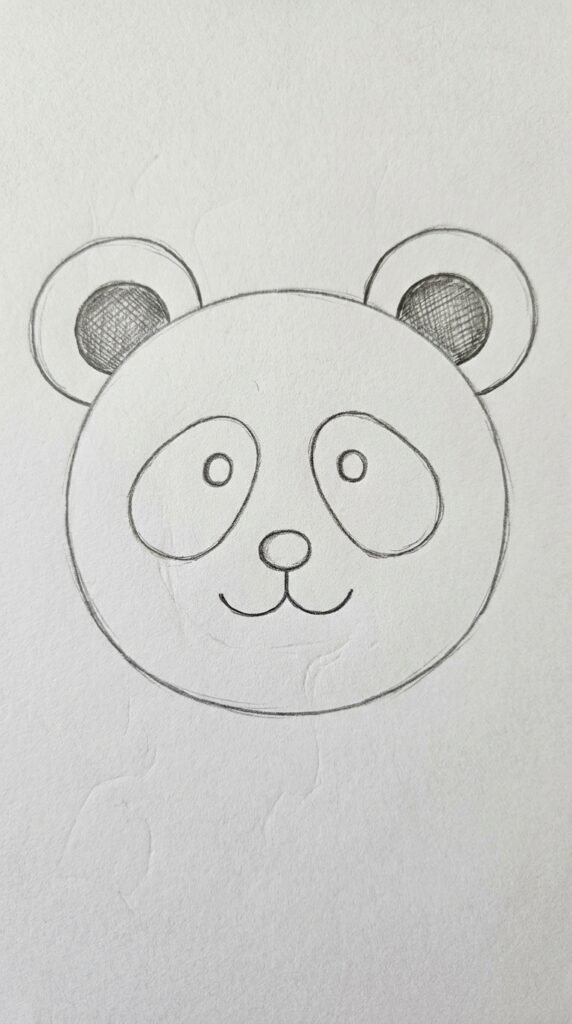
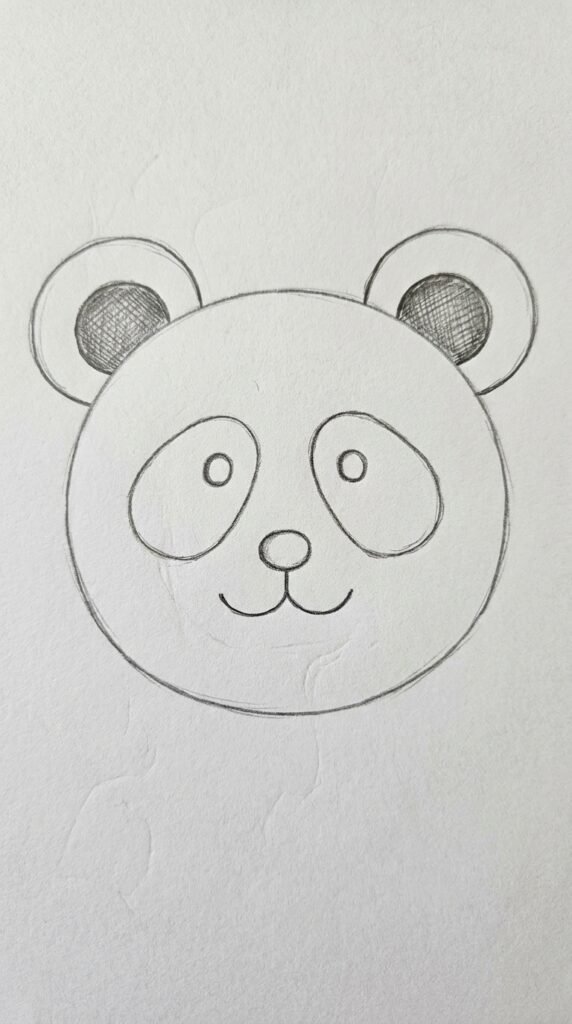
Panda bears are a favorite drawing subject because of their bold black and white markings. Even without shading or color, you can create a recognizable panda using simple outline patches around the eyes and ears. This is one of the most fun bear drawing ideas on this list.
Step-by-Step Instructions:
- Draw a large circle for the panda’s head in the center of your paper.
- Add two round ears at the top of the head. Draw a slightly smaller circle inside each ear and fill the inside circle with pencil lines to make them dark, representing the panda’s black ears.
- Draw two large oval patches around where the eyes will be. These patches should be tilted slightly inward at the top, like a rounded triangle shape. Outline them clearly.
- Inside each patch, draw a small circle for the eye with a dot pupil.
- Draw a small round nose in the center of the lower face and a simple curved smile beneath it.
Polar Bear
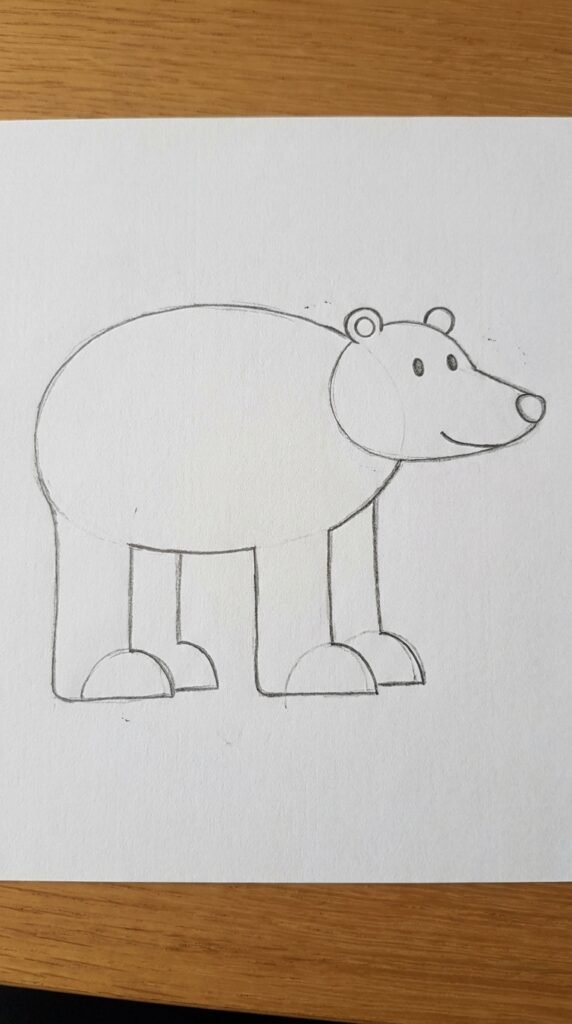
A polar bear has a slightly different head shape than a brown or black bear, making it an interesting drawing variation. The longer snout and narrower head are the key details that set it apart. This drawing idea works well for winter-themed art projects.
Step-by-Step Instructions:
- Draw an oval for the polar bear’s head, slightly wider than it is tall and a little more elongated than the round heads used in other bear drawings.
- Extend the lower part of the oval forward slightly to suggest the longer snout shape of a polar bear.
- Add two small rounded ears near the top of the oval. Polar bear ears are smaller and rounder than other bears.
- Draw a small rounded nose at the tip of the extended snout area and add a simple open or closed mouth below it.
- Place two small oval eyes on the upper portion of the face, spaced naturally apart.
Bear Eating Honey
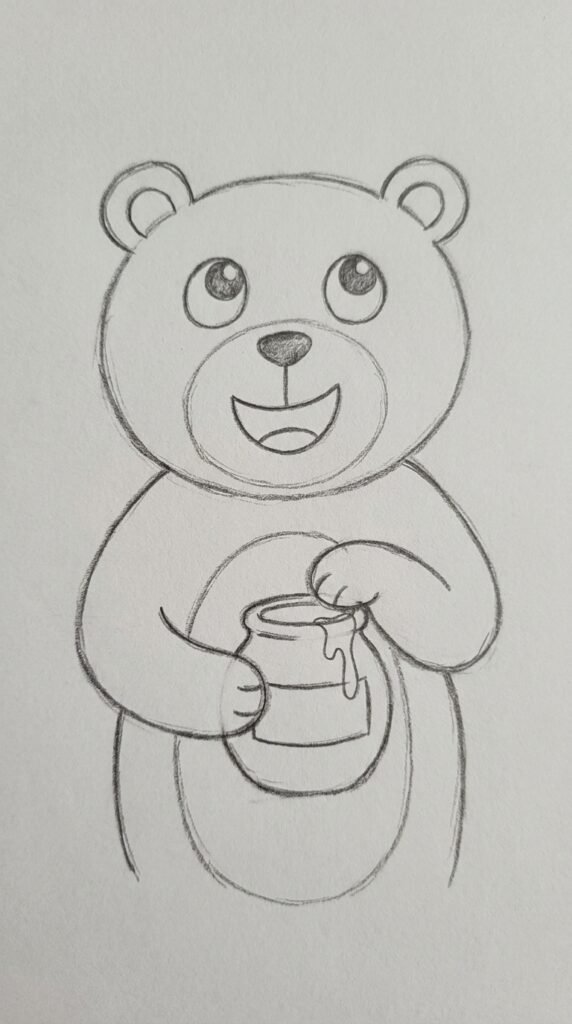
A bear eating honey is a playful and storytelling drawing that children absolutely love. This idea adds a small honey pot or honeycomb detail to a basic sitting bear, giving the drawing a fun narrative element that makes it extra engaging.
Step-by-Step Instructions:
- Draw the basic sitting bear body as described in the sitting teddy bear section above.
- Position the bear’s arms so they curve slightly forward rather than straight out to the sides, as if the bear is holding something in front of it.
- In front of the bear’s body, between its paws, draw a small round jar shape with a slightly narrower neck at the top. This is the honey pot.
- Draw a simple label rectangle on the jar and add a small drip line from the top of the jar.
- Draw one of the bear’s paws overlapping slightly onto the jar to show it is holding the pot.
Sleeping Bear
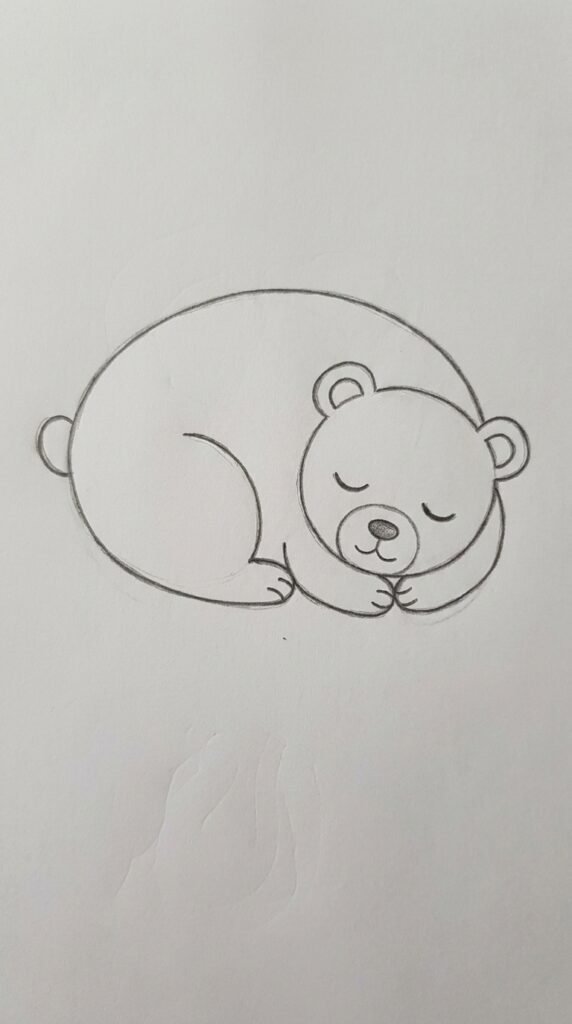
A sleeping bear curled into a ball is a sweet and simple drawing idea. The compact rounded pose makes it one of the easiest full-body bear drawings to attempt because almost all the shapes are circular and close together.
Step-by-Step Instructions:
- Draw a large oval on its side in the center of your paper. This will form the main body and the sleeping pose.
- At one end of the oval, add a smaller circle for the head. Let the head tuck slightly into the body oval to show the curled sleeping position.
- Add two small rounded ears to the top of the head circle.
- Draw two short front paws extending slightly from under the head, as if the bear is resting its head on its paws.
- Curve the tail end of the oval slightly upward to suggest the back and haunches of the bear.
Bear in the Woods
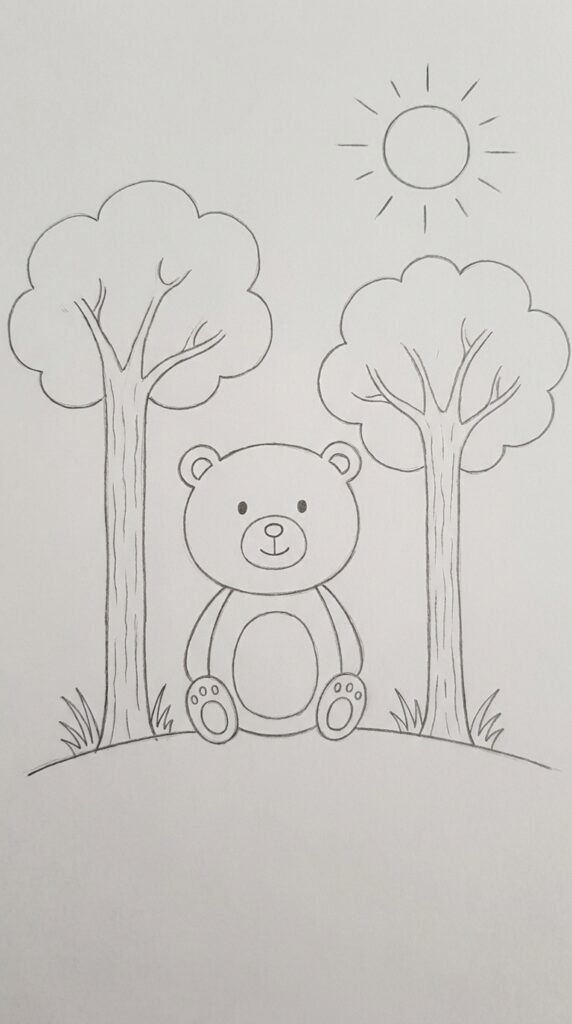
Adding a simple background transforms a bear sketch into a complete scene. This drawing idea pairs a basic standing or sitting bear with a few simple tree trunks and ground line elements to create a nature setting without getting too complex.
Step-by-Step Instructions:
- Start by drawing a simple sitting bear in the lower center of your page using the sitting bear method described earlier. Leave space above and around the bear for the background.
- Draw a straight vertical line on the left side of the bear for a tree trunk. Add a second trunk on the right side.
- At the top of each trunk, draw a simple rounded cloud shape or a loose triangle to represent the tree canopy.
- Draw a gently curved horizontal line across the bottom of the page to represent the ground or forest floor.
- Add two or three short vertical lines near the bear’s feet for simple grass tufts.
Bear Wearing a Hat
Adding a simple accessory like a hat gives a bear drawing personality and makes it feel like a character rather than just an animal sketch. This is a great creative exercise for kids who love to give their drawings unique identities.
Step-by-Step Instructions:
- Draw a standard round bear head with ears, eyes, muzzle, nose, and smile as described in the bear face section.
- At the top of the head circle, draw a flat oval line to form the brim of a hat. This line should sit just above where the ears are placed.
- Above the brim oval, draw a tall rectangle with slightly rounded corners to form the hat body.
- Close the top of the rectangle with a slightly curved horizontal line.
- Optionally add a simple band near the bottom of the hat body using two parallel horizontal lines.
Bear Holding a Fish
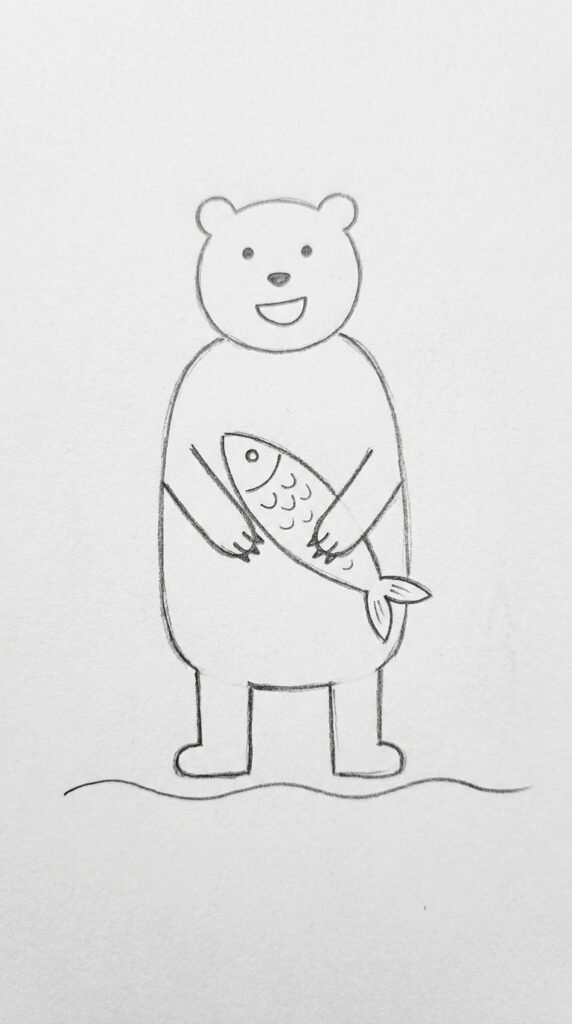
This is a fun drawing idea inspired by the classic image of a brown bear catching a fish in a river. It introduces a simple fish shape alongside the bear and is a great storytelling sketch for kids who love nature.
Step-by-Step Instructions:
- Draw a standing bear using the standing grizzly bear method, but keep the arms positioned lower and slightly in front of the body.
- Between the two front paws, draw a simple fish shape. The fish body is an elongated oval with a pointed front and a split tail fin at the back.
- Draw a small circle for the fish eye and add a few short curved lines on the body to suggest scales.
- Position the bear’s paws so they appear to be gripping the sides of the fish.
- Give the bear an open mouth or a happy expression to add personality to the scene.
Bear Paw Print
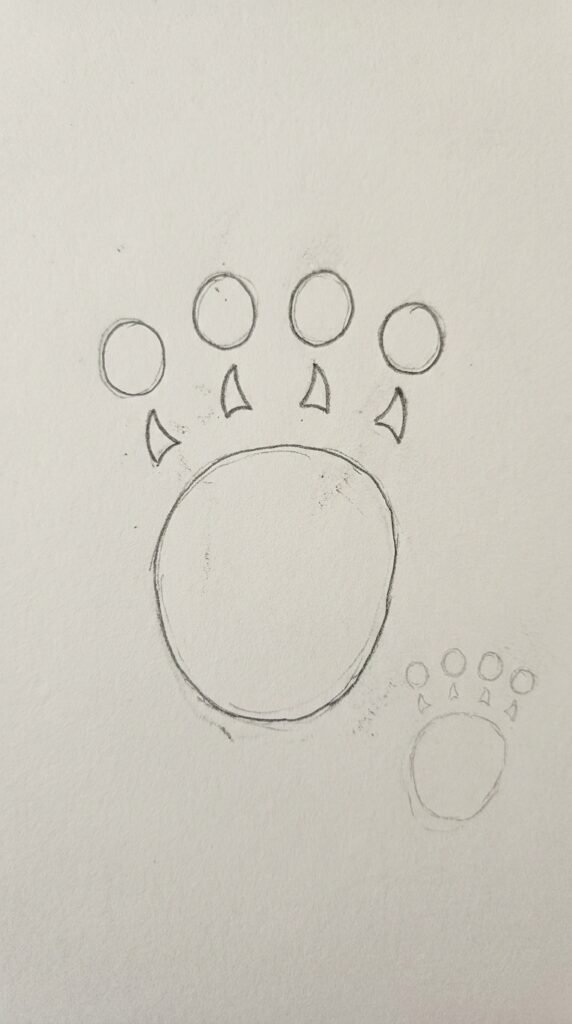
A bear paw print is a simple and satisfying drawing that even the youngest beginners can complete successfully. It also works great as a decorative element, a nature journal sketch, or a pattern drawing exercise.
Step-by-Step Instructions:
- Draw a large rounded oval in the center of your paper. This is the main pad of the paw print.
- Above the main oval, draw four smaller circles in a curved row. Space them evenly across the top of the large oval.
- Make each small circle roughly the same size. They represent the toe pads of the bear paw.
- At the bottom of each small circle, add a short curved triangle or teardrop shape for the claw marks. These should point slightly outward and downward.
- Make sure the main oval is large enough to feel like the heel pad of a big bear.
Drawing Tips for Bear Sketches
Start every bear drawing with the lightest pencil pressure you can manage. Sketch your basic shapes faintly first so you can adjust proportions before committing. It is much easier to erase a light circle than a heavily pressed line. Once you are happy with the placement of your shapes, go over them with slightly more pressure to finalize the lines.
Always begin with the largest shape first and work your way down to the smallest details. For a bear, that means starting with the head or body circle before adding ears, eyes, or muzzle details. This approach keeps your drawing centered and proportioned from the start.
Use slow, smooth, consistent strokes for curved lines. Many beginners press too hard and jerk the pencil, which creates shaky lines. A relaxed hand and a slow even movement produce much cleaner curves. Practice drawing circles and ovals on scrap paper before starting your main drawing.
Keep your eraser clean. A dirty eraser can smudge graphite across your paper rather than removing it. Rub your eraser on a clean piece of scrap paper every few uses to remove built-up graphite.
Common Mistakes to Avoid
Drawing the ears too small is one of the most common mistakes in beginner bear sketches. Bear ears tend to be round and moderately sized. Tiny ears make the bear look like a different animal entirely. Always check your ear size against the head before finalizing.
Placing the muzzle too high on the face is another frequent error. The muzzle oval should sit in the lower third of the face, not in the center. Placing it too high pushes the eyes and nose into an awkward position.
Making the body too small relative to the head is a proportion issue that affects the overall look of the drawing. Unless you are deliberately drawing a baby bear cub, keep the body noticeably larger than the head. As a general rule, the body should be at least one and a half times the size of the head.
Rushing through the basic shapes is a mistake that leads to wobbly, uneven drawings. Take your time with the foundational circles and ovals. Everything else is built on top of those, so getting them right is the most important step.
Frequently Asked Questions
What is the easiest bear to draw for beginners?
The easiest bear to draw for beginners is the cartoon bear face. It uses only a few simple shapes including a large circle for the head, two small half-circles for the ears, a small oval for the muzzle, and basic dots and curves for the eyes and nose. Most beginners can complete it in under ten minutes.
How do you draw a bear step by step for kids?
To draw a bear step by step for kids, start with a large circle for the head, add two small rounded ears at the top, draw an oval muzzle in the lower center, add circle eyes with dot pupils, and finish with a simple nose and smile. For a full body, add a larger oval below the head and short arms and legs around it.
What pencil is best for drawing bears for beginners?
An HB pencil is the best choice for beginners drawing bears. It produces clear, visible lines without being too dark or too light. HB sits in the middle of the pencil hardness scale, making it easy to sketch lightly for planning and then press a little firmer for final lines. It also erases cleanly.
Can I draw a realistic bear as a beginner?
As a complete beginner, it is better to start with simple cartoon-style bears before attempting realistic ones. Realistic bear drawings require understanding of fur texture, anatomy, and shading techniques that take time to develop. Start with the simple outline ideas in this list and gradually work toward adding more detail as your confidence and skill grow.