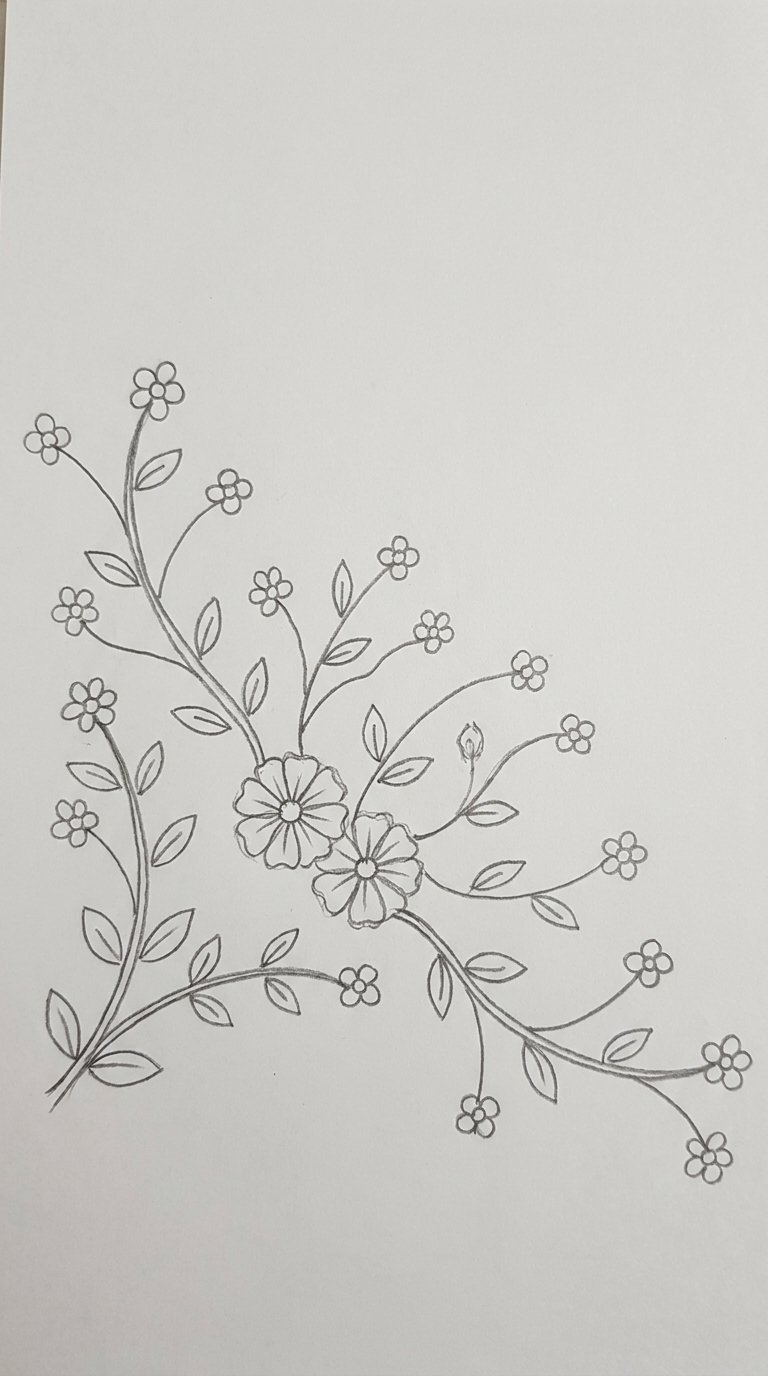
If you have ever admired a string of mogra flowers and wished you could draw one, you are in the right place. Mogra, also known as Arabian jasmine or chameli, is a beginner-friendly flower built on simple rounded petals and soft curves. No shading, no special tools just a pencil and paper.
Once you master one bloom, you can create garlands, borders, rangoli-inspired patterns, and more. These mogra drawing ideas are perfect for students, hobbyists, and teachers alike. Anyone can follow them, including young children.
Single Mogra Bloom Drawing
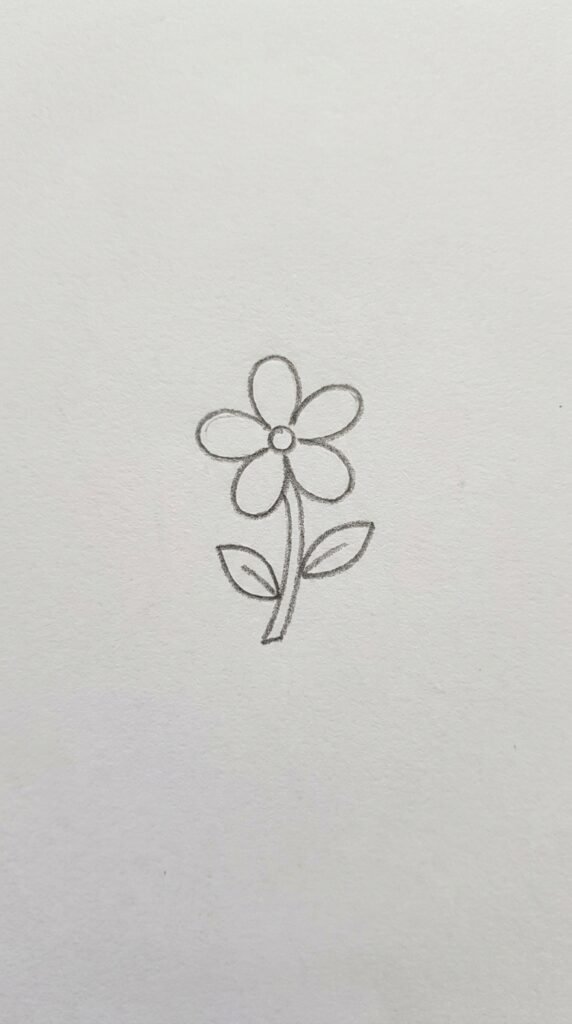
The single mogra bloom is the foundation of every other design in this guide. It is a small five-petaled flower with a tiny round center. Learning this one drawing unlocks every other idea on this list. The petals are gently rounded at the tip, slightly narrow at the base, and each one sits close to the next. This flower looks beautiful on its own inside a simple circular border or on the corner of a notebook page.
Step-by-Step Instructions:
Step 1: Draw a tiny circle in the center of your paper, about the size of a pea. This is the flower’s center.
Step 2: Around the center circle, draw five small oval petals. Each petal should be about twice the size of the center circle. Space them evenly so they surround the circle completely.
Step 3: At the base of each petal, draw a tiny V-shape or a light curved line where the petal meets the center. This gives the flower a realistic look.
Step 4: Below the flower, draw two small oval leaves on each side of a short straight stem. Add a light curved vein line down the middle of each leaf.
Step 5: Review the shape and gently darken any lines that look too faint. Keep all lines smooth and even.
Mogra Garland Border Drawing
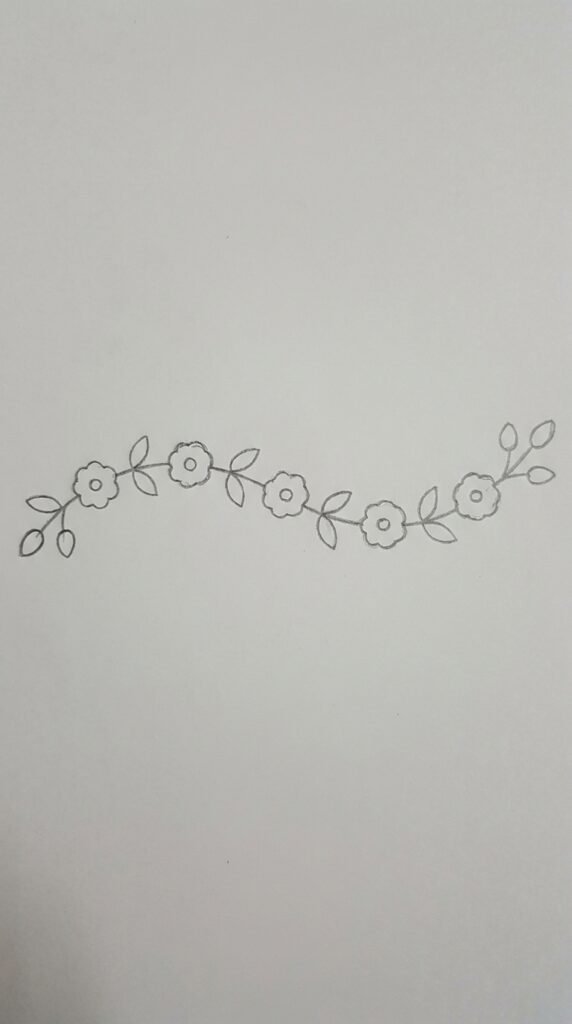
A mogra garland border is a decorative strip of connected mogra flowers linked by curved stems and small leaves. It is commonly used in Indian art and looks beautiful as a page border, a bookmark design, or a frame for a greeting card. The key to this design is keeping the flowers evenly spaced and making the curved stem flow smoothly from one bloom to the next.
Step-by-Step Instructions:
Step 1: Draw a gently curving horizontal line across your paper from left to right. This is the main stem of the garland.
Step 2: At regular intervals along the stem, draw small mogra blooms. Each bloom should sit slightly above or on top of the stem line. Space them about two finger-widths apart.
Step 3: Between each pair of flowers, draw two or three small oval leaves attached to the stem. The leaves should alternate sides, one on top and one below.
Step 4: Add tiny curved connecting lines between the flowers and the stem to show how each bloom is attached.
Step 5: At the ends of the garland, draw one or two small buds. A bud is simply an oval shape with two small pointed sepals at the base
Mogra Circular Wreath Drawing
A mogra wreath is a ring of mogra flowers and leaves arranged in a circle. It makes a beautiful mandala-inspired drawing and works well as a centerpiece for a greeting card or decorative page. The circular arrangement is easier than it looks because you simply place mogra blooms at equal intervals around an invisible circle.
Step-by-Step Instructions:
Step 1: Lightly draw a medium-sized circle in pencil on your paper. This is your guide circle and will be erased later.
Step 2: Place eight small mogra blooms at equal intervals around the guide circle. Think of them like numbers on a clock at 12, 1:30, 3, 4:30, 6, 7:30, 9, and 10:30.
Step 3: Between each pair of flowers, draw two or three small oval leaves. The leaves should point outward from the center of the circle.
Step 4: Connect the flowers and leaves with short curved stem lines to create a sense of flow and continuity around the ring.
Step 5: Erase the guide circle carefully. Add a small single mogra bloom or a tiny star shape in the very center of the wreath.
Mogra Braid or Veni Drawing
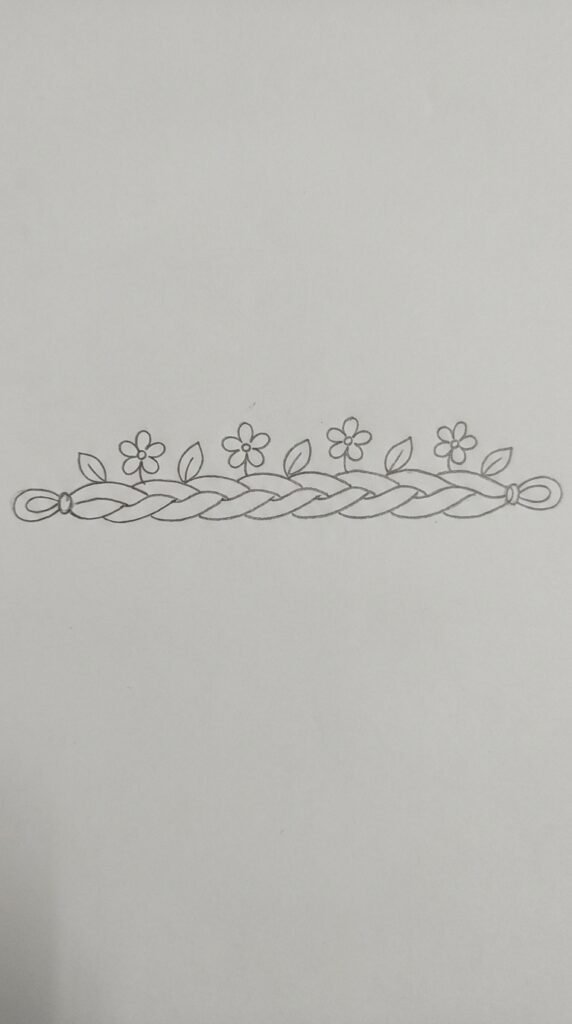
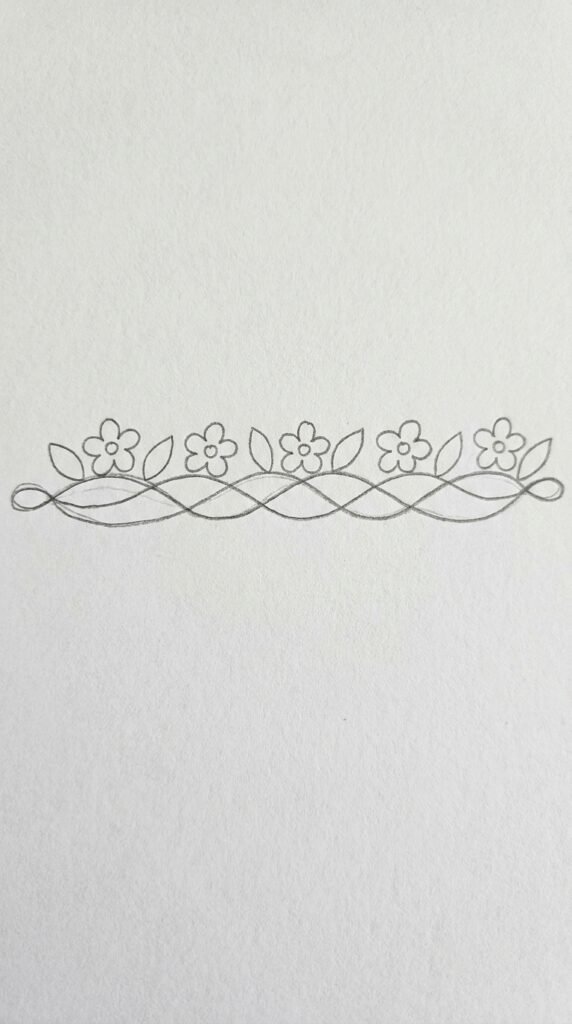
A mogra veni, also called a gajra, is a flower braid worn in hair during festivals and weddings in India. Drawing a veni is a popular art activity because it combines the mogra flower with a braided or twisted rope structure. It is a recognizable cultural symbol and a very satisfying drawing project.
Step-by-Step Instructions:
Step 1: Draw two gently twisting lines running parallel to each other across the paper from left to right, crossing over each other every few centimeters to create the look of a braided thread.
Step 2: Along the upper edge of the braid, place small mogra blooms at regular intervals. Each bloom should appear to sit on top of the braid.
Step 3: Add small leaves between some of the flowers along the braid to fill the space naturally.
Step 4: Draw small circles or dashes along the braid itself to suggest texture in the thread or string that holds the flowers together.
Step 5: At the two ends of the veni, draw a small looped knot shape to show where the braid is tied off.
Mogra Flower Pot Drawing
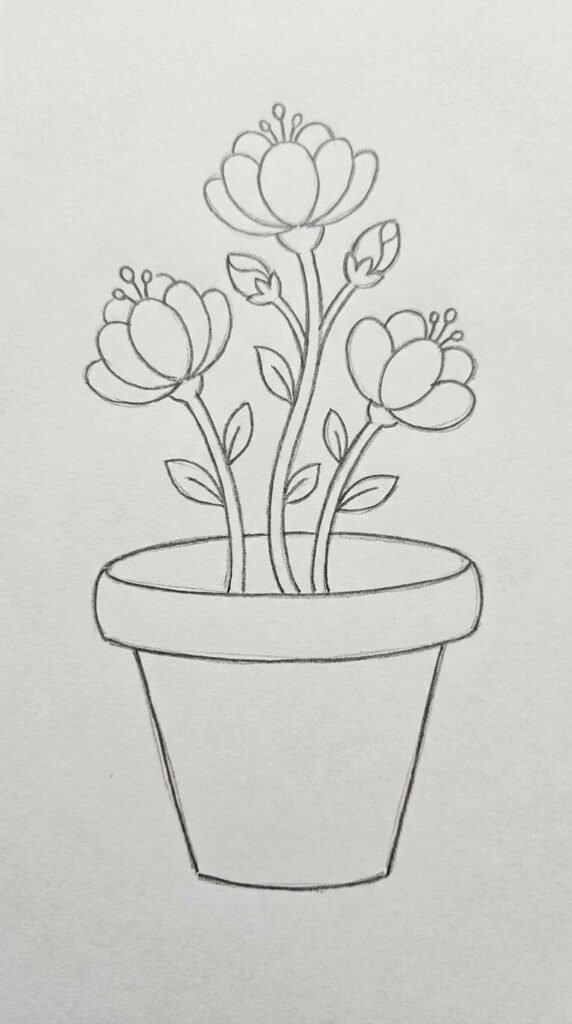
This idea combines a simple terracotta flower pot with mogra blooms growing out of it. It is a great drawing for young students because it practices two different shapes: the trapezoid form of a pot and the rounded petal shapes of mogra flowers. Together they create a cheerful, complete composition.
Step-by-Step Instructions:
Step 1: Draw a simple flower pot shape. Start with a wide oval at the top for the rim, then draw two slightly angled lines going down and inward to a flat bottom. Add a thin curved rectangle at the very top to show the pot’s rim thickness.
Step 2: From the center of the pot’s opening, draw three or four upward curving stems of different heights.
Step 3: At the top of each stem, draw a small mogra bloom. Vary the angles so some flowers face the viewer and some face to the side.
Step 4: Add small oval leaves on either side of each stem at different heights.
Step 5: Draw a few small buds on some of the shorter stems to show new flowers about to open.
Mogra Rangoli Border Drawing
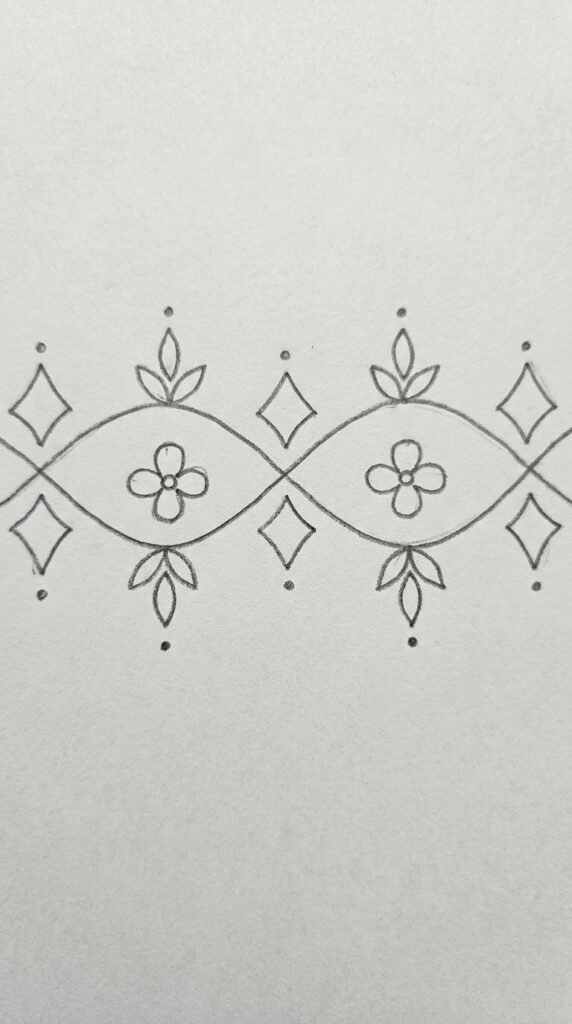
Mogra flowers are a staple of traditional Indian rangoli designs. Drawing a rangoli-inspired mogra border combines symmetry, repetition, and floral shapes in one satisfying composition. This idea works especially well for Diwali-themed drawing projects or cultural art activities.
Step-by-Step Instructions:
Step 1: Draw a horizontal straight line across the center of your paper using a ruler. This is your base line.
Step 2: Above and below the base line, draw a repeating wave or zigzag pattern. Each arc of the wave should be about the same size.
Step 3: Inside each arc or curve of the wave pattern, draw one small mogra flower centered in the space.
Step 4: In the pointed spaces between arcs, draw a small diamond shape or a tiny leaf cluster.
Step 5: Add small dots at the tips of every point in the pattern to give it a traditional rangoli look.
Mogra Sprig Drawing
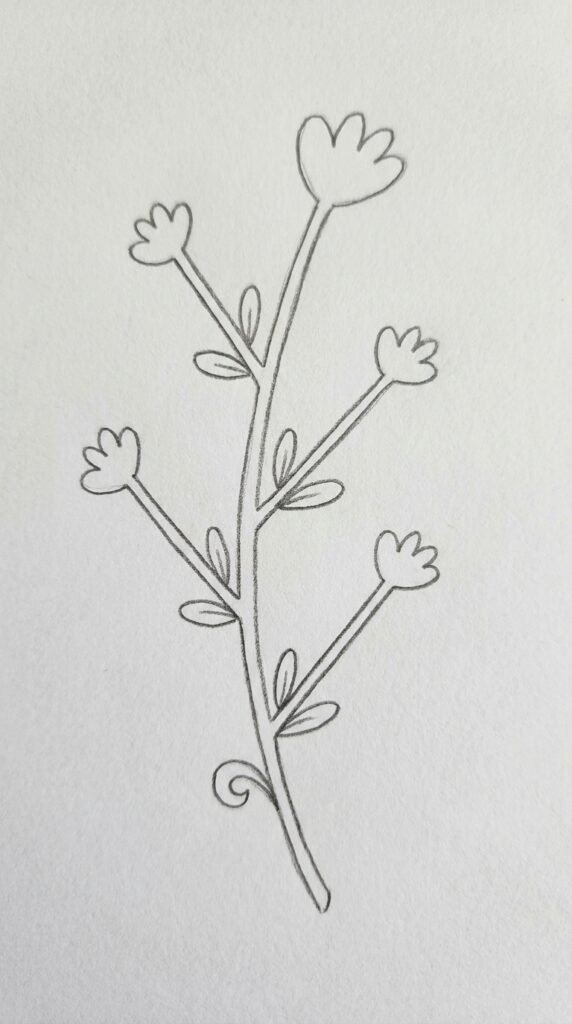
A mogra sprig is a single branch with multiple flowers and leaves growing from one central stem. This design is very popular in textile prints, saree borders, and henna patterns. It is a compact and elegant drawing that does not require a lot of space on the paper.
Step-by-Step Instructions:
Step 1: Draw one slightly curved vertical line for the main stem. Make it about six centimeters long.
Step 2: From this main stem, draw four or five smaller branch lines angling upward and outward on alternating sides, like a herringbone pattern.
Step 3: At the tip of each branch, draw one small mogra bloom. At the tip of the main stem, draw a larger bloom.
Step 4: Add two small oval leaves near the base of each branch line, one on each side.
Step 5: At the very bottom of the main stem, draw a small root curl or two tiny curling leaves to ground the design.
Mogra Pattern Tile Drawing
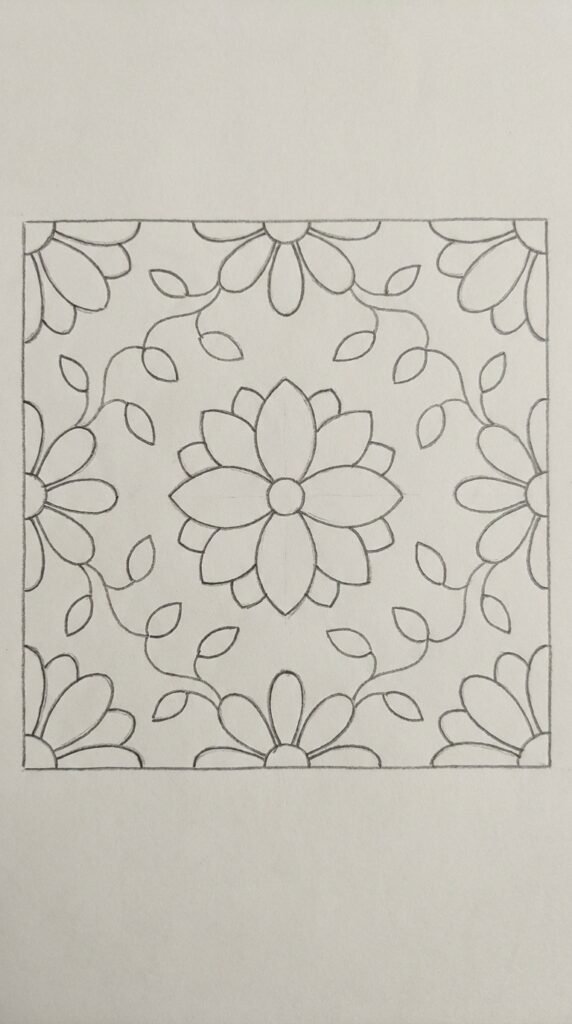
A pattern tile is a square frame filled with a repeating arrangement of mogra flowers. It looks like a fabric swatch or a decorative tile design. This drawing exercises symmetry skills and is great for creating repeat patterns that can be used as backgrounds or gift wrapping motifs.
Step-by-Step Instructions:
Step 1: Draw a medium-sized square using a ruler. The square should be about eight centimeters on each side.
Step 2: Draw a mogra flower in the exact center of the square, slightly larger than your regular single blooms.
Step 3: Draw four more smaller mogra flowers, one at each corner of the square, placed so that only a quarter of each corner flower is visible inside the square border.
Step 4: Place four more medium mogra flowers at the midpoint of each side of the square, also slightly cut off by the border.
Step 5: Fill the remaining spaces between the flowers with small oval leaves and tiny curved stems connecting everything together.
Mogra Diya Drawing
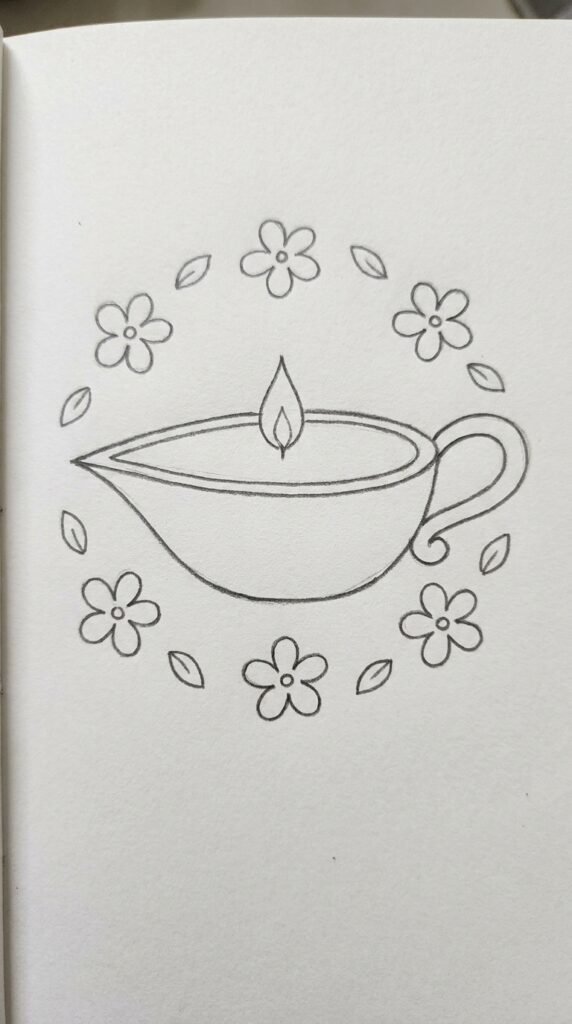
A diya is a traditional Indian oil lamp, and pairing it with mogra flowers creates a beautiful Diwali-themed drawing. The flat round shape of the diya contrasts nicely with the soft petals of the mogra flowers surrounding it. This is one of the most popular mogra drawing ideas for festive occasions.
Step-by-Step Instructions:
Step 1: Draw a shallow oval shape for the main body of the diya. Make it wide and slightly flat, like a shallow bowl.
Step 2: On the left side of the oval, draw a small pointed spout shape where the wick would sit. On the right side, draw a small curved handle.
Step 3: Above the diya, draw a small elongated teardrop shape for the flame.
Step 4: Around the diya on all sides, draw five or six small mogra blooms arranged in a loose circle. Leave some space between the flowers.
Step 5: Add small oval leaves between the flowers and draw tiny curved lines connecting them to suggest a decorative garland wrapped around the diya.
Mogra Mandala Drawing
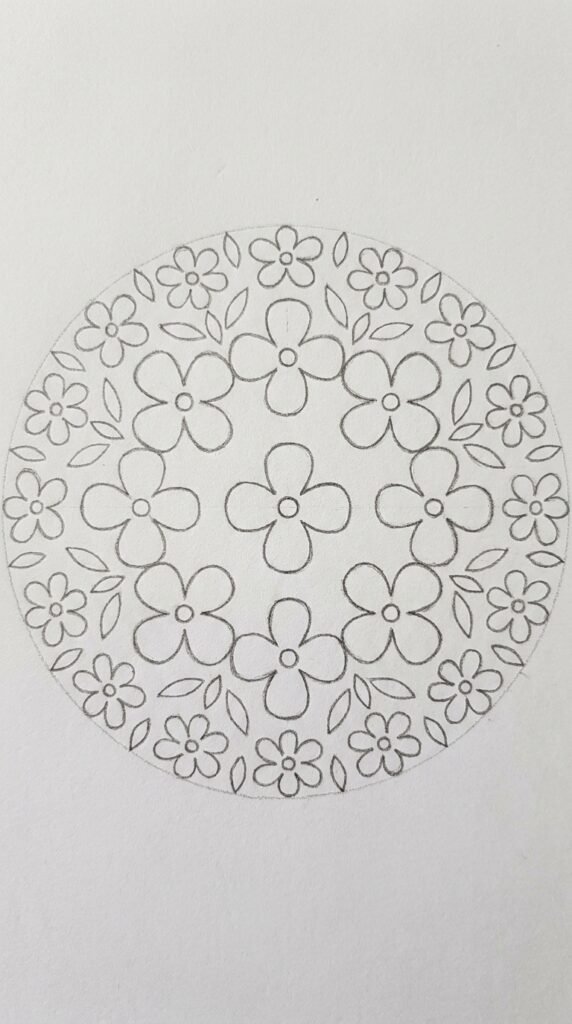
A mogra mandala uses mogra flowers as the primary motif in a circular geometric design. Unlike complex mandalas, this version uses only the basic mogra bloom shape repeated in concentric rings, making it very achievable for beginners. The result is a satisfying symmetrical drawing.
Step-by-Step Instructions:
Step 1: Draw three concentric circles lightly in pencil: one small circle in the center, one medium circle around it, and one large outer circle.
Step 2: In the very center, draw one mogra flower sitting inside the smallest circle.
Step 3: Along the medium circle, evenly space eight small mogra blooms. Use the circle as a guide so all flowers sit at the same distance from the center.
Step 4: Along the outer circle, place sixteen smaller mogra blooms, one between each pair of the middle ring flowers and one aligned with each middle ring flower.
Step 5: In the spaces between outer ring flowers, draw small pointed petal or leaf shapes to fill the design completely. Erase all guide circles.
Mogra Bud Drawing
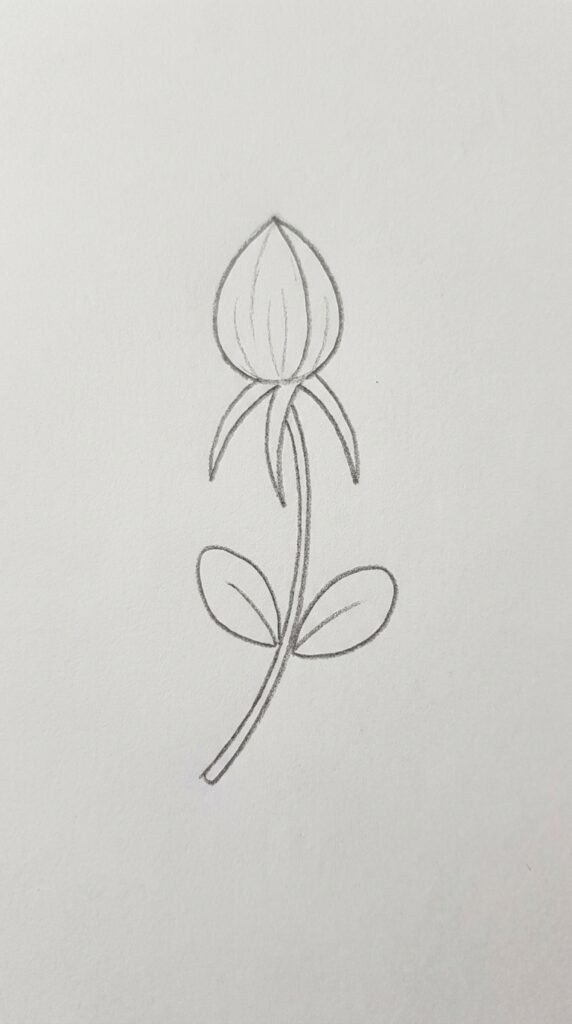
Not every mogra drawing needs to show a fully open flower. The mogra bud, still closed and waiting to bloom, has a beautiful elongated shape that is very satisfying to draw. Learning to draw the bud also helps you understand how the open flower is formed. Buds are commonly added to garland and sprig designs to add variety.
Step-by-Step Instructions:
Step 1: Draw a small oval shape, slightly pointed at the top. This is the main bud shape. Make it about one centimeter tall.
Step 2: At the base of the oval, draw three or four small narrow triangular points curving downward. These are the sepals that hold the bud closed.
Step 3: Draw a thin curved stem below the sepals, about two centimeters long.
Step 4: Add two small oval leaves attached to the stem, one on each side near the bottom.
Step 5: Draw faint vertical lines on the bud surface to suggest the wrapped petals inside. Keep these lines very light.
Mogra Hair Decoration Drawing
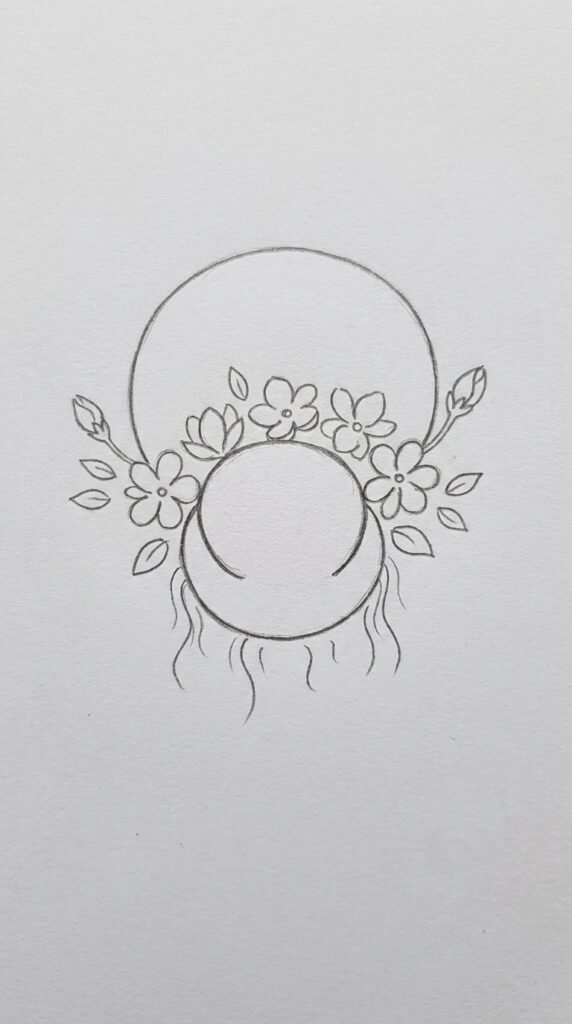
Drawing a mogra hair decoration shows flowers pinned or clipped into a stylized hair bun. It is a popular art subject in Indian culture and combines a simple hair shape with mogra flower clusters. This is a great drawing for storytelling, character design for kids, and cultural art projects.
Step-by-Step Instructions:
Step 1: Draw a simple rounded bun shape. It looks like a slightly flattened circle sitting on a short curved base that represents hair pulled up.
Step 2: On top of and around the bun, draw a cluster of four or five mogra flowers close together, overlapping slightly.
Step 3: Add a few mogra buds among the blooms to make the cluster look natural and full.
Step 4: Draw three or four small oval leaves tucked among the flowers to fill any gaps.
Step 5: Below the bun, draw a few short wavy lines to suggest loose hair or the nape of the neck. Add a small decorative pin or stick shape if desired.
Mogra Corner Decoration Drawing
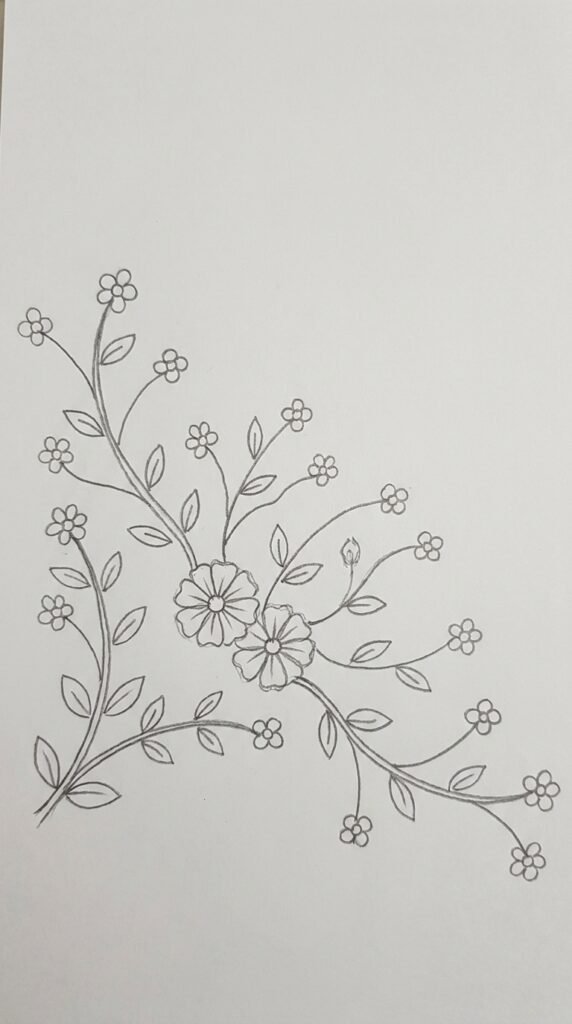
A mogra corner decoration is a triangular spray of flowers and leaves designed to fit into the corner of a page, frame, or card. It is one of the most practical mogra drawing ideas because it has immediate real-world uses for handmade cards, certificates, and journal pages.
Step-by-Step Instructions:
Step 1: Place your pencil in the bottom left corner of your paper. Draw two main branch lines extending outward from the corner: one going upward along the left edge and one going to the right along the bottom edge.
Step 2: From these two main branches, draw smaller sub-branches fanning outward and upward at gentle angles.
Step 3: At the tip of each sub-branch, draw one small mogra bloom.
Step 4: Along the sub-branches, add pairs of small oval leaves at intervals.
Step 5: In the center of the corner, where the two main branches meet, draw one or two slightly larger mogra flowers as a focal point.
Mogra Leaf and Flower Study Drawing
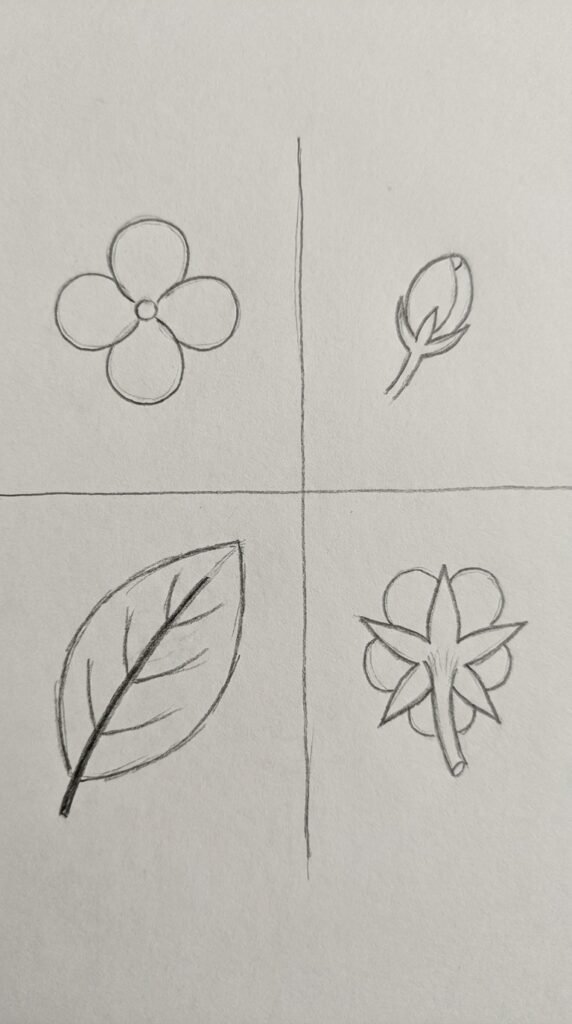
A botanical-style study drawing shows multiple views of the same plant side by side: a full flower, a bud, a single leaf, and a back view of the flower. This is a great educational drawing that helps students understand the structure of the mogra plant while practicing observation and pencil control.
Step-by-Step Instructions:
Step 1: Divide your paper into four equal sections by drawing light pencil lines forming a simple grid.
Step 2: In the top left section, draw a full open mogra flower viewed from the front.
Step 3: In the top right section, draw a mogra bud with its sepals and stem.
Step 4: In the bottom left section, draw a single mogra leaf. Make it oval with a pointed tip and draw a clear central vein with four or five smaller veins branching from it.
Step 5: In the bottom right section, draw the back view of a mogra flower, showing the star-shaped sepals and the base of the petals as they fan outward.
mogra paisley fusion drawing
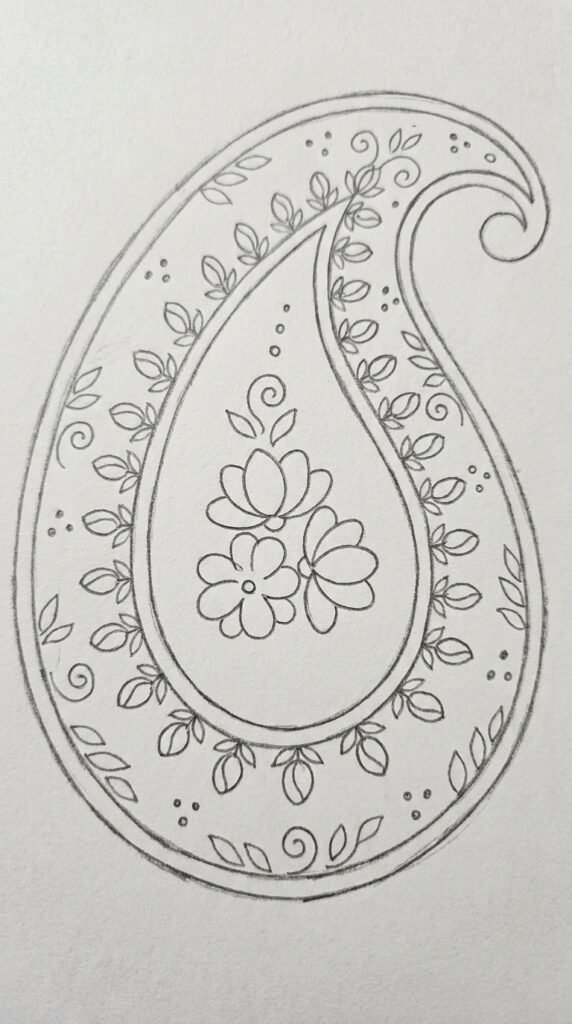
A paisley shape fused with mogra flowers combines two traditional Indian decorative elements into one drawing. The curved teardrop form of the paisley is filled with small mogra flowers and leaves, creating a decorative design inspired by henna, block printing, and textile art. This is one of the more advanced mogra drawing ideas on this list, but it is still very manageable.
Step-by-Step Instructions:
Step 1: Draw a large paisley shape. Start with a rounded teardrop and add a curved point at the narrow end that curls slightly inward.
Step 2: Draw a smaller paisley shape inside the first one, leaving a border gap of about one centimeter all around.
Step 3: In the center of the inner paisley, draw three or four small mogra blooms clustered together.
Step 4: In the border space between the two paisley outlines, draw a row of small mogra buds and leaves following the curve of the shape.
Step 5: Fill any remaining spaces with tiny dots, small curved lines, or miniature leaf shapes to complete the design.
Drawing tip
Keep your pencil sharp throughout the drawing process. A sharp HB pencil creates clean thin lines that are much easier to control than a blunt one. Blunt pencils tend to produce thick smudgy lines that can make your drawing look messy.
Start with the center of the mogra flower and work outward. Drawing the petals before the center often leads to uneven spacing. The center circle acts as an anchor that keeps all five petals balanced around it.
Use light pressure for your first outlines and heavier pressure only when you are happy with the shape. Mogra petals are small, so it is easy to press too hard and end up with lines you cannot erase cleanly.
Practice drawing a single mogra bloom ten times on scrap paper before starting your main drawing. Repetition builds muscle memory. After a few attempts, the petal shape will feel natural and effortless.
Leave space between flowers in garland and wreath designs. Crowding mogra blooms too close together makes the individual flowers hard to see. A small gap between each bloom helps each one stand out clearly.
COMMON MISTAKES
Drawing petals that are all different sizes is the most common problem for beginners. To avoid this, draw each petal to roughly the same length as the center circle’s diameter. Consistency in petal size makes the flower look balanced.
Forgetting to draw sepals is another frequent mistake. Sepals are the small pointed shapes at the base of each petal or bud. They are small but they make the drawing look much more complete and plant-like.
Using too much pressure too early causes lines that are hard to erase if you make a mistake. Always sketch lightly first and go over your best lines more firmly once you are satisfied with the shape.
Making the stem too thick compared to the delicate flowers is a proportion error that stands out immediately. The stem should be thin, roughly the width of a pencil line, not a thick bar. If your stems look heavy, try using the very tip of your pencil and using less pressure.
Skipping the leaves is a small mistake that has a big visual effect. Leaves add variety, break up the repetition of flower shapes, and give the design a sense of natural growth. Even two small leaves make the whole drawing look more finished.
F
Q1: What is the easiest mogra drawing for absolute beginners?
The single mogra bloom is the best starting point. It uses only one small circle and five oval petal shapes, making it completely achievable for anyone who can draw basic rounded shapes. Once you are comfortable with the single bloom, every other mogra drawing idea on this list becomes much easier.
Q2: Can kids draw mogra flowers?
Yes, mogra flowers are ideal for children from around age six and above. The shapes involved are basic ovals and circles, and there is no complex shading required. Children in art class or at home can follow the step-by-step instructions in this guide with a simple HB pencil and plain paper.
Q3: What pencil is best for mogra drawing?
An HB pencil is the best choice for mogra drawing. It provides medium pressure that gives clear visible lines without being too dark or too faint. HB pencils are also easy to erase, which makes correcting mistakes simple. Avoid using very soft pencils like 4B or 6B for outline-only drawings as they smudge easily.
Q4: How do I turn mogra drawing ideas into Pinterest-worthy art?
Scan or photograph your finished mogra drawing against a plain white background in good natural lighting. Use a phone camera held directly above the drawing without any angle. Upload to Pinterest with a clear descriptive title and relevant keywords like mogra drawing, jasmine flower sketch, and floral doodle for beginners to maximize your reach.