If you have ever looked at an iris flower and thought it was too complicated to draw, this article is going to change your mind completely. Iris flowers have a reputation for looking elegant and complex, but the truth is that they are made up of simple curved shapes that any beginner can learn to draw with a little practice and patience. Whether you are a child picking up a pencil for the first time or an adult who wants to explore drawing as a relaxing hobby, these iris flower drawing ideas are designed with you in mind.
In this guide, you will find 15 easy iris flower drawing ideas that break the flower down into manageable steps using only basic shapes. Every single idea here avoids complicated shading techniques, so you do not need any special skills or expensive art supplies to get started. All you need is a pencil, a piece of white paper, and the willingness to try.
Iris flowers are one of the most beautiful subjects for beginner artists because their petals have a natural flow to them. That flowing quality means you are mostly drawing soft curves and simple petal shapes, not rigid geometric lines. Once you learn a few basic petal shapes, you will be able to draw iris flowers in many different styles and compositions.
These iris flower drawing ideas are also perfect for school projects, greeting card illustrations, journal decorations, and creative practice. The instructions are written in plain, simple language so that children and beginners can follow along without confusion. By the time you finish reading this guide, you will have a whole collection of iris flower drawing ideas to practice and enjoy.
Simple Single Iris Bloom
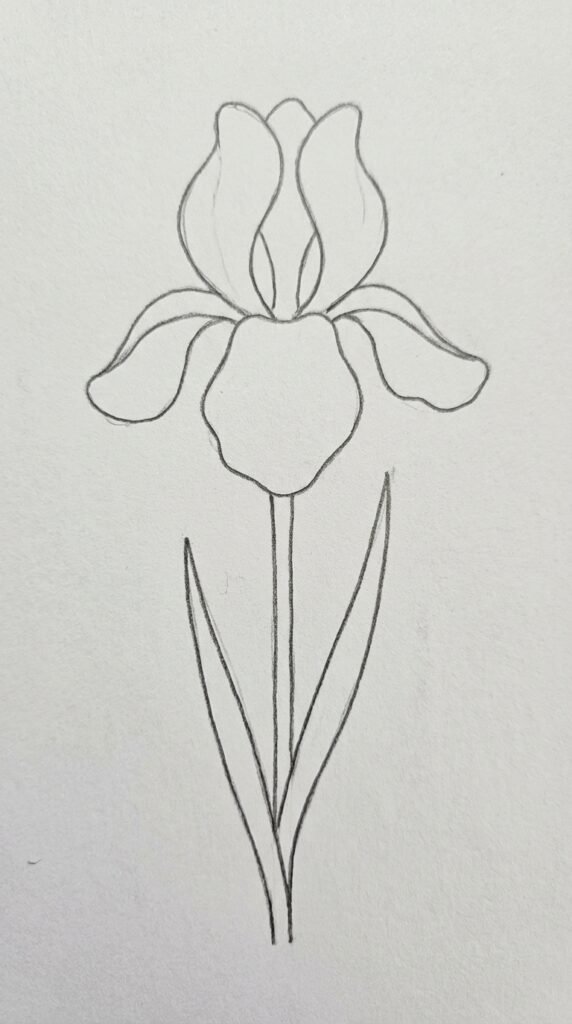
The single iris bloom is the perfect starting point for any beginner. It focuses on drawing just one flower head with three upright petals and three drooping petals, which is the classic iris shape. Drawing a single bloom gives you the chance to understand the basic structure of the iris without feeling overwhelmed. This is a great exercise to repeat several times until the petal shapes feel natural and easy to draw.
Step-by-Step Instructions:
- Start by drawing a small oval shape in the center of your paper. This will act as the center of the bloom and give you a reference point for placing the petals.
- Draw three upward-curving petal shapes above the oval. Make each petal about the same size, slightly wider at the top and narrowing as it meets the center oval.
- Add three downward-drooping petals below and around the center oval. These petals should curve gently outward and downward, like small open hands.
- Draw a straight vertical stem below the entire flower, about twice the height of the bloom.
- Add two small, pointed leaves along the sides of the stem using long, slightly curved triangular shapes.
Iris Flower in a Simple Vase
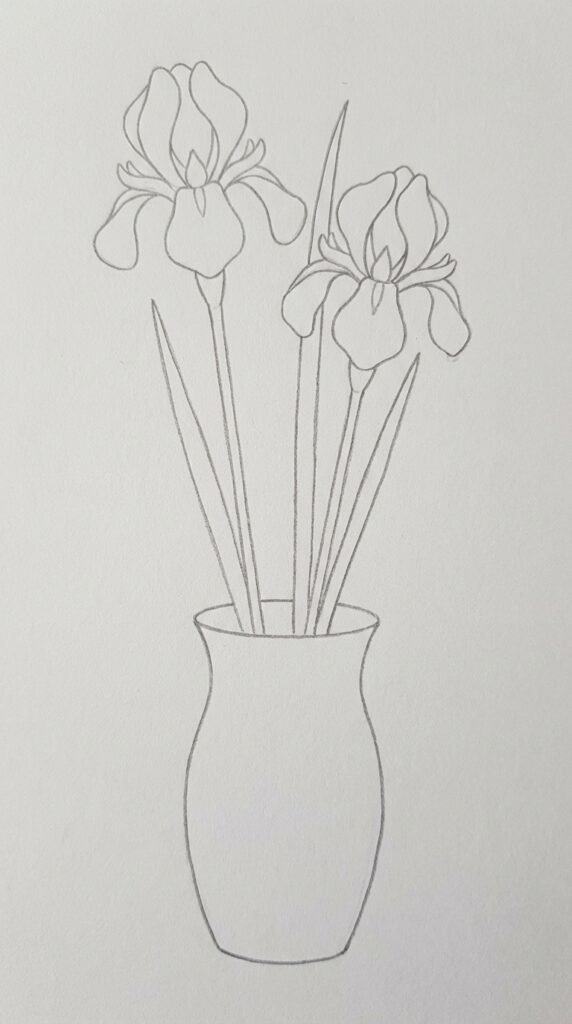
Drawing an iris in a vase is a wonderful idea for beginners because the vase shape gives you a simple anchor to build your composition around. This drawing feels complete and satisfying even at the beginner level because it looks like a real decorative scene. The vase itself is just a simple curved rectangle or bottle shape, which makes it very easy to draw even for young children. This idea is perfect for greeting cards or decorating the cover of a notebook.
Step-by-Step Instructions:
- Draw a simple vase shape in the lower center of your paper. Use a rounded bottom, slightly narrowing sides, and a wider opening at the top. A simple U-shape with a flat bottom works well.
- Add two or three tall vertical stems coming out from the top opening of the vase.
- At the top of each stem, draw an iris bloom using three upright petals and three drooping petals. Keep the flowers simple and slightly different sizes to add variety.
- Draw a few long, pointed leaves growing upward alongside the stems.
- Add a small curved line near the base of the vase to suggest a rounded surface.
Cute Cartoon Iris Flower
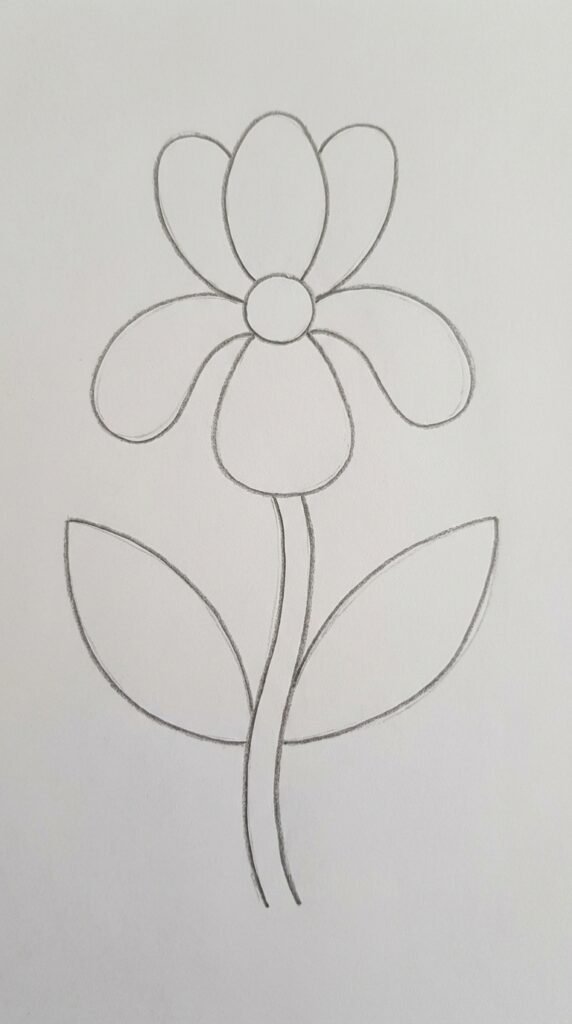
A cartoon-style iris is a fun and approachable way to practice drawing this flower without worrying about realistic proportions. In this version, the petals are slightly rounder, the stem is a little thicker, and the overall flower has a friendly and simplified look. This style is especially popular with younger children and beginners who prefer a playful approach to drawing. Cartoon iris flowers also look great in coloring books, sticker designs, and illustrated journals.
Step-by-Step Instructions:
- Draw a small circle in the center of your paper to represent the flower center.
- Around the circle, draw six rounded petal shapes. Make the top three petals slightly taller and the bottom three petals slightly wider and more spread out.
- Keep the edges of each petal smooth and gently curved. Avoid sharp points or complicated details.
- Draw a slightly thicker stem than usual, using two parallel curved lines coming down from the base of the flower.
- Add two broad, rounded leaves on either side of the stem, shaped like elongated ovals with a pointed tip.
Iris Flower Bouquet Outline
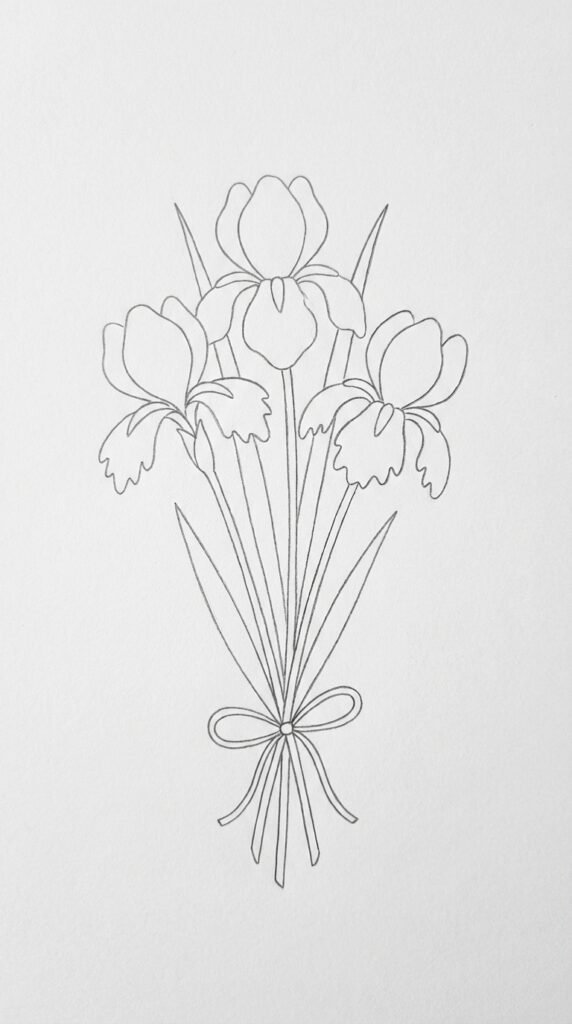
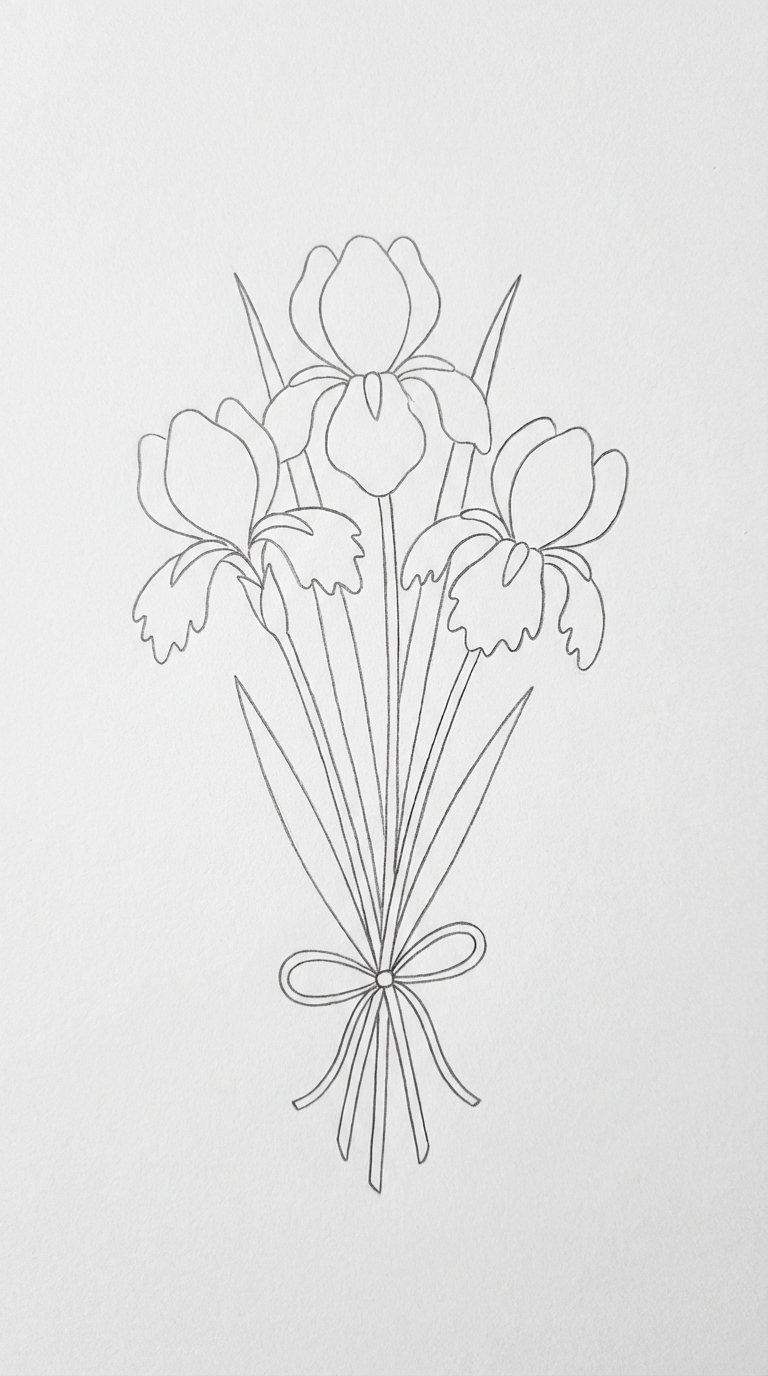
A bouquet of iris flowers looks impressive but is surprisingly easy to draw when you break it into steps. This idea involves drawing three or four iris blooms clustered together with overlapping stems and leaves. The overlapping shapes actually make the drawing look more interesting and full, even though each individual element is still simple. This is a great idea for a birthday card illustration or a nature-themed art project.
Step-by-Step Instructions:
- Start by lightly sketching three vertical lines in the center of your paper to plan where your stems will go. Make them slightly different heights.
- Draw an iris bloom at the top of each stem. Each bloom should have three upright petals and three drooping petals. Keep them simple and similar in size.
- Allow the blooms to slightly overlap each other to create a natural grouped effect.
- Add long, pointed leaves growing upward from the stems, some overlapping the stems of other flowers.
- At the base of the stems, draw a loose ribbon or bow shape to suggest the bouquet is tied together.
Side View Iris Flower
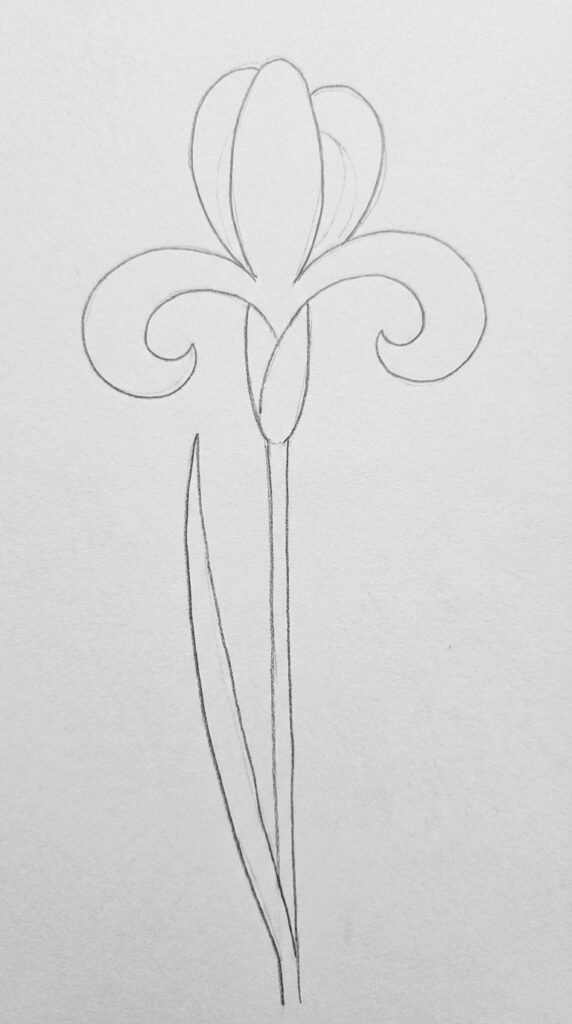
Drawing an iris from the side is a different and interesting perspective that helps beginners understand how the flower’s layers work. From the side, you can see the petals curling outward and the stem connecting cleanly to the base of the bloom. This angle also shows the long tube-like structure at the base of the iris flower, called the ovary, which looks like a small elongated oval. This side-view drawing idea is great for scientific illustration practice and nature journaling.
Step-by-Step Instructions:
- Draw a small elongated oval at the top of your stem to represent the base of the flower.
- From the top of the oval, draw two or three petals curling outward to one side. These petals should curve gently like open hands turning away from the viewer.
- Add one or two smaller petals visible behind the front petals to give a sense of depth.
- Draw a long straight stem extending downward from the oval base.
- Add one long pointed leaf growing from the base of the stem at a slight outward angle.
Iris Flower with Butterfly
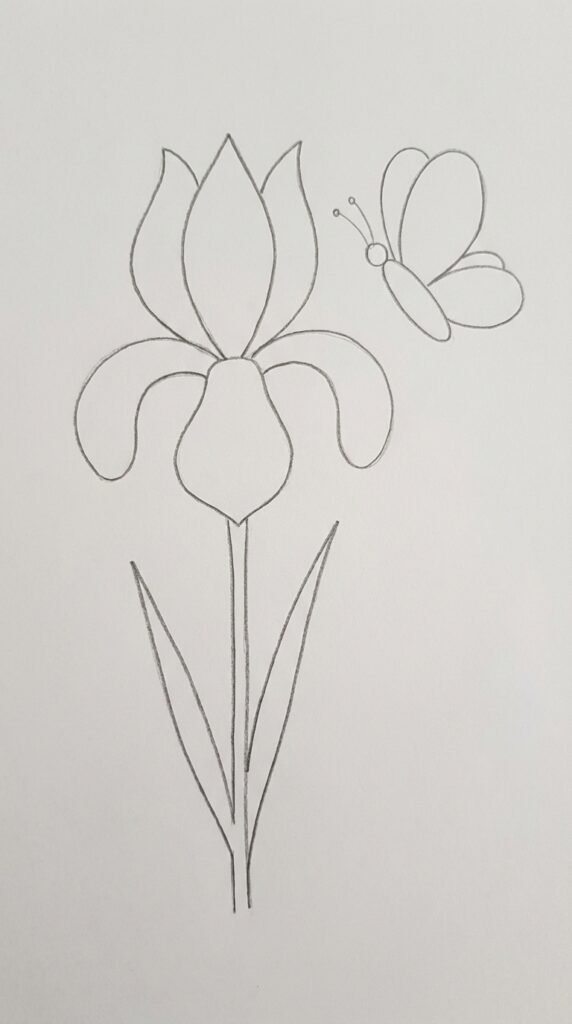
Adding a small butterfly to an iris flower drawing instantly makes the composition more dynamic and interesting. The butterfly can be drawn using simple wing shapes made of curved triangles, which are very easy for beginners to manage. This combined drawing idea is popular for wall art, greeting cards, and school nature projects. The iris provides a strong vertical focal point while the butterfly adds movement and lightness to the overall drawing.
Step-by-Step Instructions:
- Draw a complete iris flower slightly to the left or right of center on your paper. Include a stem and one or two leaves.
- Near the top of the flower or beside one of the upper petals, draw a small oval for the butterfly body.
- Add two large upper wings using rounded triangular shapes extending from the top of the body.
- Add two smaller lower wings using smaller rounded shapes below the upper wings.
- Draw two thin antenna lines extending from the top of the butterfly body, each ending in a tiny circle.
Iris Flower Border or Frame
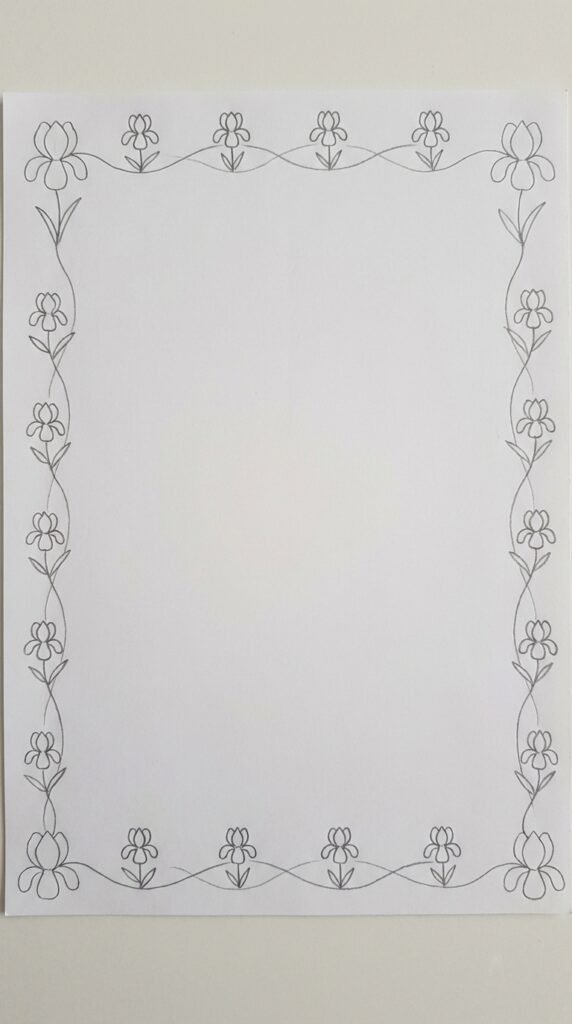
An iris flower border is a creative drawing idea that uses repeated iris shapes to create a decorative frame around the edge of a page. This is a practical and beautiful drawing project that can be used to frame a poem, a letter, or a photograph. The repetition actually makes it easier because you are drawing the same simple iris shape multiple times. With practice, you will be able to create a complete floral border in a short amount of time.
Step-by-Step Instructions:
- Start at one corner of your paper and draw a single small iris bloom with a short stem and two small leaves.
- Continue drawing iris flowers along the top edge of the paper, spacing them evenly. Alternate the direction of the drooping petals to add variety.
- At the corners, draw slightly larger iris blooms to mark the turning points of the border.
- Continue along the sides and bottom edge in the same way.
- Connect the stems along each side with a light flowing vine line to unify the border into one continuous design.
Iris Flower with Rain Drops
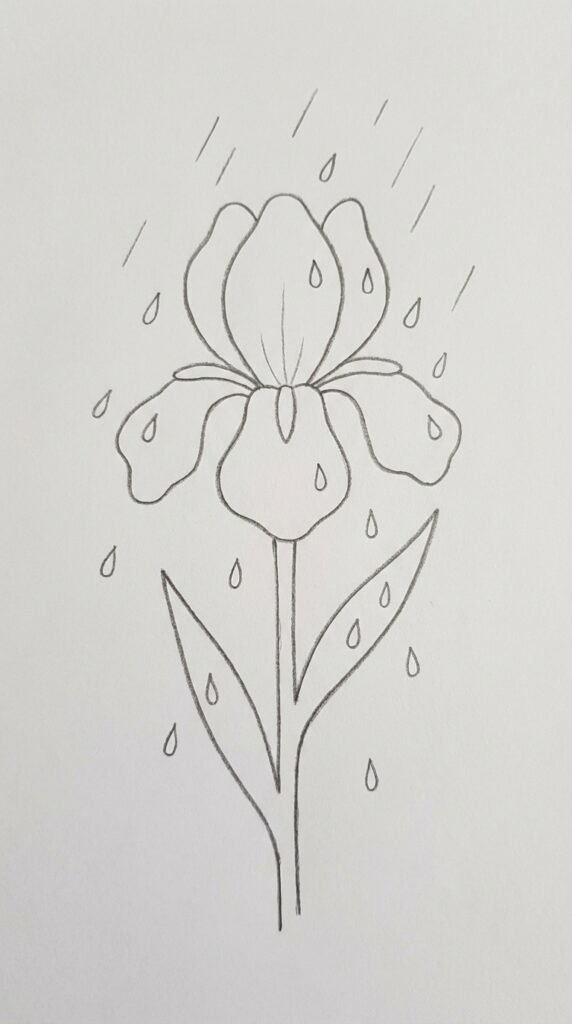
Adding simple rain drop shapes to an iris flower drawing creates a fresh, nature-inspired composition that is very easy to achieve. The rain drops are drawn as small teardrop shapes scattered around the flower and on the petals. This drawing idea is excellent for practicing the relationship between a focal subject and supporting decorative elements. The result looks detailed and creative even though every individual element is simple and manageable for beginners.
Step-by-Step Instructions:
- Draw a complete iris flower in the center of your paper with a stem and two leaves.
- Around the flower, draw five to eight small teardrop shapes scattered at different angles. A teardrop shape is simply a small circle with a point at the top.
- Draw two or three slightly larger teardrops resting on the top surface of the drooping petals.
- Add tiny teardrop shapes on the leaves as well, suggesting drops of water collecting on the surface.
- Draw two or three diagonal short lines above the flower to suggest falling rain in the background.
Geometric Iris Flower
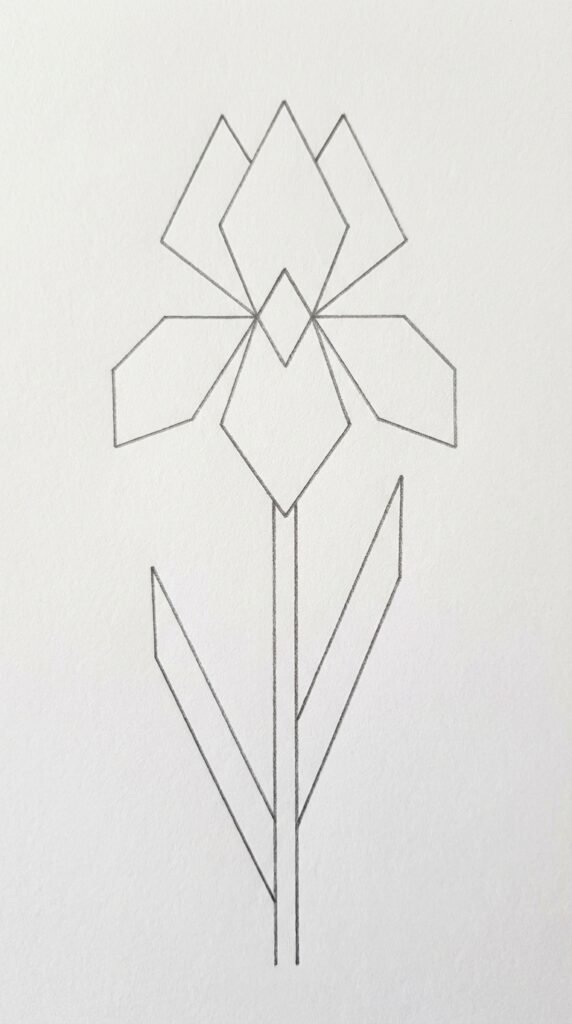
A geometric iris flower uses straight lines and angular shapes instead of curves to create a modern, stylized version of the bloom. This is a surprisingly easy style for beginners because straight lines are often easier to control than curves. The result is a clean and graphic-looking iris flower that looks like it belongs in a modern design or architecture context. This drawing idea is perfect for older beginners and teens who enjoy a more contemporary art style.
Step-by-Step Instructions:
- Draw a small diamond shape in the center of your paper using four straight lines.
- Around the diamond, draw three upward-pointing triangular petal shapes using straight lines. Space them evenly above the center diamond.
- Draw three downward and outward-pointing diamond shapes for the drooping petals, using straight lines only.
- Add a straight vertical stem below the flower using two parallel lines.
- Draw two long thin parallelogram shapes for the leaves, growing at slight angles from the stem.
Iris Flower Mandala
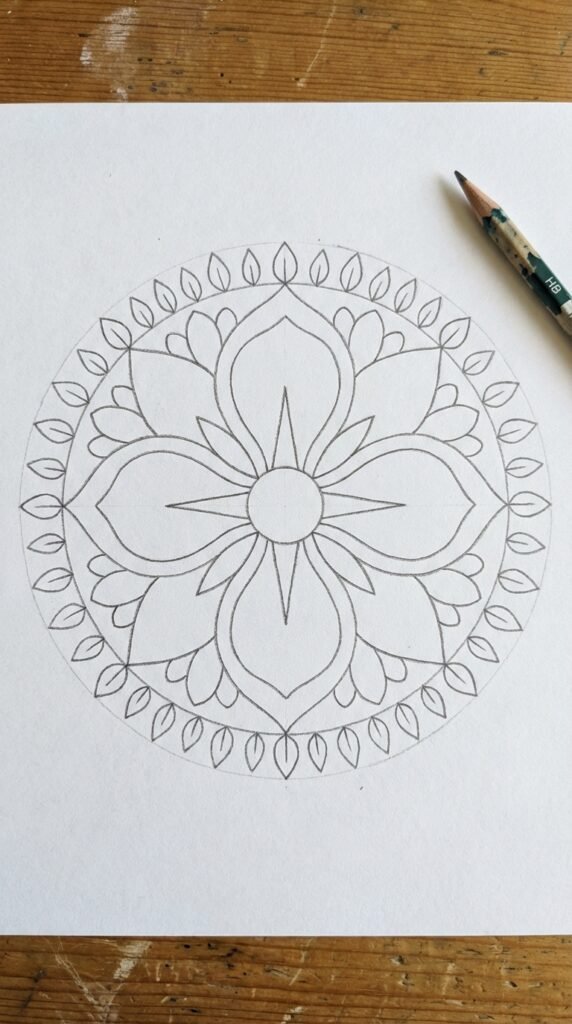
An iris flower mandala is a circular pattern that uses repeated iris petal shapes radiating outward from a center point. This drawing idea is meditative and very satisfying to create. The symmetry makes it feel complex, but because you are repeating the same simple petal shapes over and over, it is manageable for a determined beginner. This is one of the most visually rewarding iris flower drawing ideas in this collection.
Step-by-Step Instructions:
- Draw a small circle in the exact center of your paper. This will be the center of your mandala.
- Draw four iris petal shapes pointing outward from the center circle, one pointing up, one down, one left, and one right.
- Between these four petals, draw four more smaller petal shapes pointing diagonally outward.
- Around the entire inner ring of petals, draw a second ring of slightly smaller petal shapes, again spaced evenly.
- Finish the outer edge with a ring of small pointed leaf shapes pointing outward, completing the circular mandala design.
Baby Iris Flower Sketch
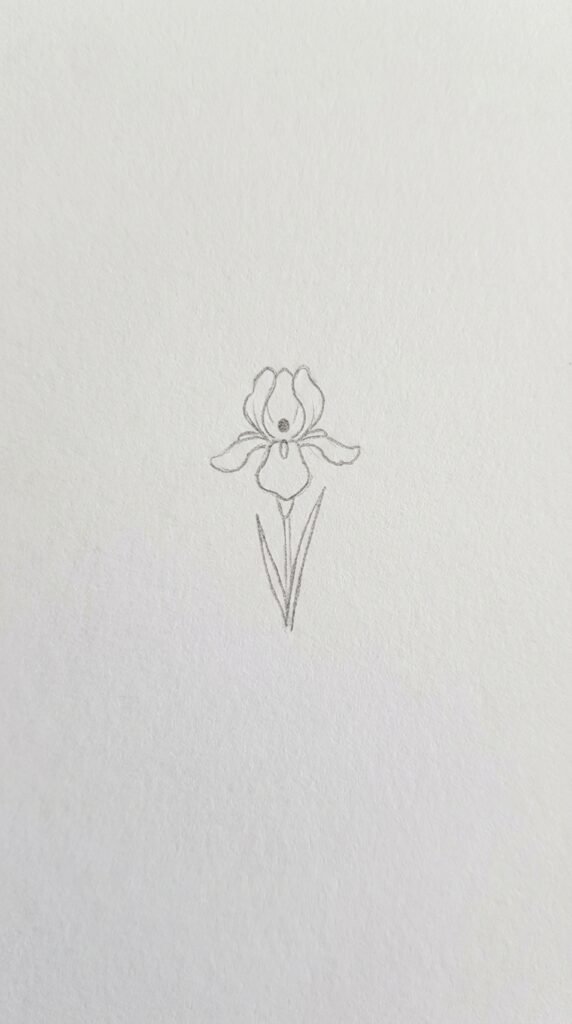
A baby iris flower sketch focuses on a tiny, delicate version of the iris, smaller in scale and with fewer details than a full-size drawing. This style is charming and perfect for decorating the corners of journal pages, small gift tags, or stationery. Because the flower is small, every line is simple and quick to draw. This is also a great warm-up exercise before attempting larger and more detailed iris flower drawings.
Step-by-Step Instructions:
- Draw a very small circle or dot in the center of your paper or in a corner, depending on where you want your tiny flower.
- Add three tiny upward-curving petal shapes above the dot. Keep them small, roughly the size of a fingernail.
- Add three tiny downward-spreading petal shapes below the dot, each slightly wider than the upper petals.
- Draw a thin, short stem extending below the flower. Keep it proportionally small to match the tiny bloom.
- Add one or two very small leaf shapes along the stem to complete the miniature sketch.
Full Iris Plant with Roots
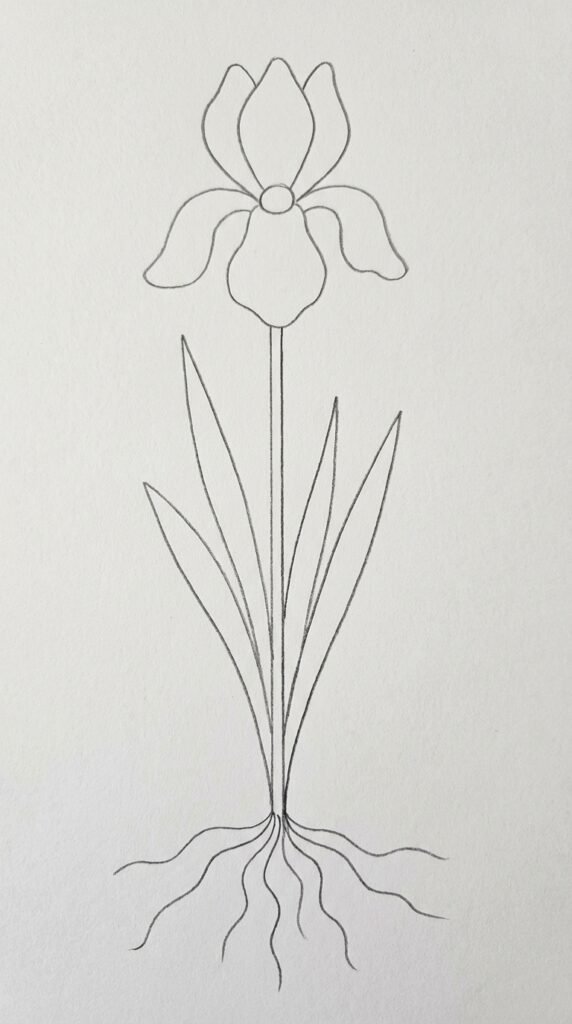
Drawing a full iris plant from roots to bloom gives beginners a complete picture of how this flower grows in nature. This composition is educational as well as artistic. The roots are drawn as simple wavy lines at the bottom, the stem is long and straight, and the bloom sits at the top. This idea is excellent for school science projects, botanical sketchbook pages, and nature study journals.
Step-by-Step Instructions:
- Draw a long straight vertical stem running from near the bottom of your paper to near the top.
- At the very bottom of the stem, draw several thin wavy lines spreading outward and downward to represent roots.
- Along the lower two-thirds of the stem, add three or four long narrow pointed leaves growing outward at slight upward angles.
- At the very top of the stem, draw a full iris bloom with three upright petals and three drooping petals.
- Add a small oval shape between the stem and the bloom base to represent the seed pod or ovary of the flower.
Drawing Tips Section
Learning to draw iris flowers is a rewarding journey, and a few simple tips can help you improve faster and enjoy the process more.
Practice the petal shape separately before drawing the full flower. Draw several upward curving petal shapes on a scrap piece of paper until they feel comfortable and consistent. Once the individual petal shape feels natural, assembling the full bloom becomes much easier.
Use light pencil pressure for your first outlines. Drawing lightly at first means you can erase and adjust easily without leaving marks on the paper. Once you are happy with the overall shape, you can go over your lines with slightly more pressure to darken and define them.
Focus on symmetry when placing petals. Iris flowers look most natural when the three upright petals are roughly evenly spaced and the three drooping petals are balanced around the center. You do not need to measure precisely, but try to distribute the petals with a sense of even spacing.
Draw the stem before the bloom. Starting with the stem gives you a clear anchor point for placing the bloom at the top. This approach helps with proportion and prevents the flower from ending up too high or too low on the page.
Keep your pencil sharp. A sharp pencil tip gives you clean, controlled lines, which is especially important for the narrow parts of the iris petals and the thin stem. A dull pencil makes lines look messy and is harder to control for small details.
Common Mistakes Section
Many beginners make a few predictable mistakes when drawing iris flowers. Knowing what to avoid ahead of time can save you a lot of frustration.
Making the petals too similar in shape and size is one of the most common issues. Real iris flowers have a distinction between the upright petals and the drooping petals. Keep your upright petals slightly narrower and taller, and make your drooping petals wider and more spread out.
Drawing the stem too thin and fragile-looking is another frequent problem. The iris stem is actually quite sturdy in real life. Give your stem a little more width so it looks strong enough to support the bloom.
Placing the bloom too close to the top edge of the paper is a mistake that leaves no room for the composition to breathe. Always start your stem a little below the center of the page so you have enough space above for the bloom and below for the roots or base of the plant.
Overcomplicating the petal edges by adding too many small bumps or ruffles makes the drawing look messy. Keep petal edges smooth and simple. You can always add details later, but a clean simple outline always looks better than a complicated one at the beginner level.
Pressing too hard with the pencil from the beginning leaves dark marks that are difficult to erase. Always start light and darken only when you are satisfied with the shape and placement of each element.
FAQ Section
What is the easiest iris flower drawing idea for absolute beginners?
The simplest starting point is the single iris bloom drawing. This focuses on just one flower head with three upright petals and three drooping petals. Once you practice this basic shape a few times, it becomes easy and quick to draw, and you can use it as the foundation for all the other iris flower drawing ideas in this guide.
Do I need special pencils or paper to draw iris flowers?
No special supplies are required. A standard HB pencil and plain white printer paper or drawing paper is all you need to get started. An HB pencil gives you a good balance between light enough to erase easily and dark enough to see your lines clearly. As you progress, you might want to try slightly heavier paper, but for practice purposes, any paper will work.
How do I make my iris flower drawing look more balanced and natural?
The key to a balanced iris flower drawing is even petal spacing. Try to place the three upright petals at equal intervals around the upper half of the flower center, and spread the three drooping petals evenly around the lower half. Drawing a very light circle first as a guide for petal placement can help a lot. Erase the guide circle once your petals are in place.
Can children follow these iris flower drawing ideas?
Yes, all of these iris flower drawing ideas are designed to be child-friendly. The instructions use simple language, the steps are broken down clearly, and none of the ideas require shading or advanced techniques. Children as young as six or seven years old can follow the simpler ideas like the single iris bloom, the cartoon iris flower, and the baby iris flower sketch with adult guidance.