Iris Drawing Ideas
Eleven iris drawings you can copy straight onto paper, from a single bloom on a stem to a full mandala. Every one is a clean pencil outline drawn by hand, with no shading and no colour. Pick one, keep it next to you, and copy it line by line.
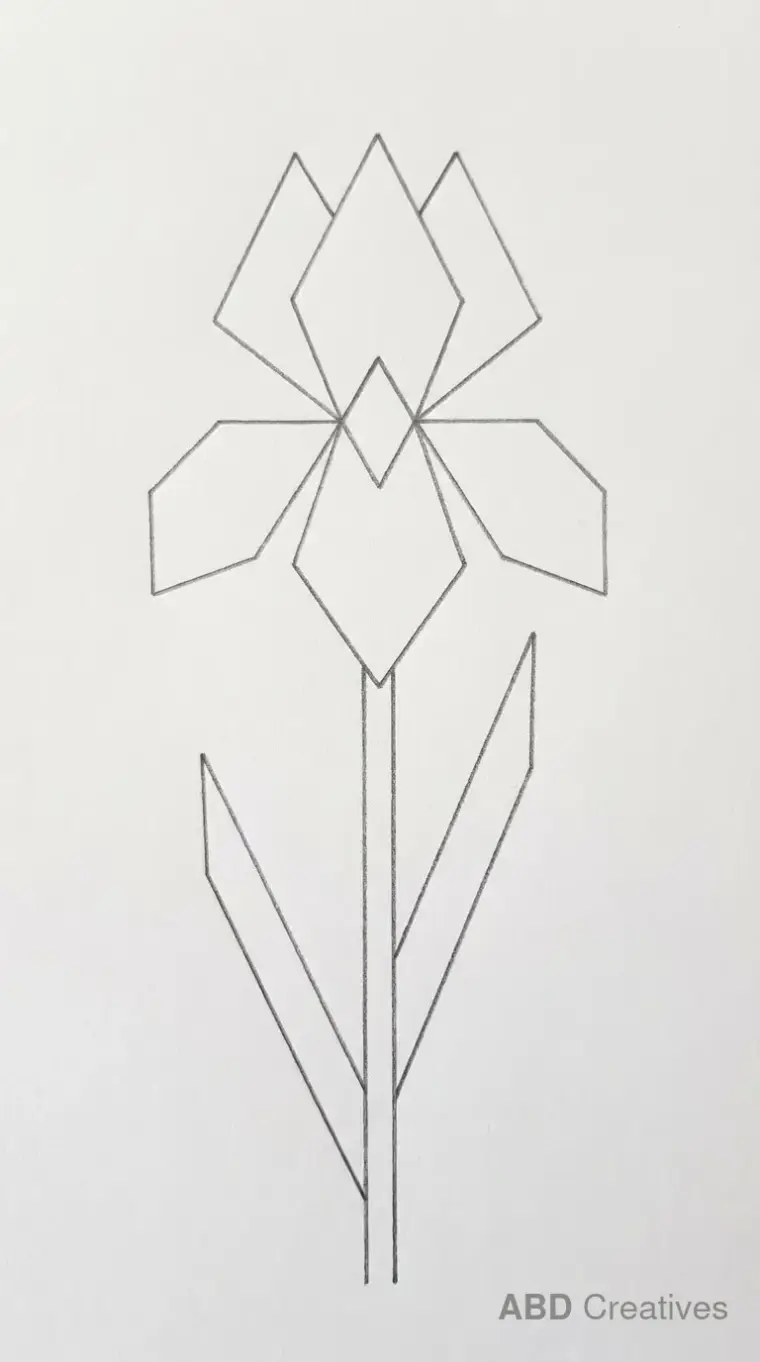
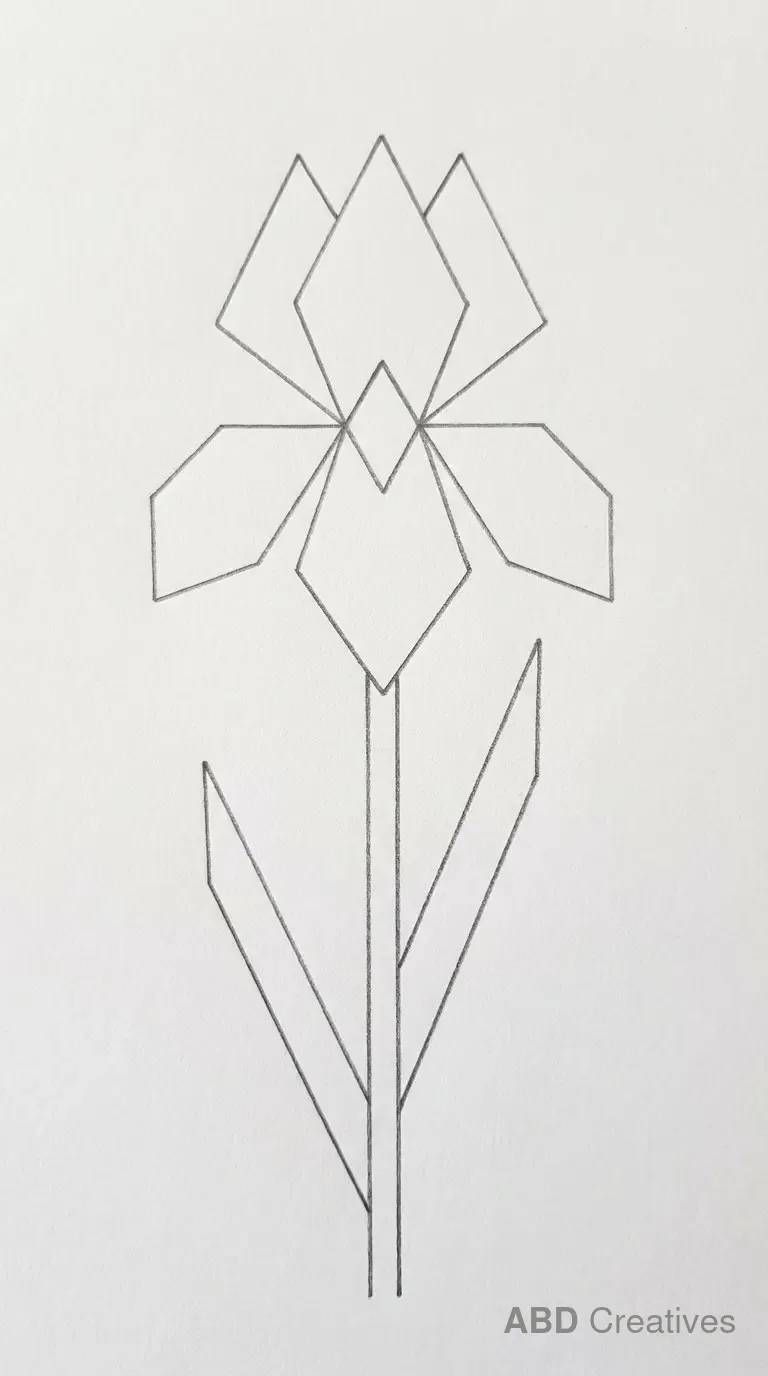
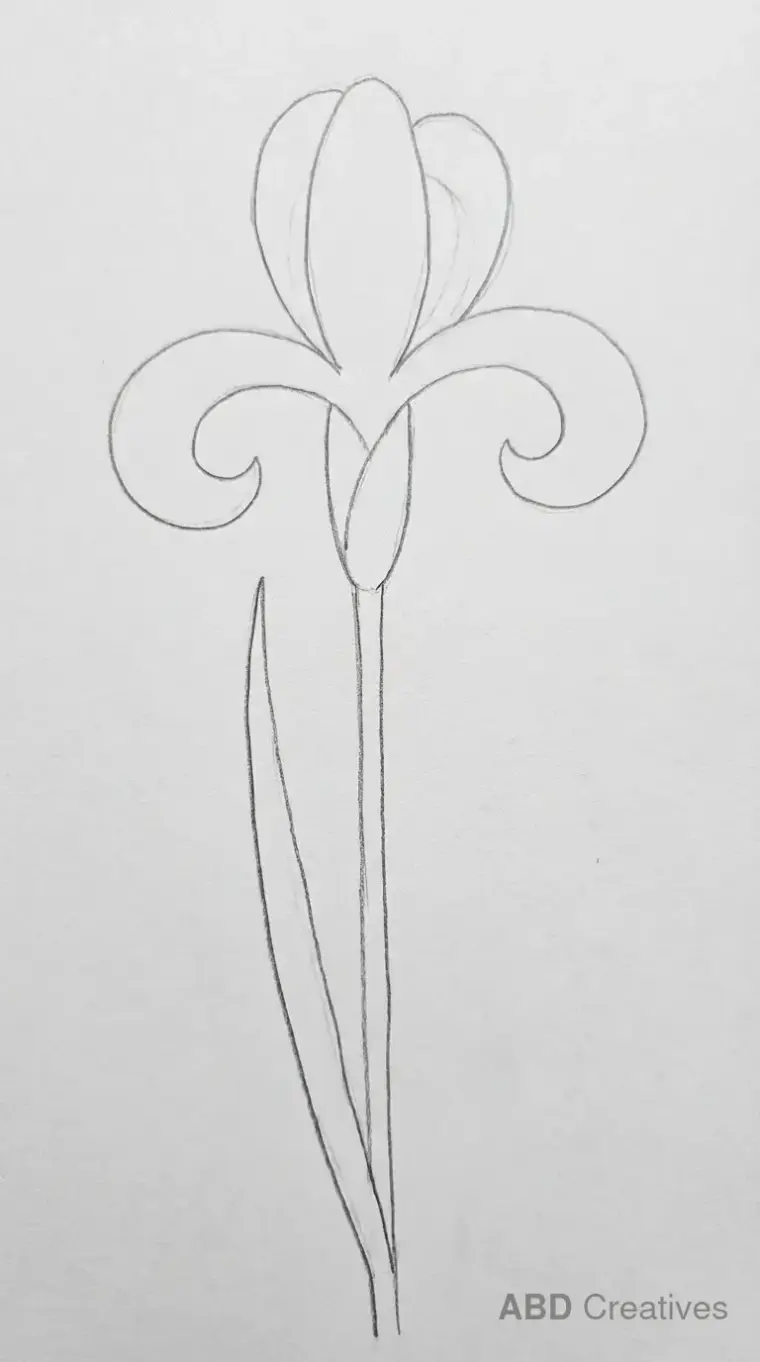
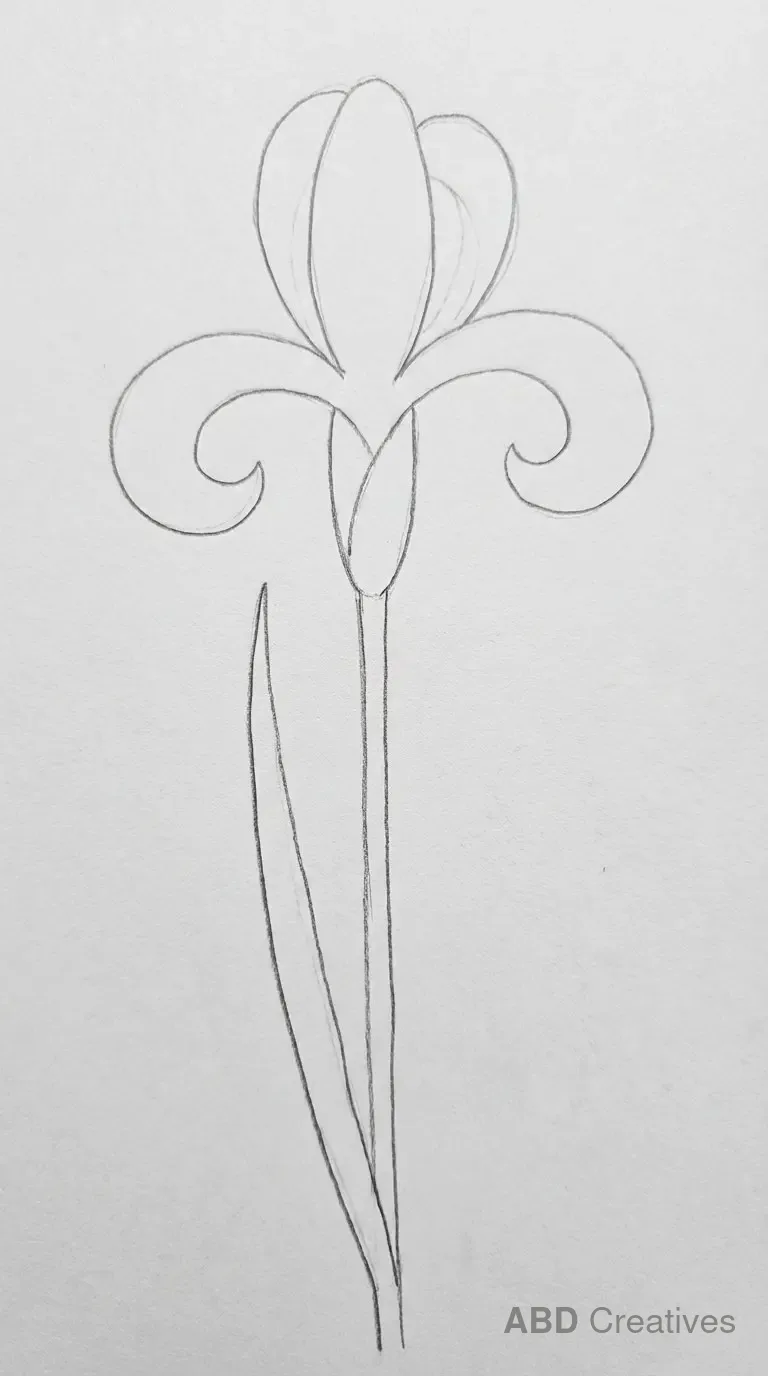
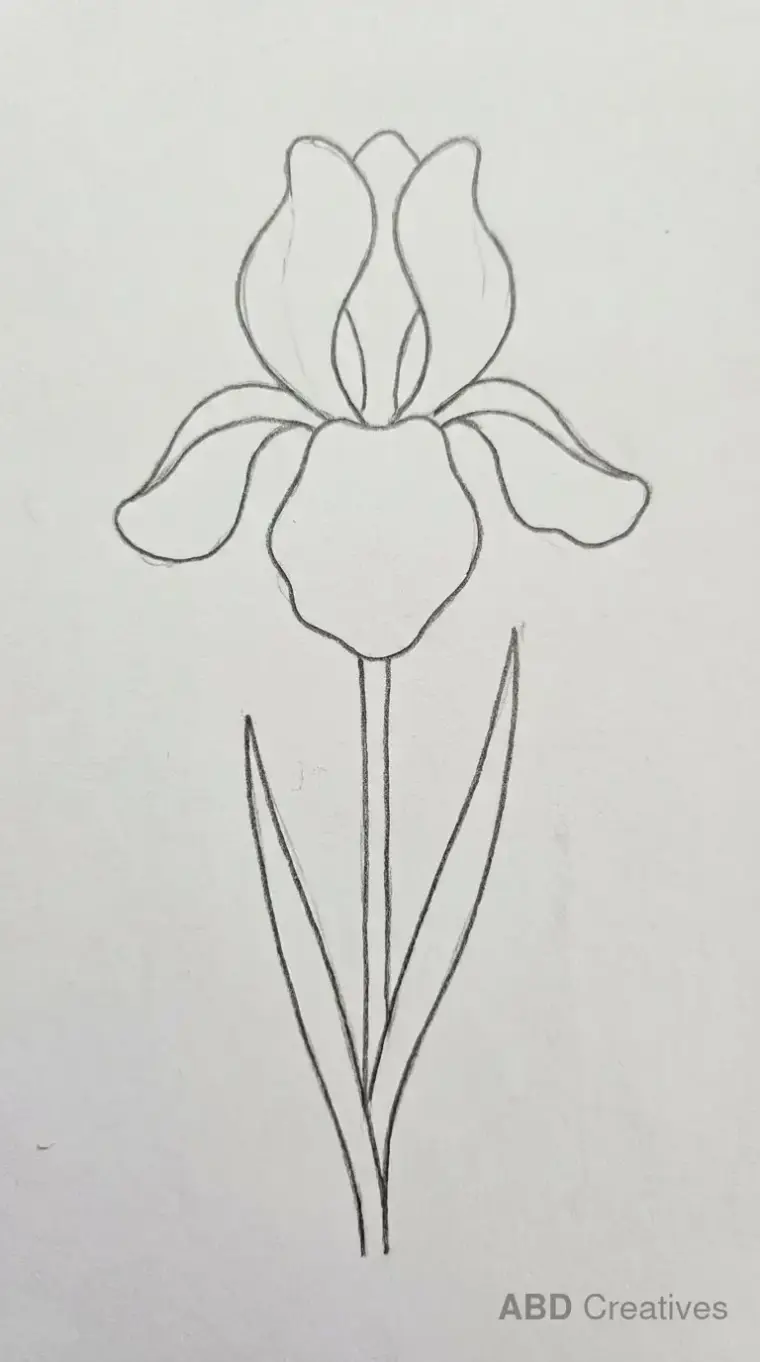
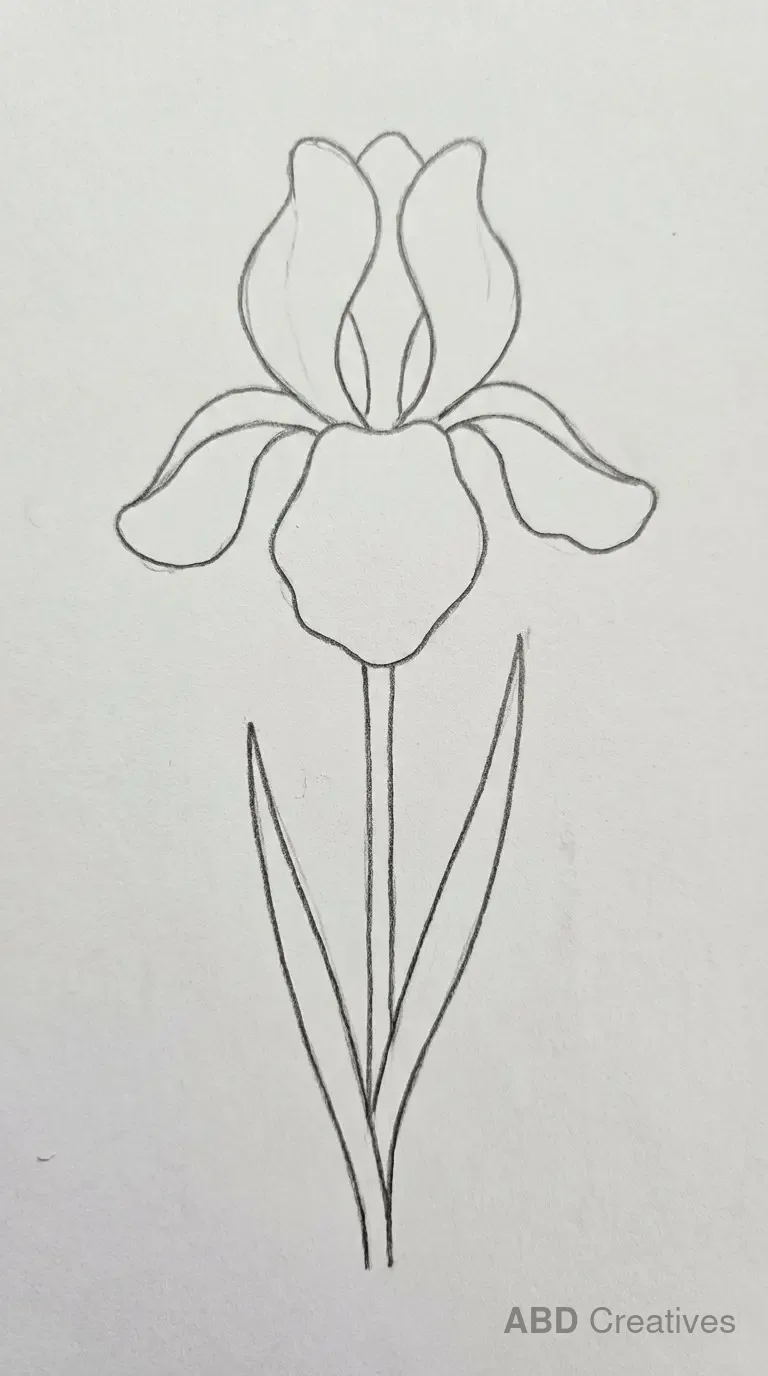
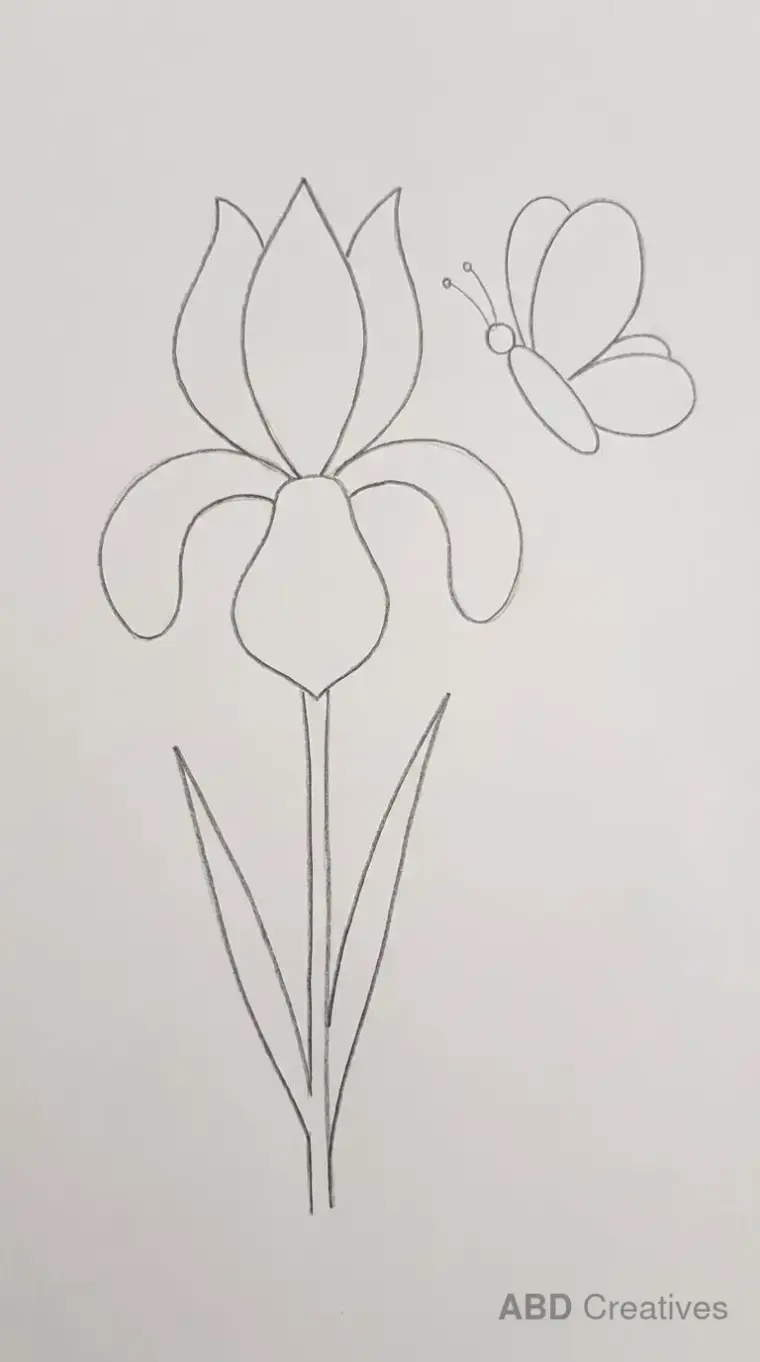
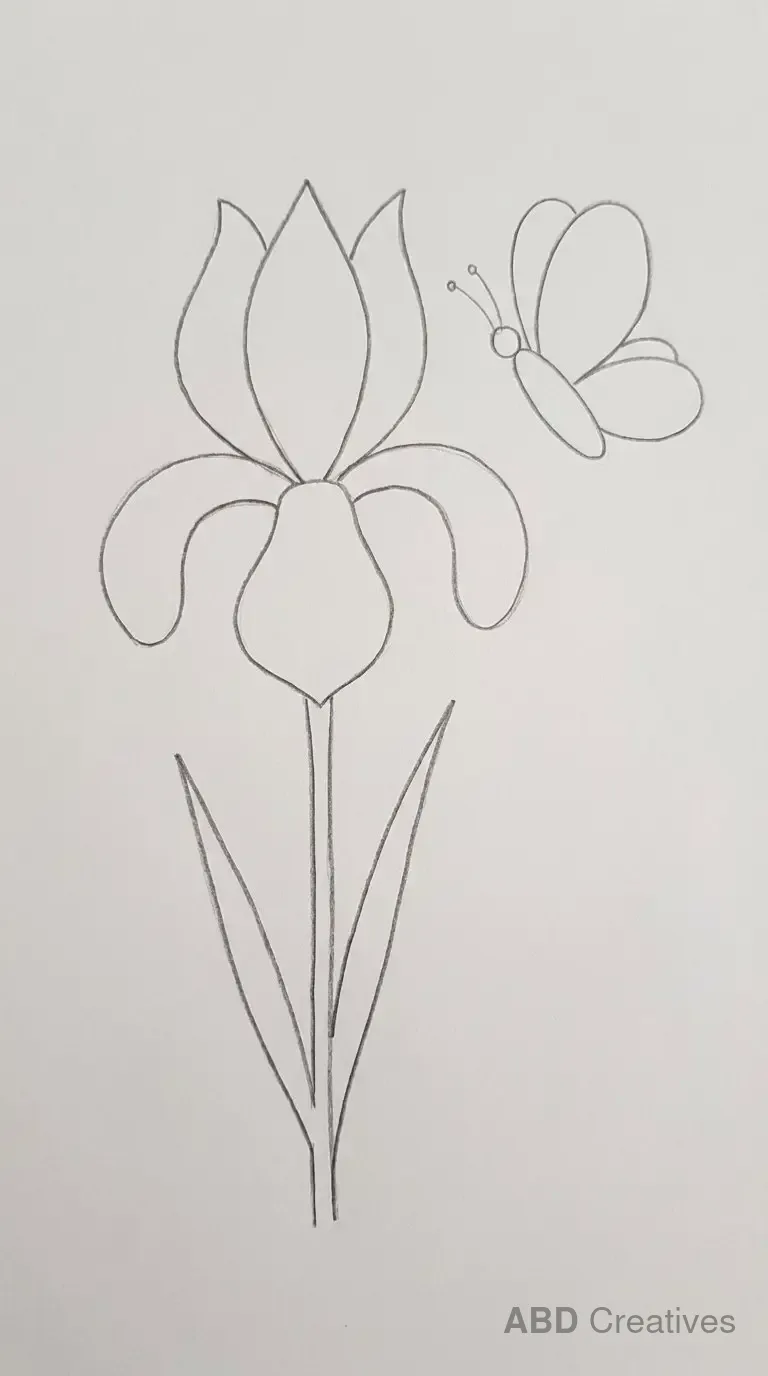
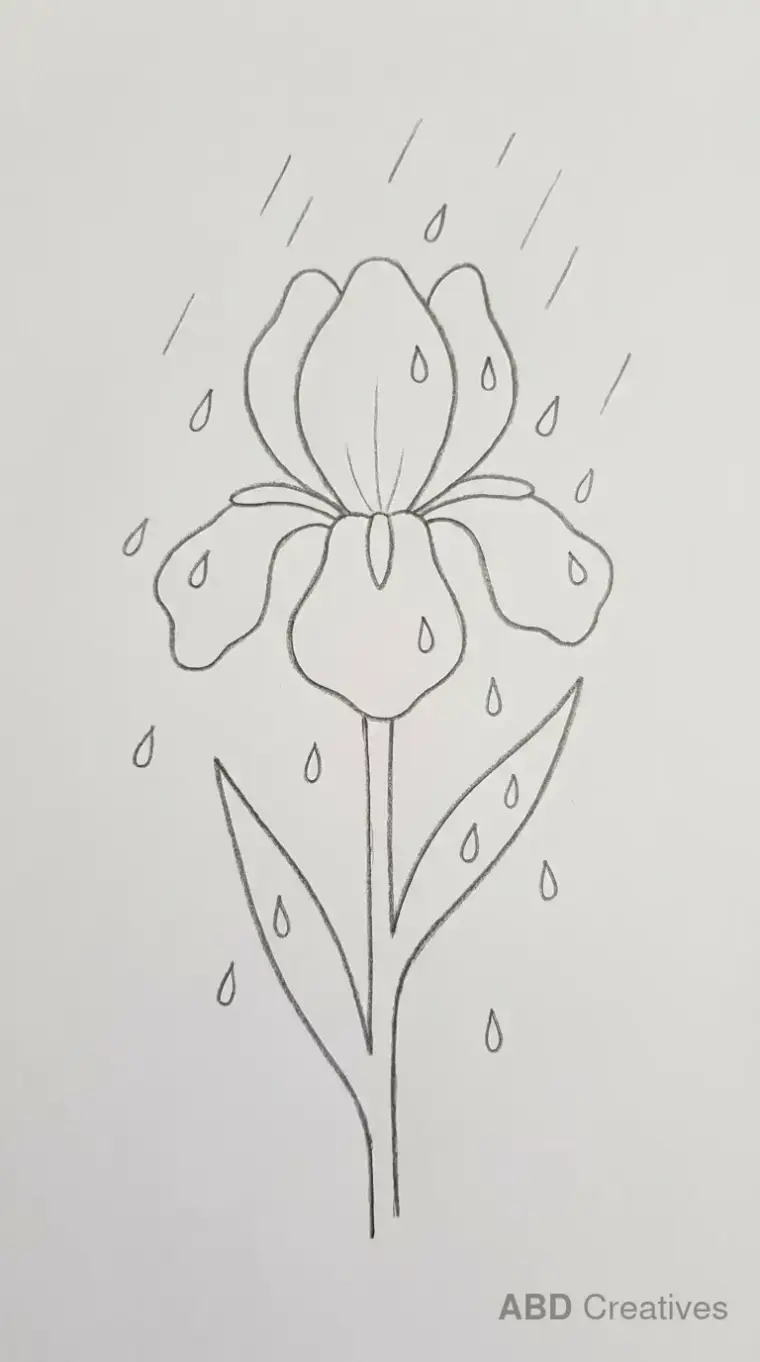
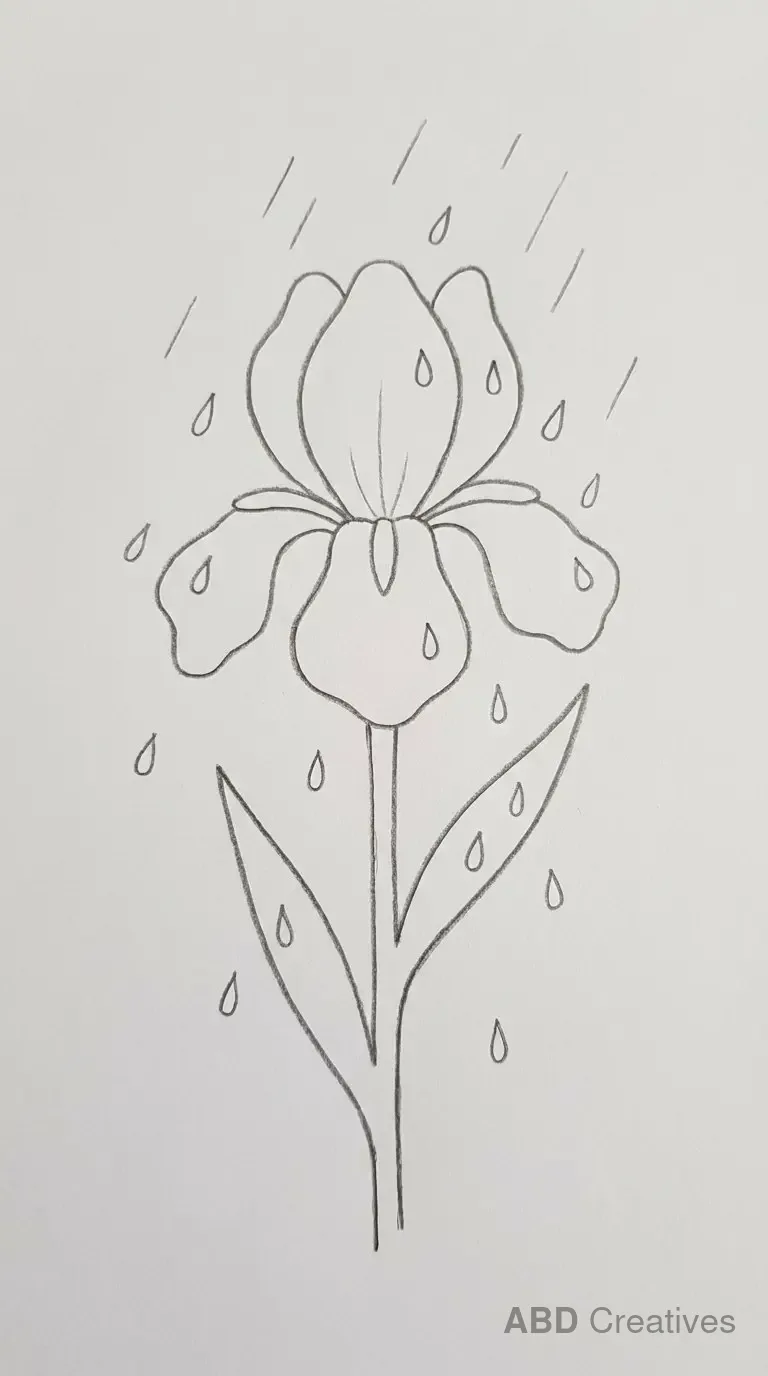
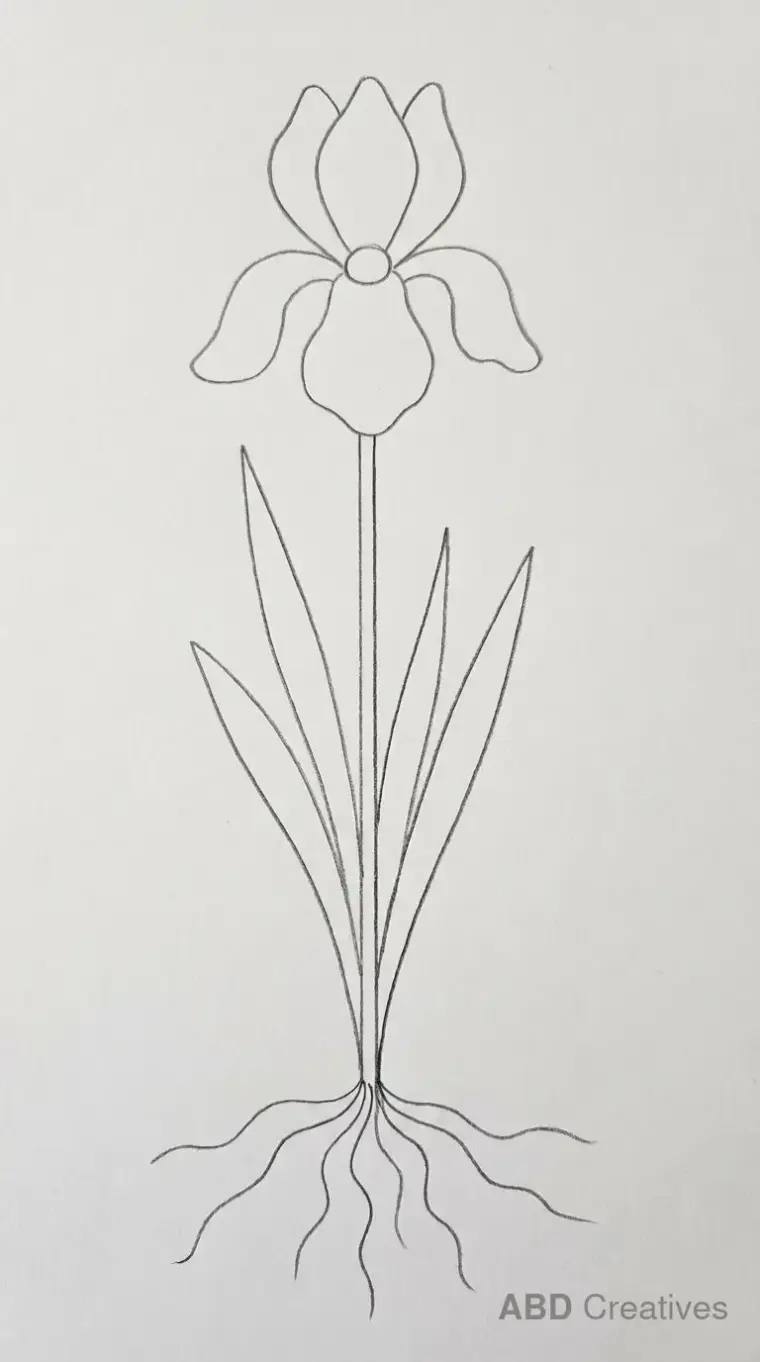
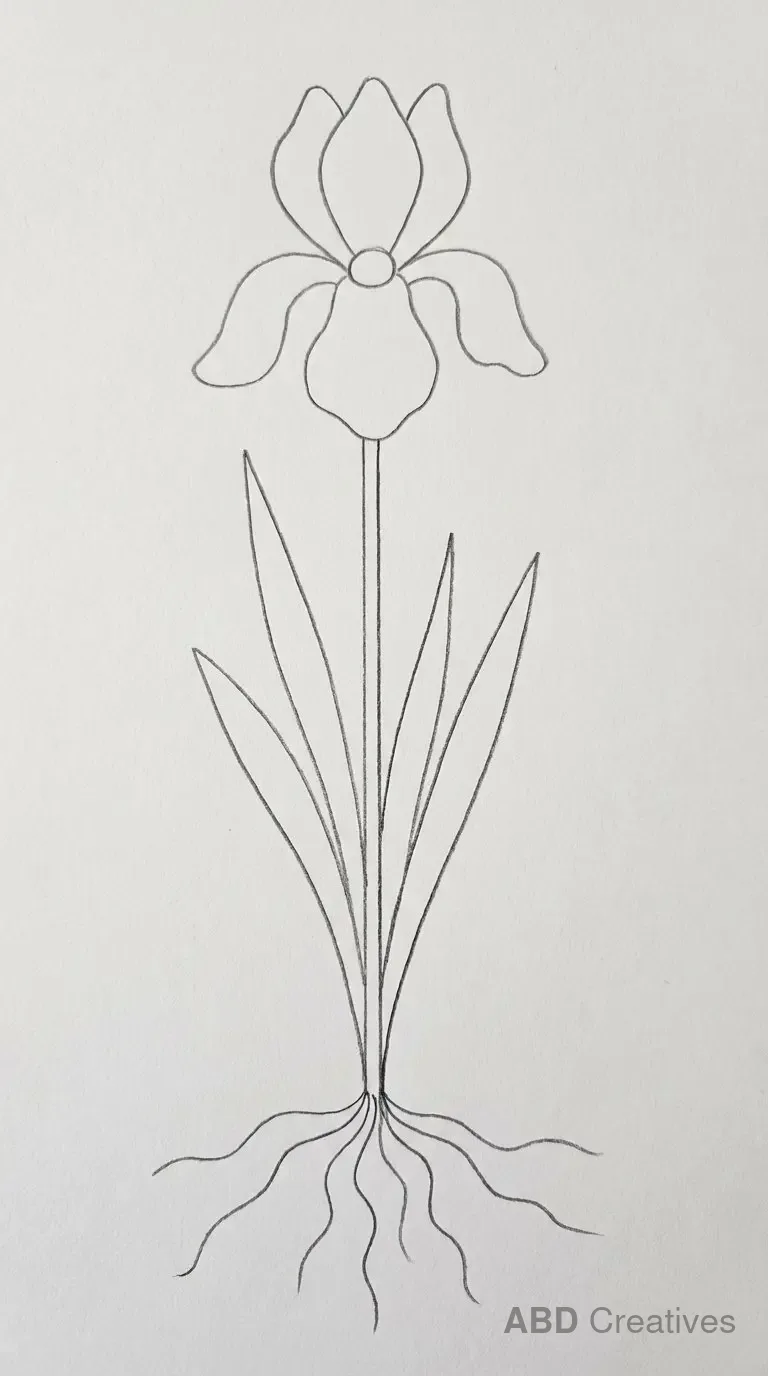
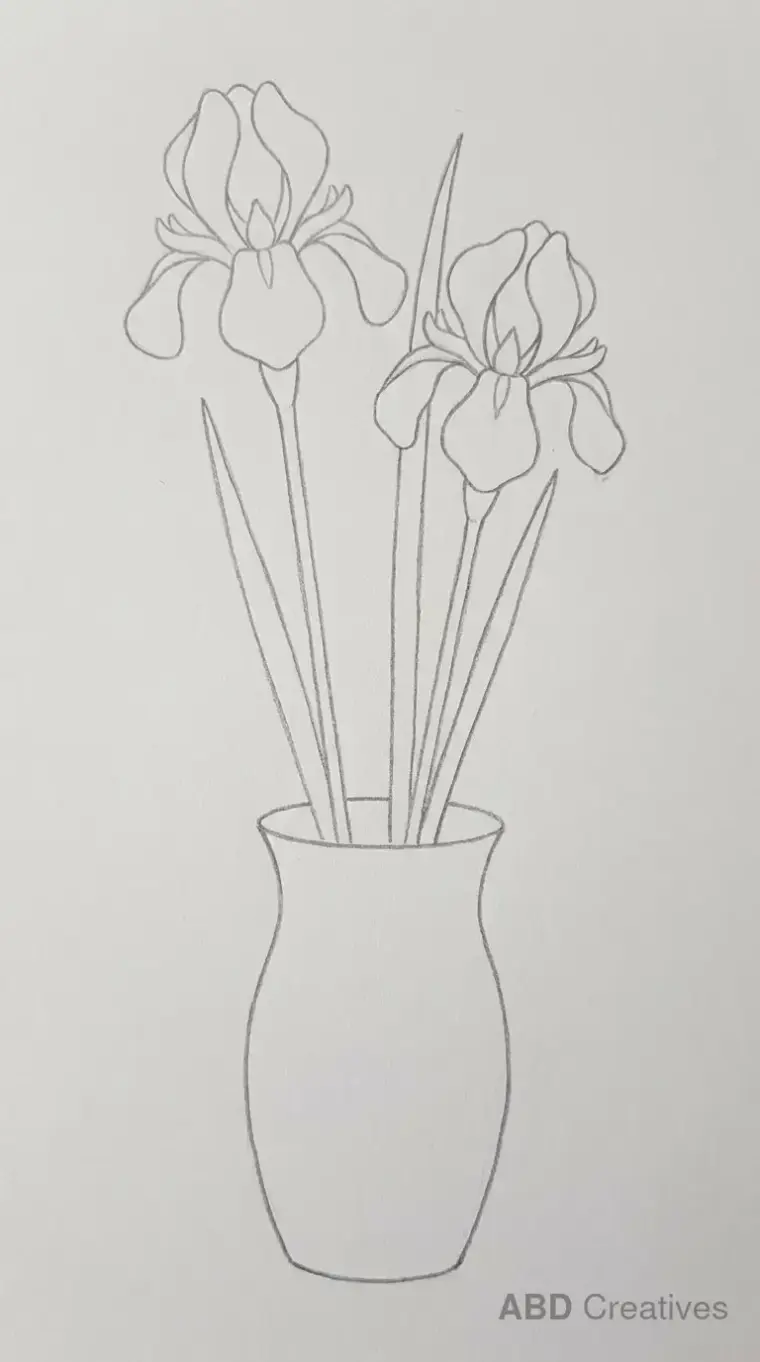
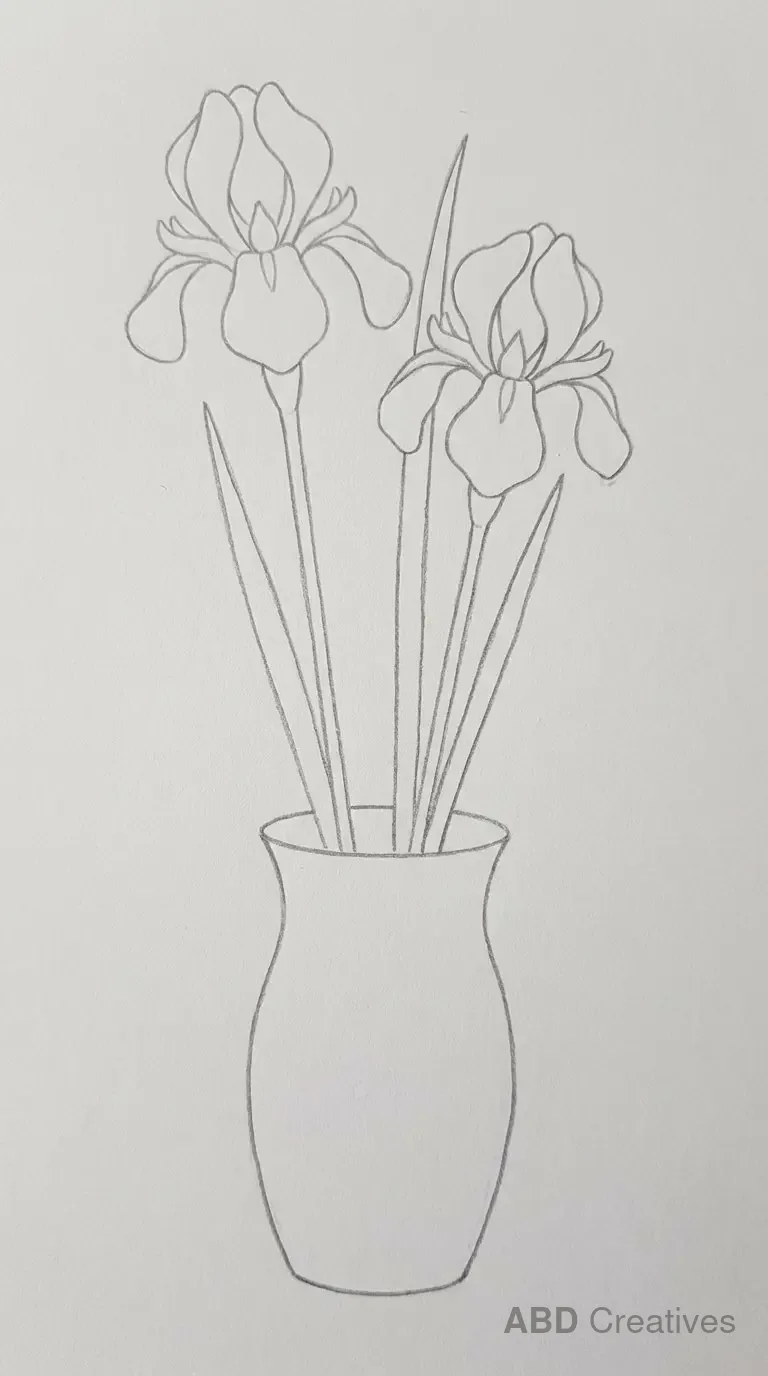
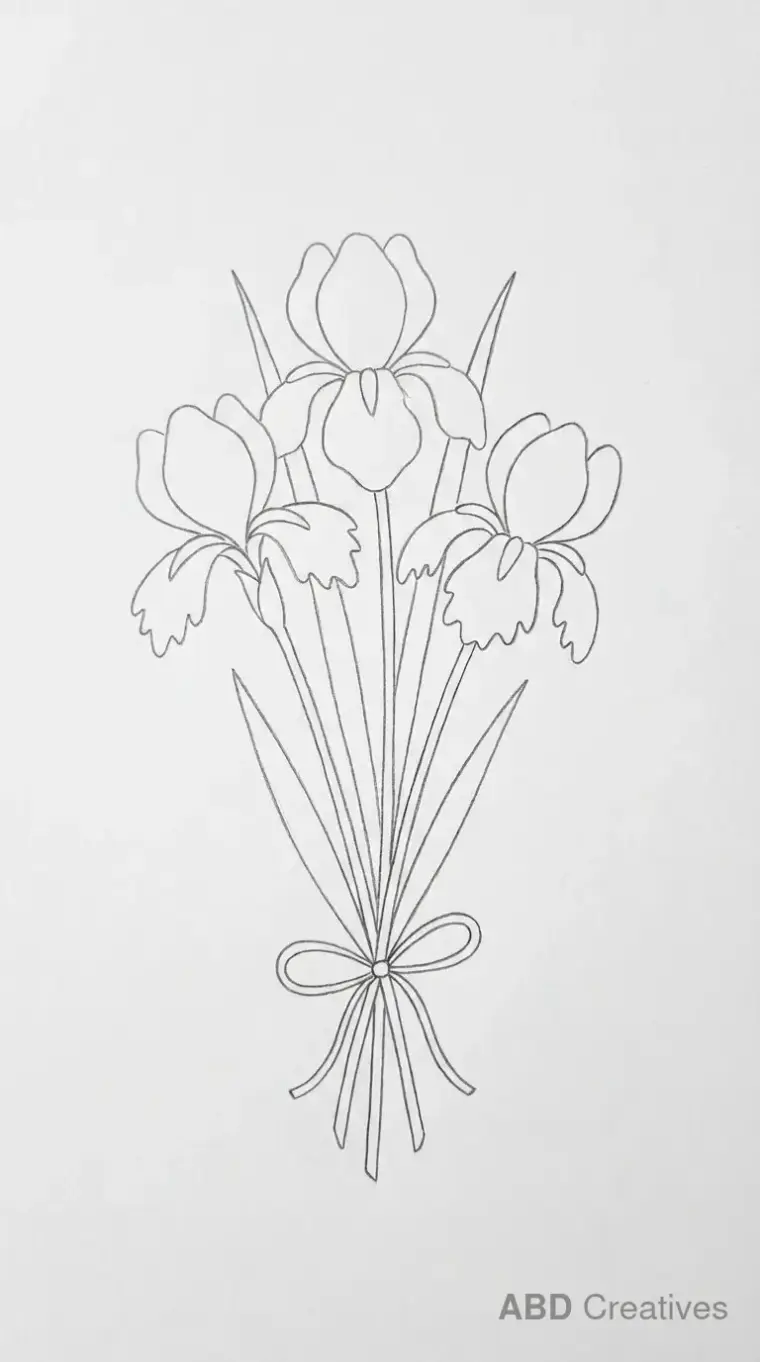
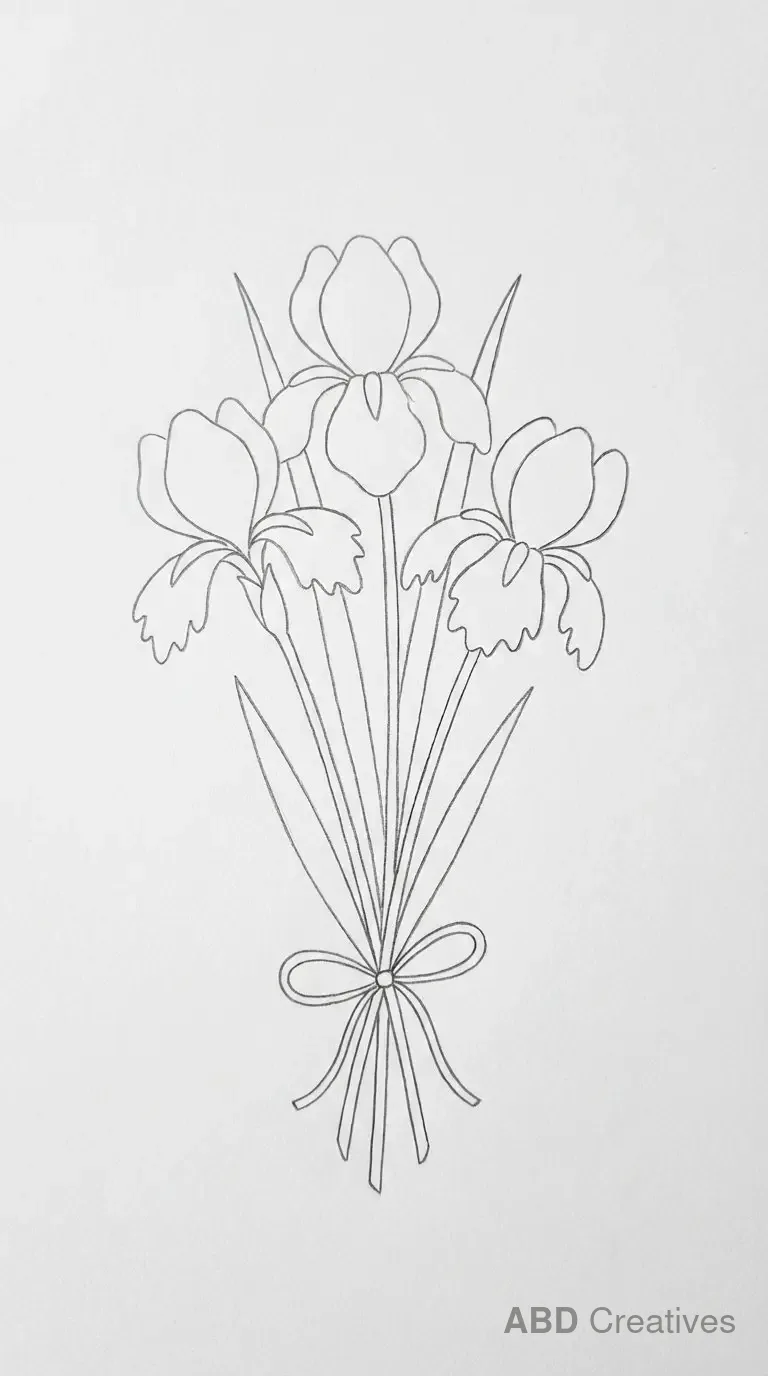
How to draw an iris step by step
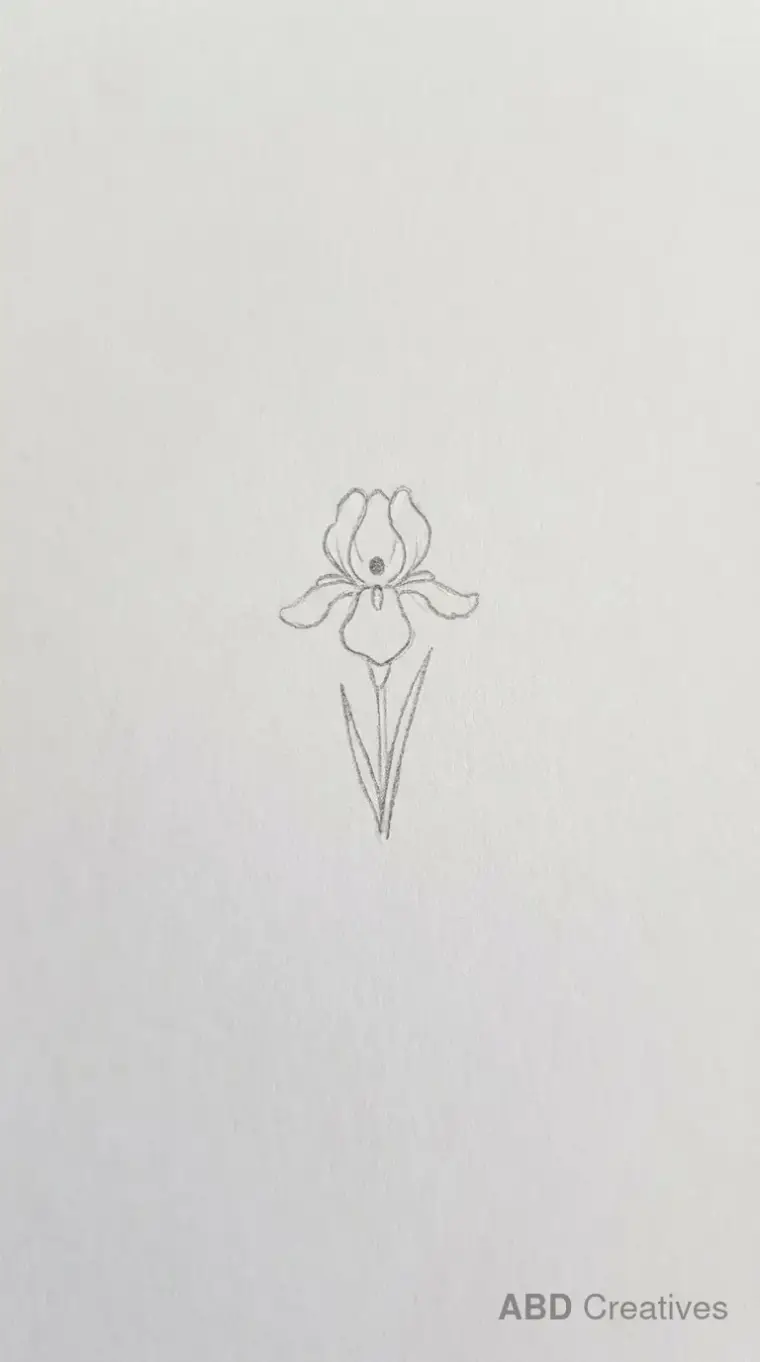
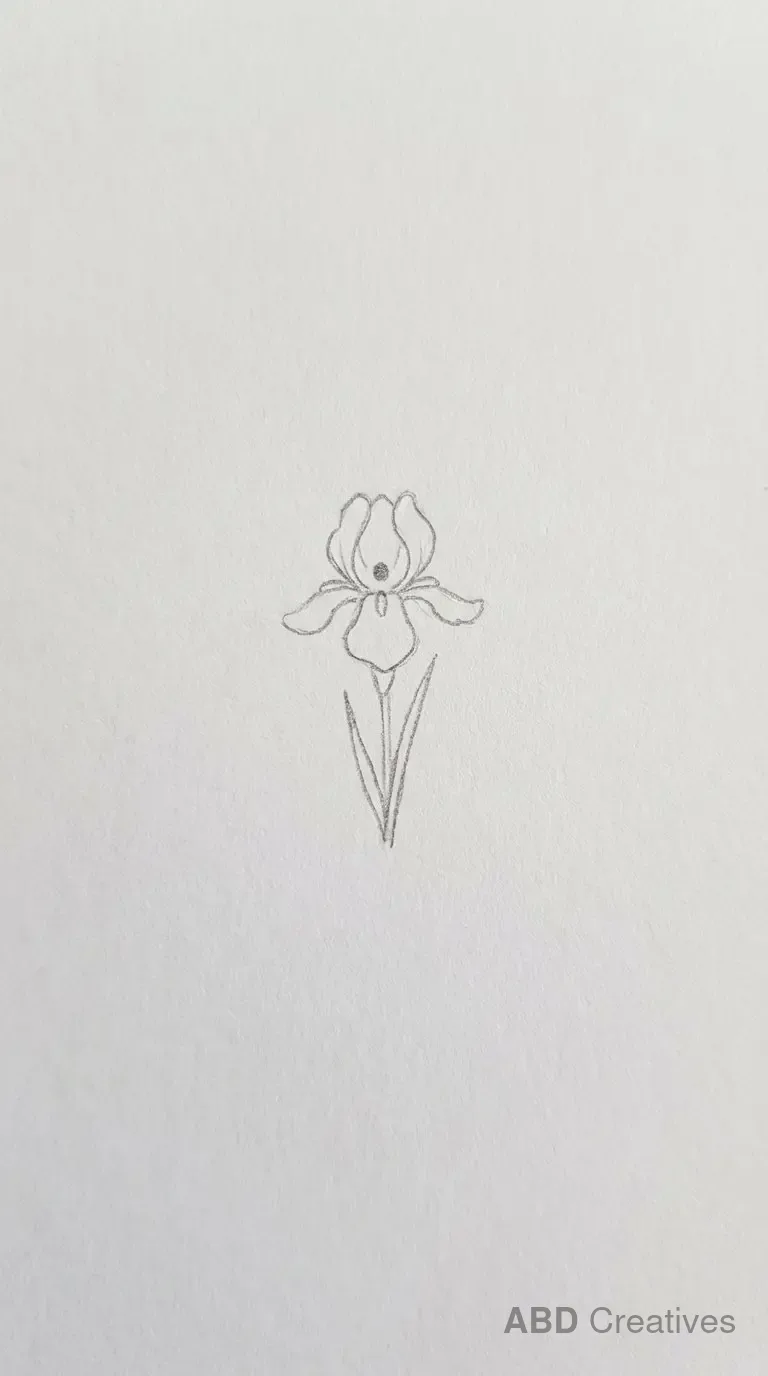
An iris looks harder than most flowers because the petals go in two directions at once. Three stand up and three droop down. Once you know that, the rest is straightforward.
- Draw a short vertical line where you want the centre of the flower. This is your guide for keeping both halves even.
- Add the three upright petals at the top. The middle one points straight up, the two beside it lean out slightly. Keep them close together so they look like one cluster.
- Draw the three drooping petals below. These curve outwards and then fold down. Make them wider than the upright ones, because this is what tells people it is an iris and not a tulip.
- Add the stem as one long line straight down from the middle of the flower. Iris stems are tall and do not bend much.
- Finish with the leaves. Iris leaves are long, narrow and blade shaped, and they come up from the base rather than off the stem. Cross two or three of them near the bottom.
Darken your final lines at the end and rub out the guide line through the middle.
Which iris should you start with
If this is your first flower
Start with the small simple iris. It is small, symmetrical and has very few lines, so there is little to get wrong. The iris in straight lines is also easier than it looks, because angular petals are more forgiving than curved ones.
If you have drawn flowers before
Try the classic iris on a single stem, the iris with a butterfly or the iris in the rain. The flower stays the same in all three, and you are only adding one extra element.
If you want a challenge
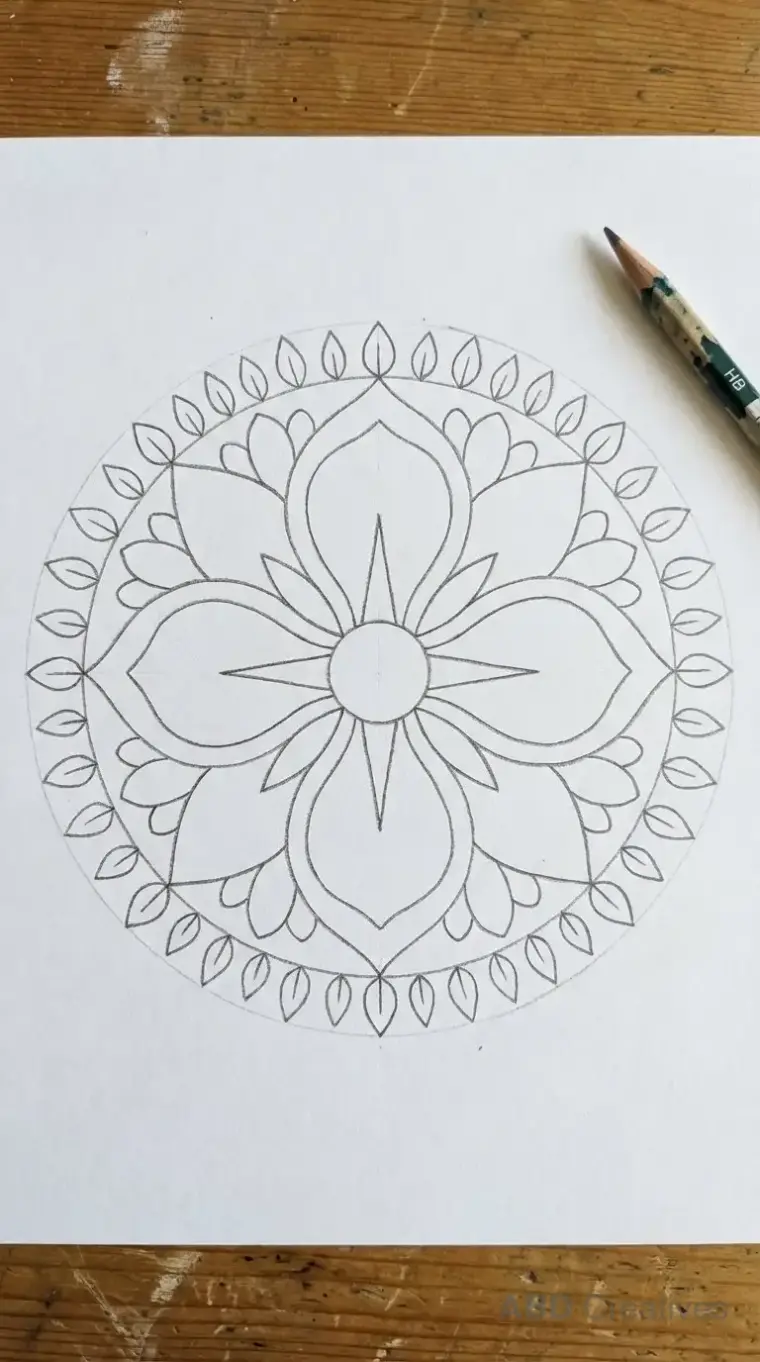
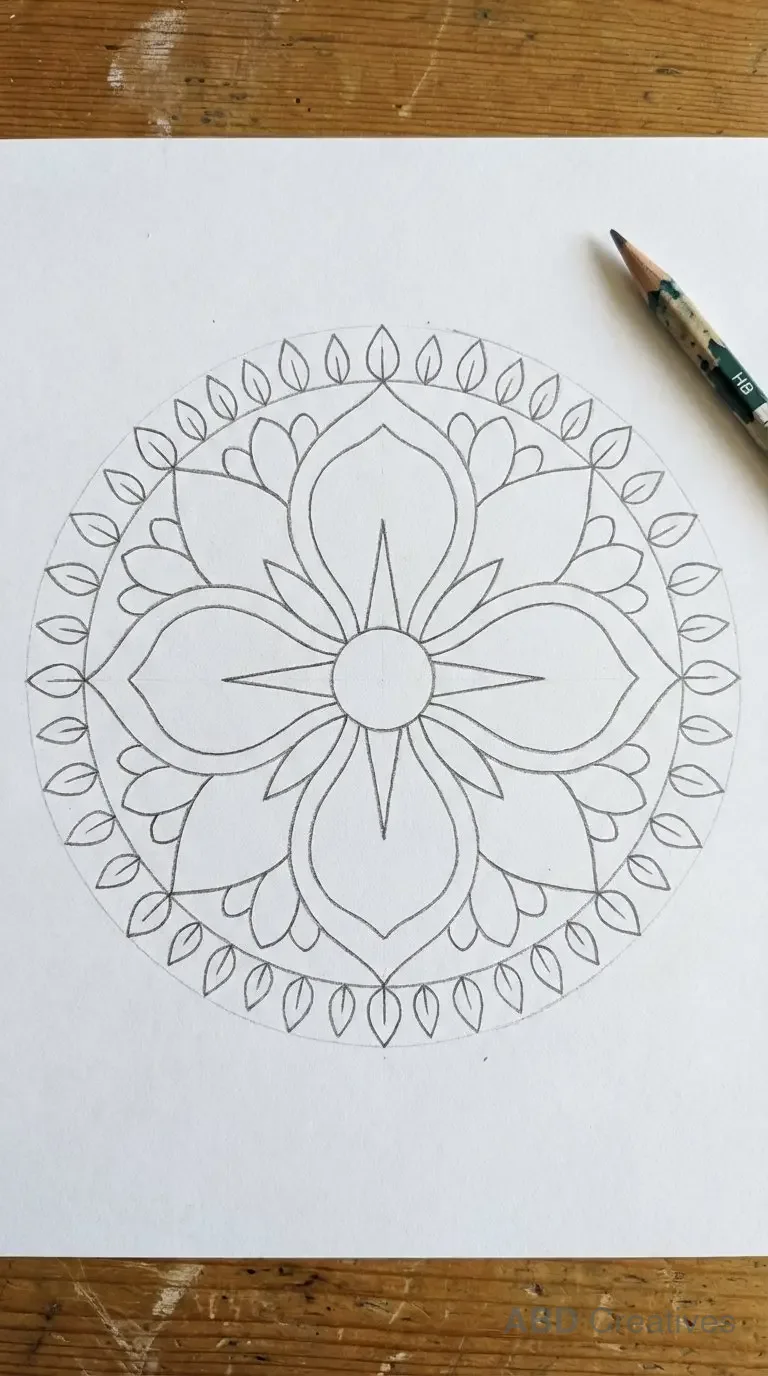
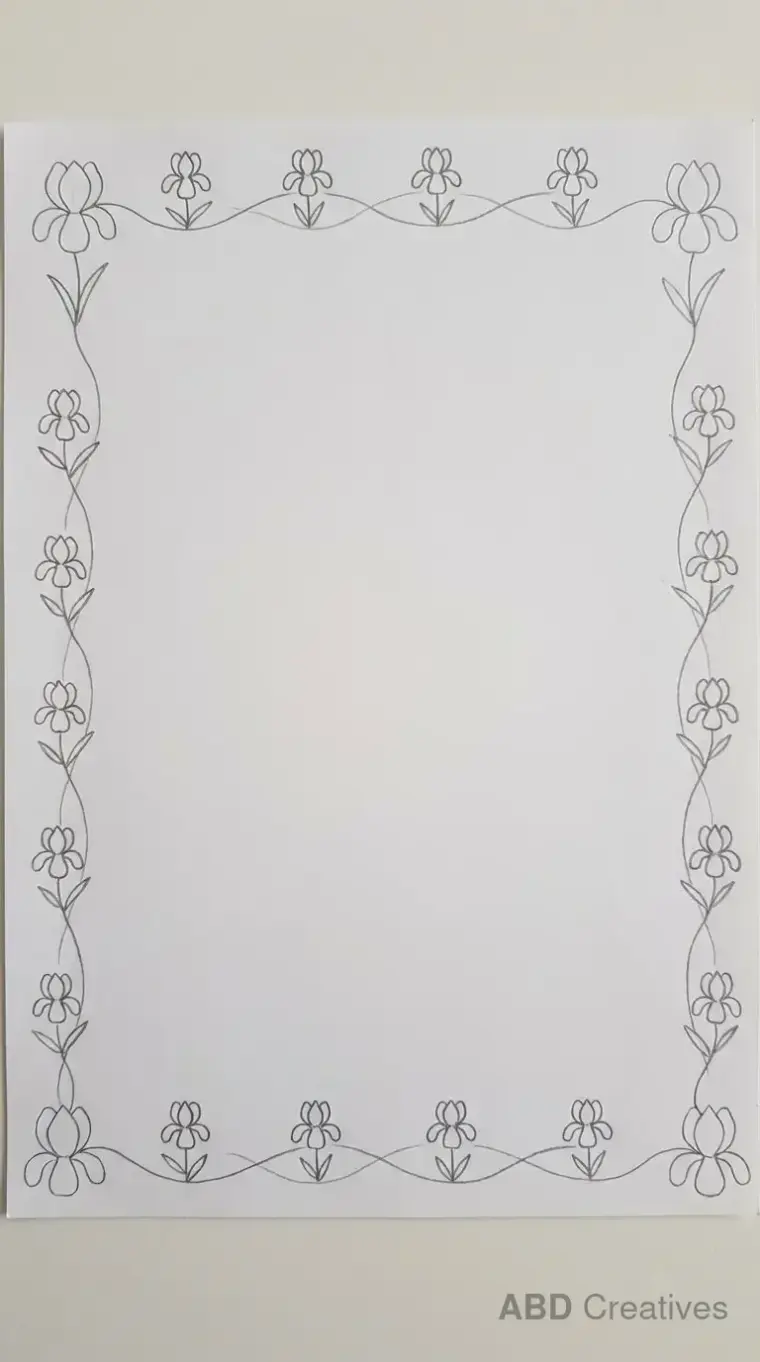
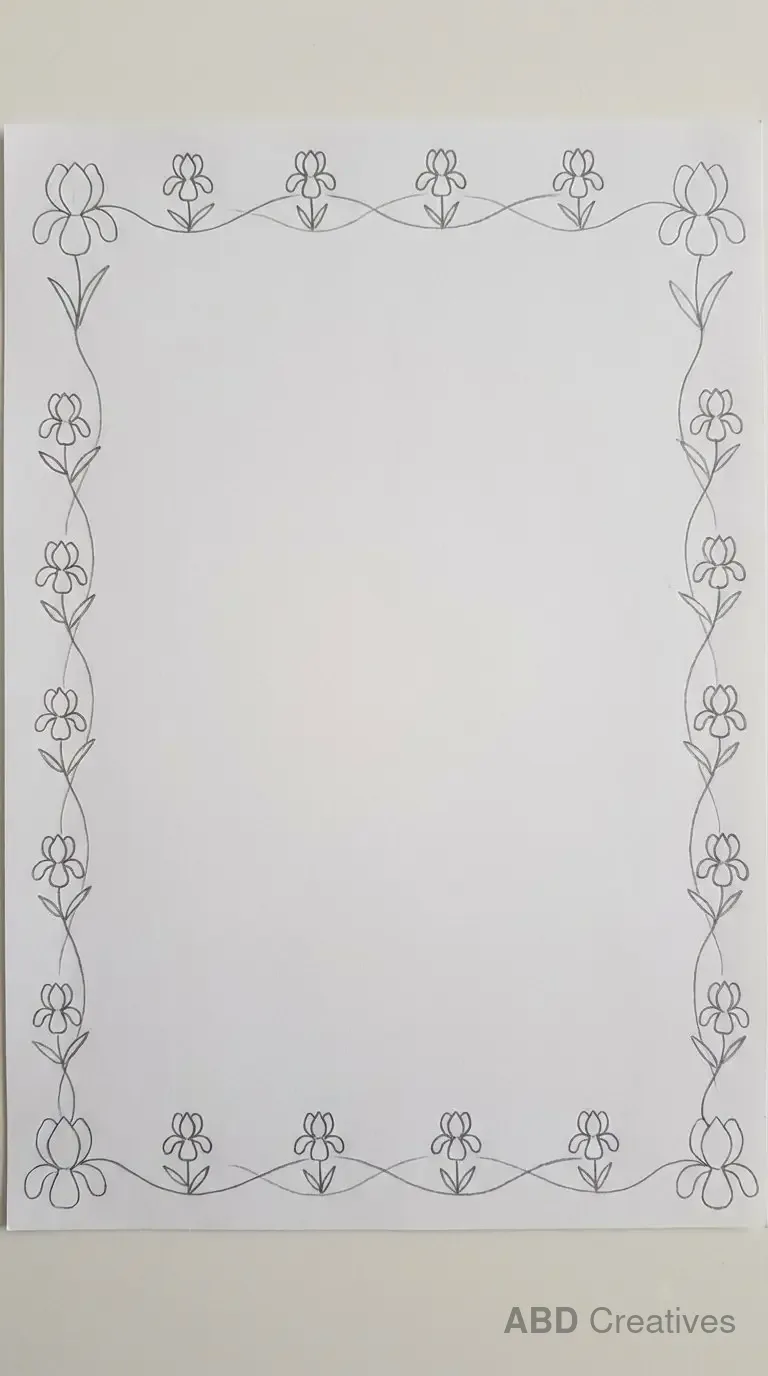
The bouquet and the border frame both need several flowers that sit correctly next to each other. The mandala is the most detailed drawing here, although it repeats one petal shape over and over, so it is more about patience than skill.
What you need
An HB pencil, plain paper and an eraser. A 2B pencil helps for darker final lines, and a ruler is useful for the mandala if you want the rings even. Nothing on this page needs a tablet, a light box or special paper.
Three things that make an iris look right
- The drooping petals are too small. The lower petals should be as wide as or wider than the upright ones. If they are small, the flower reads as a tulip.
- The leaves come off the stem. Iris leaves grow from the base of the plant, not from partway up the stem. Start them at the bottom and let them cross.
- The flower sits flat. Let one upright petal lean slightly and let the drooping petals fold at different angles. Perfect symmetry makes a flower look like a logo.
Using these for cards and journals
The border frame and the mandala are made for this. Print the border, write inside it, and you have a card or a certificate. The mandala works as a colouring page or a journal cover. The bouquet and the vase both fill a page on their own if you want a single finished piece.
Ways to use these drawings
Copy any of these by hand, or download and print them for yourself, for your children or for your classroom. They work as colouring sheets, tracing practice, a warm up before a bigger drawing, or line art for a card. If you want to use one in something you sell, write to us first.
Questions people ask
What is the easiest iris drawing on this page?
The small simple iris. It is small, symmetrical and takes only a few lines. The iris in straight lines is a good second option, because angular petals are easier to copy than curved ones.
Are these iris drawings free to download?
Yes. Every drawing here can be downloaded and printed for personal use, school use or classroom use at no cost. For commercial use, please contact us first.
How many petals does an iris have?
Six. Three stand upright in the middle and three droop down and outwards around them. Getting that six petal arrangement right is what makes the flower recognisable.
What is the difference between an iris and a tulip drawing?
A tulip is a closed cup shape with all its petals pointing up. An iris opens out, with three petals up and three folding down. If your iris looks like a tulip, make the lower petals bigger and let them fold outwards.
Can children draw these?
Most of them. The small simple iris and the iris in straight lines are both suitable for children around six and up. The mandala and the border frame take longer and suit older children and adults.
How do I draw iris leaves?
Long narrow blades that start at the base of the plant and rise up, crossing over each other. They are not round or heart shaped, and they do not grow out of the stem partway up. Two or three crossing leaves is usually enough.
What pencil should I use?
An HB for the light guide lines and a 2B for the final lines. If you only have one pencil, an HB is fine. A ruler helps with the mandala rings if you want them even.
Are these drawings made by hand?
Yes. Each one was drawn in pencil on plain paper and photographed. They are not computer generated or traced from photographs.