Skip to content

ABD Creatives

Where Creativity Comes to Life

Menu
  • Home
  • Easy Drawing Ideas
  • About Us
Menu
Carnation Letter Initial Drawing

12 Carnation Flower Drawing Ideas for Beginners

Posted on May 21, 2026 by absayyed4@gmail.com

If you have ever wanted to draw a beautiful flower but felt unsure where to begin, carnations are one of the best flowers to start with. Their layered petals look impressive on paper, but when you break them down into simple curved shapes, they are actually very approachable for artists of any level. Whether you are a complete beginner picking up a pencil for the first time, a parent looking for a fun activity to do with your kids, or a hobbyist who wants to fill an art journal with lovely floral sketches, this guide has something for you.

Carnations are recognizable by their ruffled, tightly packed petals and their distinctive jagged-edged silhouette. At first glance they might seem complicated, but they are built from a series of curved C-shapes and U-shapes that anyone can draw. You do not need advanced shading skills, expensive supplies, or any formal art training. All you need is a pencil, a piece of paper, and a little patience.

In this article, you will find 12 carnation drawing ideas that range from a single simple bloom to decorative arrangements, stylized versions, and more. Each idea comes with clear step-by-step instructions that explain exactly where to place each line, how large to draw each part, and how to build the flower layer by layer. You will also find ALT text and a detailed image prompt for each idea, so you know exactly what the finished drawing should look like. At the end of the article, there are practical drawing tips, common mistakes to watch out for, and answers to frequently asked questions. By the time you finish reading, you will have a full toolkit for drawing carnations with confidence.

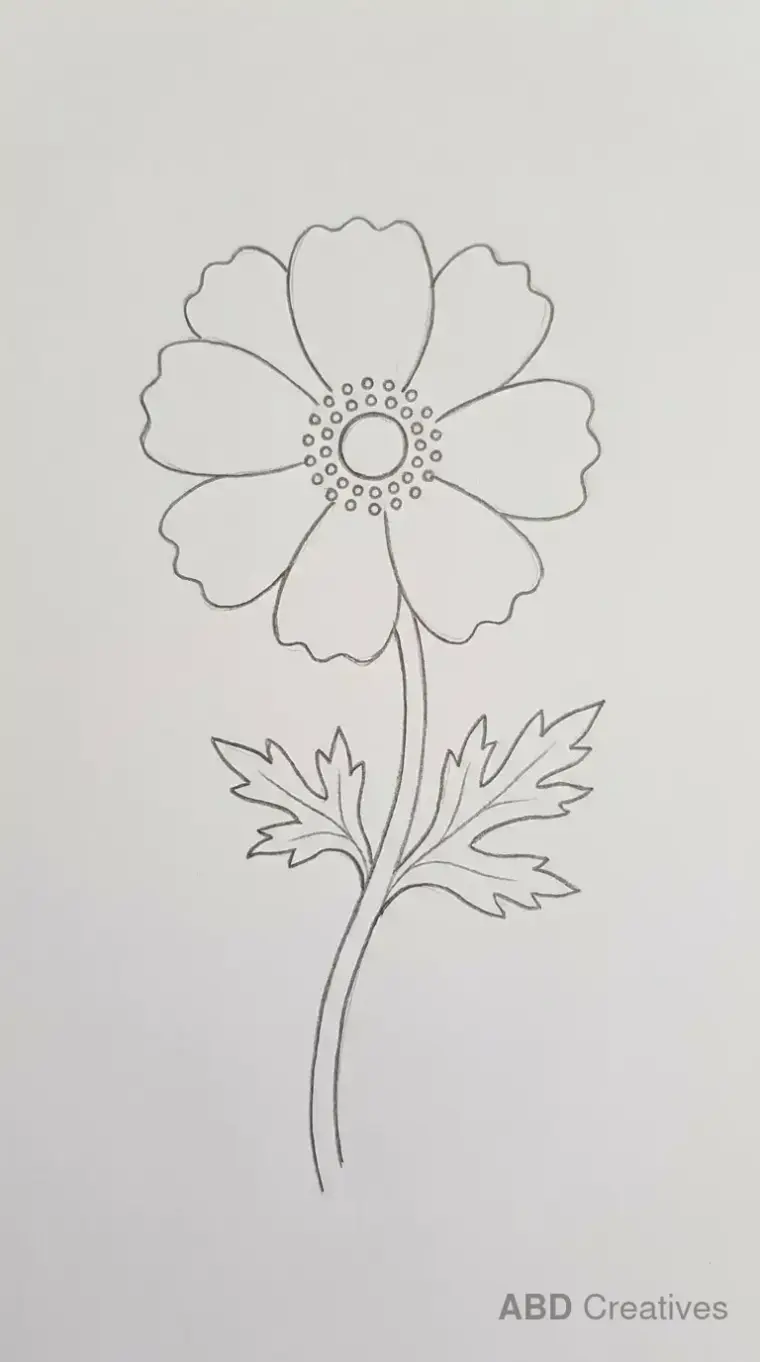
Single Carnation Bloom in Full View

Single Carnation Bloom in Full View Save

A single carnation drawn from the front is the ideal starting point for any beginner. This view lets you practice the layered petal structure without worrying about foreshortening or complex angles. The flower reads clearly at a glance and makes a lovely small sketch that fits easily in an art journal or greeting card.

Step-by-Step Instructions:

  • Step 1: Draw a small horizontal oval shape near the center of your paper. This is the base of the flower head and should be roughly one inch wide.
  • Step 2: Add a row of curved C-shaped petals sitting on top of the oval. Draw five to six petals that each curve outward and slightly upward from the oval’s top edge.
  • Step 3: Add a second row of petals behind the first. These petals should be slightly taller and fan out a little wider, peeking out from between the first-row petals.
  • Step 4: Add a third and final row at the very back. These petals are the tallest and widest, creating the full, round silhouette of a carnation. Make the top edges slightly jagged with tiny notches.
  • Step 5: Draw a short, straight stem dropping down from the center of the oval. Add two small pointed sepals at the base of the flower head where the stem meets the bloom.

Side View Carnation Sketch

Side View Carnation Sketch Save

Drawing a carnation from the side reveals its beautiful trumpet-like base, which gives the flower its distinctive silhouette. This angle is slightly different from the front view and teaches you how the petals swell outward from a narrow calyx. It is a great second step after practicing the front view.

Step-by-Step Instructions:

  • Step 1: Draw a narrow cup or vase shape in the center of your paper. This cup represents the calyx, the green base that holds the petals. It should be about half an inch wide and a quarter inch tall.
  • Step 2: From the top opening of the cup, draw petals curving upward and outward on both sides. The petals on the left side curve left and the petals on the right side curve right, creating a wide, rounded top.
  • Step 3: Add more petals filling in the center of the flower top. These petals should be shorter and more tightly packed, suggesting the dense interior of the bloom.
  • Step 4: Add tiny jagged notches along the top edges of the outermost petals. This detail is what distinguishes a carnation from other flowers and takes only a few seconds to add.
  • Step 5: Draw a straight stem extending downward from the bottom of the cup. Add one small pointed leaf partway down the stem.

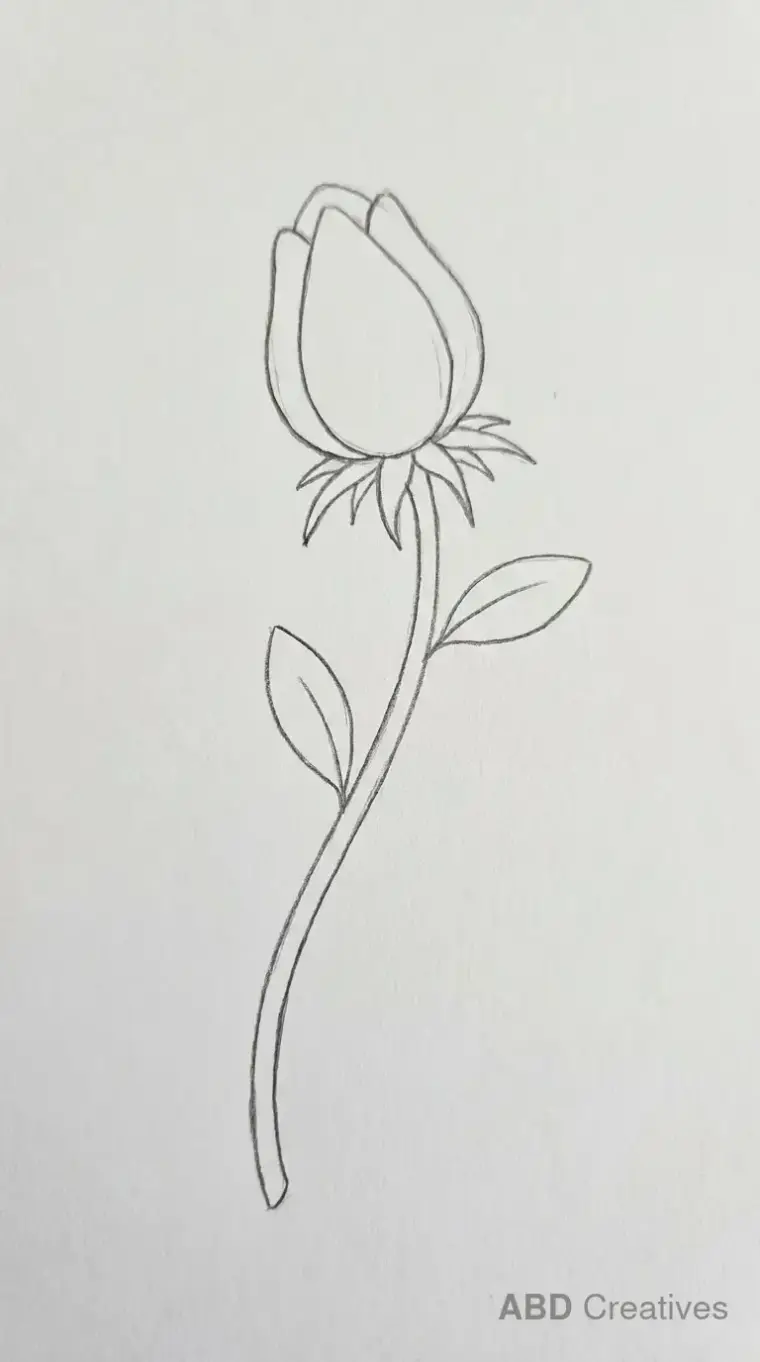
Carnation Bud Drawing

Carnation Bud Drawing Save

A carnation bud is a young flower that has not yet fully opened. It has a slim, elegant shape that is easier to draw than the full bloom and looks beautiful paired with an open flower in a larger arrangement. Learning to draw the bud also helps you understand how the flower grows.

Step-by-Step Instructions:

  • Step 1: Draw a small narrow oval in the upper-center area of your paper. This oval should be about half an inch tall and a quarter inch wide. It represents the tightly closed petals.
  • Step 2: Add a few short curved lines peeking out from the very top of the oval. These suggest the petals beginning to open at the tip of the bud.
  • Step 3: Below the oval, draw a narrow cup shape snugly fitted around the bottom of the oval. This is the calyx. Add three or four small pointed tips along the bottom edge of the calyx, pointing downward.
  • Step 4: Draw a straight stem coming down from the calyx. The stem of a bud tends to be slightly slimmer than that of a full bloom. Add one or two small narrow leaves branching off the stem at an upward angle.

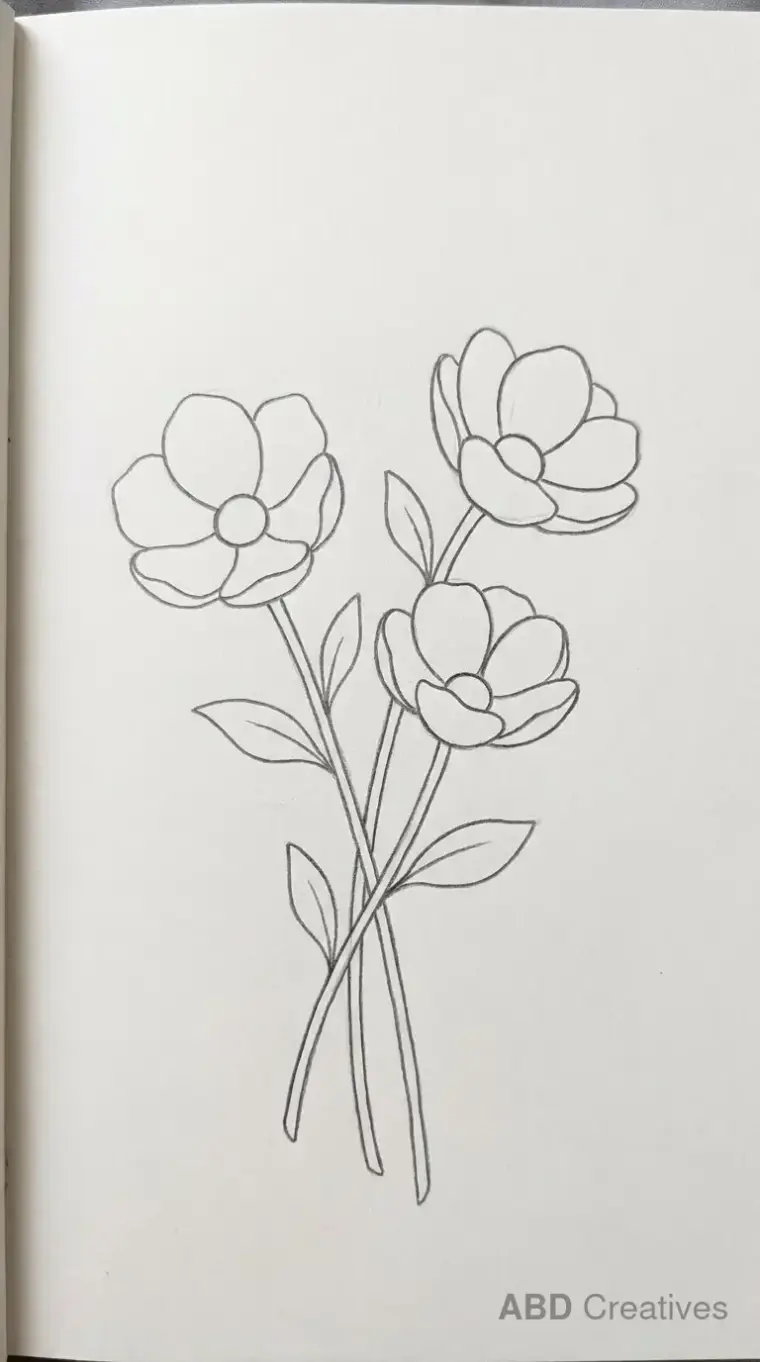
Carnation Bouquet Drawing

Carnation Bouquet Drawing Save

A small bouquet of carnations is a wonderful project that combines multiple blooms, stems, and leaves into a single pleasing composition. It looks elaborate, but because each individual flower uses the same simple shapes you already practiced, it is very achievable for a beginner.

Step-by-Step Instructions:

  • Step 1: Lightly sketch three small circles arranged in a loose triangular cluster near the upper half of your paper. These mark the position of your three flower heads. Make them roughly equal in size, about one inch across each.
  • Step 2: Draw the carnation petal layers inside each circle, following the same three-row method from the single bloom idea. Allow the flowers to overlap slightly at their edges where they are closest together.
  • Step 3: Draw stems curving downward from each flower head, converging toward a single point at the bottom of the bouquet. Stems can cross each other slightly for a natural look.
  • Step 4: Add two or three elongated leaves along the outer stems, angled upward and outward to frame the bouquet.
  • Step 5: At the point where all the stems meet, draw a simple ribbon bow. The bow is made of two D-shaped loops on either side of a small central knot, with two ribbon tails curving downward.

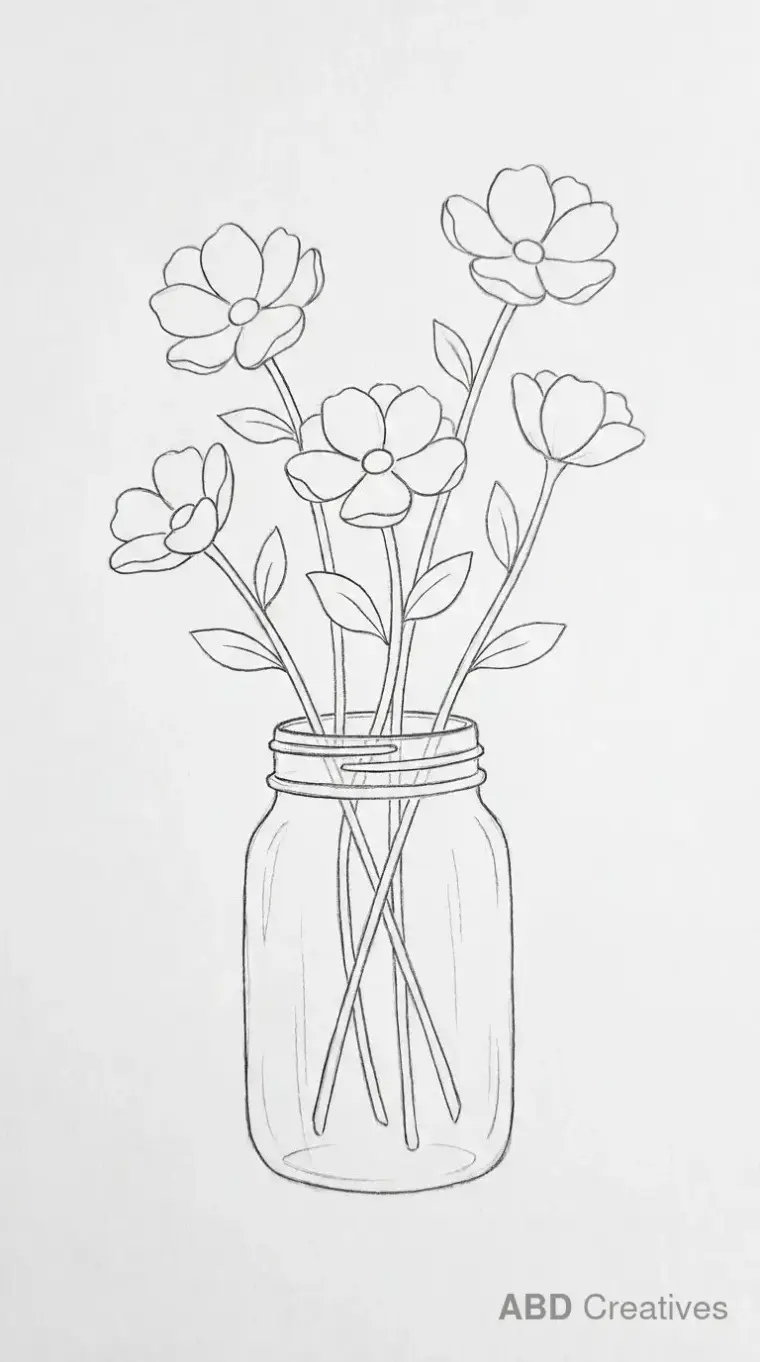
Carnation in a Vase Drawing

Carnation in a Vase Drawing Save

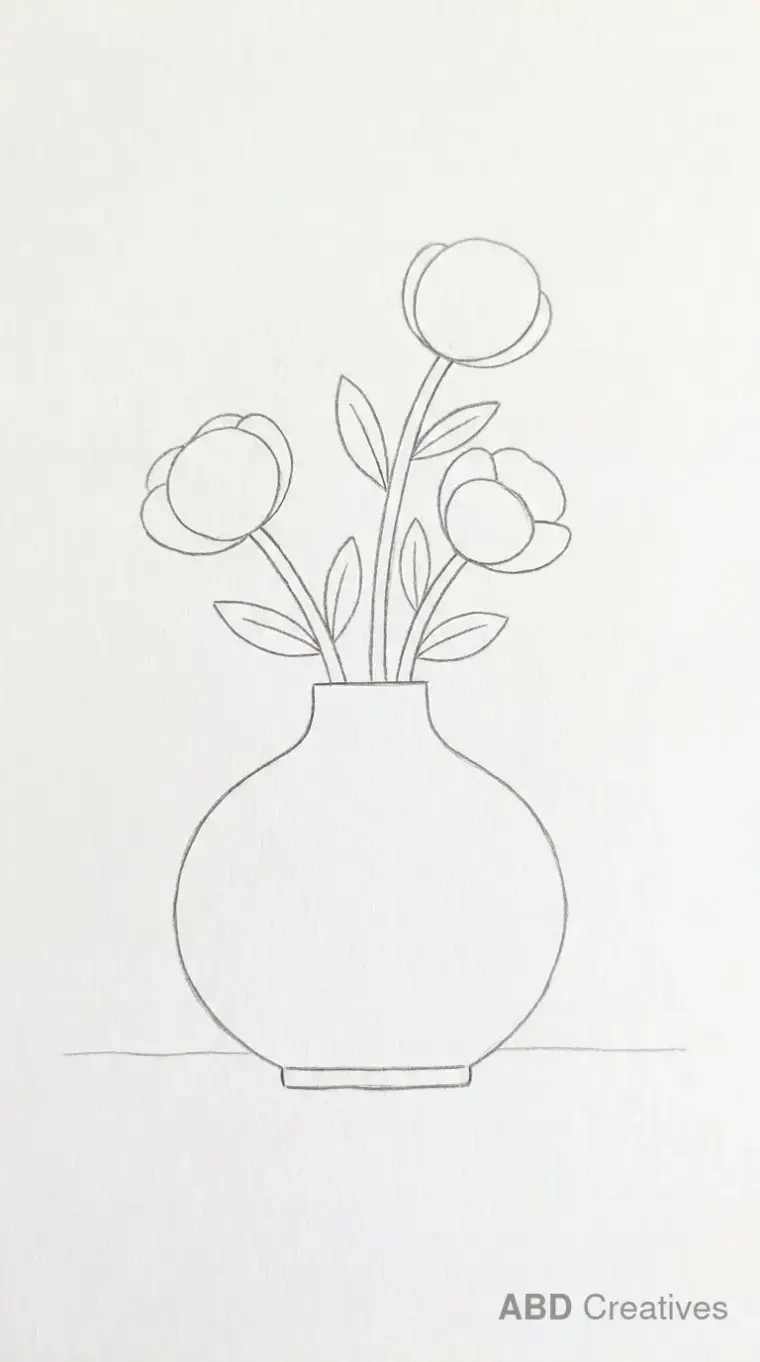
Drawing a carnation in a vase adds context and creates a charming still-life composition. This idea introduces a simple cylindrical vase shape as a new element, which is excellent practice for drawing symmetrical containers alongside organic flowers.

Step-by-Step Instructions:

  • Step 1: Draw a simple vase in the lower half of your paper. Start with a wide oval for the opening at the top. Below the oval, draw two slightly curved lines going downward and angling inward slightly, then curving back out at the bottom. Close the bottom with a small oval.
  • Step 2: Draw two or three carnation stems rising out of the vase opening. The stems should extend several inches above the top of the vase at slightly different heights and angles.
  • Step 3: Draw one fully open carnation at the top of the tallest stem using the three-layer petal method. Add a carnation bud at the top of one of the shorter stems.
  • Step 4: Add two or three leaves along the stems, branching off at gentle upward angles.
  • Step 5: Add a simple horizontal line just below the vase opening to suggest a water line inside the vase.

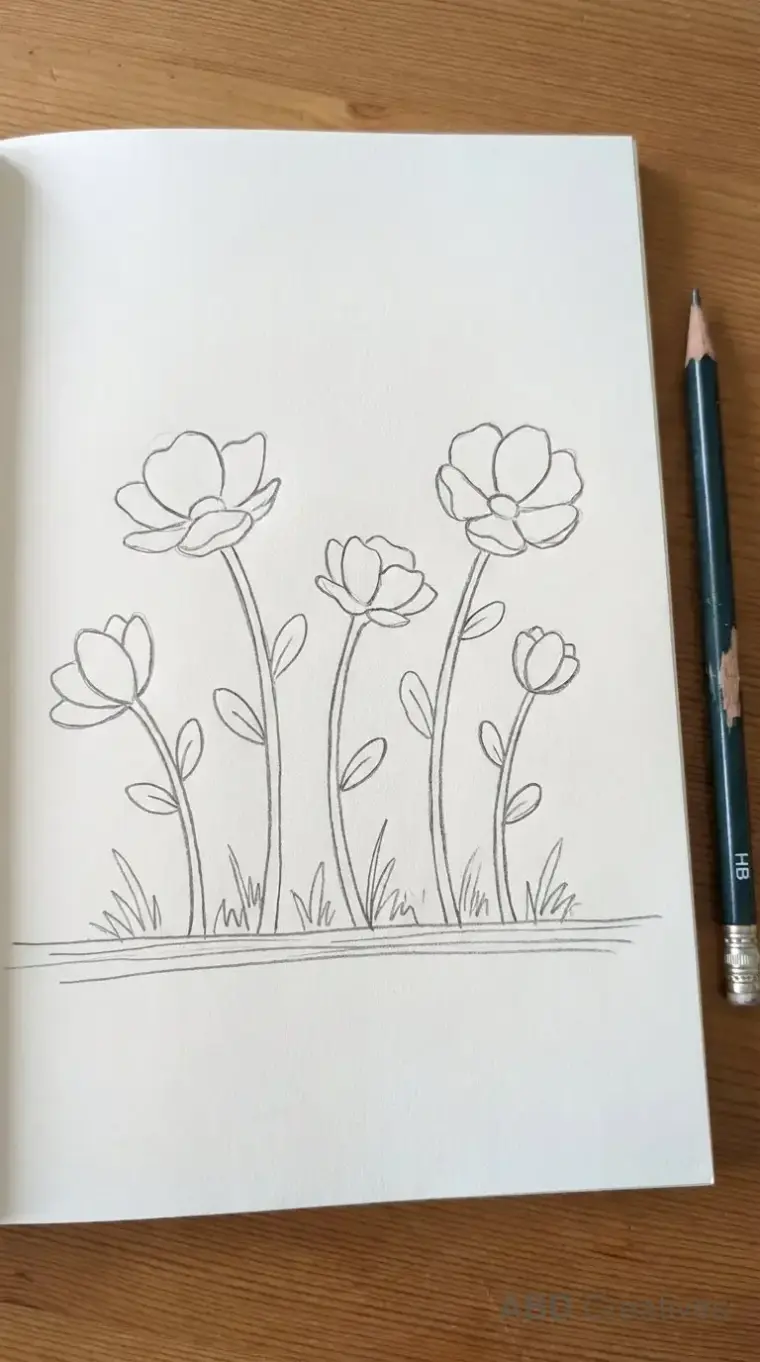
Carnation with Leaves and Stem Full Plant Drawing

Carnation with Leaves and Stem Full Plant Drawing Save

This idea invites you to draw a carnation as a complete plant from root to bloom, including a long jointed stem with multiple leaves. It is a great way to understand the full structure of the plant and produces a tall elegant drawing that fits beautifully in a vertical journal spread.

Step-by-Step Instructions:

  • Step 1: Draw one fully open carnation bloom near the top of your paper using the front-view three-layer method.
  • Step 2: From the base of the flower, draw a long straight stem running most of the way down the page. Carnation stems have slightly swollen nodes where the leaves attach. Mark three or four of these with small rounded bumps along the stem.
  • Step 3: At each node bump, add a pair of narrow elongated leaves, one on each side, angling upward and slightly outward. The leaves closer to the flower are shorter; those near the bottom are longer.
  • Step 4: At one of the middle nodes, add a small carnation bud on a short side branch, giving the plant a secondary focal point.
  • Step 5: At the very base of the stem, draw a few short curved lines suggesting the plant emerging from soil or a pot rim.

Carnation Heart Shape Arrangement

Carnation Heart Shape Arrangement Save

This decorative drawing arranges multiple carnation blooms and leaves into the outline of a heart. It is a popular design for greeting cards and Valentine’s art. The trick is to plan the heart outline first, then fill it with flowers.

Step-by-Step Instructions:

  • Step 1: Lightly draw a large heart outline in the center of your paper with a pencil. The heart should be about four inches tall. This is a guide line only and will be erased later.
  • Step 2: Starting at the top center of the heart and working your way around the outline, place small carnation blooms along the heart’s edge. Draw each bloom using the simplified two-layer front view. Make the blooms about half an inch across.
  • Step 3: Fill the interior space of the heart with more carnation blooms, packing them loosely together so they overlap slightly.
  • Step 4: Fill the remaining gaps between flowers with small leaves and short curved stem segments.
  • Step 5: Erase the original heart guide line. The arrangement of flowers now reads as a heart shape on its own.

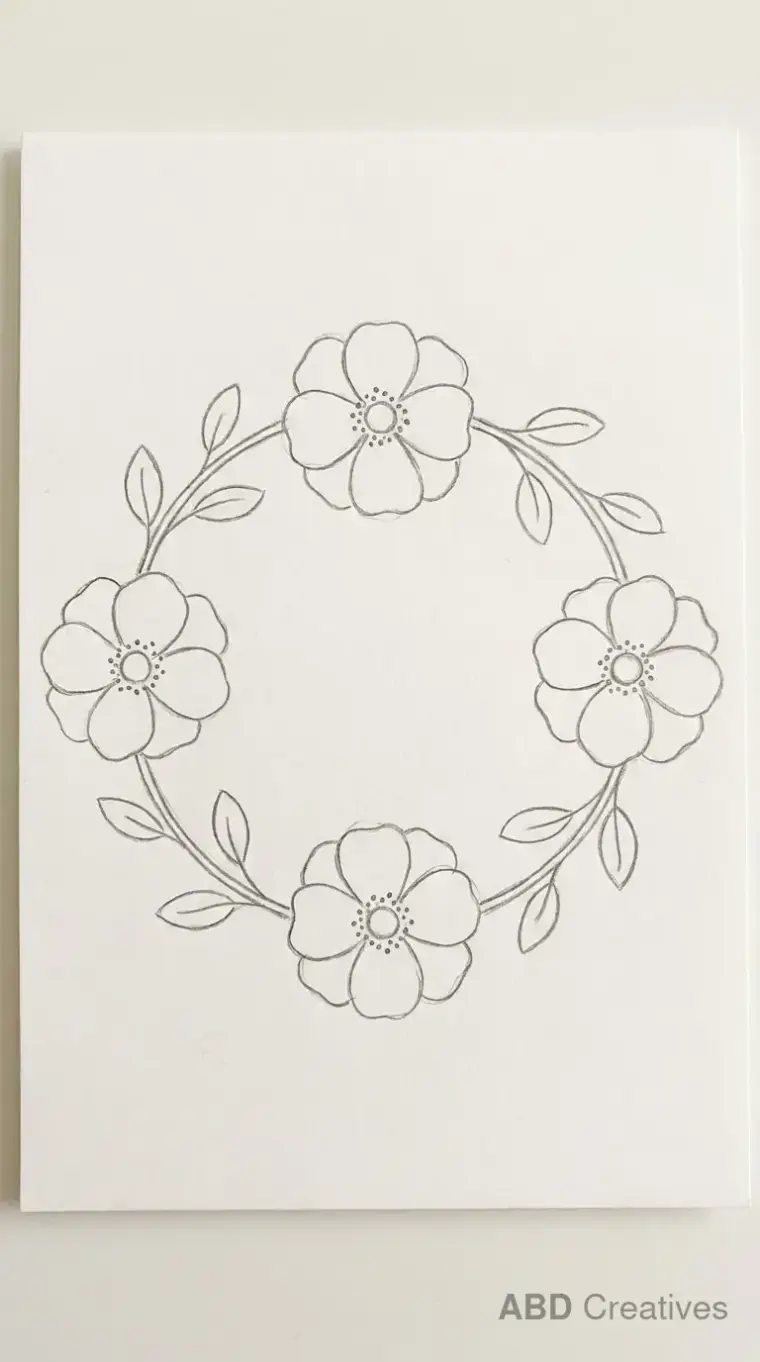
Carnation Wreath Drawing

Carnation Wreath Drawing Save

A circular carnation wreath combines blooms, leaves, and stems into a decorative ring shape. It is a satisfying composition that looks impressive despite being built entirely from elements you have already learned.

Step-by-Step Instructions:

  • Step 1: Lightly draw a large circle guide on your paper using a round object as a template, or draw it freehand. A circle about four inches in diameter works well.
  • Step 2: Place four to five carnation blooms evenly spaced around the circle. Draw each bloom sitting on the guide line, with the stem pointing inward toward the center of the circle.
  • Step 3: Connect adjacent blooms with curved stem lines following the circular guide. These stems create the base ring of the wreath.
  • Step 4: Add leaves branching off the stems, pointing outward away from the center of the wreath. Vary the leaf size slightly for a natural look.
  • Step 5: Erase the original circle guide and add a simple ribbon bow at the bottom of the wreath between the lowest two flowers.

Carnation Corner Border Drawing

Carnation Corner Border Drawing Save

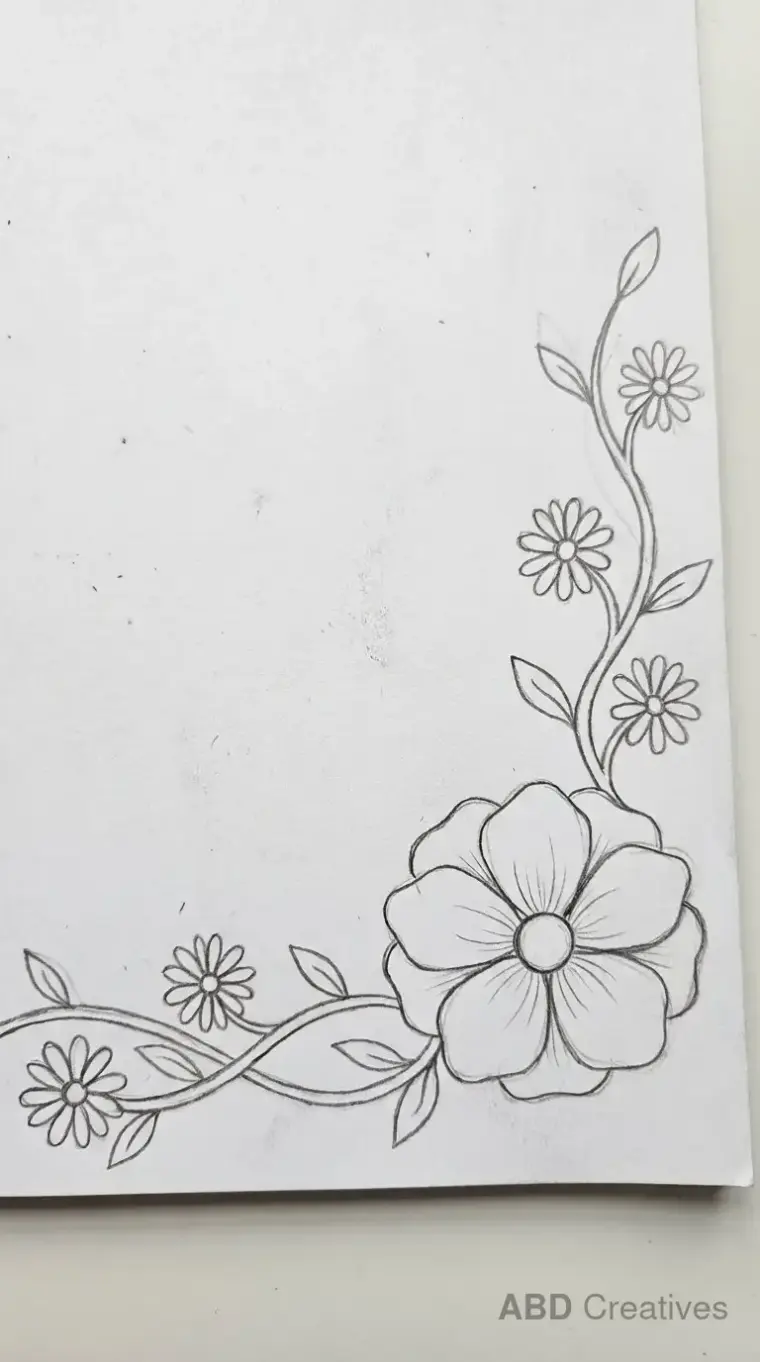
A carnation corner border is a decorative element used to frame the edges of a journal page, card, or art print. It features a diagonal spray of blooms and leaves that radiates from one corner.

Step-by-Step Instructions:

  • Step 1: Pick one corner of your paper. Draw a main curved stem starting right at the corner, curving diagonally inward toward the center of the page. The stem should extend about three inches.
  • Step 2: At the tip of the main stem, draw a fully open carnation bloom using the front-view method.
  • Step 3: Branch two shorter curved stems off the main stem, one branching left and one branching right. Place a carnation bud at the tip of each side branch.
  • Step 4: Add leaves along all three stems. Place larger leaves near the corner and smaller leaves near the tips.
  • Step 5: Add a few small round dots or tiny circular shapes scattered around the corner area to fill in gaps and add decorative detail.

Chibi Style Carnation Character Drawing

Chibi Style Carnation Character Drawing Save

A chibi carnation gives the flower a cute cartoon-like personification with tiny arms, legs, and simple facial features, while still maintaining the classic ruffled carnation petal shape as the head. This is a favorite for kids and character design beginners.

Step-by-Step Instructions:

  • Step 1: Draw a large carnation bloom shape centered at the top of your paper, slightly larger than usual, about two inches wide. This ruffled circular shape is the character’s head.
  • Step 2: Below the flower head, draw a small round body shape. The body should be about half the width of the flower head and sit directly beneath it.
  • Step 3: Add two tiny rounded stick arms extending from each side of the small body. Give each arm a rounded mitten-like hand.
  • Step 4: Add two short rounded legs at the bottom of the body with small rounded feet pointing outward.
  • Step 5: Inside the carnation petal head, draw two small oval eyes in the upper-center area and a small curved smile line below the eyes.

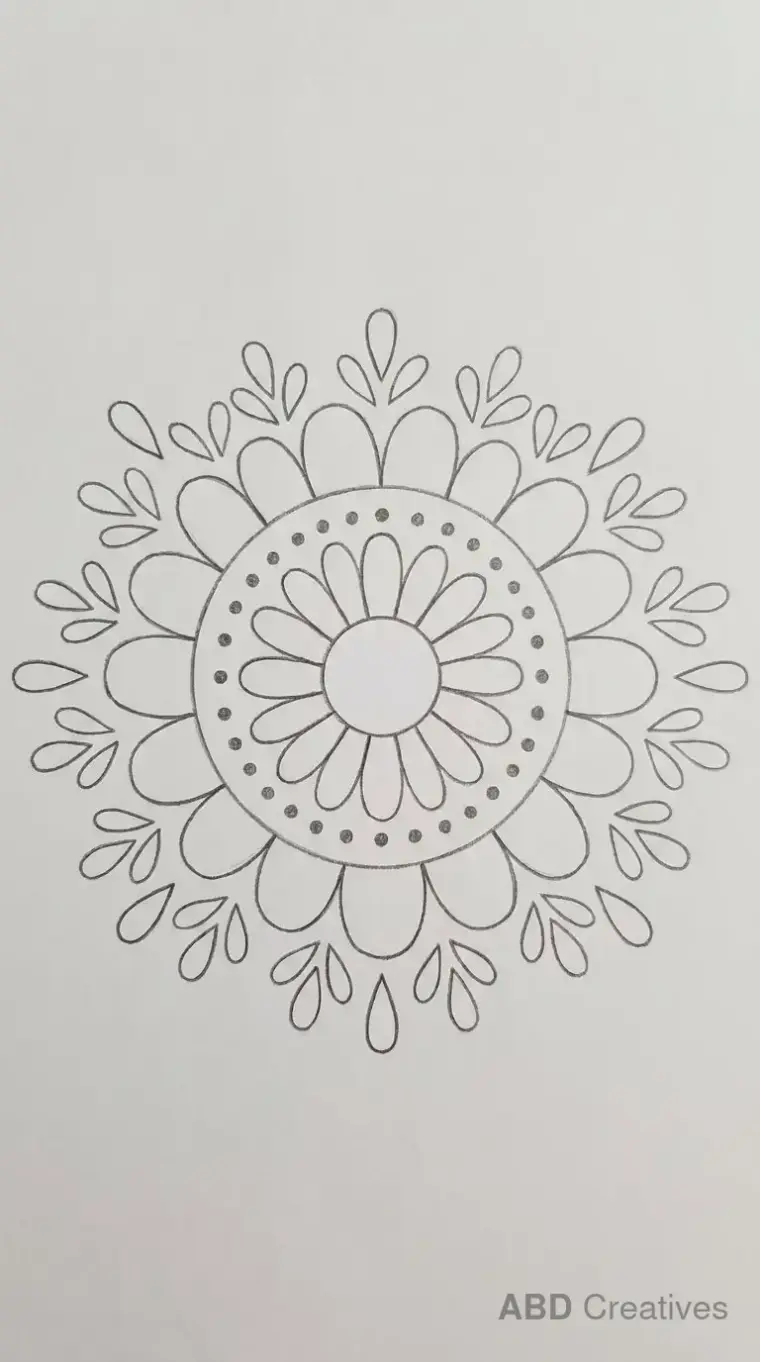
Carnation Mandala Drawing

Carnation Mandala Drawing Save

A carnation mandala arranges stylized carnation shapes in a circular repeating pattern, creating a meditative, symmetrical design. This idea is wonderful for older kids and adults who enjoy detailed pattern work.

Step-by-Step Instructions:

  • Step 1: Draw a small circle in the very center of your paper. This is the core of the mandala.
  • Step 2: Around the center circle, draw eight evenly spaced simplified carnation blooms radiating outward like the spokes of a wheel. Use a clock-face method to ensure even spacing: place flowers at 12, 1:30, 3, 4:30, 6, 7:30, 9, and 10:30 positions.
  • Step 3: Between each pair of adjacent flowers, draw a single elongated leaf pointing outward, giving you eight leaves total in this ring.
  • Step 4: Add a second outer ring of eight smaller carnation buds, positioned between and slightly outside the blooms of the inner ring.
  • Step 5: Draw a thin circle line connecting the bases of all the outer buds to close the mandala design.

Carnation Letter Initial Drawing

Carnation Letter Initial Drawing Save

This idea combines a decorative capital letter with a carnation illustration to create a personalized monogram artwork. The carnation wraps around or grows from the letter shape, making it a meaningful and creative project.

Step-by-Step Instructions:

  • Step 1: Draw a large bold capital letter of your choice in the center of the paper. The letter should be at least three inches tall and drawn with simple thick strokes. A letter like A, B, C, or M works well for this project.
  • Step 2: Draw a long curving carnation stem that begins at the base of the letter, winds along one side of the letter, and ends above the top of the letter.
  • Step 3: Place a fully open carnation bloom at the top tip of the stem, sitting above the letter.
  • Step 4: Add two or three carnation buds branching off the stem at different points along the letter.
  • Step 5: Fill in along the stem with small leaves. Allow some leaves to overlap the edges of the letter slightly for a natural intertwining effect.

. DRAWING TIPS SECTION

Practice the basic petal shape first

. Before you attempt a full carnation, spend five minutes drawing just the C-shaped and U-shaped curves that make up individual petals. Getting comfortable with these simple strokes will make the entire flower easier.

Use light guide lines.

Sketch a loose circle or oval first to mark where the full flower head will sit. Build your petals inside this guide. Erase the guide once your petal layers are in place.

Work from the inside out

. Always draw the innermost row of petals first and the outermost row last. This creates a n

atural layering effect that gives the flower depth without any shading.

Keep your pencil sharp.

A sharp HB pencil gives you clean, consistent lines. Blunt pencils produce uneven lines that make the drawing look messy. Sharpen your pencil every few minutes during detailed work.

Do not press too hard.

A light, relaxed pencil grip produces smoother curves. Pressing hard creates stiff lines that are difficult to erase if you make a mistake. Use medium pressure throughout.

Add the jagged petal edges last

. The tiny notches along carnation petal tops are the finishing touch. Add them at the very end so they do not interfere with the overall construction of the flower.

Take breaks between layers.

If the overlapping petal rows start to confuse you, pause, look at your drawing from a distance, and identify which layer you are working on before continuing.

. COMMON MISTAKES SECTION

Making petals too symmetrical. Real carnation petals are irregular and slightly uneven. If your petals look too perfectly matched, they will appear stiff and mechanical. Vary the size and curve of each petal slightly.

Skipping the calyx. Many beginners draw just the petals and stem without the small cup-shaped calyx at the base of the flower. The calyx is an essential part of the carnation’s silhouette. Always include it.

Drawing all petals the same size. The innermost petals are shorter and the outermost petals are larger. If all petals are the same height, the flower loses its layered three-dimensional appearance.

Making the stem too thin or too thick. Carnation stems are slender but not hair-thin. A stem that is too thin will look weak and out of proportion; one that is too thick will look like a tree trunk. Aim for a consistent slim line that is clearly visible.

Forgetting the jagged petal edges. The small notches at the tops of outer petals are what make a carnation look like a carnation rather than a generic flower. This single detail elevates the entire drawing.

Overcrowding petals in a bouquet. When drawing multiple flowers, it is tempting to draw too many petals on each bloom to fill space. Keep each individual flower simple and let the group of flowers create the visual richness.

. FAQ SECTION

How do I draw a carnation petal step by step?

Start by drawing a small curved C-shape for the first petal. Add another slightly larger C-shape beside it, curving in the opposite direction to create a mirrored pair. Continue adding pairs of curved petals in rows, making each outer row slightly larger than the one before it. Finish by adding small jagged notches to the top edges of the outermost petals. This step-by-step approach breaks the carnation petal structure into simple, manageable shapes that any beginner can follow.

What is the easiest carnation drawing idea for kids

? The single front-view carnation bloom is the easiest drawing for kids because it uses only simple oval and C-curve shapes. Start by drawing a small oval as the flower base. Add one row of curved petals on top, then a second row behind those. Finish with a straight stem and two small leaves. The whole drawing can be completed in under five minutes, which makes it perfect for young artists with limited patience for long projects.

How do I make my carnation drawing look realistic without shading?

You can add a sense of depth and realism to a carnation drawing without any shading by using three tricks. First, draw petals in clear layered rows, with inner petals visibly shorter than outer petals. Second, let the outer petals slightly overlap each other where they meet, which creates a natural sense of arrangement. Third, add the small jagged notches to the top edges of the outer petals. These three details together create the recognizable carnation appearance without any shading technique required.

Can I use carnation drawings for greeting cards and art journals?

Absolutely. Carnation drawings are one of the most popular floral motifs for handmade greeting cards, art journals, gift tags, and decorative stationery. A single bloom fits neatly on a small card. A bouquet arrangement works beautifully as a full journal page spread. The corner border and wreath designs are especially useful as decorative frames for written text on cards and journal pages. Because these drawings use only pencil outlines, you can also trace over them with fine-line pens or watercolor markers if you want to add color.

Category: Flowers Drawing Ideas

Leave a Reply Cancel reply

Your email address will not be published. Required fields are marked *

Recent Posts

  • 12 Cat Drawing Ideas for Beginners – Easy Step-by-Step Tutorials
  • 13 Monkey Drawing Ideas for Kids and Beginners (Easy Step-by-Step)
  • 12 Easy Fox Drawing Ideas for Beginners
  • 12 Bear Drawing Ideas for Beginners (Easy Step-by-Step Tutorials)
  • 12 Chicken Drawing Ideas That Are Easy and Fun for Beginners

Categories

  • Animal Drawing Ideas
  • Easy Drawing Ideas
  • Flowers Drawing Ideas
© 2026 ABD Creatives | Powered by Minimalist Blog WordPress Theme