Skip to content

ABD Creatives

Where Creativity Comes to Life

Menu
  • Home
  • Easy Drawing Ideas
  • About Us
Menu
Genbenya Cluster Flower

13 Genbenya Flower Drawing Ideas That Are Simple and Beautiful for Beginners

Posted on May 10, 2026 by absayyed4@gmail.com

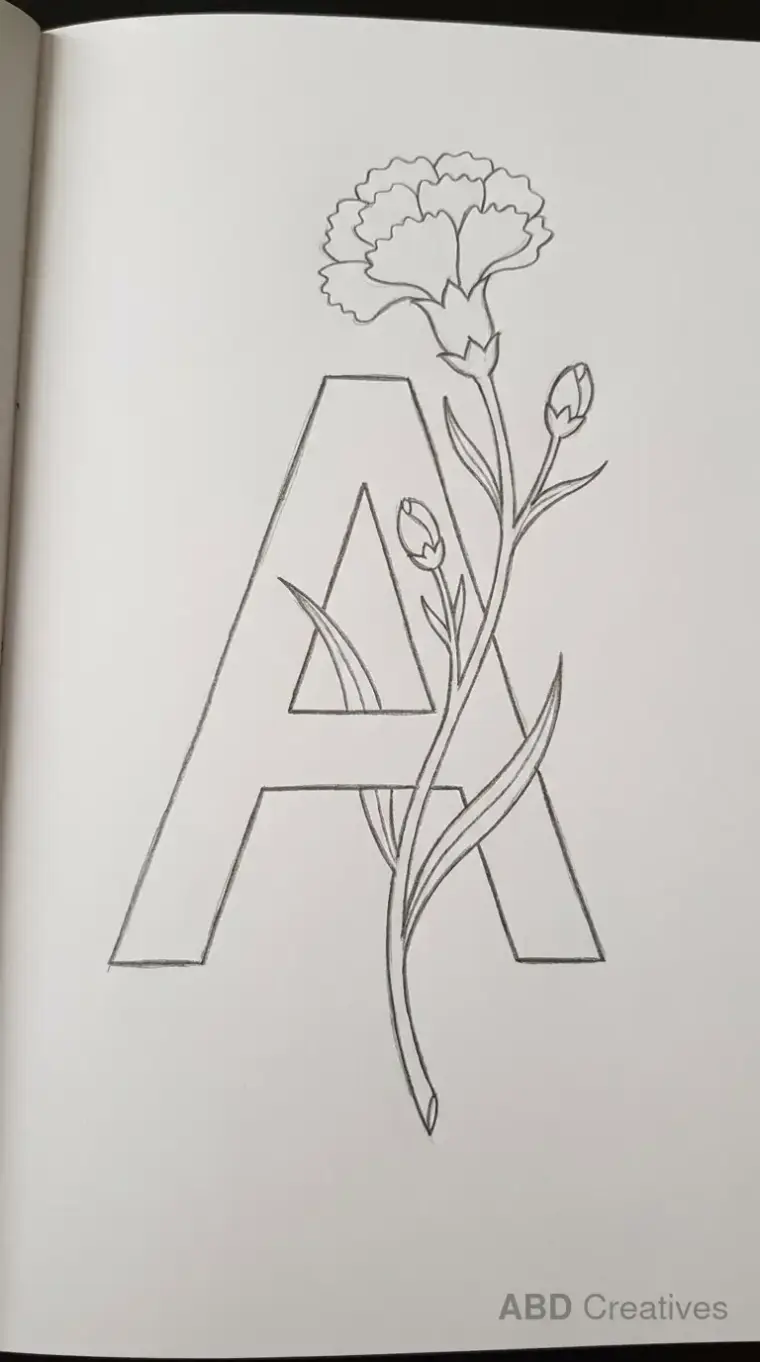
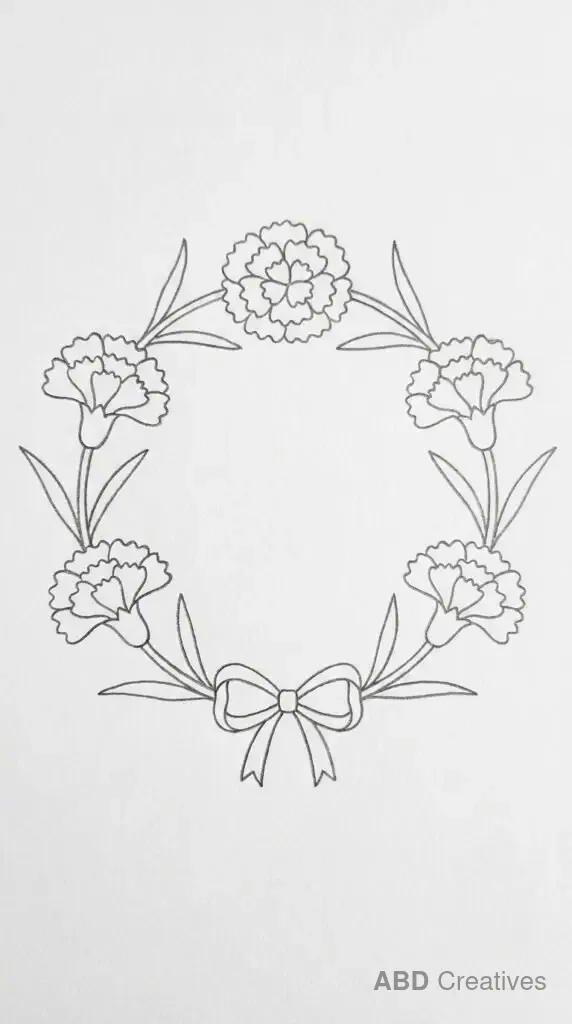
Have you ever wanted to fill a sketchbook with beautiful flower drawings but felt unsure where to begin? Many beginners open a blank page, stare at it for a few minutes, and then close the book without drawing a single line. The problem is not a lack of talent. The problem is not having a clear, simple starting point. That is exactly what this collection of genbenya flower drawing ideas is designed to solve. Each idea in this guide begins with a basic shape and builds from there in steps that anyone can follow, including young children.

Genbenya flowers are known for their expressive, stylized petal arrangements and their ability to look decorative and thoughtful without requiring advanced technique. Drawing them does not mean copying a photograph or memorizing complicated anatomy. Instead, you will use simple shapes like circles, ovals, curved lines, and gentle arcs to create each flower from scratch. None of the ideas in this guide require shading. Every drawing is built entirely from clean pencil outlines so you can focus on getting comfortable with your lines before adding any extra complexity.

Whether you are a child picking up a pencil for the first time, a student who wants a calm creative habit, or an adult looking for simple and satisfying art projects, these 13 genbenya flower drawing ideas will give you exactly what you need. Each idea comes with a full step-by-step walkthrough, a placement guide, and an image prompt so you know what the finished result should look like. Work through them in order or jump to whichever flower catches your eye first. There is no wrong way to begin.

Genbenya Round Petal Bloom

Genbenya Round Petal Bloom Save

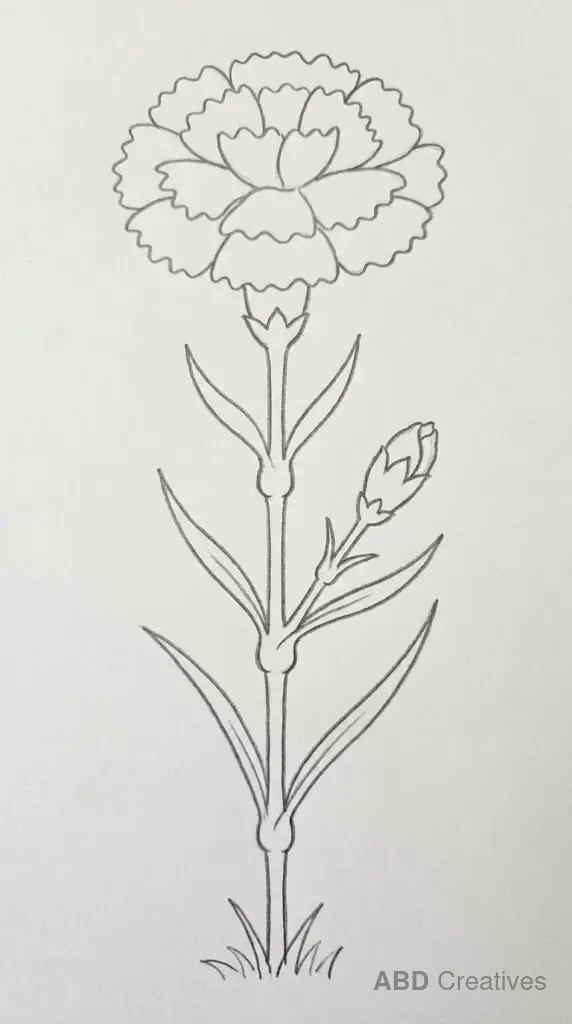
The round petal bloom is the most foundational genbenya flower shape and the perfect starting point for beginners. It is built from a central circle surrounded by broad rounded petals that overlap slightly at their edges. This shape teaches you how to work outward from a center point, which is a skill you will use in nearly every other flower drawing. The result looks full and polished even with minimal effort.

Step-by-Step Instructions:

  1. Draw a circle in the center of your page roughly the size of a large coin. Press lightly with your HB pencil so you can adjust it if needed.
  2. Around the outside of the circle, draw five broad rounded petals. Each petal should be about twice as wide as the circle and slightly cupped, meaning the sides curve gently inward before rounding at the tip.
  3. Let each petal overlap slightly with the ones on either side at the base where they meet the center circle. This creates a layered look.
  4. Add small short lines radiating outward from the center circle to suggest stamen or petal detail.
  5. Draw a short straight stem from the base and add two small oval leaves, one on each side of the stem at different heights.

Genbenya Four Petal Square Flower

Genbenya Four Petal Square Flower Save

The four petal square flower is a structured and satisfying shape that introduces beginners to drawing symmetrical arrangements. Because the four petals point in the four cardinal directions, it is easy to keep them evenly spaced. This genbenya flower variation has a graphic quality that looks striking on journal pages, greeting cards, and pattern borders.

Step-by-Step Instructions:

  1. Draw a small circle in the center of your page. This will be the flower core.
  2. From the top of the circle, draw one broad rounded petal pointing straight upward. The petal should be about three times the height of the circle and rounded at the tip.
  3. Repeat the same petal shape pointing straight downward, then to the left, and then to the right. All four petals should be equal in size.
  4. Between each petal, draw a small narrow pointed shape like a thin teardrop pointing outward. These are the sepals that peek between the main petals and add visual interest.
  5. Add a short stem at the base and two small heart-shaped leaves branching from it.

Genbenya Layered Cup Flower

Genbenya Layered Cup Flower Save

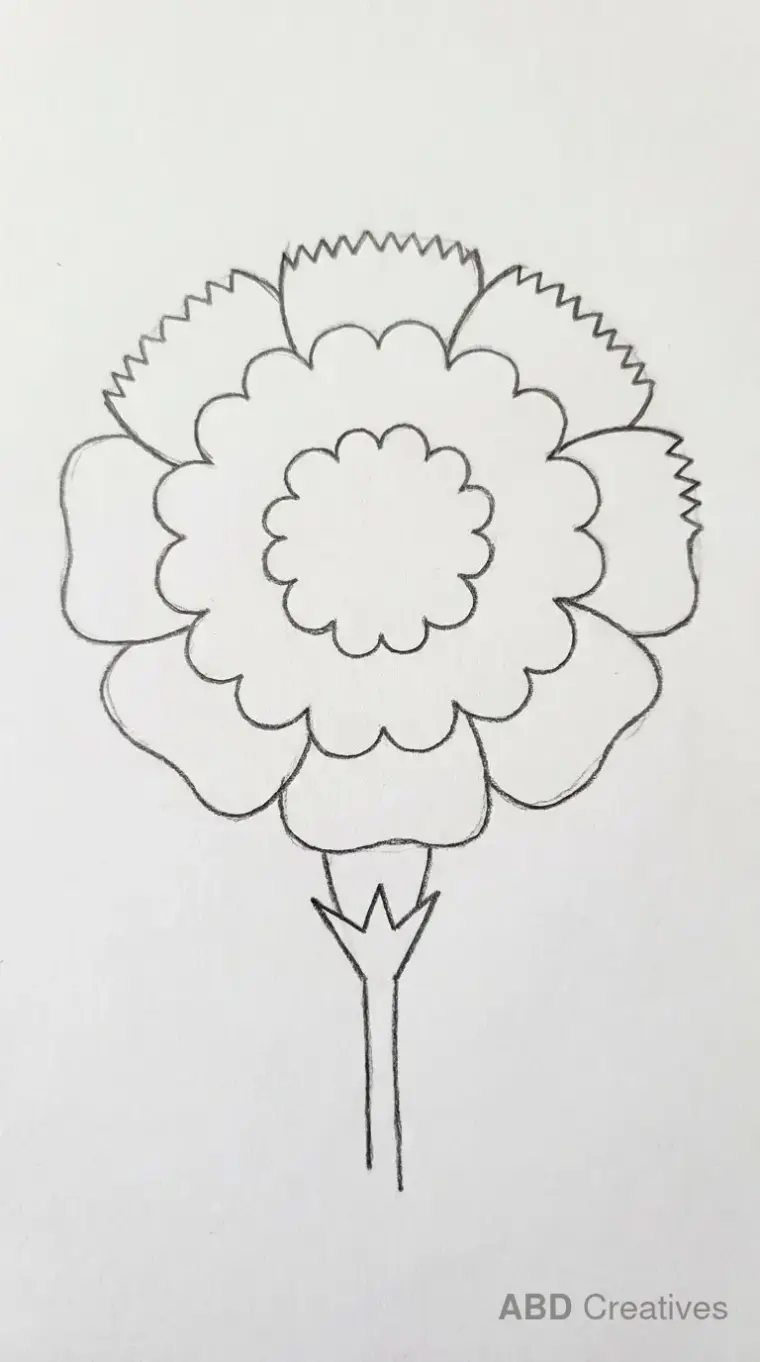
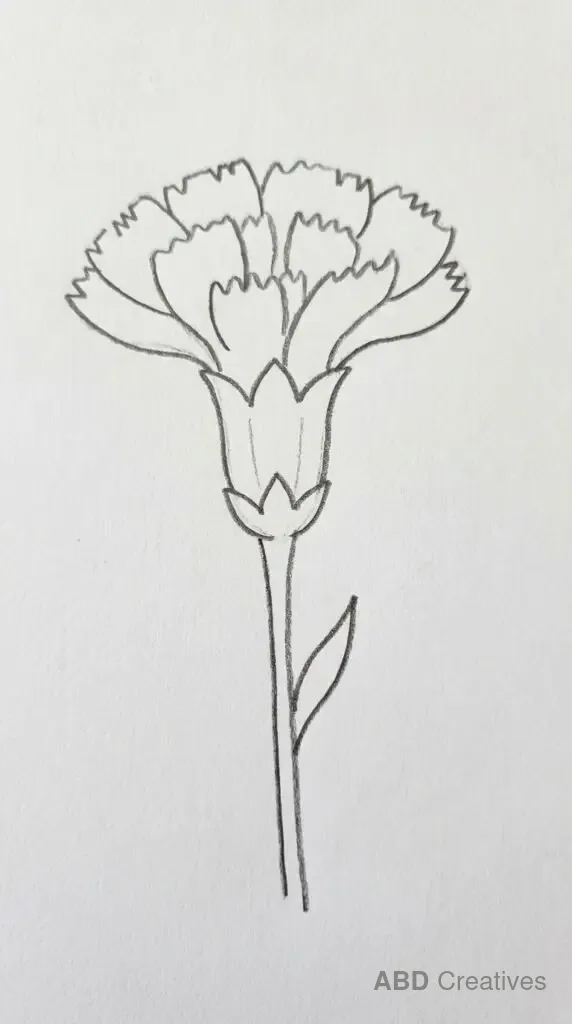
The layered cup flower is a genbenya style that uses two rings of petals to create a sense of depth and fullness. The inner petals are shorter and more upright while the outer petals are longer and spread outward. This two-layer approach makes the drawing look more complex than it actually is and gives beginners a taste of how layering transforms a simple flower into something impressive.

Step-by-Step Instructions:

  1. Draw a small oval in the center of your paper, slightly taller than it is wide. This is the inner bud area of the flower.
  2. Around the oval, draw five short upright petals hugging close to it. These are the inner petals and they should point slightly inward at their tips.
  3. Behind the inner petals, draw five larger petals that spread outward and downward. Position each outer petal in the gap between two inner petals so they alternate.
  4. Below the layered bloom, draw a curved cup shape to suggest the base calyx where the petals emerge from the stem.
  5. Add a thick stem below the calyx with two broad leaves that curve gently downward, their tips pointing slightly toward the ground.

Genbenya Pointed Star Flower

Genbenya Pointed Star Flower Save

The pointed star flower takes the genbenya floral style in a bolder direction. Instead of soft rounded petals, this version uses narrow pointed petals that radiate from the center like a starburst. The angular quality of the petals gives the flower a more graphic and energetic look. It is a wonderful choice for decorating borders and notebook covers.

Step-by-Step Instructions:

  1. Draw a small tight circle in the center of your page to serve as the flower core.
  2. Draw one narrow pointed petal extending straight upward from the circle. The petal should be long, tapering from a slightly wider base to a sharp tip.
  3. Add six more identical pointed petals evenly spaced all the way around the center circle. Take your time spacing them to keep the starburst balanced.
  4. Between each pointed petal, draw a very small narrow petal half the length of the main petals. These fill the gaps and add texture.
  5. Draw a slender stem and two narrow lance-shaped leaves, one longer and one shorter, on opposite sides of the stem.

Genbenya Spiral Center Flower

Genbenya Spiral Center Flower Save

This genbenya flower drawing idea uses a spiral in the center to create an eye-catching focal point before the petals are even drawn. The spiral adds a sense of movement and energy to what would otherwise be a simple round center. Beginners find this drawing especially satisfying because the spiral is quick to draw and immediately makes the whole composition feel more interesting and intentional.

Step-by-Step Instructions:

  1. In the center of your page, draw a small spiral starting from a central dot and curling outward in two full rotations. Keep the spiral loose and relaxed rather than tight and compressed.
  2. Around the outside of the spiral, draw six medium-sized rounded petals evenly spaced. Each petal should be a simple broad oval.
  3. Add a second outer ring of petals in the gaps between the first ring petals. Make these outer petals slightly longer and more pointed at the tip.
  4. Below the flower, draw a gently curving stem that leans slightly to one side, as if the flower is nodding.
  5. Add two leaves to the stem. Draw one leaf curving upward and one curving downward to give the composition natural balance.

Genbenya Frilled Edge Flower

Genbenya Frilled Edge Flower Save

The frilled edge flower introduces beginners to the idea of adding texture and detail to petal edges without shading. By drawing small wavy bumps along the outer edge of each petal, you instantly create a ruffled, decorative quality that makes the flower look more ornate. This technique is easy to do and produces impressive results with very little practice.

Step-by-Step Instructions:

  1. Draw a circle in the center of your page slightly larger than a coin. This is the flower center.
  2. From the circle, draw five large petals. Draw each petal as a smooth broad shape first, then go back and add small gentle waves or bumps along the outer curved edge of each petal.
  3. Make sure the frilled bumps are small and consistent in size along each petal edge. About four to six bumps per petal edge works well.
  4. Add small dots or tiny circles inside the center circle to suggest the flower’s pollen center.
  5. Draw a medium length stem and add two leaves. Give the leaves a similar frilled treatment along their outer edges to match the flower style.

Genbenya Bell Shaped Flower

Genbenya Bell Shaped Flower Save

The bell shaped flower is a graceful genbenya variation that hangs downward from its stem rather than facing upward. This gives it an elegant drooping quality that feels different from most other flower drawings. The bell shape is built from a simple downward-opening oval or cup, making it one of the more architectural and satisfying flowers in this collection to draw.

Step-by-Step Instructions:

  1. Draw a long curved stem across the upper portion of your page that arcs gently downward like a fishing rod under slight weight.
  2. At the end of the stem where it curves downward, draw the bell flower. Start with a downward-pointing oval that is wider at the open bottom and slightly pinched at the top where it meets the stem.
  3. Inside the open bottom of the bell, draw two or three small lines curving downward to suggest the inner structure of the flower.
  4. At the top of the bell where it meets the stem, draw three or four small pointed sepals curving upward around the base.
  5. Along the curved stem, add two long narrow leaves growing upward from short side stalks.

Genbenya Double Bloom

Genbenya Double Bloom Save

The double bloom is one of the most impressive-looking genbenya flower drawing ideas and yet it is surprisingly approachable for beginners. It uses the same principle as the layered cup flower but takes it further with three rings of petals, each slightly different in size and angle. The result is a lush, full flower that looks like it belongs in a botanical illustration.

Step-by-Step Instructions:

  1. Draw a small circle in the center of your page for the flower core.
  2. Around the core, draw a ring of five short petals pointing inward and upward. These are the innermost petals and they should be small and tightly arranged.
  3. Behind the first ring, draw a second ring of seven slightly larger petals that spread outward. Position each one in the gap between two inner petals.
  4. Add a third outermost ring of five large open petals that angle downward and outward from the flower. These form the outermost layer of the double bloom.
  5. Draw a thick sturdy stem from the base and add three leaves of different sizes arranged naturally along the stem.

Genbenya Oval Bud

Genbenya Oval Bud Save

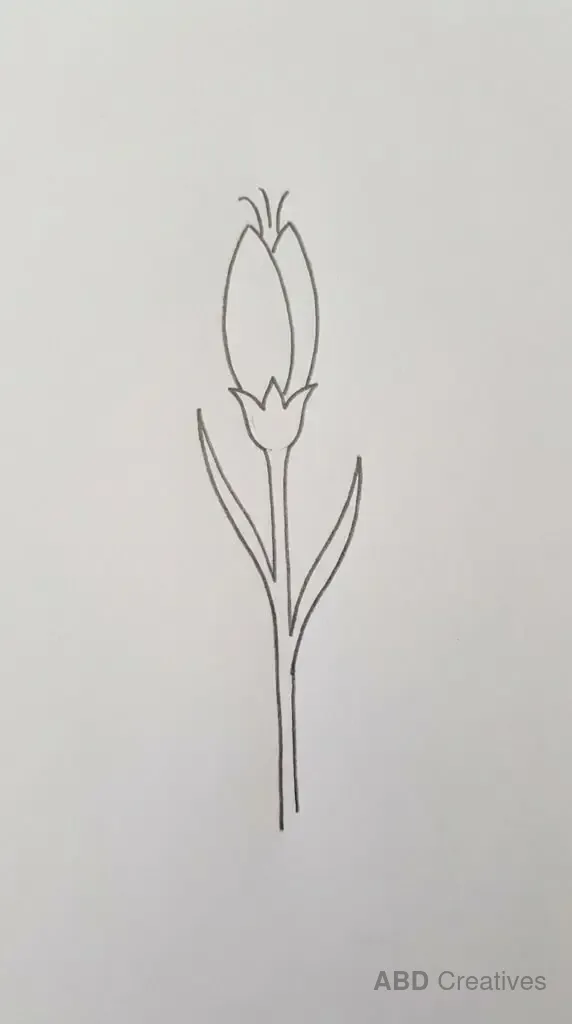
The oval bud drawing is an important companion to any flower tutorial because it shows the flower before it has opened. Buds are simpler to draw than full blooms and they add variety and realism when combined with open flowers in a larger composition. This genbenya bud style uses clean oval shapes and gentle petal suggestions at the tip to look both simple and natural.

Step-by-Step Instructions:

  1. Draw a medium oval shape in the center of your page, slightly taller than it is wide. This is the closed bud.
  2. At the top of the oval, draw two or three small petal tips peeking out from the closed bud. These are just small curved lines suggesting petals about to open.
  3. Along the bottom and sides of the oval, draw three or four narrow pointed sepals curving upward around the bud like a protective hand.
  4. Below the bud, draw a long slender stem. Give the stem a very slight natural curve rather than making it perfectly straight.
  5. Add two narrow leaves of different lengths growing from the stem at a slight upward angle.

Genbenya Vine Flower

Genbenya Vine Flower Save

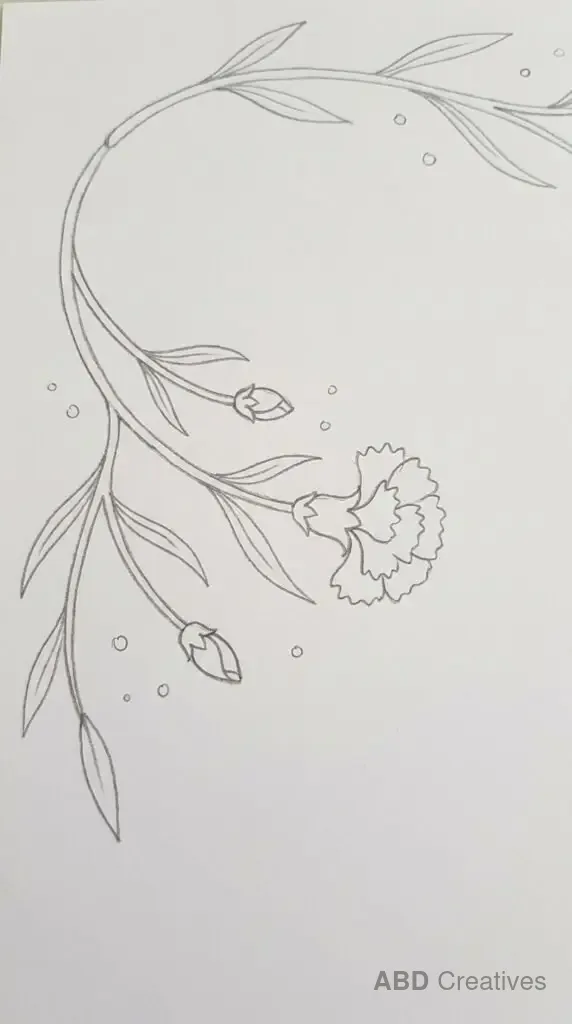
The vine flower expands the genbenya drawing style from a single bloom into a flowing vine composition. This is one of the most versatile drawing ideas in this guide because you can make the vine as long or as short as you like and add as many flowers and leaves as the page allows. It is perfect for practicing how to fill a page naturally without overcrowding.

Step-by-Step Instructions:

  1. Draw a long winding curved line across your page from one side to the other, or from bottom to top in a lazy S shape. This is the main vine.
  2. At three or four points along the vine, add short branching stems curling away from the main vine. These branches will hold the flowers.
  3. At the end of each branch, draw a simple small genbenya flower using the round petal bloom style from earlier in this guide.
  4. Along the vine between the flowers, add small oval or heart-shaped leaves growing on short stalks from the vine. Vary their size and angle.
  5. Add a few small oval buds on some branches that do not have open flowers to give the vine a natural growing quality.

Genbenya Vine Flower

Genbenya Vine Flower 1 Save

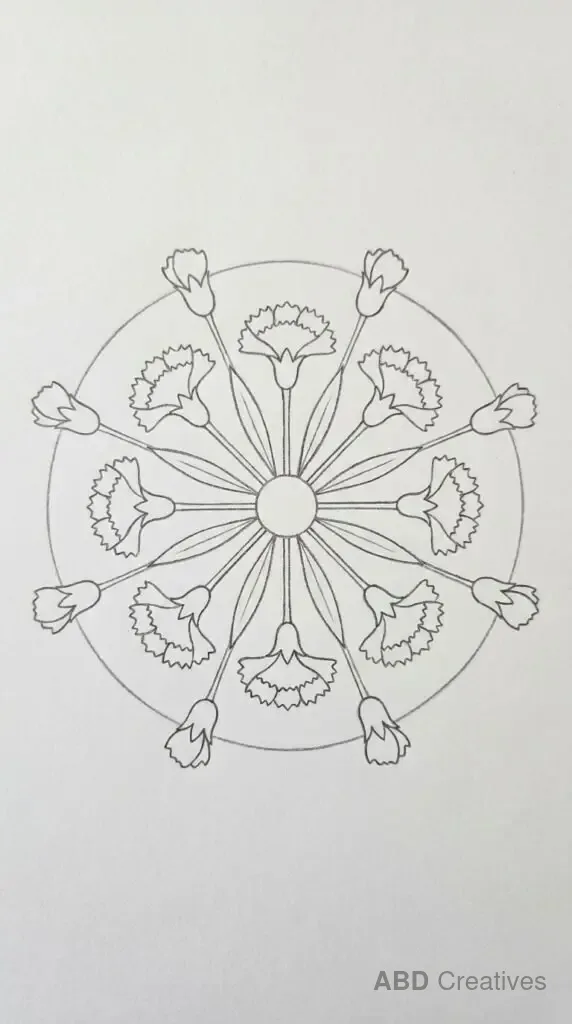
The sunray flower is a genbenya variation that combines a large bold center with long thin petals radiating in all directions, creating a shape that resembles a stylized sun as much as a flower. It is energetic and expressive and gives beginners practice in drawing many uniform lines from a single central point, which is a foundational drawing skill.

Step-by-Step Instructions:

  1. Draw a large circle in the center of your page, roughly the size of a golf ball. This is the sunray center and it should be noticeably larger than the centers in your other flower drawings.
  2. Inside the large circle, draw a smaller circle. Between the outer and inner circles, fill the ring with small pie-slice shapes all the way around to create a textured border.
  3. From the outside of the large circle, draw long thin pointed petals radiating outward in all directions. Aim for 14 to 18 petals placed as evenly as possible.
  4. Between every two main petals, draw one shorter thin petal of about half the length to fill the gaps.
  5. Add a thick stem below the flower with two large broadly oval leaves sitting at a low position on the stem.

Genbenya Teardrop Petal Flower

Genbenya Teardrop Petal Flower Save

The teardrop petal flower uses a distinctive petal shape that is narrow at the base and widens toward the tip before rounding off. This creates a look that is slightly more elegant than a standard round petal and gives the genbenya flower drawing a refined, jewel-like quality. It is a wonderful flower for practicing petal consistency because each teardrop shape must be drawn with the same width and length.

Step-by-Step Instructions:

  1. Draw a small circle in the center of your paper for the flower core.
  2. Draw one teardrop petal pointing straight upward from the top of the circle. The petal is narrow where it meets the circle and gradually widens as it extends outward, then rounds off at the top.
  3. Add five more teardrop petals evenly spaced around the center circle in the same style. All six petals should be the same size.
  4. Draw a second outer ring of six more teardrop petals slightly larger than the first ring, each one positioned in the gap between two inner petals.
  5. Add a slender stem below the flower and two teardrop-shaped leaves, one on each side, mirroring the petal shape used in the flower.

Genbenya Cluster Flower

Genbenya Cluster Flower Save

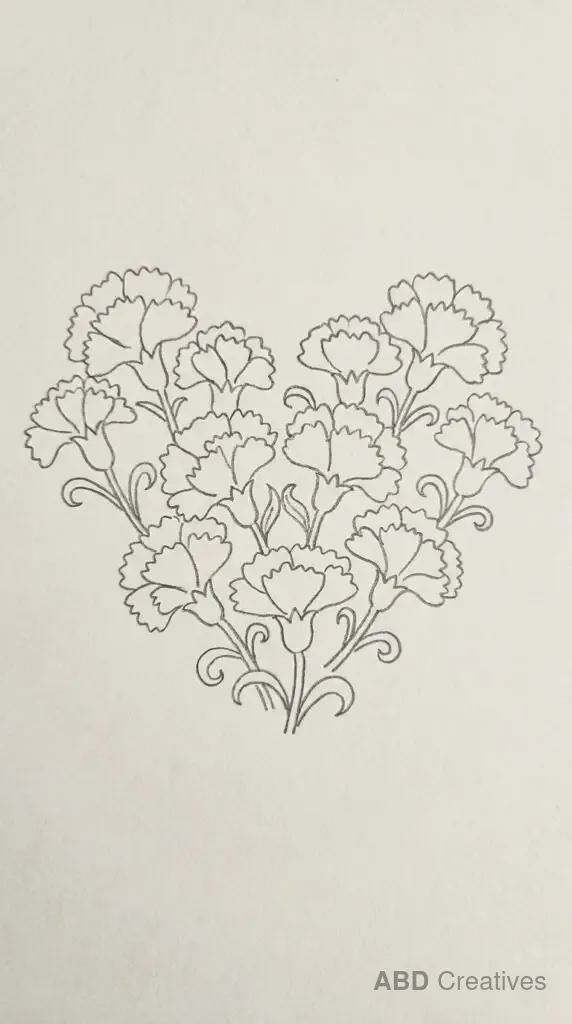
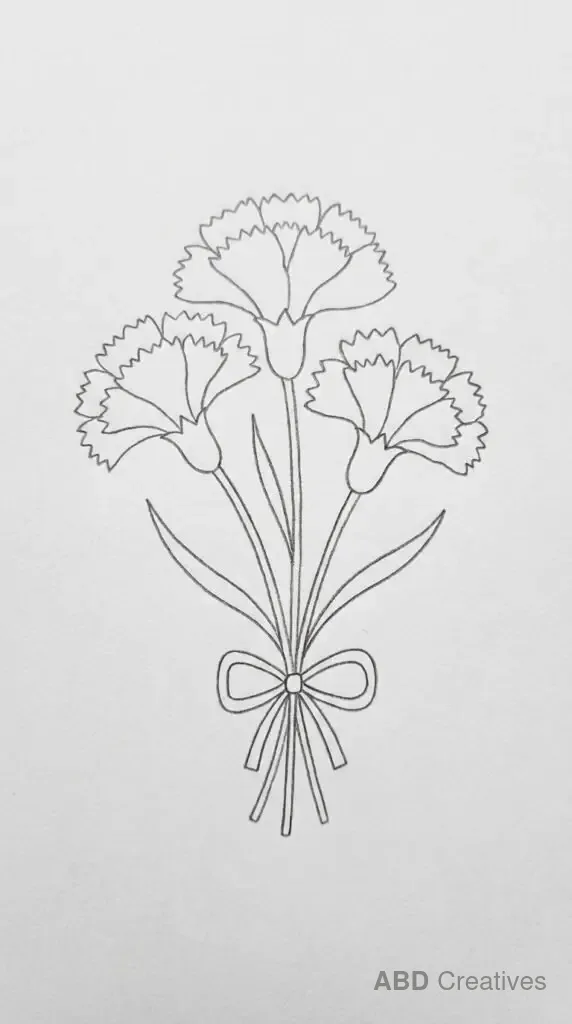
The cluster flower is the final idea in this guide and it brings everything together by showing how a group of small simple genbenya flowers can be drawn together to create a rich and layered composition. Rather than one central bloom, the cluster places three to five flowers of slightly different sizes together in a tight bouquet arrangement. This drawing is perfect for filling a whole page with floral energy.

Step-by-Step Instructions:

  1. Lightly sketch three to five small circle placeholders scattered across the center area of your page at slightly different heights. These mark where each flower in the cluster will sit.
  2. Draw a simple small genbenya flower on each placeholder. Vary the style slightly: use a round petal bloom on one, a pointed star on another, and a four petal flower on a third.
  3. Where the flowers overlap or sit close together, let some petals gently tuck behind other flowers to suggest depth and layering.
  4. Between and below the flowers, add an assortment of small leaves and buds on short stems so the cluster feels full and natural.
  5. Erase the placeholder circles and darken your final outlines with confident medium HB pencil pressure.

Drawing Tips

These practical tips will help you get the most out of every genbenya flower drawing session.

Before you draw any flower, spend thirty seconds sketching the most basic shape lightly on scrap paper. This warm-up stroke helps your hand relax and makes the actual drawing feel easier. Use an HB pencil for all the line work in this guide because it gives the clearest and most balanced graphite lines without being too dark or too faint.

When drawing petals, always work outward from the center. Drawing the center first and then building the petals around it keeps your proportions consistent and prevents the flower from becoming lopsided. If you find petals coming out uneven, draw small guide dots around the center before adding the petals. Place one dot at each position where a petal will begin. This simple trick makes spacing much more accurate.

Keep your pencil sharp throughout the drawing session. A blunt pencil makes lines thick and difficult to control. Sharpening your pencil every few minutes is a habit that noticeably improves line quality. Finally, always erase in long smooth strokes in one direction rather than scrubbing back and forth. Scrubbing damages the paper surface and makes your final lines look fuzzy.

Common Mistakes

The most common mistake beginners make when drawing genbenya flowers is drawing the center circle too large. A flower center that is too big leaves almost no room for the petals to look full and proportionate. Keep your center circle small and let the petals take up the majority of the space.

Another frequent issue is inconsistent petal size. When petals vary too much in width or length, the flower looks accidental rather than intentional. Slow down between petals and compare each new one to the previous one before lifting your pencil.

Many beginners also apply too much pressure from the first stroke. Heavy early lines cannot be adjusted and the grooves they leave in the paper will show through even after erasing. Always begin with light strokes and only darken them once you are satisfied with the shape and placement.

Skipping the stem and leaves is another common shortcut that weakens the final drawing. A flower without a stem and leaves looks unfinished. Even a basic straight stem and two simple oval leaves complete the composition and give the drawing a natural, grounded feeling.

Frequently Asked Questions

What are genbenya flower drawing ideas and why are they good for beginners?

Genbenya flower drawing ideas are stylized floral illustrations built from simple repeating shapes like circles, ovals, and curved lines. They are ideal for beginners because they do not require realistic proportions, shading, or advanced technique. The structured petal arrangements make them easy to learn step by step, and the results look decorative and polished even with minimal practice.

How many steps does it take to draw a genbenya flower?

Most genbenya flower drawings in this guide take between four and six steps to complete. Each step focuses on one element: the center, the inner petals, the outer petals, the stem, and the leaves. Following the steps in order keeps the drawing manageable and ensures each part of the flower is properly proportioned before moving on.

Can I use these genbenya flower drawing ideas for creative journaling and bullet journals?

Yes. These genbenya flower drawings are perfectly suited for creative journaling, bullet journals, and notebook decoration. Their clean outline style works well with any pen or pencil, and the compact petal arrangements fit neatly in page margins, headers, and corner decorations without taking up too much space.

What is the best pencil to use for these genbenya flower drawing tutorials?

An HB pencil is the best choice for all the drawings in this guide. HB sits exactly in the middle of the pencil hardness scale, giving lines that are clear and visible without being too dark or too faint. It also erases cleanly, which is important when you are making adjustments to petal shapes and spacing during the early stages of each drawing.

Category: Easy Drawing Ideas

Leave a Reply Cancel reply

Your email address will not be published. Required fields are marked *

Recent Posts

  • 12 Cat Drawing Ideas for Beginners – Easy Step-by-Step Tutorials
  • 13 Monkey Drawing Ideas for Kids and Beginners (Easy Step-by-Step)
  • 12 Easy Fox Drawing Ideas for Beginners
  • 12 Bear Drawing Ideas for Beginners (Easy Step-by-Step Tutorials)
  • 12 Chicken Drawing Ideas That Are Easy and Fun for Beginners

Categories

  • Animal Drawing Ideas
  • Easy Drawing Ideas
  • Flowers Drawing Ideas
© 2026 ABD Creatives | Powered by Minimalist Blog WordPress Theme