Skip to content

ABD Creatives

Where Creativity Comes to Life

Menu
  • Home
  • Easy Drawing Ideas
  • About Us
Menu
Magnolia Pattern Drawing

12 Magnolia Flower Drawing Ideas for Beginners Step by Step

Posted on May 5, 2026May 5, 2026 by absayyed4@gmail.com

Have you ever looked at a magnolia flower and thought it was too beautiful and complex to draw? You are not alone. Many beginners feel that way when they first see those wide, graceful petals and elegant silhouettes. The good news is that magnolia flowers are actually one of the friendliest flowers for beginner artists. Once you break the petals down into simple oval and teardrop shapes, everything falls into place naturally.

In this article, you will find 12 magnolia flower drawing ideas that are easy to follow, fun to create, and perfect for kids and adults alike. Each idea uses only basic shapes like ovals, curves, and simple lines. There is no shading required and no complicated technique involved. All you need is a pencil, a piece of white paper, and the willingness to try.

Whether you are drawing magnolias for a school project, a greeting card, a bullet journal spread, or just for fun, these ideas will guide you from the very first line to the finished flower. The step-by-step instructions are written in plain, clear English so that anyone can follow along without confusion.

Magnolia flowers have a timeless elegance. Their large open petals and softly curved shapes make them ideal subjects for pencil drawing. They look impressive even as simple outlines, which means you do not need to add shading or color to make your drawing look beautiful. Just clean pencil lines on white paper are enough to create a stunning result.

By the end of this article, you will have a full collection of magnolia drawing ideas to practice, share, or display. Let us get started.

Simple Single Magnolia Bloom Drawing

Simple Single Magnolia Bloom Drawing Save

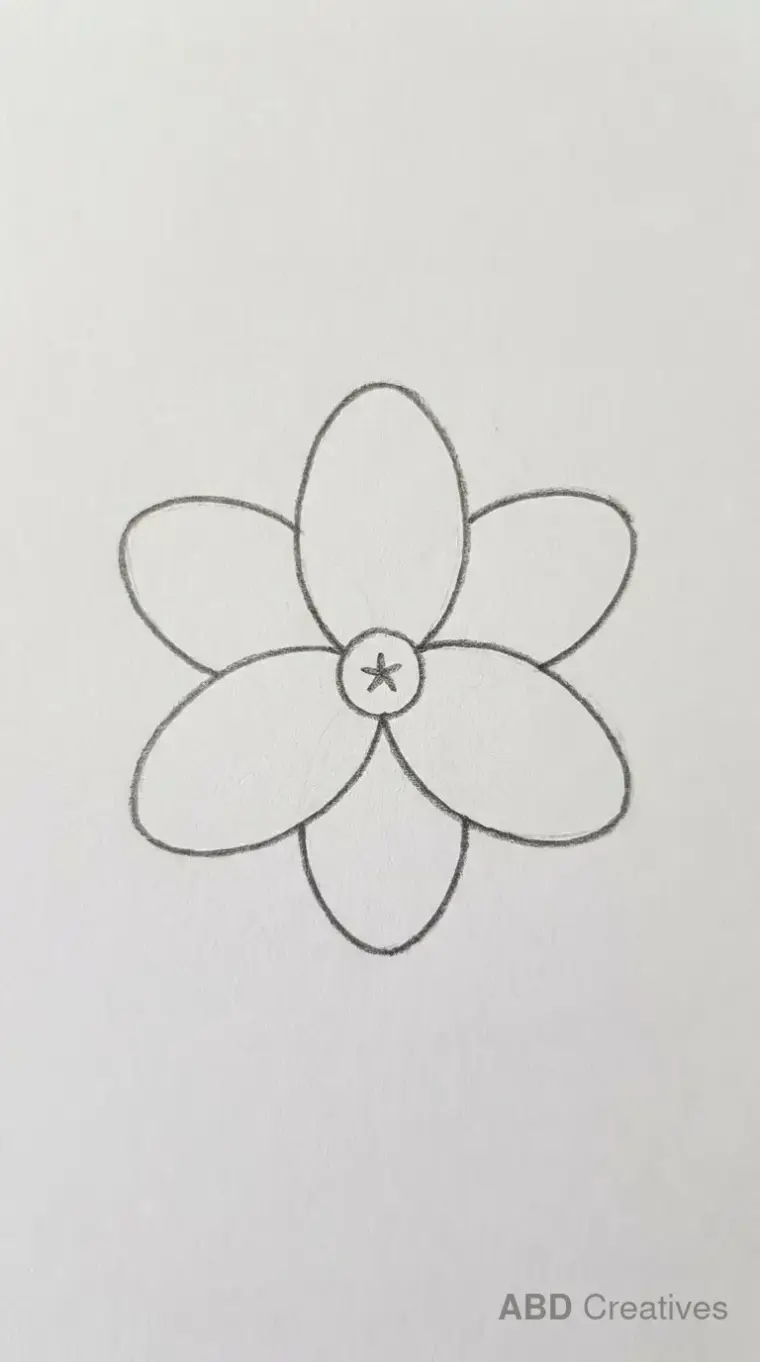
A single magnolia bloom is the perfect starting point for any beginner. This drawing focuses on one open flower with five to six wide petals arranged in a circular shape. It is clean, simple, and instantly recognizable. The goal here is to get comfortable drawing curved petal shapes and understanding how petals overlap slightly at the center.

Step-by-Step Instructions:

  1. Draw a small oval in the center of your paper. This will be the seed pod or center of the magnolia bloom. Keep it about the size of a large coin.
  2. From the center oval, draw three large curved petals that point outward and slightly upward. Each petal should look like a wide teardrop or a rounded tongue shape. Space them evenly around the oval.
  3. Add two to three smaller petals between the first set of petals. These sit slightly behind the front petals and their tips peek out from behind them. Draw them a little shorter and narrower.
  4. Draw a few short, thin lines radiating from the center oval to suggest the stamens in the middle of the flower. Keep these lines delicate and close together.
  5. Add a gentle curved line near the base of the outer petals to show the slight curvature of each petal as it connects to the center.

Magnolia Branch With Two Blooms Drawing

Magnolia Branch With Two Blooms Drawing Save

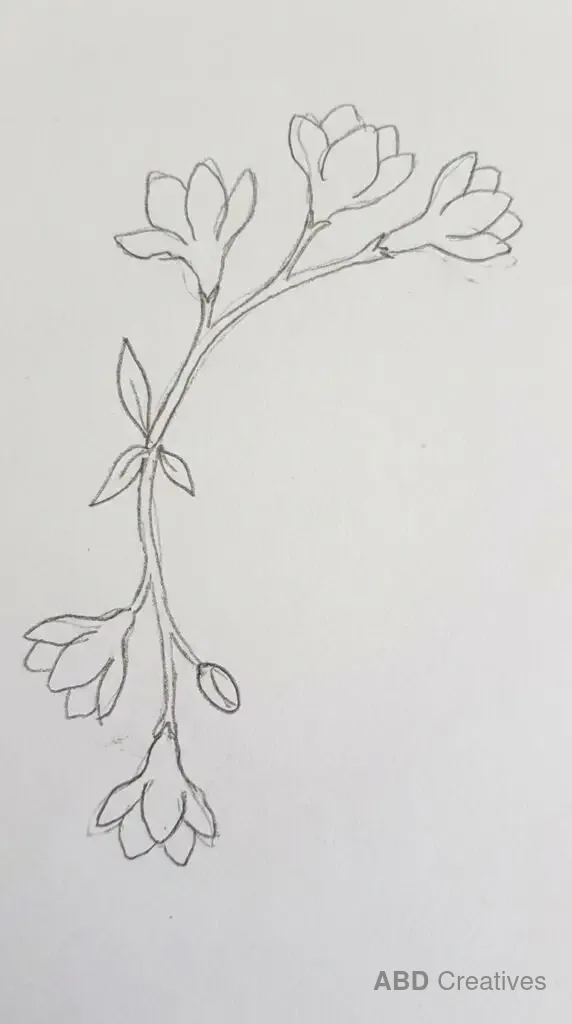
Drawing a magnolia branch with two flowers adds a natural, botanical feel to your artwork. This composition shows how magnolias grow in real life, with flowers appearing directly on the branches before the leaves come out in spring. It is a slightly more advanced idea but still very manageable for beginners.

Step-by-Step Instructions:

  1. Draw a gently curving diagonal line across the center of your paper from the lower left toward the upper right. This is the main branch. Make it slightly thick by drawing a second line very close to the first.
  2. Add a smaller branch that extends from the upper part of the main branch. Let it curve upward naturally like a small arm reaching for the sky.
  3. At the top of each branch, draw one magnolia bloom using the same method from the first idea. Place one bloom facing forward and one slightly tilted to the side so it shows a different angle.
  4. Below the blooms, add two or three small closed bud shapes. These look like elongated ovals pointing upward, slightly fuzzy at the tips. Use short feathery lines around the bud to suggest the furry covering that magnolia buds have.
  5. Add two to three simple leaf shapes along the lower part of the branch. Magnolia leaves are large and oval with a pointed tip and a visible central midrib line.

Magnolia Flower in Side View Drawing

Magnolia Flower in Side View Drawing Save

Drawing a magnolia from the side is one of the most elegant approaches. The side profile shows the beautiful cup shape of the flower and makes it easier to understand how the petals wrap around the center. This is a great perspective for cards and journal pages.

Step-by-Step Instructions:

  1. Draw a small oval tilted slightly on its side in the middle of your paper. This represents the bottom part of the magnolia flower base.
  2. From the left side of the oval, draw two large curved petals that extend outward and slightly upward. These petals should be wide and gentle like open hands.
  3. On the right side, draw one petal that wraps slightly inward as if the flower is half open. This petal curves inward at the top.
  4. Draw two smaller petals at the very back of the flower. Show just their tips peeking out behind the main petals. Keep these shorter and narrower.
  5. Add the stem below the base oval. Draw it as a single slightly curving line going downward. Add two small curved lines at the base of the flower to show the sepal, which looks like small leaves hugging the flower from below.

Magnolia Bud Drawing

Magnolia Bud Drawing Save

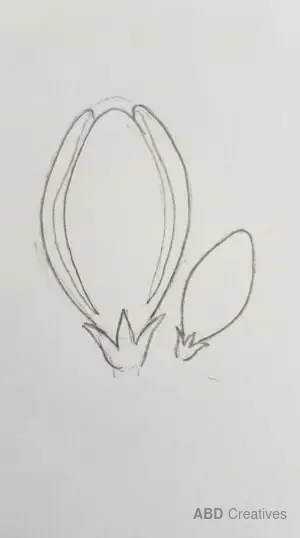
The magnolia bud is one of the most charming and recognizable stages of the flower. Tightly wrapped in a soft fuzzy covering, the bud looks like a small, sleek teardrop sitting on a thin branch. This drawing is perfect for beginners who want a quick and satisfying result.

Step-by-Step Instructions:

  1. Draw a narrow, elongated oval that comes to a slight point at the top. This is the bud shape. Place it in the upper half of your paper so there is room for the stem below.
  2. Draw a thin, gently curving stem extending straight down from the base of the bud. The stem should be about twice the length of the bud itself.
  3. Add a few short, slightly curved lines around the outer surface of the bud. These lines run vertically from base to tip and suggest the seams where the bud covering is wrapped tightly around the flower inside.
  4. At the very base of the bud, draw two small pointed shapes on either side. These are the sepals, which hold the bud in place. They look like two small curved leaves.
  5. Add a few very short, fine, wispy lines at the very tip of the bud to show the tiny hairs that cover magnolia buds in real life. These should be thin and delicate.

Full Magnolia Tree Silhouette Drawing

Full Magnolia Tree Silhouette Drawing Save

Drawing a full magnolia tree is a wonderful way to practice combining branches, blooms, and overall composition. Even a simplified version of the tree creates a striking image. This idea works beautifully as a wall art sketch or a journal page illustration.

Step-by-Step Instructions:

  1. Draw the main trunk near the bottom center of your paper. Use two slightly wavy parallel lines that are wider at the base and taper slightly as they go up. The trunk should reach about one third of the way up the page.
  2. From the top of the trunk, draw three to five main branches spreading outward in different directions. Let each branch curve gently and taper toward its tip. Space them so the tree looks balanced and open.
  3. Add smaller branches extending from each main branch. These should be shorter and thinner, reaching outward like fingers.
  4. At the tips of the branches, draw magnolia blooms in different stages: some fully open, some half open, and some still as buds. Keep each flower simple using the petal shapes learned in earlier ideas.
  5. Add a few scattered leaf shapes among the lower branches to suggest foliage. These are large and oval with a pointed tip and a clear center vein.

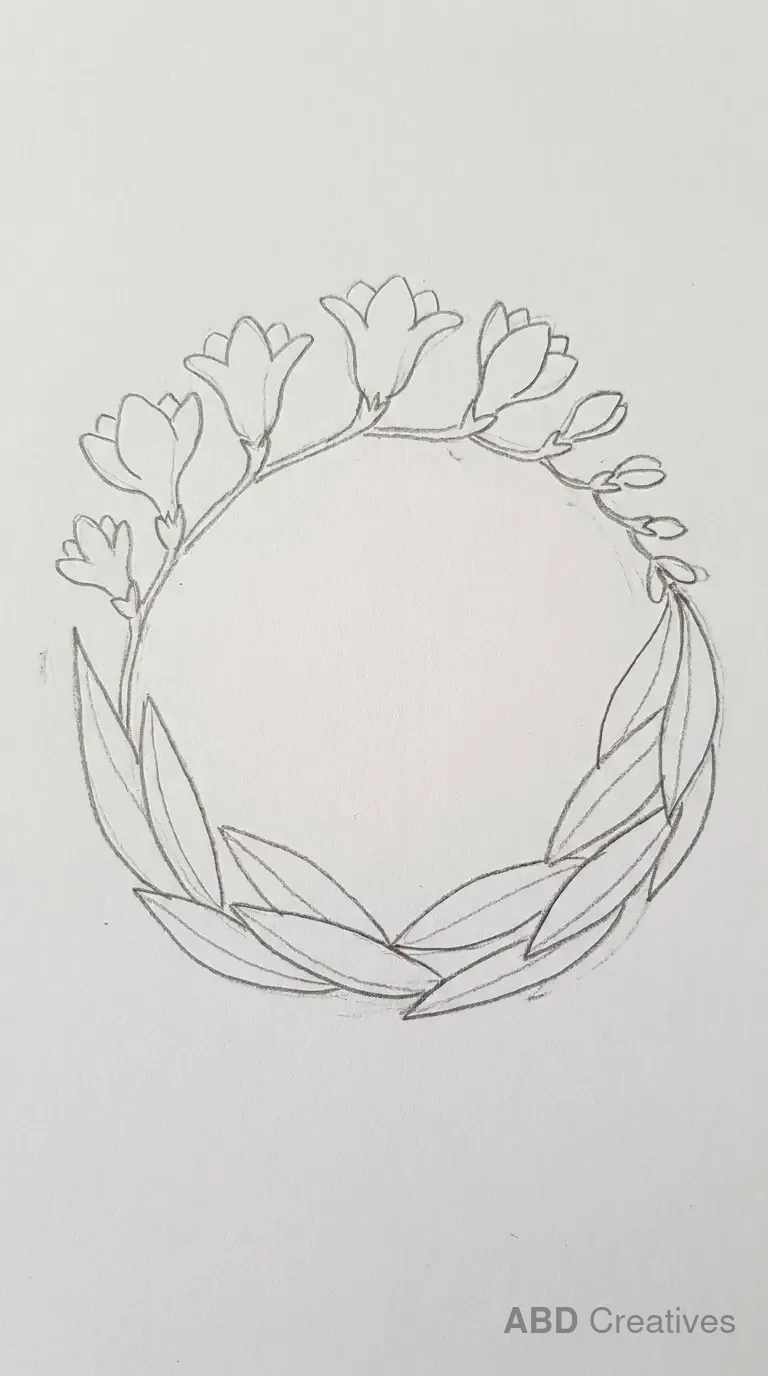
Magnolia Wreath Drawing

Magnolia Wreath Drawing Save

A magnolia wreath is a circular arrangement of blooms, buds, and leaves that makes a beautiful decorative drawing. It works well as a frame for text or as a standalone decorative piece for greeting cards and posters.

Step-by-Step Instructions:

  1. Lightly draw a circle in pencil as your guide. You will erase this later. Make it about the size of a small plate. This circle is just to help you keep the wreath even.
  2. Along the guide circle, draw five to six magnolia blooms at even intervals. Alternate between fully open blooms and half-open blooms for variety.
  3. Between the blooms, draw clusters of oval magnolia leaves. Draw each leaf with a pointed tip and a central midrib line. Group two to three leaves together between each pair of flowers.
  4. Add two to three small closed buds at various points around the circle. Let some buds sit between flowers and leaves to fill in the gaps naturally.
  5. Erase the guide circle. Add small connecting lines or short curved stems to link the flowers, buds, and leaves together as a unified wreath.

Magnolia Flower in a Vase Drawing

Magnolia Flower in a Vase Drawing Save

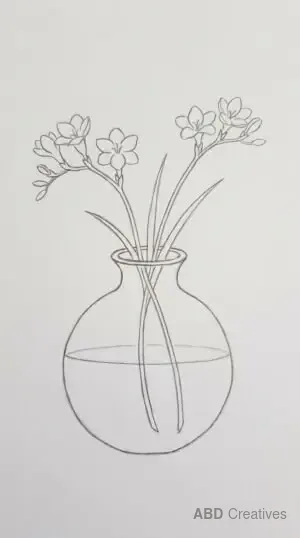
This idea combines a simple vase shape with one or two magnolia stems placed inside. It is a classic still-life subject that is easy to execute and looks charming even in its simplest form.

Step-by-Step Instructions:

  1. Draw the vase first. Start with a simple rounded rectangle or hourglass shape near the bottom center of the page. Add a wider rim at the top using a flat oval shape.
  2. Draw two or three long, gently curving stems rising from the top of the vase. Let the stems lean slightly in different directions so they look natural and relaxed.
  3. At the top of each stem, draw a magnolia bloom. Make one fully open and facing the viewer, one in side profile, and one as a closed bud to add variety.
  4. Add two or three leaves to the stems. These sit along the lower part of the stems and should be large, oval, and slightly curving downward under their own weight.
  5. Add a horizontal line across the body of the vase to suggest a simple surface the vase is resting on. This one detail immediately gives the drawing a grounded, finished feel.

Magnolia Petal Close-Up Drawing

Magnolia Petal Close Up Drawing Save

A close-up drawing of a single magnolia petal is an excellent exercise for understanding the unique shape, size, and gentle curvature of these flowers. It is simple, meditative, and great for practicing smooth curves.

Step-by-Step Instructions:

  1. Draw one large, wide petal shape in the center of the paper. The petal should look like a broad spoon or a wide teardrop with a rounded top and a narrow base.
  2. Add a gentle curve running from the tip of the petal down toward the base on each side. This suggests the slight cupping shape of a magnolia petal as it curves inward.
  3. Draw a single thin line down the very center of the petal from tip to base. This is the midrib or central vein. Keep it straight and delicate.
  4. From the midrib, draw three to four faint, short lines branching off to the side. These are the secondary veins and they add a touch of botanical accuracy without making things complicated.
  5. At the very base of the petal, add a slightly wider, flatter area to show where the petal connects to the flower center. A few short vertical lines here suggest the textured base of the petal.

Magnolia With Falling Petals Drawing

Magnolia With Falling Petals Drawing Save

This idea adds movement and poetry to your magnolia drawing by showing petals gently falling from the bloom. It is a favorite subject in East Asian brush art and looks equally beautiful as a pencil sketch.

Step-by-Step Instructions:

  1. Draw a magnolia bloom in the upper portion of your paper. Make it slightly open as if the wind has caught it and one or two petals are beginning to fall.
  2. On the lower half of the paper, draw two to three individual petals floating downward. Stagger them at different heights and tilt each one at a different angle to suggest natural movement through the air.
  3. Draw a simple curved line below each falling petal to suggest the gentle drift of movement, like a very faint shadow or implied line of direction.
  4. Add a short stem and branch at the upper corner of the paper connecting the main bloom to the edge of the picture. This anchors the composition and gives context to the falling petals.
  5. Add two small leaves near the branch to complete the botanical feel. Keep the falling petals and the main flower at different scales to create depth in the composition.

Magnolia Flower Border Drawing

Magnolia Flower Border Drawing Save

A magnolia border is a repeated decorative strip of flowers, buds, and leaves that can be used to frame a page, a letter, or a drawing. It is a practical and beautiful project that teaches repetition and spacing.

Step-by-Step Instructions:

  1. Draw a long horizontal line near the top of your paper to act as the stem or baseline for the border. Let it run from one side of the paper to the other with a slight gentle curve.
  2. Along the stem line, draw small magnolia blooms at regular intervals. Space them evenly and alternate between a bloom facing forward and a bloom in side profile.
  3. Between each bloom, add a small cluster of two oval leaves pointing upward from the stem. Keep the leaves consistent in size throughout the border.
  4. Between the flower and leaf clusters, add small bud shapes pointing upward. These fill the gaps and give the border a lush, full appearance.
  5. Add a second thin line just below the main stem line to give the border a finished, framed appearance. This closing line completes the border and makes it look intentional and decorative.

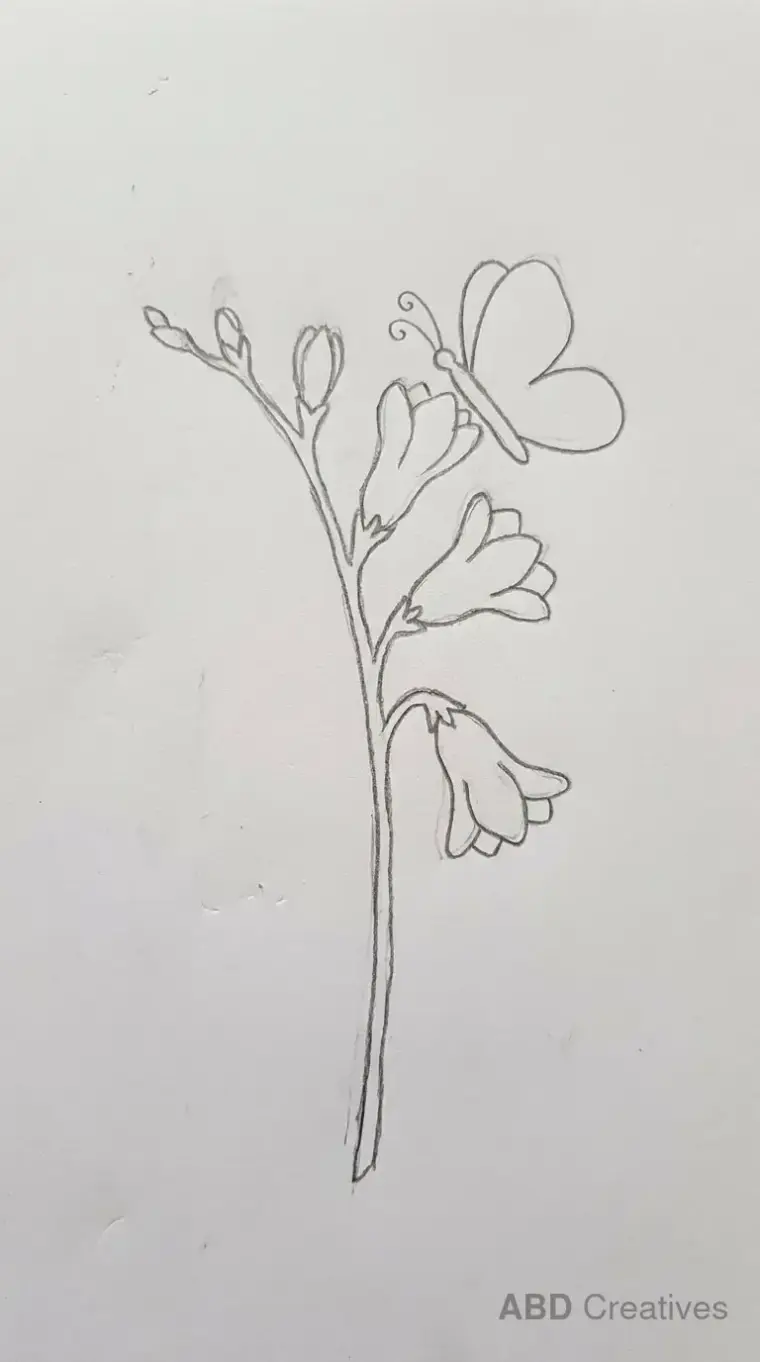
Magnolia and Butterfly Drawing

Magnolia and Butterfly Drawing Save

Adding a simple butterfly perched on a magnolia bloom brings life and charm to your drawing. The butterfly shape pairs naturally with the rounded petal forms and creates a delightful composition that children especially love.

Step-by-Step Instructions:

  1. Draw a magnolia bloom slightly to the left of center on your paper using the same open-faced bloom technique from the first idea.
  2. On top of one of the upper petals, draw the butterfly’s body. This is simply a small thin oval shape, slightly elongated, sitting at an angle on the petal.
  3. From the top of the body, draw two large upper wings. These are rounded triangle shapes that spread upward and outward. Keep the curves gentle and wide.
  4. From the lower part of the body, draw two smaller lower wings that curve outward and slightly downward. These are shorter and rounder than the upper wings.
  5. Add one or two simple oval spots on each wing for decoration. Keep them as clean oval shapes without any detail inside. Add the antennae as two thin lines with a tiny circle at each tip rising from the head of the body.

Magnolia Pattern Drawing

Magnolia Pattern Drawing Save

A magnolia pattern drawing features multiple flowers, buds, and leaves arranged across the page in a repeating, decorative layout. It looks like a fabric print or wallpaper design and makes excellent practice for composition and repetition.

Step-by-Step Instructions:

  1. Begin by drawing one open magnolia bloom in the upper left area of your paper. This is your first anchor flower.
  2. Draw a second bloom in the lower right area of the page, slightly larger than the first. This creates visual balance and leads the eye diagonally across the composition.
  3. Fill the space between the two blooms with two or three bud shapes and three to four sets of oval leaves. Let them connect loosely with short, curved stem lines.
  4. Add two more small blooms in the remaining open corners of the page. Keep them smaller than the central blooms to suggest a sense of depth and layering.
  5. Connect all elements with very thin, gently curving vine or stem lines. These do not need to be precise. They simply tie the pattern together and make it feel like a living, continuous design.

Drawing Tips for Magnolia Flowers

Start every magnolia drawing with the flower center first. Placing the center correctly determines where everything else goes. Many beginners make the mistake of drawing petals first and then struggling to find a natural-looking center.

Use light pencil pressure for the first attempt. This lets you make adjustments easily before committing to darker lines. Once you are happy with the shape, go over your lines with slightly firmer pressure.

Magnolia petals are wide and smooth, not pointed or jagged. The biggest mistake beginners make is drawing petals that are too narrow or too sharp. Practice drawing wide oval shapes and smooth banana curves before you start a full flower.

When drawing petals that overlap, always draw the front petal first and then tuck the back petals behind it. This creates a natural layered look without confusion.

Use a light, consistent hand pressure throughout your drawing. Uneven line weight, where some lines are very dark and others barely visible, makes a sketch look unfinished. Aim for clean, even lines from start to finish.

Common Mistakes to Avoid

Drawing petals too small is one of the most common issues. Magnolia petals are large and wide. Do not make them the size of a tulip or a daisy. Let them take up space generously on your paper.

Forgetting the center structure is another frequent problem. The seed pod at the center of a magnolia is an important visual anchor. Without it, the petals look like they are floating with nothing to hold them together.

Making the stem too thin is a mistake that makes the flower look fragile and disconnected from its natural form. Magnolia stems and branches are sturdy. Draw them with a little thickness to give the drawing a grounded, realistic proportion.

Skipping the bud stage when drawing a branch makes the composition look flat. Including at least one bud or half-open flower gives your drawing a sense of life, growth, and natural variety.

Pressing too hard on the pencil from the very first line makes it impossible to erase mistakes and adjust proportions. Always begin with a light sketch and only darken lines once you are confident in the overall shape.

Frequently Asked Questions

What shapes do I use to draw a magnolia flower? Magnolia flowers are made from a combination of wide ovals, gentle teardrop shapes, and smooth curved lines. The center is a small oval, each petal is a wide rounded teardrop, and the stems and branches are simple curved lines. Once you understand these basic shapes, drawing a magnolia becomes straightforward and enjoyable.

Can kids draw magnolia flowers easily? Yes. Magnolia flowers are ideal for children because the petals are large, smooth, and simple. There are no complicated angles or tiny details required. Children aged six and above can successfully draw a basic magnolia bloom using the step-by-step instructions in this article with a regular pencil and a piece of paper.

Do I need to shade a magnolia flower drawing? No. A magnolia flower drawing looks beautiful as a clean outline without any shading. The natural elegance of the wide petals and smooth curves creates visual interest all on its own. Shading is an optional step that you can add later once you are confident with the basic shapes, but it is never required for a charming result.

What is the best pencil to use for drawing magnolia flowers? An HB pencil is the best choice for beginners drawing magnolia flowers. It is firm enough to make clear, visible lines but soft enough to erase easily when you need to correct a mistake. Avoid very hard pencils like 4H, which produce lines that are too faint, and very soft pencils like 4B for initial sketching, as they smudge easily.

Category: Flowers Drawing Ideas

Leave a Reply Cancel reply

Your email address will not be published. Required fields are marked *

Recent Posts

  • 12 Cat Drawing Ideas for Beginners – Easy Step-by-Step Tutorials
  • 13 Monkey Drawing Ideas for Kids and Beginners (Easy Step-by-Step)
  • 12 Easy Fox Drawing Ideas for Beginners
  • 12 Bear Drawing Ideas for Beginners (Easy Step-by-Step Tutorials)
  • 12 Chicken Drawing Ideas That Are Easy and Fun for Beginners

Categories

  • Animal Drawing Ideas
  • Easy Drawing Ideas
  • Flowers Drawing Ideas
© 2026 ABD Creatives | Powered by Minimalist Blog WordPress Theme