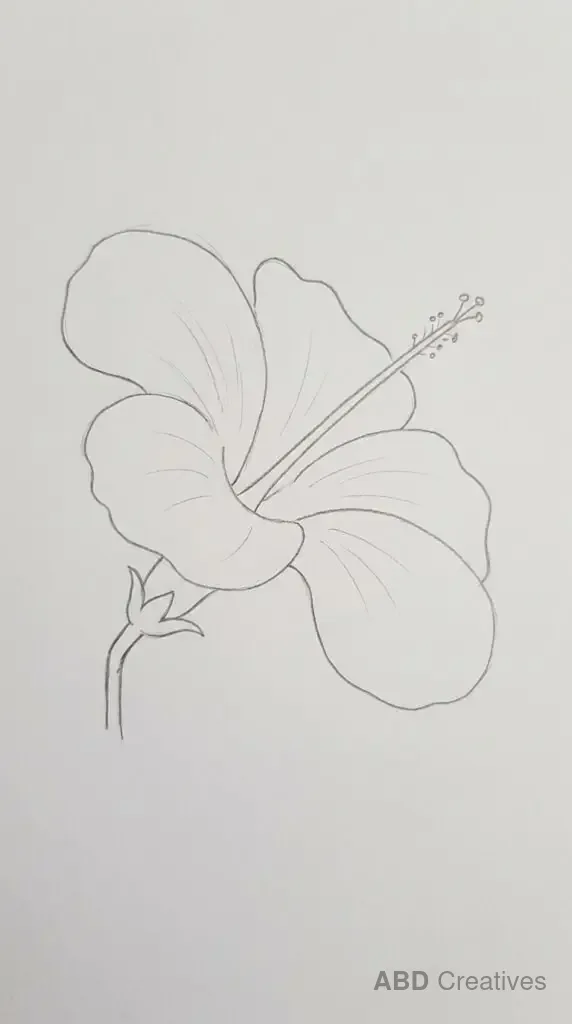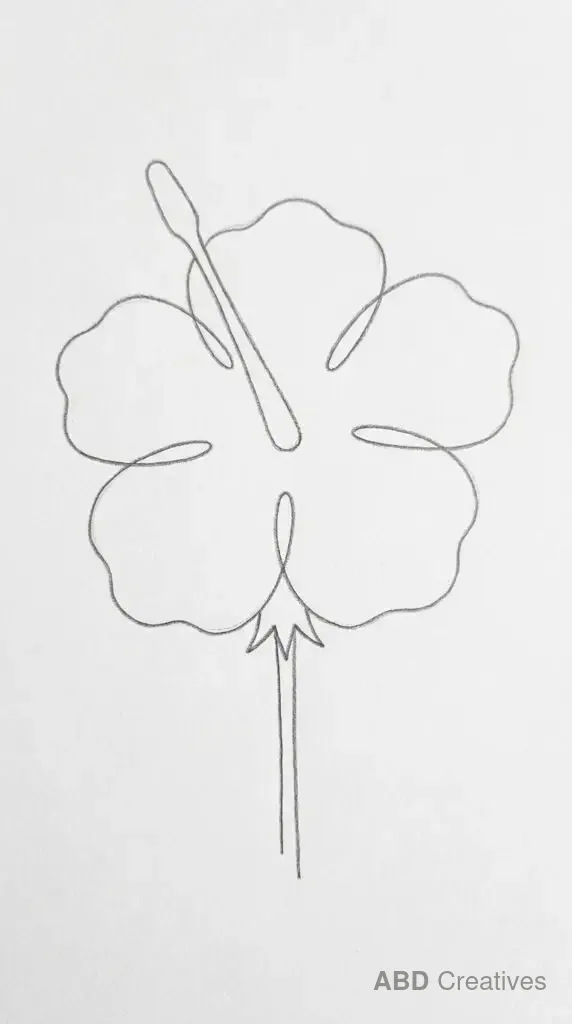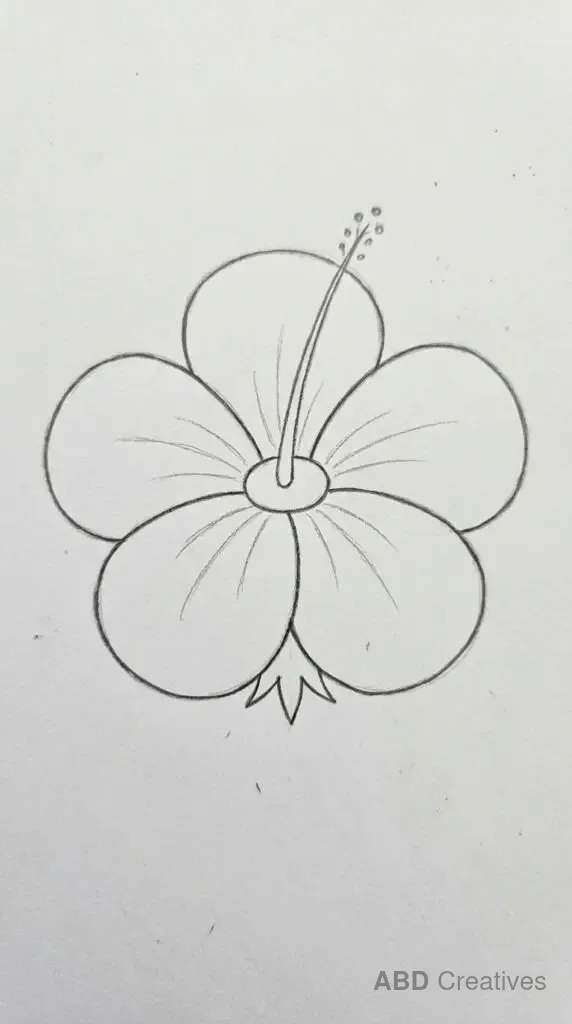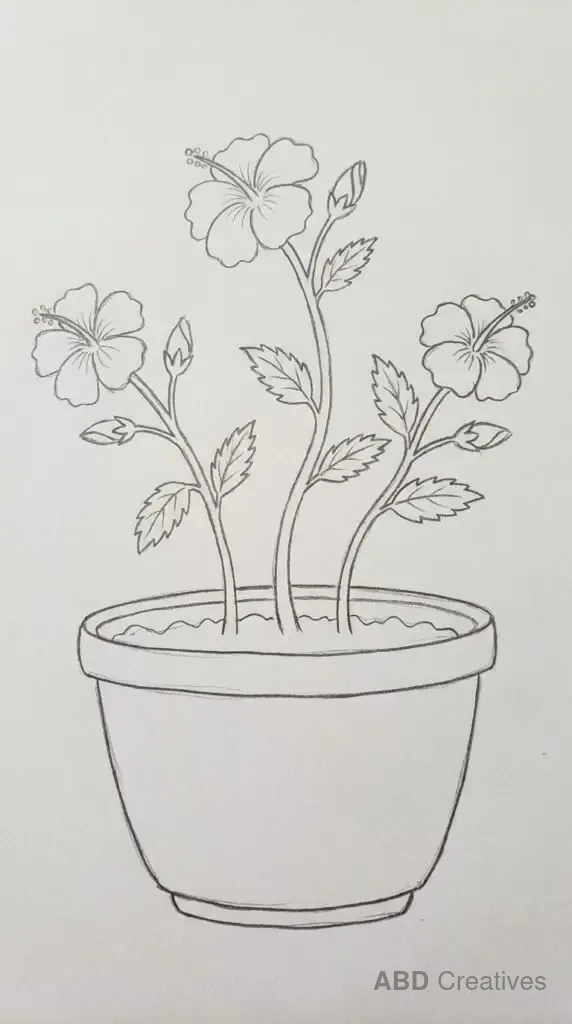
Marigolds are one of the most cheerful and recognizable flowers in the world. With their round, layered petals and bright sunny appearance, they make a perfect subject for beginner artists who want to practice drawing flowers. But if you have ever sat down with a pencil and tried to draw a marigold, you know how tricky it can feel. Where do you start? How do you make all those petals look right without getting overwhelmed?
The good news is that marigolds are actually easier to draw than they look. When you break the flower down into simple shapes like circles, ovals, and small curved lines, drawing a marigold becomes a relaxed and enjoyable activity. This article gives you 15 different marigold drawing ideas, each one explained in clear, beginner-friendly steps. Whether you are a child trying flower art for the first time or an adult who wants simple pencil sketching practice, you will find something here that works for your skill level.
None of these drawings require shading. You will not need any special tools. A regular pencil and a piece of white paper are all you need to follow along. Every idea starts with the basic shapes and builds from there, so you always know what to draw next. Some ideas show the full flower with a stem and leaves. Others focus on the petals alone or show the flower from different angles. By the time you finish exploring all 15 ideas, you will have a strong understanding of how to draw marigolds in many different ways. Let us get started.
Simple Round Marigold with Layered Petals
The classic marigold shape is one that beginners often reach for first. This version focuses on the full, round silhouette of the flower with visible petal layers stacked around a small circular center. It captures the familiar look of a marigold without any complicated detail.
Step-by-Step Instructions:
- Draw a small circle in the center of your paper. This will be the flower’s center and should be about the size of a large coin.
- Around the center circle, draw a ring of short oval petals. Make each petal about the same length and space them evenly around the circle.
- Add a second ring of petals behind the first. These petals should peek out between the gaps of the first ring, appearing slightly larger to show depth.
- Draw a third outer ring of petals, slightly longer and wider than the previous two rings.
- Add a short straight stem below the flower and draw two small simple leaves on either side of the stem.
Single Marigold Bloom from the Front
This idea draws the marigold from a direct front view, making it look flat and symmetrical. This is one of the most satisfying ways to draw a marigold because the finished piece has a pleasing circular shape and looks instantly recognizable.
Step-by-Step Instructions:
- Start with a small oval or circle shape in the very center of your drawing area. This is the seed center of the marigold.
- Draw eight to ten short, wide petals directly attached to the center oval. Each petal should look like a slightly rounded rectangle or a short tongue shape.
- Behind those petals, add another set of petals that fill in the gaps. These should be slightly longer and peep out between each petal in the first ring.
- Continue adding one or two more rings of petals, each ring slightly longer than the one before it.
- Once you are happy with the fullness of the flower, clean up your pencil lines and make the outline of each petal smooth and consistent
Marigold with Long Stem and Leaves
Adding a stem and detailed leaves transforms a simple flower head into a full plant illustration. This version gives beginners practice with both the flower and its foliage, which together tell a more complete visual story.
Step-by-Step Instructions:
- Draw the flower head first using two to three rings of simple oval petals around a small center circle, positioned in the upper portion of your paper.
- Below the flower, draw a long, slightly curved line for the main stem. The stem should be two to three inches long on the paper.
- On the left side of the stem, draw a leaf shape. A marigold leaf is long and narrow with a pointed tip and slightly jagged or toothed edges. Add small notches along the edge of the leaf to suggest this texture.
- Draw a matching leaf on the right side of the stem, slightly lower than the first for a natural look.
- Optionally, add a small bud shape near the base of the flower head using two or three small petals and a tiny oval.
Marigold bud drawing
Drawing a marigold bud is simpler than drawing a full bloom and is a wonderful starting exercise for absolute beginners. The bud shape teaches basic form and proportion before you tackle the full flower.
Step-by-Step Instructions:
- Draw a small oval shape in the center of your paper, leaning very slightly to one side. This is the bud itself.
- At the top of the oval, draw three to four small triangular or pointed petal tips peeking out. These represent the petals just beginning to open.
- At the bottom of the oval, draw a pointed base called the calyx. This looks like a small star or crown shape made of five narrow pointed pieces.
- Draw a stem below the calyx, straight and simple.
- Add one small leaf on the side of the stem using a long, thin shape with a pointed tip.
Marigold Garland or String Drawing
Marigolds are famously used in garlands and decorative strings for festivals. Drawing a simple marigold garland is a fun idea that repeats the basic flower shape multiple times, giving beginners valuable repetition practice.
Step-by-Step Instructions:
- Draw a gently curved horizontal line across the center of your paper. This is the string of the garland.
- At equal intervals along the string, draw small circles where each flower will attach. Space them about an inch apart.
- On each small circle attachment point, draw a small marigold flower head. Keep each flower simple: one ring of petals around a tiny center is enough.
- Between each flower, draw one or two small oval leaf shapes hanging from the string to fill the gaps.
- At the ends of the garland, draw the string looping slightly downward to give a natural hanging shape.
Marigold Mandala Style Drawing
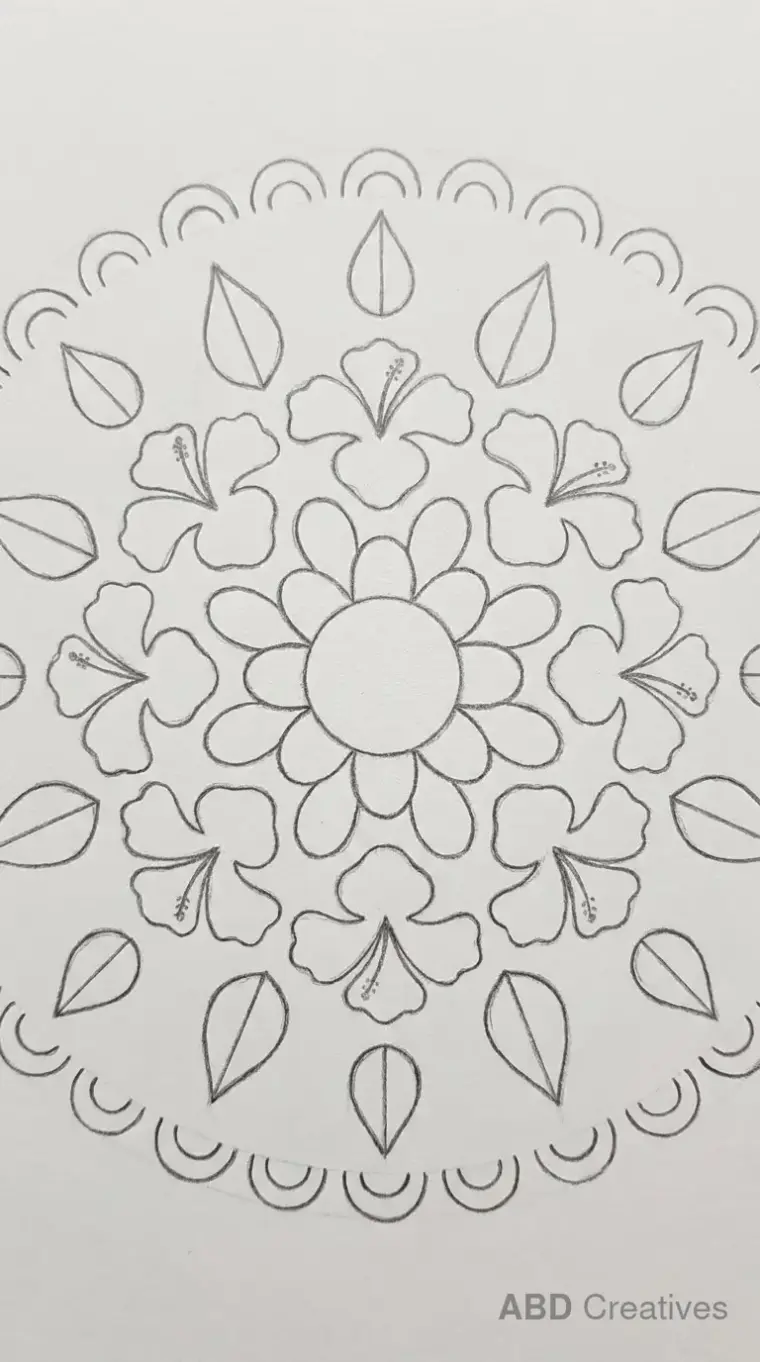
A marigold mandala combines the circular layered petal pattern of the flower with a repeating, symmetrical decorative layout. This is a slightly more detailed idea but still very accessible for beginners who enjoy pattern-based drawing.
Step-by-Step Instructions:
- Draw a small circle in the exact center of your paper. This is your starting point.
- Around this circle, draw six equal petals, each shaped like a long narrow oval, pointing outward like the spokes of a wheel.
- In the spaces between those six petals, draw six more petals of the same size. You now have twelve petals in the first ring.
- Add a second ring of twelve slightly longer petals behind the first, again filling the gaps between each inner petal.
- Optionally add a third ring of shorter decorative petals or small triangular shapes to complete the mandala look.
Marigold in a Pot
Placing a marigold in a simple pot makes a charming standalone illustration and is a great idea for greeting cards, journal pages, or decorative drawings. The pot shape itself is very simple to draw.
Step-by-Step Instructions:
- Draw a simple flower pot shape at the bottom of your paper. Start with a trapezoid shape for the body of the pot and add a small rectangular rim at the top.
- Inside the pot rim, draw a small mound shape representing soil.
- From the soil, draw a short straight stem going upward.
- On top of the stem, draw a full marigold flower head with two or three rings of petals around a small center circle.
- Add one or two simple leaves branching from the stem for completeness.
Marigold Side Profile Drawing
Drawing a marigold from the side shows a completely different shape and helps beginners understand the three-dimensional form of the flower even in a flat pencil sketch. The side view reveals the base of the flower and the way petals fan out from it.
Step-by-Step Instructions:
- Draw a small dome or half-circle shape in the center of your paper. This is the top of the marigold head as seen from the side.
- Below the dome, draw a short cylindrical shape that tapers slightly downward. This is the flower base or receptacle.
- From the left and right edges of the dome, draw curved petals fanning outward and slightly downward. Each petal should be elongated and gently curved.
- Add more petals behind the visible ones by drawing their tips peeking out from behind the front petals.
- Draw a stem dropping straight down from the base and add a small leaf on one side.
Two Marigolds Together Drawing
Drawing a pair of marigolds on one stem or side by side teaches beginners how to arrange multiple elements on a single page and how to vary flower sizes for visual interest.
Step-by-Step Instructions:
- Draw the first marigold flower in the upper left area of your paper using three rings of oval petals around a small center circle. Make this flower slightly larger.
- Draw a second, slightly smaller marigold flower in the upper right area of your paper. Use two rings of petals to keep it a bit simpler.
- Draw long curved stems going downward from each flower, allowing the two stems to merge into a single stem at the bottom of the page.
- Add two or three leaves along the merged stem section, alternating left and right.
- Make sure the flowers overlap slightly or sit very close together to create a natural grouped look.
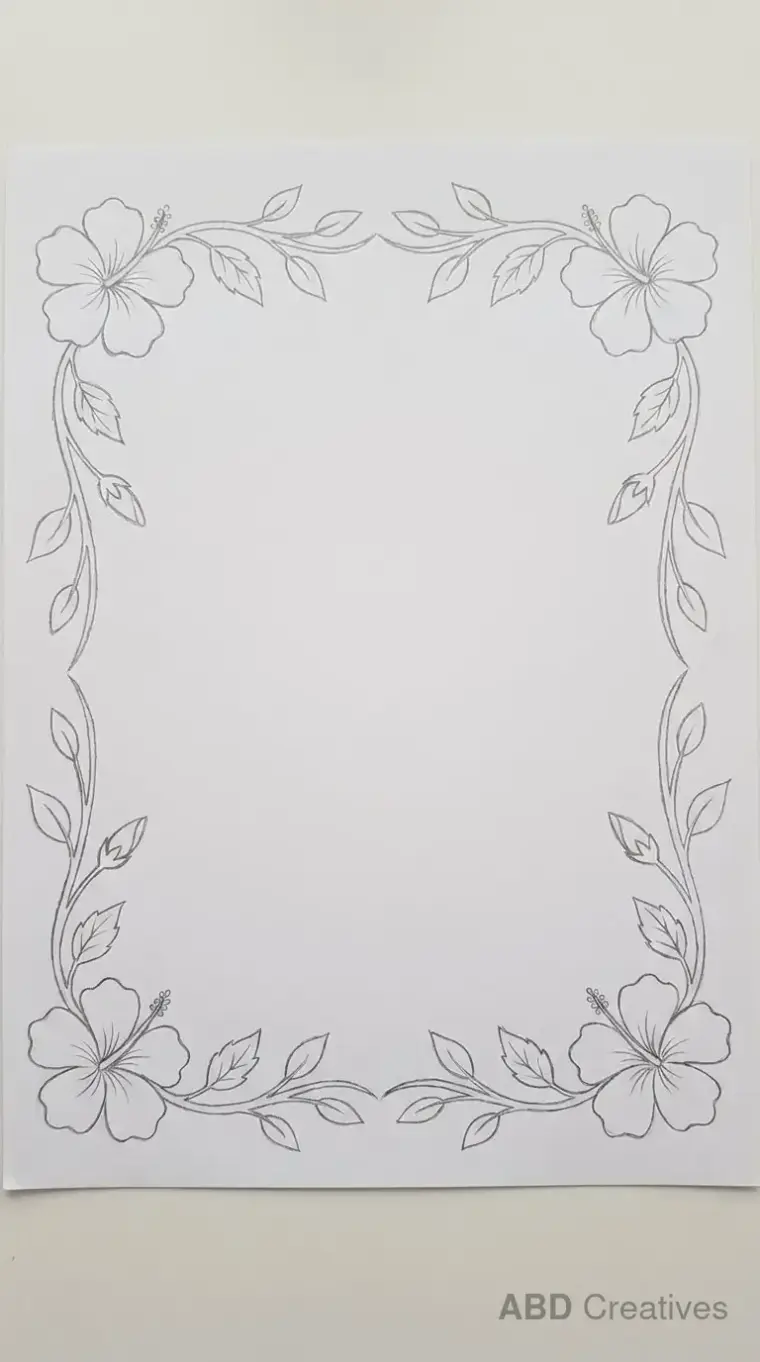
Marigold with Decorative Border Drawing
This idea frames a single marigold inside a simple hand-drawn decorative border. It makes a great composition for greeting cards, bookmarks, or wall art and teaches beginners about layout and balance.
Step-by-Step Instructions:
- Lightly draw a rectangle border near the edges of your paper using a ruler if you prefer, or freehand for a softer look.
- Draw a single large marigold flower in the center of the rectangle with three rings of petals and a clear center circle.
- Add a short stem below the flower with two simple leaves, keeping everything within the border.
- Along the inside edges of the border, draw small simple marigold-inspired doodles: tiny flower heads, small petals, or simple leaf shapes evenly spaced around the frame.
- Go over your border and flower outlines to make all lines consistent and clear.
Marigold Half-Open Drawing
A half-open marigold shows the flower in the process of blooming. This is a beautiful intermediate stage that looks delicate and natural and gives beginners practice drawing petals at different stages of openness.
Step-by-Step Instructions:
- Draw a small tight oval in the center of your paper. This is the bud-like center of a marigold that has only partly opened.
- Draw six to eight petals around the oval that are upright and slightly curved inward at their tips, as though they have just begun to open.
- Behind those first petals, draw a second ring of petals that are more spread out and flatter, showing they have opened more fully.
- Draw a calyx at the base of the flower made of five small pointed shapes forming a star crown around the base of the petal group.
- Add a stem and one or two leaves below the calyx.
Marigold wrealth drawing
A marigold wreath is a circular arrangement of marigold flowers and leaves that makes a stunning decorative drawing. It is slightly more complex but broken into simple repeating steps that any beginner can follow.
Step-by-Step Instructions:
- Lightly draw a large circle in the center of your paper using a compass or by tracing a round object. This is your invisible guide circle for the wreath shape.
- Place five to six small marigold flowers evenly around the guide circle. Each flower should have two simple rings of petals and a small center.
- Between each flower, draw two or three simple leaf shapes following the curve of the guide circle.
- Erase the guide circle once all flowers and leaves are in place.
- Review your wreath and make all the flower and leaf outlines clean and consistent.
Tiny Marigold Doodle Set Drawing
A set of tiny marigold doodles spread across the page in a loose, scattered arrangement is perfect for decorating notebooks, sketchbook pages, or bullet journals. This idea focuses on variety and looseness rather than precision.
Step-by-Step Instructions:
- Start in one corner of your paper and draw a small marigold flower head, just two rings of petals around a center dot. Keep it very small, about the size of a thumbnail.
- Leave some space and draw a tiny marigold bud shape with a pointed calyx below it.
- Continue scattering tiny flowers and buds across the page in different sizes. Some can have stems, some can be just the flower head alone.
- Add tiny simple leaf shapes near some of the flowers to fill space naturally.
- Vary the angle of each tiny flower slightly so they do not all look identical, making the arrangement feel more organic.
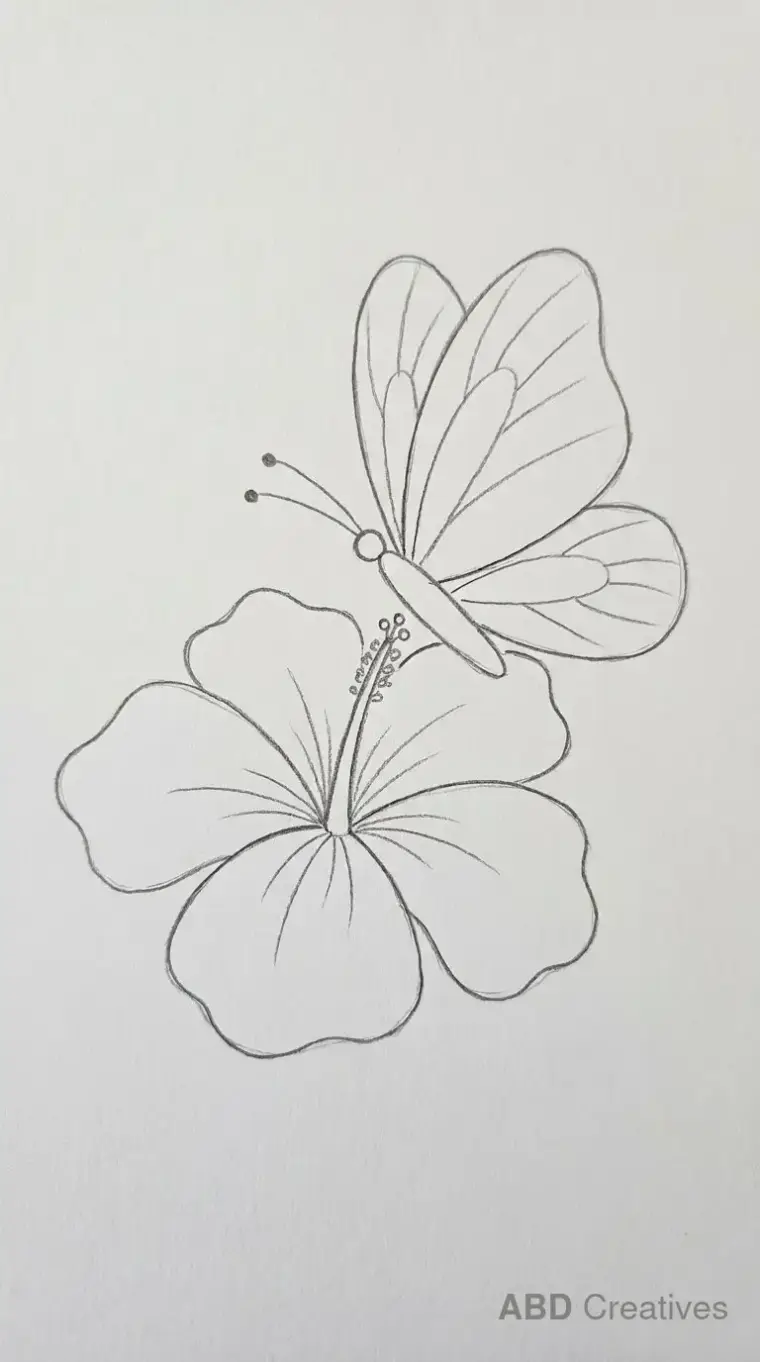
Marigold with Butterfly Drawing
Pairing a marigold with a simple butterfly adds storytelling to your drawing and makes a lovely nature composition. The butterfly shape is simple enough for beginners and complements the round flower perfectly.
Step-by-Step Instructions:
- Draw a full marigold flower with three rings of petals and a stem near the left side of your paper, leaving space on the right.
- On the right side, draw a simple butterfly. Start with a small oval for the body in the center.
- Draw two large upper wings attached to the top of the body. Each wing is a simple rounded triangle shape.
- Draw two smaller lower wings below, each shaped like a smaller rounded triangle.
- Add two antennae from the top of the body using two thin curved lines with a tiny circle at the tip of each.
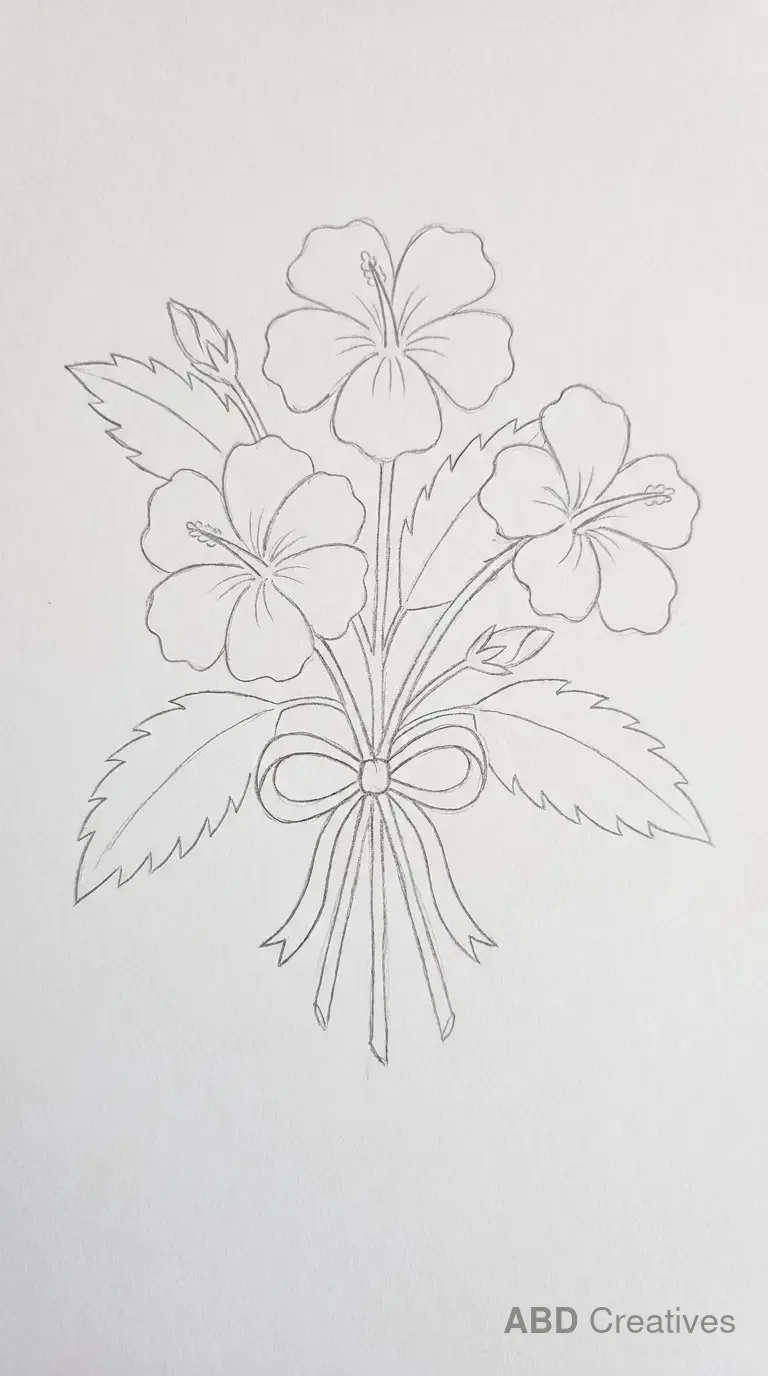
Marigold Bouquet in a Vase Drawing
Drawing a bouquet of marigolds arranged in a simple vase brings together all the marigold drawing skills practiced in previous ideas and makes a classic, satisfying composition.
Step-by-Step Instructions:
- Draw a simple vase at the bottom of your paper. A classic vase shape is wider at the base, narrower at the neck, and wider again at the opening.
- From the vase opening, draw three to four stems fanning outward and upward.
- On top of each stem, draw a marigold flower head. Vary the sizes slightly so not all flowers are identical.
- Add simple leaves along the visible stems between the flowers.
- Optionally draw one or two marigold buds among the full blooms to add variety to the bouqu
DRAWING TIP
Start with a light pencil sketch before committing to your final lines. Drawing lightly first allows you to adjust the size and placement of petals before anything is permanent.
Always begin from the center of the flower and work outward. Drawing the center circle first gives you a clear anchor point so that each ring of petals stays evenly placed.
When drawing multiple petals, focus on making them roughly the same width. You do not need perfect symmetry, but consistent petal width creates a clean, natural flower appearance.
Use slow, controlled strokes rather than quick, hasty lines. Slower pencil strokes are easier to keep even and smooth, which makes your petal edges look clean without any special skill.
Practice drawing a single petal shape on a separate sheet of paper before adding it to your flower. Once your hand is comfortable with the petal shape, the full flower comes together much more naturally.
Do not try to draw every single petal you see in a real marigold photo. Simplifying the flower to three rings of petals is enough to create a recognizable and beautiful marigold drawi
COMMON MISTAKES
Drawing petals that are all different sizes in the same ring is a very common mistake. Try to keep each petal within a single ring roughly the same length and width for a balanced look.
Starting from the outer petals and working inward often leads to a cluttered center with no room for the important circle in the middle. Always build from the center outward.
Pressing too hard with the pencil from the beginning leaves marks that are difficult to erase if you need to adjust shapes. Start with light pressure and go darker once you are satisfied with the shape.
Making the stem too thin or too thick relative to the flower throws off the proportion of the whole drawing. A stem that is about the width of a medium pencil stroke works well for most flower sizes.
Forgetting the calyx at the base of the flower head is easy to overlook. The calyx gives the marigold its distinctive pointed base and without it the flower can look incomplete or unnatural.
Crowding too many petal rings into a small flower makes the drawing look messy. If your flower is small, two petal rings are enough. Save three or more rings for larger, more prominent flower drawings.
FAQ
How do you draw a marigold flower for beginners?
Start by drawing a small circle in the center of your paper. Then draw one ring of short oval petals around it. Add a second ring of slightly longer petals behind the first, filling the gaps. Finish with a stem and simple leaves. This three-step approach gives you a clean marigold shape without needing any advanced skill.
What shapes are used to draw a marigold?
Marigolds are made up of very simple shapes. The center is a small circle or oval. Each petal is a short, rounded oval or tongue shape. The stem is a straight or gently curved line. The leaves are long, narrow ovals with slightly jagged edges. The calyx at the base of the flower is a small star or crown shape.
How many petals does a marigold have in a drawing?
In real life, marigolds have dozens of densely packed petals. But for a beginner drawing, you only need to show two or three rings of petals, with about eight to twelve petals in each ring. This simplification captures the look of a marigold without the complexity of drawing every single petal.
Can kids draw marigolds easily?
Yes, marigolds are one of the best flowers for kids to practice drawing. The petals are simple oval shapes and the overall flower is circular and symmetrical, which makes it easy to build step by step. Children as young as five or six can draw a recognizable marigold with guidance, starting from a center circle and adding petals one ring at a time.